Anatomy of a Teardrop Diamond Necklace: Expert Guide
Discover the technical specs, ideal proportions, and setting options for a teardrop diamond necklace in our expert gemological buying guide.

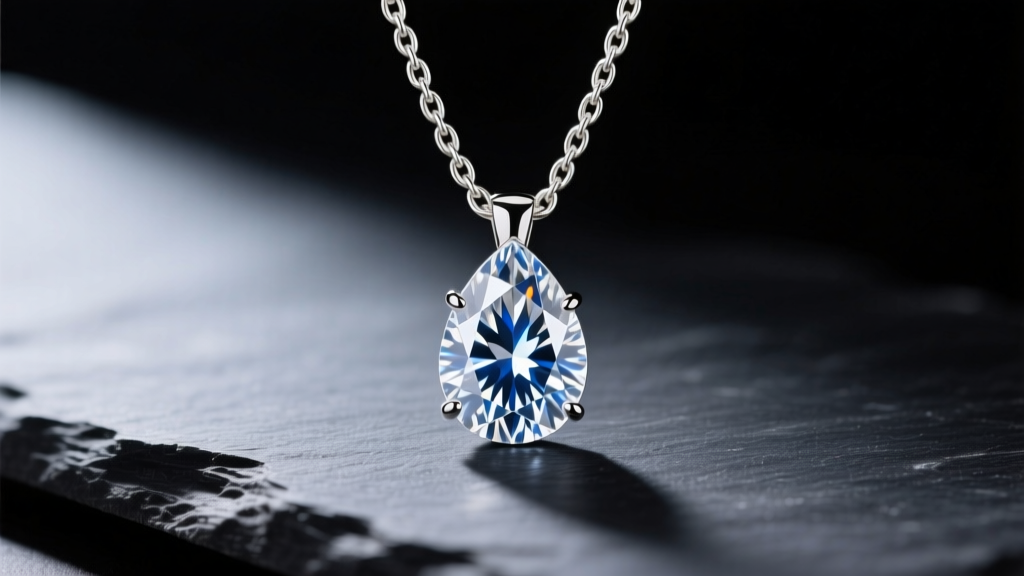
The teardrop diamond necklace, formally classified in gemology as the pear brilliant cut, represents one of the most complex and demanding facet arrangements in the diamond industry. Combining the rounded brilliance of a standard round cut with the elongated, sweeping elegance of a marquise, the pear shape requires exacting precision to maximize light return. When suspended as a pendant, the teardrop's unique geometry creates a striking visual anchor on the décolletage, drawing the eye downward and elongating the neckline. However, selecting the perfect teardrop diamond necklace goes far beyond basic carat weight or superficial sparkle. It demands a rigorous, technical understanding of optical symmetry, setting architecture, chain metallurgy, and the specific vulnerabilities inherent to fancy-shaped diamonds.
The Gemological Profile: Pear Cut Proportions
Unlike round brilliant diamonds, which have universally accepted and mathematically rigid ideal proportions, the pear shape is a 'fancy' cut with highly variable parameters. According to the Gemological Institute of America (GIA), the interplay of depth, table percentages, and pavilion angles dictates the stone's brilliance and its susceptibility to optical flaws. When evaluating a teardrop diamond for a pendant, you must scrutinize the following metrics:
- Length-to-Width (L/W) Ratio: For pendants, an L/W ratio between 1.45 and 1.75 is the optimal sweet spot. Below 1.45, the stone appears stubby and overly wide, losing the elegant 'teardrop' silhouette. Above 1.75, the stone appears overly stretched, which drastically increases the risk of chipping at the pointed tip and exacerbates the bow-tie effect.
- Depth Percentage: Aim for a total depth between 58% and 62%. Depths exceeding 65% result in a 'nailhead' effect, where the center of the stone goes dark and lifeless due to light leaking out the sides. Conversely, shallow depths under 55% cause severe light leakage through the bottom of the pavilion.
- Table Percentage: A table percentage between 53% and 63% ensures a balanced dispersion of fire (color flashes) and scintillation (sparkle) across the stone's large, flat top facet.
- Girdle Thickness: The girdle is the outer edge of the diamond. For the pointed tip of a pear shape, the girdle must be graded at least 'Medium' to 'Slightly Thick'. An 'Extremely Thin' or 'Very Thin' girdle at the point is a severe structural liability, making the tip highly prone to chipping during the setting process or daily wear.
Optical Symmetry and the Bow-Tie Effect
The most notorious optical flaw in elongated fancy cuts is the 'bow-tie' effect—a dark, bow-tie-shaped shadow that stretches across the center width of the diamond. This occurs when the pavilion main facets act as mirrors reflecting the observer's head or the setting, rather than acting as windows reflecting ambient light back to the eye. In a teardrop diamond necklace, the pendant hangs vertically, meaning the bow-tie will be oriented horizontally across the stone. While a very faint, subtle bow-tie is virtually unavoidable in pear cuts and can actually add contrast and character, a prominent, pitch-black bow-tie indicates poor facet alignment and severe light leakage. Always demand ASET (Angular Spectrum Evaluation Tool) imagery from your jeweler to quantify the bow-tie before purchasing.
Setting Architectures for Pear Pendants
The teardrop shape features a rounded 'belly' and a sharp, highly vulnerable point. The setting must protect this point without obstructing the stone's light return or adding unnecessary visual bulk. 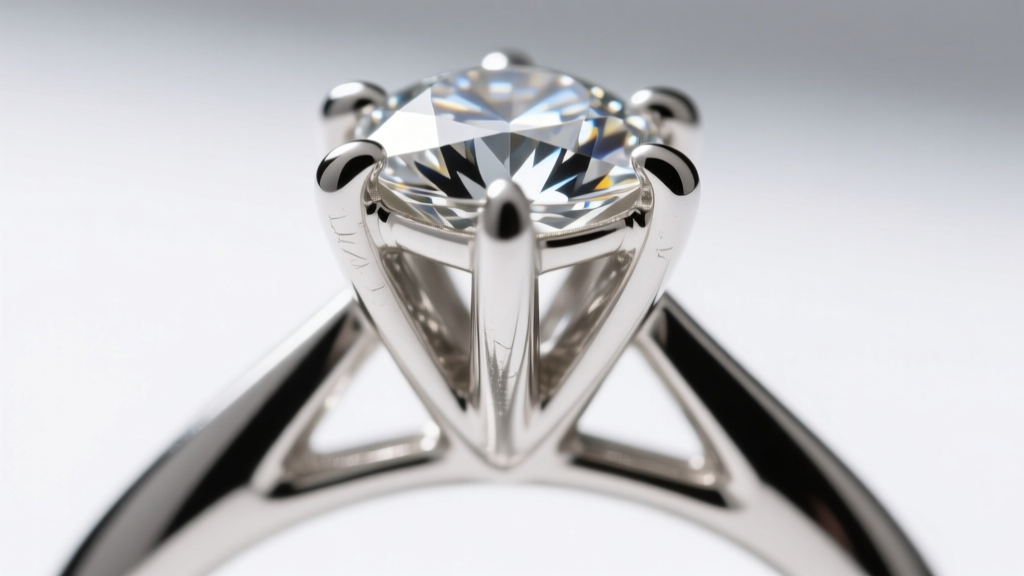
| Setting Type | Prong Count | Point Protection | Light Return | Best Application |
|---|---|---|---|---|
| Standard Prong | 5-Prong (with V-Tip) | High | Excellent | Classic solitaires maximizing brilliance and visibility |
| Full Bezel | 0 (Metal Rim) | Maximum | Good (Reduced) | Active lifestyles, modern minimalist aesthetics, snag-free wear |
| Floating Halo | 5-Prong + Pavé Halo | High | Very Good | Maximizing perceived carat weight and overall pendant footprint |
The Critical V-Prong
Never purchase a teardrop diamond necklace with a standard rounded prong over the pointed tip. The V-prong is a specialized setting technique where the metal is shaped into a 'V' to wrap securely around the acute angle of the point. This distributes impact force evenly and prevents the diamond from cleaving along its natural crystalline grain if the pendant is accidentally struck against a hard surface. For the rounded belly and shoulders, standard rounded prongs are perfectly adequate and allow maximum light entry.
Chain Mechanics: Gauge, Style, and Bail Integration
A 2-carat pear diamond weighs approximately 0.4 grams. While this sounds lightweight, the dynamic force exerted on the chain and bail during daily wear—especially the pendulum-like swinging of a heavy pendant—requires robust metallurgy to prevent catastrophic failure.
- Bail Types: The hidden bail (soldered directly to the back of the setting) offers a seamless, modern look, allowing the diamond to appear as though it is floating directly on the chain. Standard loop bails are more traditional, sit higher on the chest, and allow for easier chain swapping.
- Chain Gauge: For pendants under 1.50 carats, a 0.9mm to 1.1mm chain is sufficient. For 2.00ct to 3.00ct stones, upgrade to a 1.2mm to 1.5mm gauge to prevent tensile fatigue and chain stretching over time.
- Chain Style: Box chains, wheat chains, and Cuban links offer superior structural integrity and tensile strength compared to delicate cable, rope, or snake chains, which are highly prone to kinking and snapping when supporting the concentrated, swinging weight of a pear pendant.
- Clasp Mechanics: Avoid standard spring-ring clasps for heavy pendants. Opt for a lobster clasp or a fold-over safety clasp, which provide a much higher threshold for accidental unclasping.
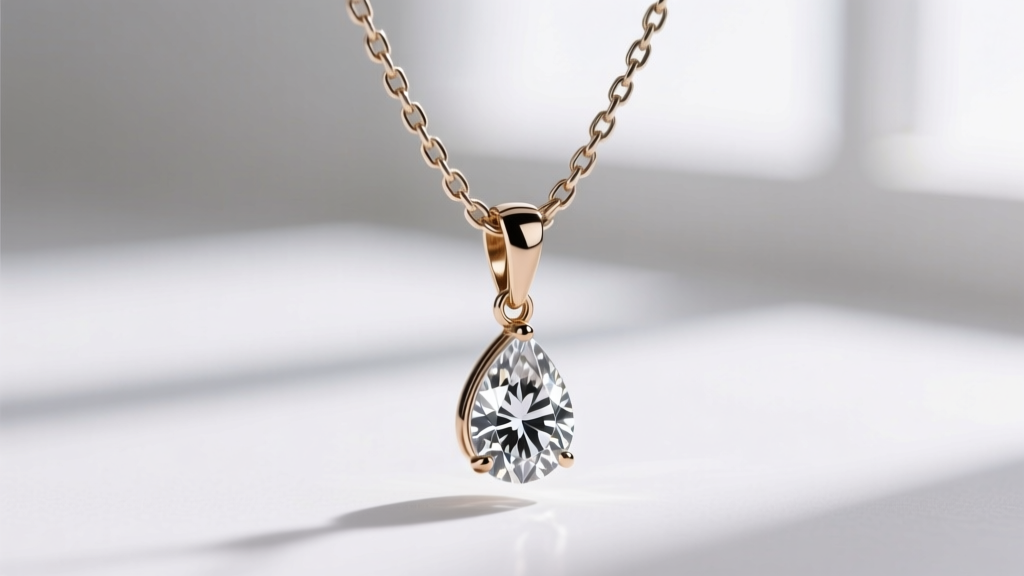
Fluorescence and Color Grading in Pear Shapes
Pear diamonds retain more body color at their pointed tip due to the extreme depth of the pavilion facets in that specific area. Therefore, color grading requires a stricter approach than round brilliants. We recommend a minimum color grade of H (Near Colorless) for white gold or platinum settings, and G or higher for yellow gold, to ensure the tip does not appear noticeably yellow or brownish. Furthermore, according to GIA's research on diamond fluorescence, a Faint to Medium blue fluorescence can actually benefit an H or I color pear diamond by masking warmth and making the stone face up whiter in UV-rich environments like natural sunlight. However, avoid 'Strong' or 'Very Strong' fluorescence unless you have physically inspected the stone, as it can cause a milky or oily appearance in certain lighting conditions.
Pricing Tiers and the 4Cs in Pear Shapes
Because the pear shape yields less from the rough diamond crystal than a round brilliant, they are generally priced 10% to 25% lower per carat than their round counterparts of the same quality. However, the demand for high-clarity, well-proportioned pear shapes has surged. Below are estimated market pricing tiers for a teardrop diamond necklace pendant (excluding the chain and setting costs) based on current wholesale metrics:
| Carat Weight | Color Grade | Clarity Grade | Estimated Price Range (USD) |
|---|---|---|---|
| 1.00ct - 1.20ct | G - H | VS2 - SI1 | $4,500 - $7,200 |
| 1.50ct - 1.80ct | F - G | VS1 - VS2 | $9,000 - $15,500 |
| 2.00ct - 2.50ct | D - F | VVS2 - VS1 | $22,000 - $38,000 |
Final Verification Checklist
Before finalizing your acquisition of a teardrop diamond necklace, demand the following technical validations from your jeweler to ensure you are receiving a structurally sound and optically superior gemstone:
- Advanced Light Performance Imaging: Request ASET or Idealscope imagery to verify light return and quantify the severity of the bow-tie effect. Do not rely on standard studio photography, which is heavily edited to hide dark zones.
- High-Resolution 360-Degree Video: Inspect the symmetry of the shoulders and wings. The curves on the left and right sides of the pear must be perfect mirror images.
- Reputable Grading Report: Insist on a GIA or AGS grading report. Avoid uncertified stones or in-house appraisals, which frequently inflate color and clarity grades by one or two tiers.
- Setting Inspection: Verify under 10x magnification that the V-prong is fully flush against the diamond's tip, with no gaps where debris can accumulate or the stone can shift.
For further technical validation and to cross-reference your stone's specific measurements against industry averages, consult the Blue Nile Pear Shaped Diamond Education portal. Armed with these gemological specifications, you can confidently select a teardrop diamond necklace that offers both breathtaking beauty and enduring structural integrity.


