Teardrop Necklace Gold Pendants: A Technical Buyer's Guide
Explore metallurgy, casting methods, and chain pairings for a teardrop necklace gold pendant. Expert insights on karats, weight, and structural integrity.

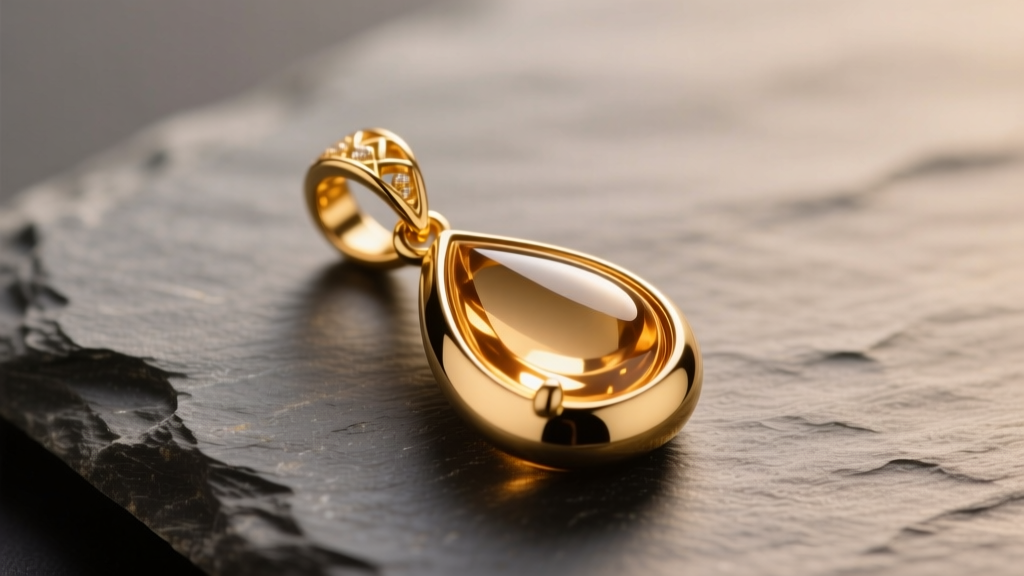
The teardrop silhouette is a masterclass in optical geometry. Its aerodynamic taper creates an illusion of elongation, drawing the eye downward and complementing virtually every neckline. However, when evaluating a teardrop necklace gold buyers often focus exclusively on the aesthetic profile while ignoring the structural engineering required to make the piece endure decades of daily wear. As a domain expert in jewelry manufacturing and metallurgy, I frequently see high-end pendants fail prematurely due to poor bail mechanics, suboptimal alloy selections, or improper chain pairing.
This technical deep dive bypasses the marketing fluff to examine the exact metallurgical properties, casting methodologies, and mechanical stress points of solid gold teardrop pendants. Whether you are sourcing components for a custom bench project or investing in a fine jewelry staple, understanding these specifications is critical.
The Metallurgy of Gold Teardrop Pendants
The structural integrity of a gold teardrop pendant is dictated by its alloy composition. Pure 24k gold is far too malleable for a functional pendant bail, possessing a Vickers Hardness (HV) of merely 25-30. To achieve the necessary durability, gold is alloyed with metals like copper, silver, zinc, and palladium. According to the Gemological Institute of America (GIA), the specific ratio of these alloying metals drastically alters the tensile strength and wear resistance of the final piece.
For a teardrop pendant that will be worn daily, 14k gold (58.5% pure gold) is the mechanical sweet spot. It typically registers between 140 and 160 HV, providing excellent resistance to the friction caused by a moving chain. 18k gold (75% pure gold) offers a richer, warmer hue but drops to roughly 110-130 HV, making the bail more susceptible to thinning over time. 22k gold should be strictly avoided for teardrop pendants unless the bail is reinforced with a platinum or stainless steel sleeve, as its high purity makes it prone to bending and deformation under minor lateral stress.
Casting Techniques and Structural Integrity
The vast majority of gold teardrop pendants on the market are produced via lost-wax investment casting. While this method allows for the seamless integration of the bail and the pendant body, it introduces specific structural vulnerabilities that buyers must inspect. The primary failure mode in cast gold jewelry is gas porosity—microscopic voids trapped within the metal as it cools. If porosity occurs near the bail joint or the tapering tip of the teardrop, it creates a localized weak point that can lead to catastrophic snapping.
Research presented at the Santa Fe Symposium on Jewelry Manufacturing Technology highlights that modern CAD/CAM wax printing and vacuum-assisted casting have significantly reduced shrinkage porosity, but gas porosity remains a risk if the investment flask is not properly burned out or if the gold melt temperature is poorly regulated.
| Manufacturing Method | Porosity Risk | Detail Resolution | Structural Density |
|---|---|---|---|
| Lost-Wax Investment Casting | Moderate (Gas/Shrinkage) | High | Solid, but prone to micro-voids |
| Die Striking | Negligible | Moderate | Extremely High (Work-hardened) |
| Electroforming | Low (Surface only) | Exceptional | Hollow (Low structural integrity) |
For maximum durability, seek out die-struck teardrop pendants. The immense hydraulic pressure used in die striking compresses the gold's molecular structure, work-hardening the metal and eliminating internal voids. While die-struck teardrops are less common and usually limited to simpler, unadorned silhouettes, their structural superiority is unmatched.
Chain Pairing: Gauge, Link Style, and Bail Mechanics
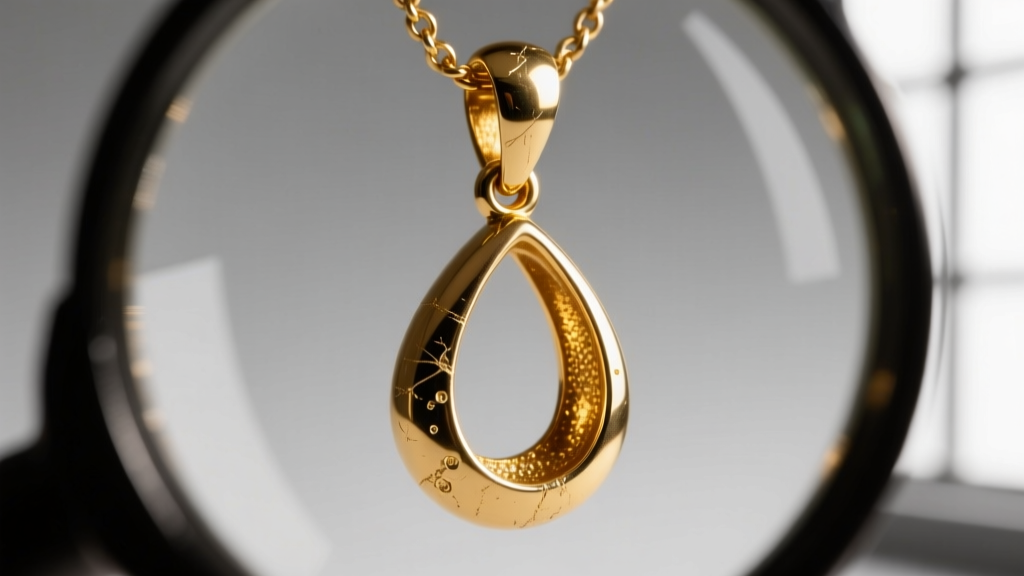
The bail—the loop through which the chain passes—is the most critical mechanical component of any teardrop necklace. Gold pendants act as pendulums, generating continuous kinetic friction against the interior of the bail. A common mistake is pairing a heavy teardrop pendant with a chain that is too thick, which restricts movement and accelerates localized wear, or a chain that is too thin, which acts like a saw blade against the gold.
The 30% Rule: For optimal longevity, the outer diameter of the chain should be at least 20% to 30% smaller than the inner diameter of the pendant bail. This ensures the chain glides freely without binding, distributing friction evenly across the bail's interior surface.
When selecting a chain for your teardrop necklace gold pendant, consider the following technical pairings:
- Cable Chain (1.0mm - 1.5mm): Ideal for lightweight teardrops (under 3 grams). The uniform oval links provide a smooth glide, but the solder points on each link can act as micro-abrasives if the gold alloy is softer than 14k.
- Box Chain (1.2mm - 2.0mm): Excellent for mid-weight pendants. The flat, geometric surfaces of the box links distribute friction over a wider surface area inside the bail, significantly reducing the rate of gold loss due to wear.
- Rope Chain (1.5mm - 3.0mm): Best reserved for heavy, oversized teardrops. The twisted helix structure provides immense tensile strength, but the textured surface can aggressively wear down an 18k or 22k bail if not monitored.
Weight, Dimensions, and Pricing Metrics
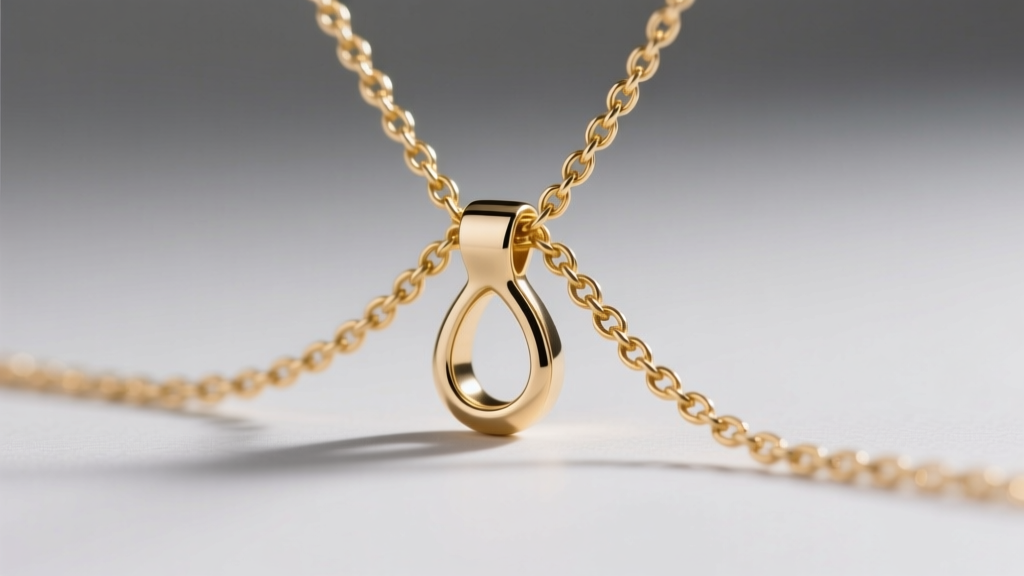
Understanding the relationship between a teardrop's physical dimensions, its gram weight, and its pricing model is essential to avoid overpaying. A standard, solid 14k gold teardrop measuring 15mm in length and 10mm in width will typically weigh between 2.5 and 3.5 grams. If you encounter a pendant of these exact dimensions weighing less than 1.2 grams, it is almost certainly electroformed or hollow-cast.
Electroforming creates a thin shell of gold over a wax or resin core, which is later dissolved. While this technique yields large, lightweight teardrops at a lower price point, they are highly susceptible to denting and cannot be easily repaired by a bench jeweler if crushed. When evaluating pricing, calculate the intrinsic melt value using current spot prices available via the World Gold Council, then assess the craftsmanship premium. For a standard cast teardrop, a retail markup of 2.5x to 4x the melt value is standard industry practice, accounting for CAD design, casting, polishing, and overhead. Premiums exceeding 6x should be justified by exceptional hand-finishing, gemstone integration, or designer provenance.
Maintenance and Failure Mode Troubleshooting
Even the most meticulously engineered teardrop necklace gold pendant requires proactive maintenance. The primary failure mode to monitor is bail thinning. Inspect the interior curve of the bail every 12 to 18 months using a 10x jeweler's loupe. If the metal has worn down by more than 30% of its original thickness, take the piece to a jeweler to have a new bail soldered on or a protective platinum sleeve inserted.
Additionally, be cautious with ultrasonic cleaners and aggressive polishing. The teardrop shape relies on crisp, continuous curves to catch the light. Repeated machine polishing will gradually round the tapering edges and flatten the silhouette, fundamentally altering the pendant's geometry. Instead, use a mild solution of warm water and phosphate-free dish soap, agitating gently with a soft-bristled baby toothbrush to remove sebum and cosmetic buildup without compromising the gold's surface tension or luster.


