Engineering the Perfect Meditation Necklace: Weight & Materials
Discover the technical anatomy of a meditation necklace. We analyze bead density, thermal conductivity, and weight distribution.

The Physics of Grounding: Weight and Proprioception
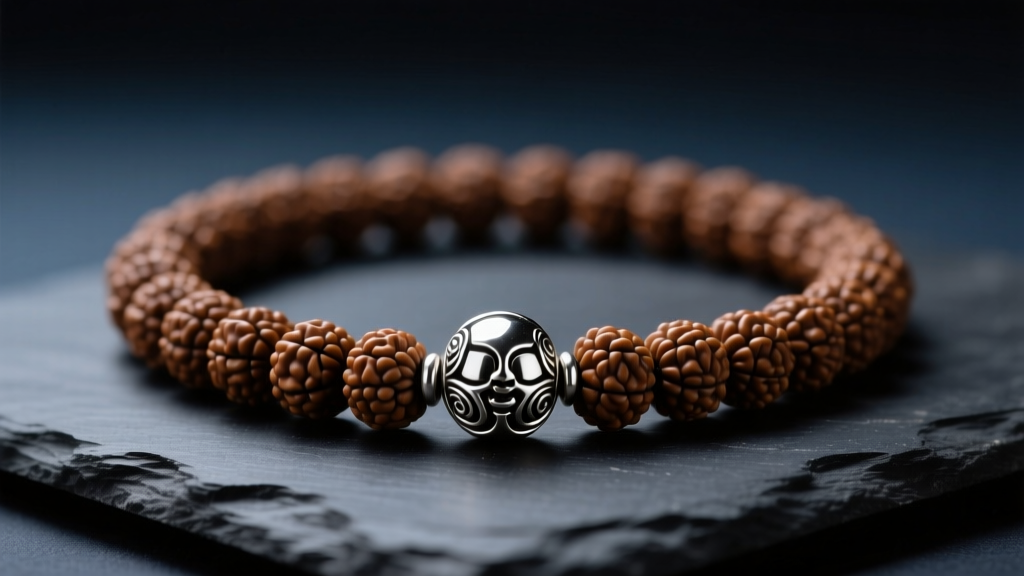
When practitioners seek a meditation necklace, they are often looking for more than just aesthetic appeal; they are seeking a tactile anchor. From a biomechanical perspective, the weight of a necklace directly influences proprioceptive feedback. For deep grounding during Vipassana or transcendental meditation sessions lasting 45 to 90 minutes, the ideal weight range for a meditation necklace falls between 45 grams and 85 grams. Pieces lighter than 30 grams often fail to provide sufficient sensory feedback, causing the mind to wander, while pendants and bead strands exceeding 120 grams can induce cervical spine fatigue and trapezius tension, ultimately disrupting the meditative state.
The distribution of this weight is equally critical. A uniformly beaded 108-count mala distributes mass evenly across the cervical and thoracic regions. In contrast, a single heavy grounding pendant concentrates the load on the lower sternum. According to ergonomic studies referenced by Yoga Journal, maintaining a neutral spine is paramount in seated postures like Padmasana (Lotus) or Sukhasana (Easy Pose). Therefore, understanding the specific gravity and mass distribution of your chosen materials is the first step in engineering a functional meditation tool.
Material Science: Thermal Conductivity and Tactile Feedback
The thermal properties of the beads or pendants in a meditation necklace dictate how the piece interacts with the skin over time. Materials with high thermal conductivity, such as hematite or obsidian, draw heat away from the body, providing a cooling, alerting sensation that is excellent for morning mindfulness practices. Conversely, organic materials like rudraksha seeds, sandalwood, or bodhi seeds act as thermal insulators. They quickly acclimate to the wearer’s body temperature, offering a warm, comforting tactile loop that promotes parasympathetic nervous system activation.
| Material | Specific Gravity (Density) | Thermal Conductivity | Best Use Case |
|---|---|---|---|
| Hematite | 4.9 - 5.3 | High (Cool to touch) | Grounding, heavy deep-pressure feedback |
| Rudraksha | 1.1 - 1.3 | Low (Warms to skin) | Traditional Japa, long-session comfort |
| Sandalwood | 0.9 - 1.1 | Very Low (Insulative) | Aromatherapy synergy, anxiety reduction |
| Black Obsidian | 2.3 - 2.6 | Medium-High (Smooth/Cool) | Focused breathwork, tactile sliding |
As noted by the Gemological Institute of America (GIA), the porosity of organic gems and woods also plays a role in maintenance. Sandalwood and rudraksha absorb sebum and sweat, which over time creates a natural patina but can degrade the structural integrity of the bead if not properly cared for. Synthetic or highly polished stones like lapis lazuli require less biological maintenance but lack the micro-texture that aids in the physical counting of mantra repetitions.
Mala Bead Engineering: Knotting Techniques and Tensile Strength
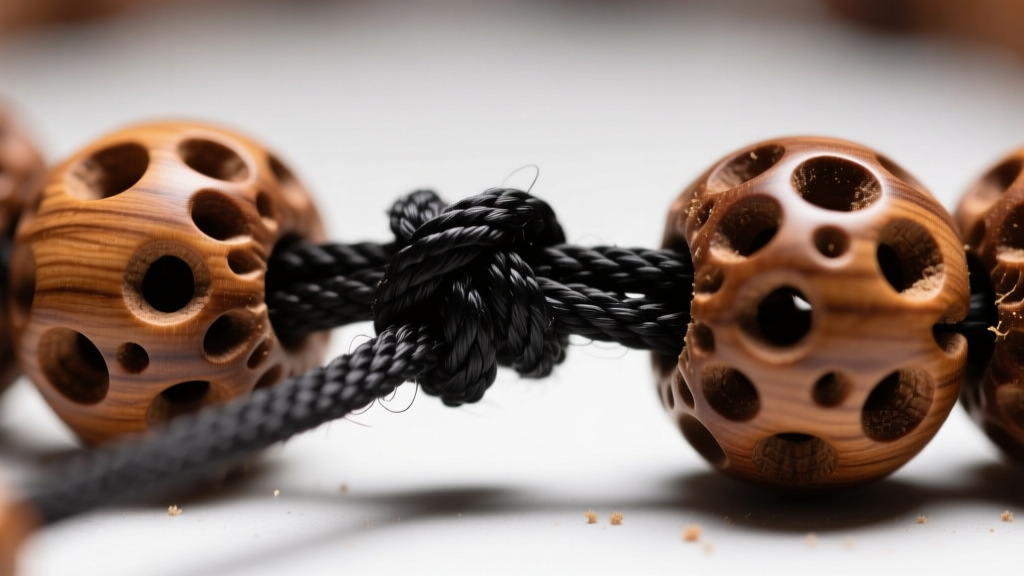
The structural integrity of a beaded meditation necklace relies entirely on the cordage and knotting methodology. Traditional silk thread (Size #18, approximately 1.2mm thick) offers an authentic drape and excellent friction between knots, but it is highly susceptible to moisture degradation and UV rot. For practitioners who wear their malas daily or meditate in humid environments, bonded nylon or polyester cords (0.8mm to 1.0mm) provide superior tensile strength, often exceeding 15 pounds of break strength, while maintaining a flexible drape.
The knotting style also affects the user experience:
- Traditional Silk Knotting (Macrame): Places a distinct overhand or square knot between every single bead. This prevents bead-on-bead friction, preserves the stone’s drill hole, and allows the practitioner to easily find the next bead by touch alone without looking.
- Micro-Macrame Spacing: Uses tiny decorative knots that sit flush against the bead. This creates a more continuous, flexible strand but reduces the tactile gap between beads, making blind counting slightly more difficult.
- Unknotted (Strung) Designs: Beads sit directly against one another. While aesthetically minimalist, this causes rapid wear at the drill holes, particularly in softer materials like turquoise or amber, leading to catastrophic cord failure.
Pendant Acoustics: Singing Bowl and Chime Integrations
For those who prefer a single pendant over a full 108-bead strand, acoustic resonance is a vital technical specification. Miniature singing bowl pendants and integrated chime beads are typically forged from Panchaloha, a traditional five-metal alloy comprising gold, silver, copper, zinc, and iron (or lead in historical contexts). The exact metallurgical ratios determine the pendant’s resonant frequency.
A precisely tuned meditation necklace pendant will resonate at either 432 Hz (often associated with natural harmonic tuning and deep relaxation) or 528 Hz (linked in sound therapy to cellular repair and clarity). When selecting an acoustic pendant, strike it lightly with a suede-wrapped mallet. A high-quality alloy will produce a sustained, oscillating sine wave with minimal dissonant overtones, whereas cheap stamped brass will emit a dull, rapidly decaying clank that offers no auditory anchoring value.
Ergonomic Sizing: Drop Lengths for Seated Postures
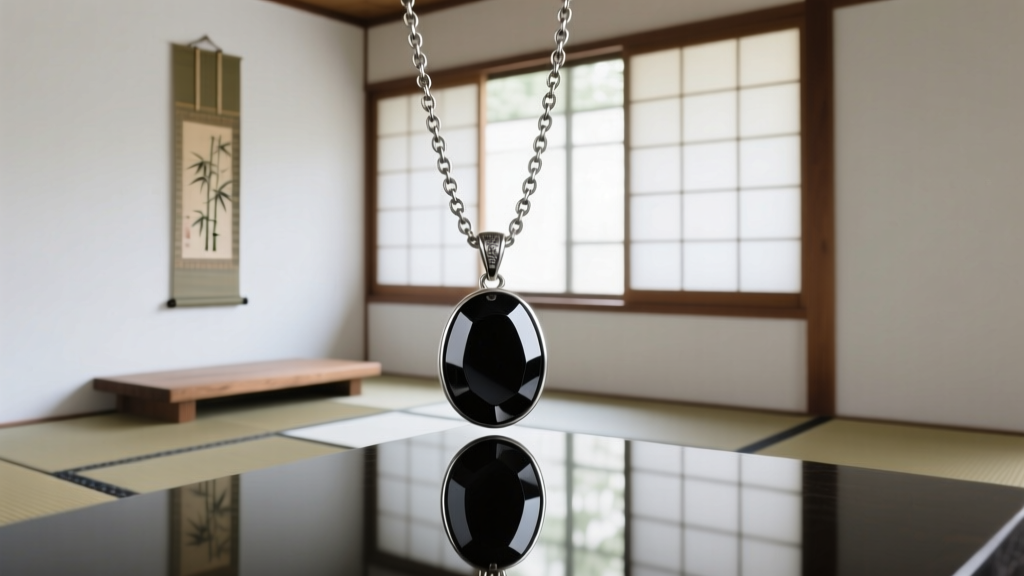
A common failure in commercial jewelry design is sizing a meditation necklace based on a standing mannequin. When a practitioner transitions from standing to a seated cross-legged posture, the torso compresses, and the angle of the sternum shifts. A standard 24-inch necklace that rests perfectly at the solar plexus while standing will often bunch up uncomfortably near the collarbone when seated in lotus position.
For dedicated meditation jewelry, the optimal drop length ranges from 28 inches to 34 inches. A 30-inch drop ensures that the guru bead (the 109th marker bead) or the central pendant rests precisely at the lower sternum or upper abdomen when the spine is fully erect in a seated pose. This placement aligns with the Manipura (solar plexus) chakra in traditional anatomy, providing a physical point of focus for diaphragmatic breathing exercises. Furthermore, longer drops prevent the necklace from pulling against the back of the neck during forward-folding pranayama techniques.
Failure Modes and Troubleshooting
Even the most meticulously crafted meditation necklace will experience wear. Understanding common failure modes allows practitioners to perform preventative maintenance:
- Guru Bead Fraying: The hole through the guru bead is typically drilled at a 90-degree angle (a T-drill). Sharp edges inside the stone or wood can saw through the cord over time. Solution: Use a diamond-tipped bead reamer to smooth the interior of the drill hole, or insert a microscopic metal eyelet to protect the cord.
- Elastic Degradation: Stretch-cord malas are convenient for slipping over the head but are highly prone to sudden snapping due to the oxidation of the elastane core from skin oils. Solution: Avoid elastic entirely for daily practice; opt for a fixed-length cord with a secure macrame sliding clasp.
- Stone Chipping: Materials with a Mohs hardness below 4 (such as fluorite or selenite) will chip at the drill holes if the beads are allowed to strike each other forcefully during active Japa counting. Solution: Ensure tight, flush knotting or reserve softer stones strictly for stationary pendant use rather than active counting malas.
By prioritizing biomechanical weight, thermal material properties, and structural cord engineering, you can select or design a meditation necklace that functions not merely as an accessory, but as a precision instrument for cognitive and spiritual anchoring. For more insights on mindful material selection, resources from Mindful.org frequently explore the intersection of physical tools and mental clarity, reinforcing that the objects we hold and wear deeply influence our internal states.


