Gold Necklace Styles: A Technical Guide to Chain Link Durability
Explore the structural engineering behind popular gold necklace styles. Compare tensile strength, karat durability, and link welding for everyday wear.

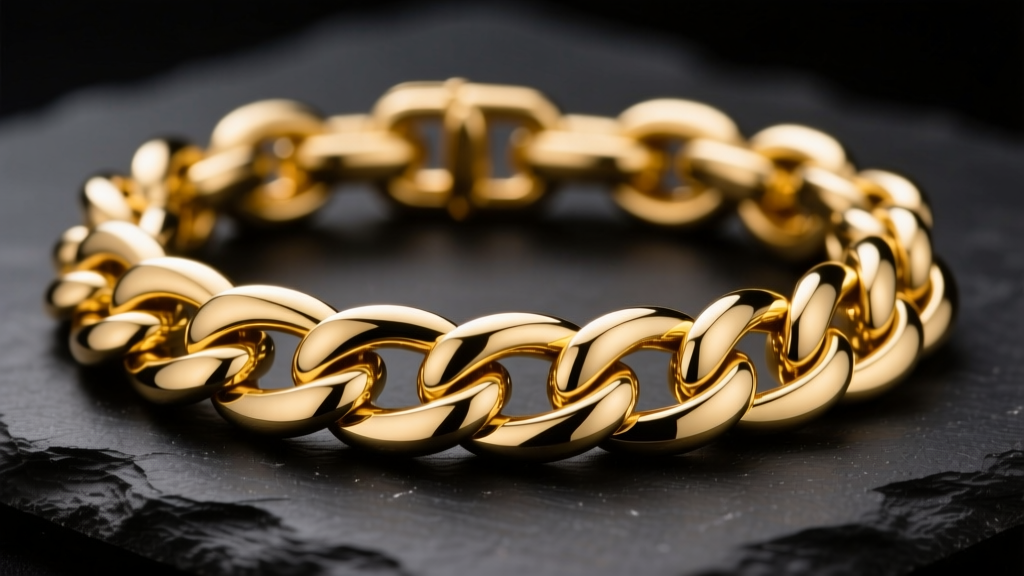
Most consumers evaluate gold necklace styles purely on visual aesthetics, focusing on shine, link pattern, and how the metal complements their wardrobe. However, from a metallurgical and structural engineering perspective, a chain necklace is a complex assembly of micro-engineered metal links subjected to continuous tensile stress, torsional twisting, and environmental degradation. As we move through 2026, advancements in laser welding and alloy formulations have shifted the baseline for what constitutes a 'durable' chain, yet the fundamental physics of gold jewelry remain unchanged.
This expert deep dive bypasses basic fashion advice to explore the structural integrity, metallurgical properties, and mechanical failure points of the most popular gold necklace styles on the market. Whether you are selecting a chain for a heavy diamond pendant or an active lifestyle, understanding the engineering behind the links is critical for long-term wearability.
The Metallurgy of Gold Necklace Styles: Karat vs. Tensile Strength
The durability of any gold chain begins at the atomic level. Pure 24-karat gold is exceptionally malleable, registering a mere 25 on the Vickers Hardness (HV) scale. At this purity, a chain will stretch, warp, and eventually snap under the weight of even a modest pendant. To create functional jewelry, gold is alloyed with secondary metals, fundamentally altering its crystalline structure and tensile strength.
- 18k Gold (75% Pure): Typically alloyed with copper and silver. It registers between 120-130 HV. It offers a rich, saturated yellow hue but remains susceptible to gradual link stretching over years of continuous wear. According to the Gemological Institute of America (GIA), the specific ratio of silver to copper in 18k alloys dictates not just the color, but the metal's work-hardening capabilities during the wire-drawing process.
- 14k Gold (58.3% Pure): The industry standard for structural durability in the US market. Registering between 140-160 HV, 14k gold provides optimal resistance to tensile deformation. The higher presence of alloy metals like zinc and nickel (or palladium in white gold) creates a denser crystalline lattice, making 14k chains significantly more resistant to the micro-abrasions that occur between interlocking links.
Expert Insight: When evaluating white gold necklace styles, always verify if the alloy uses nickel or palladium. Nickel-based 14k white gold is structurally harder and more resistant to link wear than palladium-based alloys, though it requires rhodium plating to mask its natural yellowish-gray undertone.
Structural Analysis of Core Chain Links
The geometry of the link dictates how force is distributed across the chain. A chain is only as strong as its weakest soldered seam or interlocking friction point. Below is a technical comparison of the most prevalent gold necklace styles, assuming a standard 2mm width in solid 14k gold.
| Chain Style | Link Geometry | Tensile Vulnerability | Snag Factor | Max Safe Pendant Load |
|---|---|---|---|---|
| Cable | Uniform round/oval links | High (single solder point per link) | Moderate | 3-5 grams |
| Curb / Cuban | Flattened, interlocking ovals | Low (wide surface area, multi-point friction) | Very Low | 15-25+ grams |
| Box | Square, hollow or semi-solid cubes | Moderate (prone to corner crushing) | Low | 5-10 grams |
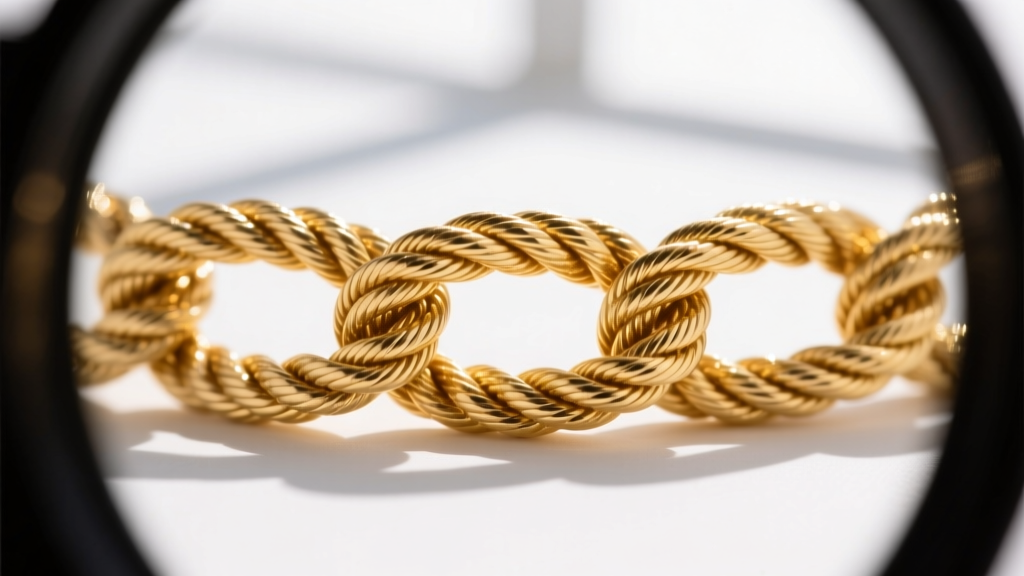
| Rope | Twisted, braided oval links | Low (torsional strength is high) | High (traps debris/oils) | 10-15 grams |
| Wheat | Woven, directional oval links | Very Low (woven structure distributes load) | Low | 12-18 grams |
The Physics of the Curb Link
The Curb (and its heavier variant, the Cuban) chain is structurally superior for heavy pendants. Because the links are flattened and interlock in a continuous, flush plane, the tensile load is distributed across the broad face of the adjacent links rather than concentrating on a single soldered seam. This geometry virtually eliminates the 'pull-through' failure mode common in standard cable chains.
Manufacturing Methods: Solid vs. Electroformed
When shopping for gold necklace styles, the term 'solid gold' can be deceptive if you do not understand the manufacturing method. The structural integrity of a chain is heavily dictated by how the wire is formed.
Traditional Solid Wire Drawing
High-quality chains are made from solid gold alloy wire that is drawn through progressively smaller tungsten carbide dies. This process, known as work-hardening, compresses the metal's grain structure, increasing its tensile strength before it is even cut and linked.
Electroforming (Hollow Chains)
Many lightweight, voluminous gold chains on the market are electroformed. This process involves 3D printing or molding a wax mandrel in the shape of the chain, submerging it in an electroplating bath to deposit a microscopic layer of gold (usually 0.1mm to 0.2mm thick), and then melting the wax core out. While electroformed chains offer a massive visual footprint for a low gold weight, they possess virtually zero crush resistance. A simple accidental impact against a hard surface can permanently dent an electroformed box or curb link, rendering it impossible to repair. The World Gold Council notes that electroformed jewelry requires specialized care and is entirely unsuitable for suspending pendants.
Welding Techniques and Failure Points
Every closed link on a chain requires a weld or solder joint. Historically, chains were assembled using traditional torch soldering, which introduces a secondary, lower-melting-point solder metal into the joint. This creates a galvanic weak point where the solder can corrode or wear away faster than the surrounding gold alloy.
In modern 2026 manufacturing, premium gold necklace styles utilize pulsed laser welding. Laser welding fuses the exact same karat of gold to itself without introducing foreign solder metals. The localized heat-affected zone (HAZ) is microscopic, meaning the surrounding wire retains its work-hardened tensile strength. When inspecting a high-end chain under a 10x jeweler's loupe, a laser-welded seam will appear as a nearly invisible, flush fusion line, whereas a traditional soldered joint will often show a slight color variation or microscopic pitting.
Clasp Mechanics and Load-Bearing Thresholds
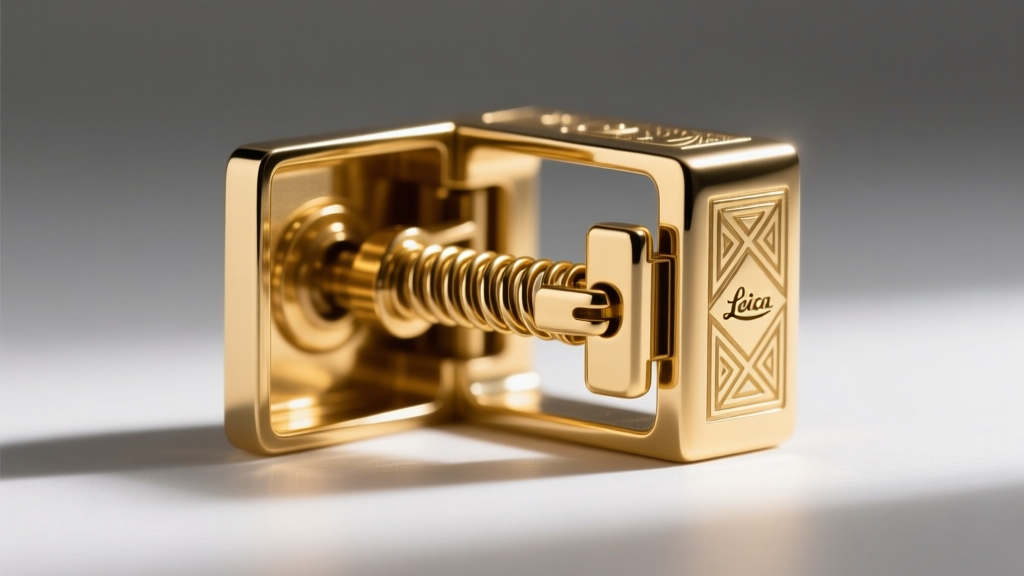
The clasp is universally the most common point of catastrophic failure in any necklace assembly. Matching the clasp mechanics to the chain's weight and the pendant's load is non-negotiable for structural security.
- Spring Ring Clasps: Operate via an internal coil spring. They are rated for very light loads (under 3 grams). The primary failure mode is spring fatigue or the accumulation of skin oils and dust inside the mechanism, preventing the gate from closing flush.
- Lobster Clasps: Feature a heavier, lever-actuated gate. A standard 12mm lobster clasp can safely support up to 10-15 grams. However, the cast lever arm can bend if subjected to lateral torque.
- Box Clasps with Safety Catches: The gold standard for heavy Cuban, Figaro, and thick Rope chains. The primary mechanism relies on a folded 'tongue' of spring-tempered gold that compresses and snaps into a square receiver box. When paired with a secondary figure-eight safety wire, a well-machined box clasp can support loads exceeding 50 grams without mechanical slippage.
The Pendant-to-Chain Weight Ratio Framework
To ensure the longevity of your gold necklace styles, adopt the structural engineering principle of the Load Ratio Framework. As a strict rule, the total gram weight of the chain should be at least three times (3x) the weight of the pendant it carries. For individuals with active lifestyles or those wearing chains that are subject to sudden kinetic shocks (e.g., swinging during movement), increase this ratio to five times (5x).
For example, if you are suspending a solid 18k gold diamond pendant weighing 8 grams, your chain must weigh a minimum of 24 grams to prevent accelerated micro-fracturing at the bail and the clasp jump rings. By prioritizing metallurgical density, advanced laser welding, and proper load-bearing mechanics over mere visual trends, you can curate a collection of gold necklaces that will structurally endure for generations.


