What The Necklace Characters Teach Us About Real vs. Paste Jewelry
Discover what the necklace characters from Maupassant's classic tale teach us about gemology, spotting paste simulants, and building real value.

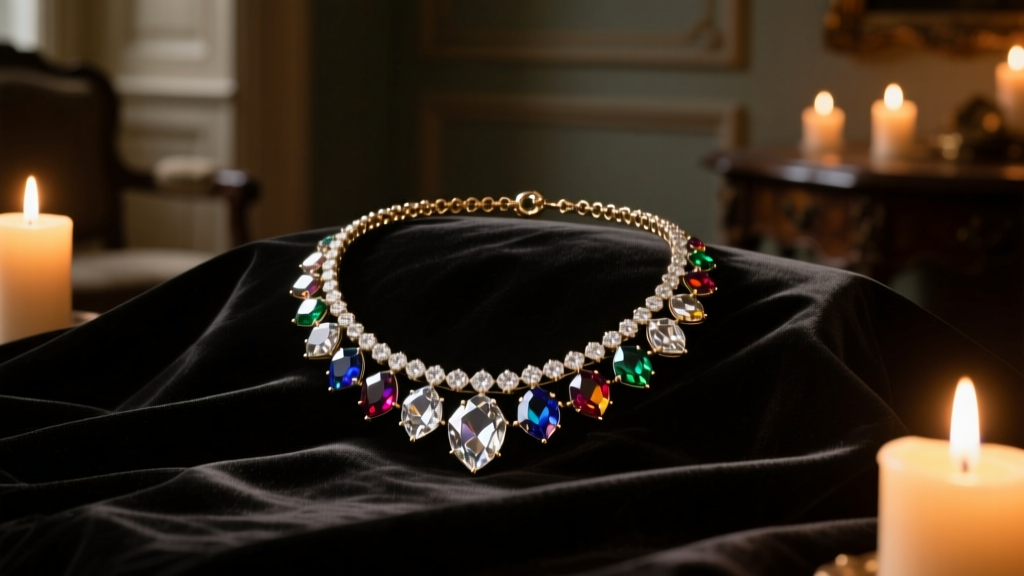
The Literary Origins: Who Are The Necklace Characters?
In Guy de Maupassant’s iconic 1884 short story The Necklace (La Parure), the protagonist Mathilde Loisel borrows what she believes to be a breathtaking diamond necklace from her wealthy friend, Madame Forestier. After losing it, Mathilde and her husband spend ten grueling years in poverty to replace it with a real diamond equivalent, only to discover the original was 'paste'—a worthless fake. When modern jewelry enthusiasts analyze the necklace characters, they aren't just looking at a tragic literary plot; they are looking at a masterclass in gemological valuation, the illusion of status, and the critical importance of understanding what you are actually wearing around your neck.
As a beginner navigating the vast world of necklaces, pendants, and chain layering in 2026, the line between 'real' and 'fake' has never been more complex. With the rise of lab-grown diamonds, advanced moissanite, and high-quality cubic zirconia, understanding the science of simulants is essential. Let’s break down the gemology of Madame Forestier’s necklace and explore how to build an authentic, debt-free jewelry wardrobe today.
The Gemology of 'Paste': What Was Madame Forestier's Necklace?
In the late 19th century, 'paste' did not mean plastic or cheap resin. It referred to leaded glass, often called strass, named after Georges Frédéric Strass, a Parisian jeweler who pioneered the technique in the 1700s. By adding lead oxide to glass, jewelers increased its refractive index (RI) and density, allowing it to mimic the sparkle of a diamond when cut and polished.
However, from a gemological standpoint, paste fails spectacularly when compared to a natural diamond. According to the Gemological Institute of America (GIA), a diamond's optical and physical properties are virtually impossible to replicate perfectly with glass.

Key Gemological Differences
- Refractive Index (RI): A natural diamond has an RI of 2.42, giving it its signature 'brilliance' and 'fire'. Leaded glass paste maxes out at an RI of about 1.70 to 1.90. It simply cannot bend light with the same aggressive, rainbow-scattering intensity.
- Mohs Hardness Scale: Diamond sits at a perfect 10. Leaded glass sits at a fragile 5.5. This means that if Mathilde had worn the paste necklace every day, the facet junctions (the sharp edges where the cuts meet) would have quickly become rounded, scratched, and dull from contact with dust and clothing.
- Inclusions vs. Bubbles: Under a 10x jeweler's loupe, natural diamonds show crystalline inclusions (like tiny feathers or mineral crystals). Paste glass, being molded or cast, often contains perfectly spherical air bubbles—a dead giveaway for any trained gemologist.
Modern Simulants: How The Necklace Characters Would Fare in 2026
If Mathilde Loisel lost a necklace today, the financial stakes would look vastly different. The modern jewelry market offers a spectrum of diamond alternatives that range from cheap simulants to chemically identical lab-grown stones. If you are shopping for a diamond pendant or a layered chain stack, you must understand where your stone falls on this spectrum.
| Material | Refractive Index (RI) | Mohs Hardness | Avg. Price (1ct / 2026) |
|---|---|---|---|
| Natural Diamond | 2.42 | 10 | $4,500 - $8,000+ |
| Lab-Grown Diamond | 2.42 | 10 | $600 - $1,200 |
| Moissanite | 2.65 - 2.69 | 9.25 | $300 - $600 |
| Cubic Zirconia (CZ) | 2.15 - 2.18 | 8.0 - 8.5 | $10 - $30 |
| Leaded Glass (Paste) | 1.70 - 1.90 | 5.5 | Historical / Antique Value |
Note: Moissanite actually has a higher RI and 'fire' (dispersion) than a diamond, which gives it a distinct, hyper-sparkly 'disco ball' effect that gemologists use to identify it.
A Beginner’s Toolkit: Spotting Real vs. Fake Diamonds
You don't need to spend a decade in poverty to figure out if your pendant is authentic. Here are three beginner-friendly, non-destructive tests you can perform at home or at a jewelry counter:
- The Fog Test: Breathe on the stone like you would fog up a mirror. Because diamonds are incredibly efficient heat conductors, the fog will dissipate almost instantly (within 1-2 seconds). On glass, CZ, or moissanite, the fog will linger for several seconds.
- The Loupe Test: Purchase a basic 10x triplet loupe. Look closely at the girdle (the outer edge) and the facet junctions. If the edges look chipped, rounded, or 'melted', you are likely looking at glass or CZ. Diamonds maintain razor-sharp facet junctions due to their extreme hardness.
- Thermal Conductivity Testers: For under $30, you can buy a handheld diamond tester. These devices measure how fast heat moves through the stone. *Warning:* Standard thermal testers will identify Moissanite as a diamond because both are highly thermally conductive. For definitive answers, a combined thermal/electrical conductivity tester is required.
Building an Authentic Pendant Wardrobe (Without the Ruin)
Mathilde’s fatal flaw wasn't her desire for beauty; it was her willingness to go into debt for the appearance of wealth. The Victoria and Albert Museum's historical jewelry archives remind us that paste jewelry was originally created for the aristocracy to wear while traveling, so they wouldn't be robbed of their real gems. There is no shame in wearing simulants if you are transparent about them. The danger lies in deception and financial overextension.
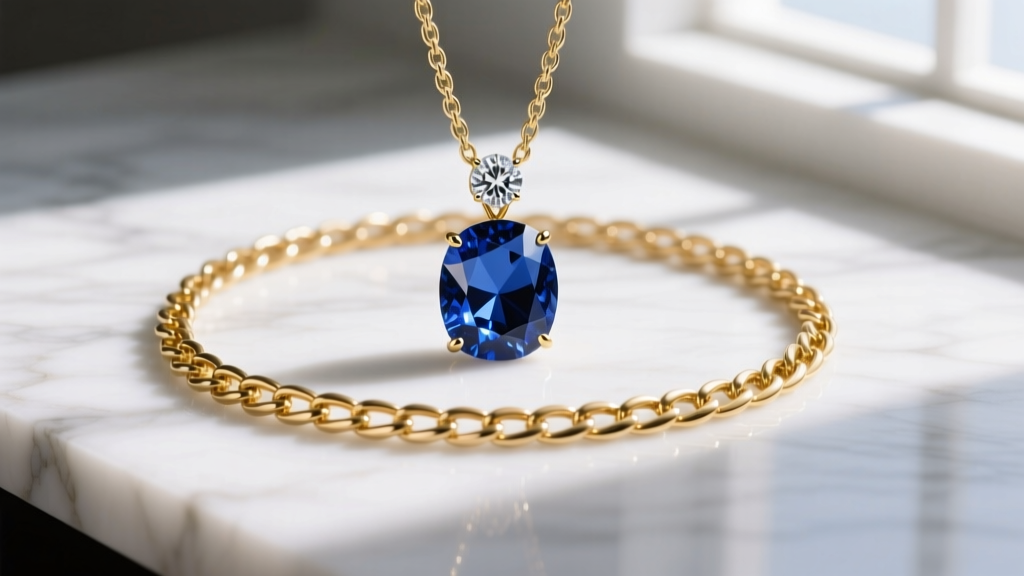
The Semi-Precious Alternative: Real Gems on a Budget
If you want the prestige of wearing 100% natural, earth-mined gemstones without the diamond price tag, look to semi-precious pendants. These stones offer incredible clarity, rich colors, and authentic gemological value:
- London Blue Topaz: With a Mohs hardness of 8, it is highly durable for everyday pendant wear. Its deep, inky blue color offers a striking alternative to blue diamonds, typically costing under $150 for a high-quality, multi-carat pendant.
- Tsavorite Garnet: A vibrant, untreated green gemstone that rivals emerald in color but lacks the heavy inclusions and brittleness. It is a favorite among high-end bespoke jewelers for accent stones and statement pendants.
- Amethyst & Citrine: Both sit at a 7 on the Mohs scale. While slightly softer and requiring care to avoid scratching, they offer massive, flawless crystals for under $100, perfect for bold, vintage-inspired lockets and pendants.
Invest in the Chain, Not Just the Stone
A common beginner mistake is pairing a beautiful pendant with a cheap, gold-plated brass chain. Plated chains will inevitably tarnish, flake, and cause skin irritation. To build a lasting jewelry wardrobe, allocate your budget toward solid metals. A 14k or 18k solid gold cable or box chain will last a lifetime and can be passed down as an heirloom. You can always swap out the pendants, layering a simple lab-grown diamond solitaire with a vintage semi-precious locket, but the foundational chain should always be authentic.
'How strange life is, and how full of surprises! How little it takes to ruin you or save you.' — Guy de Maupassant, The Necklace
Ultimately, the necklace characters teach us that true style isn't about the price tag or the illusion of status. It is about understanding the materials you wear, appreciating the science of gemology, and curating a collection that reflects your personal truth. Whether you choose a flawless lab-grown diamond, a vibrant natural topaz, or a beautifully crafted vintage paste replica, wear it with confidence—and always know exactly what is resting against your collarbone.


