Expert Care and Cleaning for Your Italian Necklace Horn
Discover expert cleaning and maintenance tips for your Italian necklace horn. Learn how to safely polish gold, silver, and delicate red coral cornicellos.

The Enduring Legacy of the Cornicello
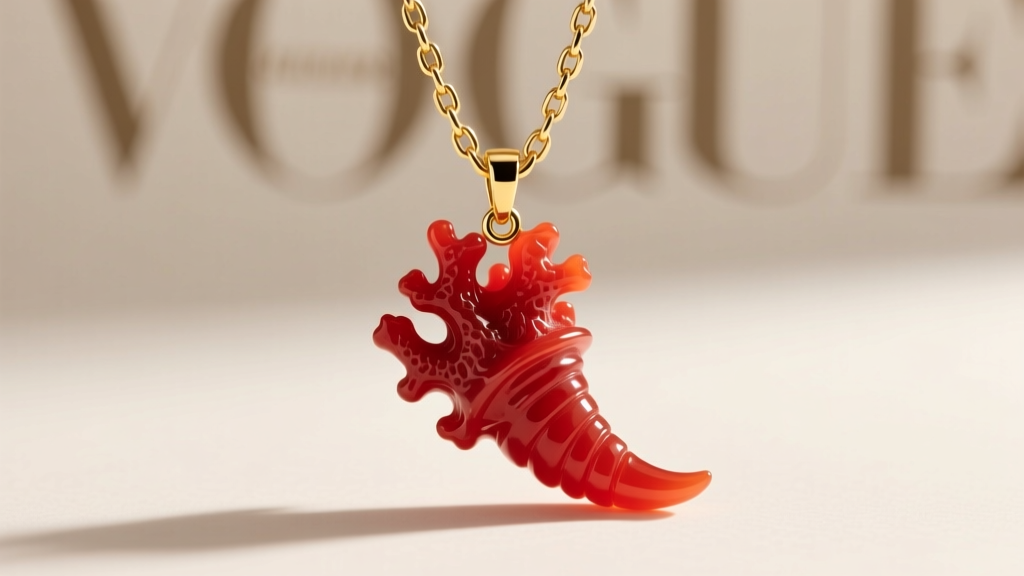
The cornicello, widely recognized as the Italian necklace horn, is far more than a simple fashion accessory. Rooted deeply in Mediterranean folklore, this twisted, chili-pepper-shaped amulet is worn to ward off the malocchio (evil eye) and attract good fortune. However, because these pendants are crafted from a diverse array of organic and inorganic materials—ranging from porous red coral to precious metals—they require highly specific maintenance routines. Treating a delicate coral horn with the same harsh chemicals used for a solid silver chain can result in irreversible damage. In this comprehensive guide, we break down the exact material science and step-by-step cleaning protocols required to preserve both the physical integrity and the symbolic luck of your Italian necklace horn.
Understanding Your Material Composition
Before applying any cleaning solution, you must accurately identify the materials of your pendant and chain. The Italian necklace horn is traditionally crafted from three primary materials, each with distinct vulnerabilities.
Red Coral (Corallium Rubrum)
Authentic Italian horns are often carved from Mediterranean red coral. Coral is an organic gemstone composed primarily of calcium carbonate, registering a mere 3.5 to 4 on the Mohs hardness scale. According to the Gemological Institute of America (GIA), calcium carbonate is highly reactive to acids. This means that even mildly acidic substances like lemon juice, vinegar, or human sweat can etch the surface of the coral, leaving it dull, pitted, and stripped of its natural luster. Furthermore, coral is inherently porous; it will absorb harsh chemicals, lotions, and perfumes, which can cause permanent discoloration.
Precious Metals: 18k Gold vs. Sterling Silver
The metal casing or chain of your Italian necklace horn dictates another layer of care. 18k yellow gold (75% pure gold) is a popular choice for high-end cornicellos. While gold does not tarnish, its high purity makes it relatively soft and prone to micro-scratches if polished with abrasive cloths. Sterling silver (92.5% silver), on the other hand, is highly susceptible to tarnishing when exposed to hydrogen sulfide in the atmosphere. Silver requires regular polishing, but you must be exceptionally careful not to let liquid silver dips or tarnish removers touch any coral or horn inlays.
Carved Horn, Bone, and Resin
For more accessible or traditional pieces, the Italian necklace horn may be carved from actual animal horn, bone, or modern synthetic resins. Organic horn and bone are highly sensitive to extreme temperature fluctuations and prolonged moisture, which can cause warping, cracking, or splintering. Resin is more durable but can become cloudy if exposed to alcohol-based cleaners or prolonged UV light.
Step-by-Step Cleaning Protocols by Material
To safely clean your amulet, you must tailor your approach to the specific material. The International Gem Society strongly advises against using ultrasonic or steam cleaners on any organic gems. Below is the safest manual cleaning methodology.
The Universal Mild Soap Method
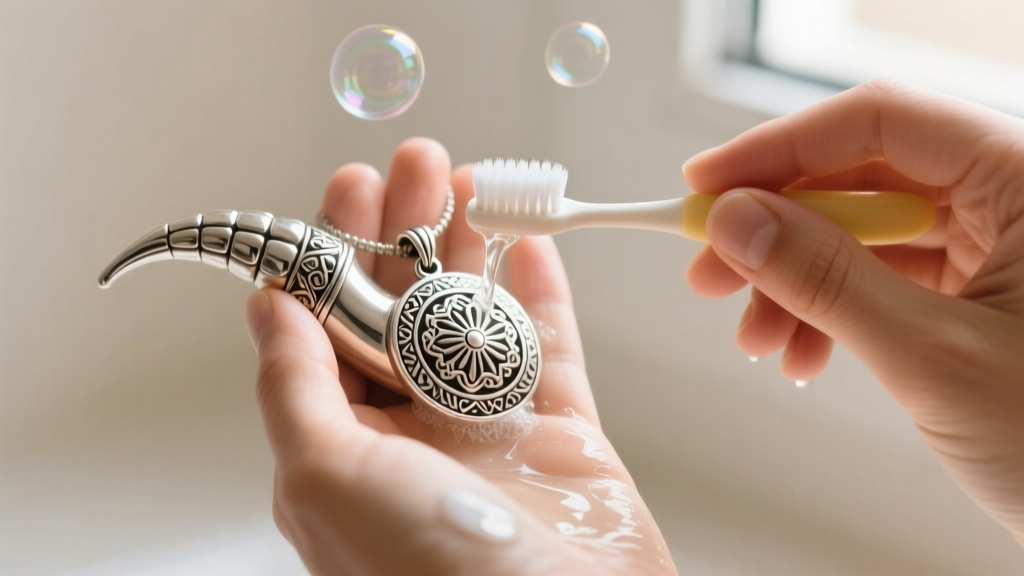
- Prepare the Solution: Mix one cup of lukewarm (never hot) distilled water with two drops of a pH-neutral, phosphate-free dish soap (such as original Dawn).
- Targeted Application: Dip a soft-bristled baby toothbrush into the solution. Gently tap the brush on a paper towel to remove excess moisture. You want the brush damp, not dripping.
- Scrubbing Technique: Lightly brush the surface of the Italian necklace horn, following the natural downward twist of the carving. Do not apply heavy pressure, especially on coral or bone.
- Rinsing: Quickly pass the pendant under a gentle stream of cool distilled water for no more than three seconds. Prolonged water exposure weakens the silk or cotton threads often used to bind coral to metal bails.
- Drying: Immediately pat the piece completely dry with a lint-free microfiber cloth. Allow it to air dry fully in a well-ventilated area before storing.
Cleaning Agents & Safety Matrix
Use the following reference table to ensure you never apply a destructive agent to your specific Italian necklace horn variant.
| Material | Safe Cleaners | Dangerous Cleaners | Mohs Hardness |
|---|---|---|---|
| Red Coral | Damp microfiber cloth, mild pH-neutral soap | Ultrasonic, steam, silver dip, vinegar, alcohol | 3.5 - 4.0 |
| 18k Yellow Gold | Warm soapy water, jewelry polishing cloth | Bleach, chlorine, abrasive toothpaste | 2.5 - 3.0 (Pure) |
| Sterling Silver | Treated silver cloth (e.g., Sunshine), mild soap | Liquid silver dips (if coral is present), bleach | 2.5 - 3.0 |
| Carved Horn/Bone | Dry soft brush, slightly damp cloth | Soaking in water, alcohol, heat, harsh detergents | 2.5 - 3.5 |
Chain Maintenance: Figaro, Rope, and Curb Links
An Italian necklace horn is rarely worn without its accompanying chain. Italian chain-making is world-renowned, particularly for styles like the Figaro, Rope, and Curb chains. However, the intricate interlocking links of a Rope chain or the alternating patterns of a Figaro chain act as magnets for skin oils, dead skin cells, and environmental dust.
To clean the chain without damaging the pendant, always unclasp the pendant and remove it from the chain before deep cleaning the metal. For solid gold or silver chains, you can safely soak the chain in the mild soapy water solution for up to ten minutes. Agitate the water gently to force the soap through the tiny crevices of the links. Rinse thoroughly with distilled water and hang vertically to dry. Never pull a wet rope chain through a towel, as the loops can snag and stretch the soft precious metal.
Daily Wear and Environmental Hazards
Preventative maintenance is vastly superior to corrective cleaning. To protect your Italian necklace horn, adopt the strict 'Last On, First Off' rule. Your cornicello should be the very last item you put on after applying cosmetics, perfumes, hairsprays, and lotions, and the very first item you take off when returning home.
The Sweat and Acid Factor
Human sweat is naturally acidic, with a pH typically ranging between 4.5 and 7.0. During exercise or hot summer months, this acidity accelerates the degradation of porous coral and the tarnishing of sterling silver. If you sweat while wearing your Italian necklace horn, wipe it down immediately with a dry, soft cloth upon removal. Leaving dried sweat on a coral horn will eventually result in a chalky, irreversible white film on the surface.
Proper Storage Techniques
How you store your amulet when not in use is just as critical as how you clean it. According to guidelines from Jewelers of America, jewelry should be stored in a way that prevents environmental exposure and physical abrasion.
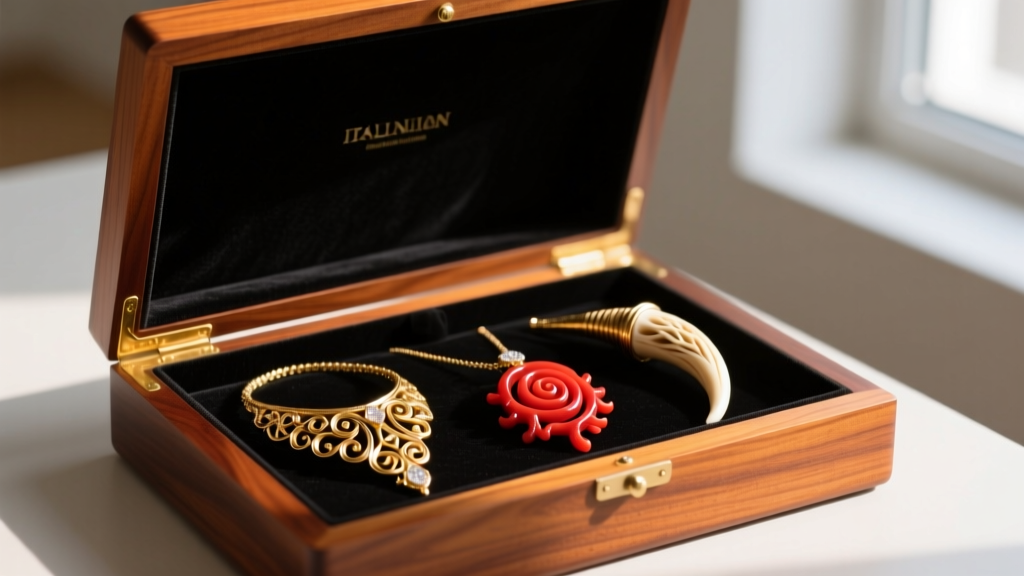
- Isolate the Pendant: Because 18k gold and silver are harder than coral and horn, storing them loose in a drawer will result in the metal scratching the organic gemstone. Always store your Italian necklace horn in a dedicated soft flannel or anti-tarnish pouch.
- Control Humidity: For silver chains and bone or horn pendants, moisture is the enemy. Store the piece in a sealed container with a silica gel packet to absorb ambient humidity and prevent silver sulfide (tarnish) from forming.
- Avoid Direct Sunlight: Prolonged exposure to UV rays can cause the vibrant red hue of Mediterranean coral to fade over time, and can dry out carved horn, leading to structural micro-fractures.
When to Seek Professional Jeweler Intervention
While routine cleaning can be managed at home, certain maintenance tasks require the precision of a professional bench jeweler. You should take your Italian necklace horn to a reputable jeweler if you notice any of the following:
- Loose Bail or Jump Ring: The bail is the metal loop connecting the horn to the chain. Over time, the friction of the chain rubbing against the bail can wear down the metal, risking the loss of the pendant. A jeweler can easily solder and reinforce this connection point.
- Deep Tarnish on Silver: If your sterling silver chain has developed heavy, black oxidation that a polishing cloth cannot remove, a jeweler can use professional-grade electrochemical cleaning methods that are safe for the metal (provided the coral is removed first).
- Coral Pitting or Cracking: If your red coral horn has sustained a physical impact resulting in a chip or crack, do not attempt to glue it yourself. A professional lapidary can assess whether the piece can be stabilized, re-polished, or if the setting needs to be modified to protect the damaged area.
By respecting the unique material properties of your Italian necklace horn and adhering to these targeted cleaning protocols, you ensure that this powerful symbol of luck and heritage remains vibrant, intact, and ready to be passed down through generations.


