Heart Purple Necklace Care: Cleaning & Maintenance Tips
Learn expert cleaning and maintenance tips for your heart purple necklace. Protect amethyst, tanzanite, and enamel pendants from damage and tarnish.

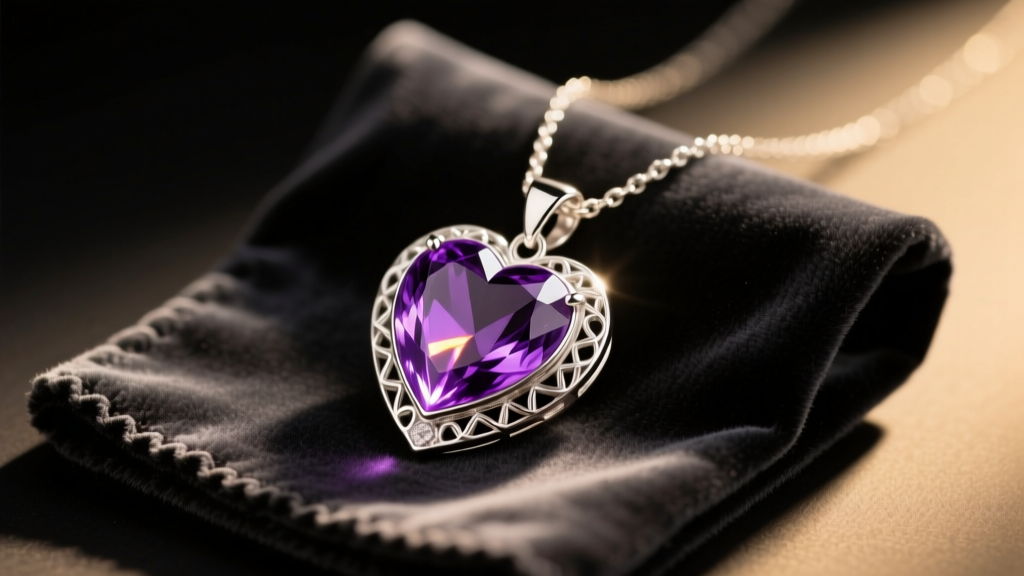
A heart purple necklace is more than just a romantic gesture or a trendy accessory; it is an investment in colored gemstones and delicate metals that require specific, knowledgeable care. Whether your pendant features a deep violet amethyst, a rare tanzanite, a brilliant purple sapphire, or vibrant purple enamel, the maintenance protocols vary drastically based on the material's physical properties. In 2026, with the rise of complex gemstone treatments and mixed-metal settings, understanding the exact science of jewelry care is essential to preserve your necklace's brilliance and structural integrity.
Understanding Your Purple Gemstone's Vulnerabilities
Before applying any cleaning solution, you must identify the exact material of your heart purple necklace. The Mohs hardness scale and the stone's crystal structure dictate what it can withstand.
Amethyst (Mohs 7)
Amethyst is the most common purple gemstone. While it is relatively durable, it contains iron impurities that give it its purple hue. According to the Gemological Institute of America (GIA), prolonged exposure to direct sunlight or intense heat can cause amethyst to fade or shift to a yellowish-brown color. Never leave your amethyst necklace on a car dashboard or near a sunny windowsill.
Tanzanite (Mohs 6.5 - 7)
Tanzanite is highly prized for its velvety purple-blue hue, but it possesses perfect basal cleavage. This means a single, sharp impact against a hard surface can cause the stone to split or chip internally. GIA experts strongly advise against wearing tanzanite pendants during physical activities where the heart-shaped stone might strike a desk edge or doorway.
Purple Sapphire (Mohs 9)
Purple sapphires are exceptionally durable, second only to diamonds. They resist scratching and can tolerate more aggressive cleaning methods. However, if your sapphire has been fracture-filled with lead glass to improve clarity, harsh chemicals will destroy the filler.
Purple Enamel
Many modern heart necklaces use vitreous (glass-based) or cold (epoxy-based) enamel. Vitreous enamel is prone to thermal shock, while cold enamel scratches easily and can yellow under UV exposure.
Daily Wear and Tear: What Damages Purple Pendants?
The most common culprit for a cloudy, dull heart purple necklace is the accumulation of microscopic debris. Daily applications of lotions, perfumes, and hairsprays create a film over the gemstone's pavilion (the bottom facets), blocking light return and making the purple color look muddy.
- Cosmetics First, Jewelry Last: Always apply perfumes and lotions at least 10 minutes before putting on your necklace. Alcohol in perfumes can degrade the rhodium plating on white gold or sterling silver chains.
- Avoid Chlorine: Never wear your necklace in a swimming pool or hot tub. Chlorine reacts with the copper alloys in sterling silver and rose gold, causing irreversible structural weakening and severe tarnishing.
- Friction Wear: If your heart pendant rests directly on your skin, natural body oils and dead skin cells will accumulate in the crevices of the heart shape, particularly at the top cleft and bottom point.
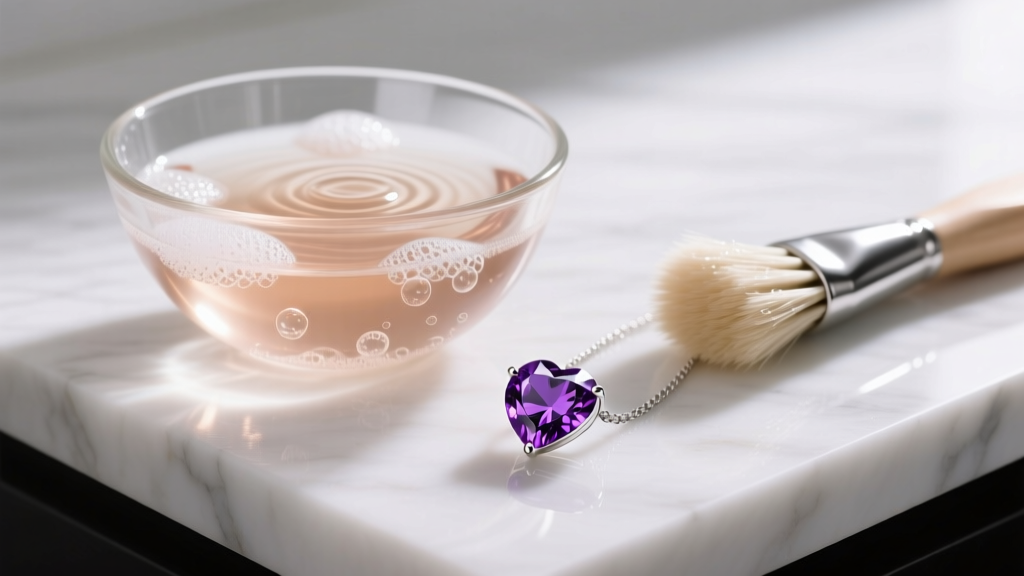
Step-by-Step Wet Cleaning Protocols
For routine maintenance, a gentle wet cleaning is the safest method for almost all purple gemstones and metal settings. Avoid commercial 'dip' cleaners, which often contain harsh thiourea compounds that can strip polish and damage porous stones.
- Prepare the Solution: Fill a small glass bowl with lukewarm (never hot) water. Add three drops of a pH-neutral, non-detergent liquid dish soap (such as original blue Dawn).
- Soak: Submerge the heart purple necklace for 10 to 15 minutes. This loosens the lipid bonds of body oils and cosmetics trapped under the gemstone setting.
- Agitate Gently: Use a brand-new, ultra-soft baby toothbrush to gently sweep the bristles behind the gemstone. Focus on the heart's inner curves and the prongs. Do not scrub the top of the stone aggressively.
- Rinse: Rinse the necklace under a gentle stream of lukewarm water. Ensure the sink drain is securely plugged to prevent accidental loss.
- Dry: Pat dry with a lint-free microfiber cloth. Do not air dry, as hard water minerals will leave white spots on the metal and stone.
Cleaning Methods by Gemstone Type
Not all cleaning technologies are safe for every material. Use the following matrix to determine if advanced cleaning methods are appropriate for your specific heart purple necklace.
| Material | Mohs Hardness | Ultrasonic Cleaner (40kHz) | Steam Cleaner | Ammonia-Based Cleaners |
|---|---|---|---|---|
| Purple Sapphire | 9 | Yes (if untreated) | Yes | Yes |
| Amethyst | 7 | No (risk of fracture) | No | No |
| Tanzanite | 6.5 - 7 | Strictly No | Strictly No | Strictly No |
| Purple Enamel | N/A | No | No (Thermal Shock) | No |
| Purple CZ | 8 - 8.5 | Yes | Yes | Yes |
Deep Cleaning and Metal Maintenance
If your heart purple necklace features a sterling silver chain or setting, oxidation (tarnish) is an inevitable chemical reaction between the silver and sulfur compounds in the air. Tarnish appears as a yellowish or blackish film.
Removing Silver Tarnish Safely
Do not use abrasive silver polishing dips on necklaces with amethyst or tanzanite, as the chemicals can seep into the prong settings and dull the stones. Instead, use a treated silver polishing cloth (such as a Sunshine Cloth). Gently rub the metal chain and the back of the pendant setting. Avoid rubbing the cloth directly over the gemstone, as the micro-abrasives in the cloth can scratch softer stones like tanzanite over time.
Gold Vermeil Care
If your necklace is gold vermeil (a thick layer of gold over sterling silver), avoid polishing the gold sections aggressively. Polishing removes microscopic layers of metal, and you risk wearing through the gold layer down to the silver base. Clean vermeil strictly with the mild soap and water method outlined above.
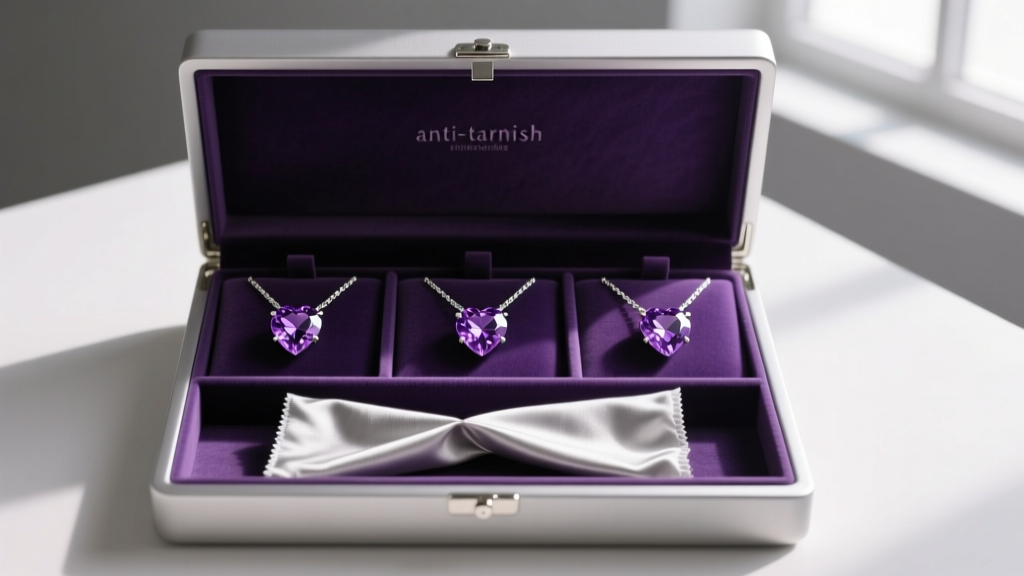
Proper Storage to Prevent Tangling and Tarnish
How you store your heart purple necklace when it is not being worn is just as critical as how you clean it. Improper storage leads to tangled chains, scratched gemstones, and accelerated tarnishing.
- Use Anti-Tarnish Strips: Place 3M anti-tarnish strips inside your jewelry box. These strips absorb airborne sulfur compounds and can prevent silver tarnish for up to 12 months in a sealed environment.
- Individual Pouches: Never store your purple necklace in a pile with other jewelry. Diamonds and sapphires will easily scratch amethyst and enamel. Store the necklace in a dedicated, soft flannel or velvet pouch.
- Prevent Chain Tangling: Before placing the necklace in its pouch, fasten the clasp and leave about two inches of the chain hanging outside the pouch before sealing it. This prevents the clasp from sliding down the chain and creating a microscopic knot.
- Humidity Control: Store your jewelry in a room with stable humidity. Bathrooms are the worst place for jewelry storage due to the extreme fluctuations in heat and moisture from showers, which accelerate metal oxidation.
Professional Maintenance Schedule
Even with meticulous home care, a heart purple necklace requires professional attention. The prongs holding the gemstone experience microscopic wear every time the necklace is put on or taken off.
Take your necklace to a certified jeweler every 12 to 18 months. The jeweler will use a microscope to check for prong wear, ensuring the heart-shaped stone is secure. For white gold settings, the jeweler may recommend rhodium replating to restore the bright white luster, which beautifully contrasts with the deep purple gemstone. By adhering to these specialized, material-specific care guidelines, your heart purple necklace will maintain its romantic brilliance and structural integrity for decades.


