Diamond vs Paste Care: The Necklace Short Story by Guy de Maupassant
Discover care and authentication tips inspired by The Necklace short story by Guy de Maupassant. Learn to clean diamonds vs. paste jewelry safely.

The Tragic Irony of Misidentified Materials
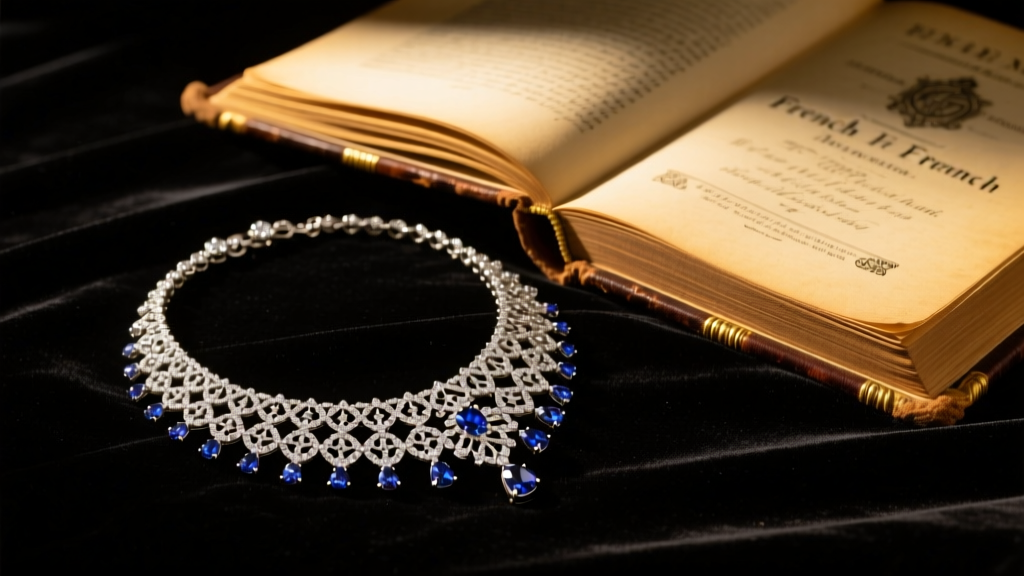
In the pantheon of classic literature, few tales illustrate the catastrophic consequences of jewelry misidentification quite like The Necklace short story by Guy de Maupassant. Published in 1884, the story follows Mathilde Loisel, a woman who borrows what she believes to be a priceless diamond necklace from her wealthy friend, Madame Forestier. After losing the piece, Mathilde and her husband plunge themselves into a decade of grueling poverty to replace it with a real diamond necklace costing 36,000 francs. The devastating twist? The original borrowed necklace was merely 'paste' (costume jewelry), worth no more than 500 francs.
While Maupassant intended the story as a critique of vanity and class obsession, for modern jewelry enthusiasts and collectors, it serves as a profound masterclass in material science, authentication, and the critical importance of proper jewelry care. If Mathilde had possessed a fundamental understanding of gemological properties, or simply known how to properly clean and inspect her jewelry, the deception of the paste necklace would have been immediately obvious. Today, we bridge the gap between 19th-century literature and 21st-century gemology, exploring how to care for, clean, and authenticate high-value diamonds versus historical and modern paste simulants.
The Science of Simulants: Diamond vs. Paste
To understand how to care for different types of necklaces, we must first understand their physical and chemical makeup. In the 1880s, 'paste' referred to a specific type of leaded glass, often called strass, named after Georges Frédéric Strass, the 18th-century jeweler who popularized it. Leaded glass has a high refractive index (around 1.7), giving it a brilliant sparkle that easily fooled the untrained eye in the gaslight of 19th-century Paris. However, its structural integrity is vastly different from that of a carbon-crystal diamond.
According to the Victoria and Albert Museum's archives on paste jewelry, these glass simulants were often backed with metallic foil to enhance their reflectivity. This foil backing is the Achilles' heel of antique paste jewelry, dictating a completely different maintenance protocol than that of a genuine diamond. Modern simulants, like Cubic Zirconia (CZ) or Moissanite, lack foil backings but still require distinct care routines due to their varying hardness on the Mohs scale and their affinity for absorbing oils.
Material Comparison and Care Matrix
| Material | Mohs Hardness | Refractive Index | Ultrasonic Safe? | Primary Cleaning Agent |
|---|---|---|---|---|
| Natural Diamond | 10 | 2.42 | Yes (with caveats) | Ammonia-based or mild degreaser |
| Cubic Zirconia (CZ) | 8.0 - 8.5 | 2.15 | No (causes clouding) | Warm water & mild dish soap |
| Antique Paste (Leaded Glass) | 5.0 - 5.5 | ~1.70 | Absolutely Not | Dry microfiber or soft brush only |
Maintenance Protocols for High-Value Diamond Necklaces
Diamonds are renowned for their durability, but they are not indestructible. The Gemological Institute of America (GIA) emphasizes that while diamonds rank at a 10 on the Mohs scale of hardness, they possess distinct 'cleavage planes'—directions in the crystal structure where atomic bonds are weaker. A sharp, accidental blow against a marble countertop can chip or even fracture a diamond pendant.

The 4-Step Diamond Cleaning Routine
Diamonds are naturally lipophilic, meaning they attract and hold onto oils from your skin, lotions, and cosmetics. This oil buildup dulls the stone's brilliance by interfering with light return. To maintain a diamond necklace's fire and scintillation, follow this protocol:
- The Soak: Mix one cup of warm water with a few drops of mild, non-detergent dish soap (avoid harsh degreasers that can damage porous accent stones like pearls or emeralds). Let the necklace soak for 20 to 30 minutes to loosen sebum and cosmetic residue.
- The Agitation: Using a brand-new, ultra-soft baby toothbrush, gently brush the stone. Pay special attention to the pavilion (the underside of the diamond), where the majority of grime accumulates and blocks light.
- The Rinse: Rinse the necklace under a gentle stream of lukewarm water. Crucial: Always ensure the drain is securely plugged or use a mesh strainer over the sink to prevent a catastrophic loss down the drain.
- The Dry: Pat dry with a lint-free microfiber cloth. Avoid paper towels, as their wood fibers can leave microscopic scratches on the precious metal setting.
A Warning on Ultrasonic Cleaners: While ultrasonic machines are excellent for shaking dirt out of hard-to-reach prong settings, they are highly destructive to 'fracture-filled' or 'clarity-enhanced' diamonds. The high-frequency vibrations and heat can melt the glass-like resins used to fill internal fissures, leaving the stone permanently cloudy.
Preserving the Illusion: Caring for Paste and Costume Jewelry
If Mathilde Loisel had known how to properly care for antique paste jewelry, she would have immediately recognized the difference in maintenance requirements. Paste stones, whether 19th-century leaded glass or modern rhinestones, are incredibly fragile and highly susceptible to moisture damage.
The Moisture Menace
Most high-quality paste and vintage costume jewelry features a metallic foil or paint applied to the back of the glass stone to act as a mirror, reflecting light back through the crown. If water penetrates the setting and reaches this foil backing, the metal will oxidize, tarnish, or flake away entirely. In the antique jewelry trade, a stone that has lost its backing is referred to as 'dead' or 'black,' and its value is effectively destroyed.
- Never Submerge: Never soak a paste necklace in water or chemical solutions.
- Avoid Ultrasonics: The vibrations will shatter the brittle glass and instantly strip away the delicate foil backing.
- Dry Dusting: Use a clean, dry, soft-bristled makeup brush to gently sweep away dust and skin cells from the surface and prongs.
- Spot Cleaning: If a stone is heavily soiled, lightly dampen a cotton swab with isopropyl alcohol, squeeze out all excess moisture, and gently roll it over the surface of the glass. Dry immediately with a soft cloth.
The Ultimate Lesson: Appraisals, Insurance, and Documentation
The true tragedy of The Necklace short story by Guy de Maupassant is not merely the misidentification of a gemstone; it is the complete lack of documentation, appraisal, and insurance. Mathilde replaced a piece of jewelry without ever verifying its intrinsic value, its maker's marks, or its material composition. In the modern jewelry market, this lack of due diligence can lead to devastating financial losses, whether through theft, loss, or accidental damage.

The Modern Loisel Protocol
To ensure you never suffer the fate of the Loisels, implement the following administrative care routine for any fine jewelry you acquire, borrow, or inherit:
'Jewelry care extends far beyond the polishing cloth. True maintenance involves protecting the asset's financial and historical value through rigorous, third-party verification.' — Master Gemologist Appraiser
- Obtain a Laboratory Report: For any diamond necklace valued over $1,000, insist on a grading report from a reputable, independent laboratory such as the GIA or AGS. This report details the exact 4Cs (Cut, Color, Clarity, Carat) and includes a microscopic laser inscription on the girdle of the stone, making it unmistakably identifiable.
- Schedule a Replacement Appraisal: Have the piece appraised by a certified Master Gemologist Appraiser (MGA) every two to three years. Precious metal markets and diamond valuations fluctuate; an insurance policy based on a 2015 appraisal will not cover the replacement cost of a platinum and diamond necklace in 2026.
- Secure a Personal Articles Floater: Standard homeowner's or renter's insurance policies often have low sub-limits for jewelry (typically $1,500 to $2,500) and may not cover 'mysterious disappearance' (e.g., losing a necklace at a ball, much like Mathilde). A scheduled Personal Articles Floater provides comprehensive, worldwide coverage with zero deductible.
- Photographic Documentation: Take high-resolution, macro photographs of the necklace, focusing on unique inclusions, custom hallmark stamps, and the clasp mechanism. Store these images in a secure cloud server alongside your digital appraisal certificates.
Conclusion: Looking Beyond the Sparkle
The Necklace remains a timeless cautionary tale, but its relevance to modern jewelry care is more pertinent than ever. Whether you are wearing a multi-carat natural diamond pendant or a beautifully crafted piece of vintage paste costume jewelry, understanding the specific material science of your adornments is the first step in preserving them. By tailoring your cleaning methods to the Mohs hardness and structural vulnerabilities of your stones, and by securing robust appraisals and insurance, you ensure that your jewelry remains a source of joy and confidence—rather than a catalyst for a decade of regret.


