The Ultimate Guide to Buying a Thick Silver Chain Necklace
Discover how to choose the perfect thick silver chain necklace. We compare sterling, Argentium, and fine silver alloys, plus link durability.

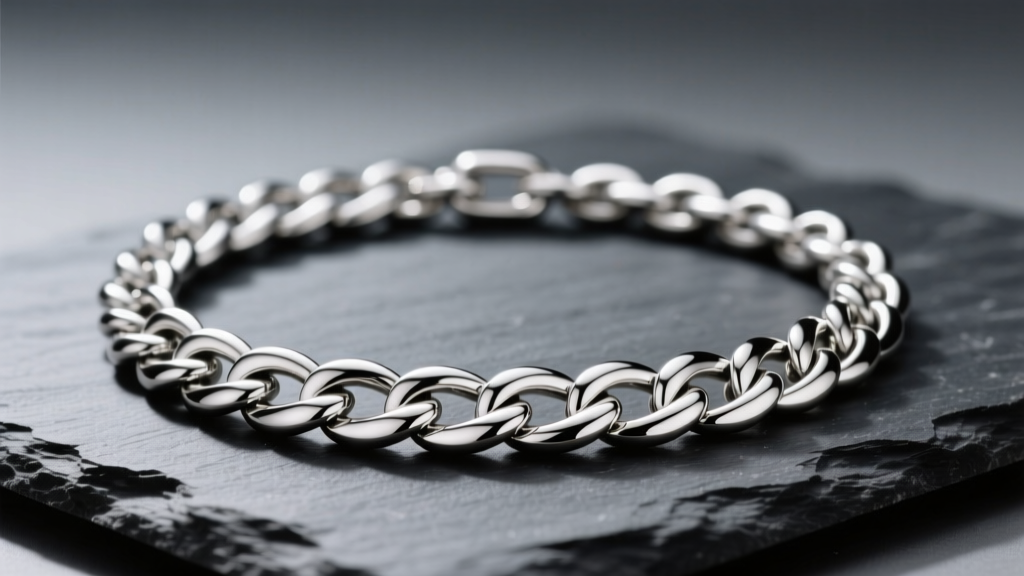
The Anatomy of a Heavy-Duty Silver Chain
A thick silver chain necklace is more than just an accessory; it is a substantial investment in precious metal and a bold sartorial statement. However, the very nature of a heavy chain introduces unique structural challenges. When a necklace exceeds 50 grams in weight, gravity and kinetic movement place immense tensile stress on the links, clasps, and jump rings. Choosing the right piece requires looking far beyond the surface polish and understanding the metallurgy, construction methods, and mechanical hardware that dictate its longevity.
Many buyers make the critical mistake of prioritizing width over weight, ending up with hollow, fragile jewelry that dents easily and cannot be repaired. To ensure your heavy silver chain withstands daily wear, we must examine the specific material properties and engineering standards that separate heirloom-quality pieces from disposable fashion jewelry.
Silver Alloys Compared: Sterling vs. Argentium vs. Fine
Pure silver is inherently too soft for heavy jewelry. To create a durable thick silver chain necklace, the silver must be alloyed with other metals to increase its Vickers Hardness (HV) and tensile strength. According to the Gemological Institute of America (GIA), the specific alloy composition dramatically affects the chain's resistance to stretching, tarnishing, and environmental degradation.
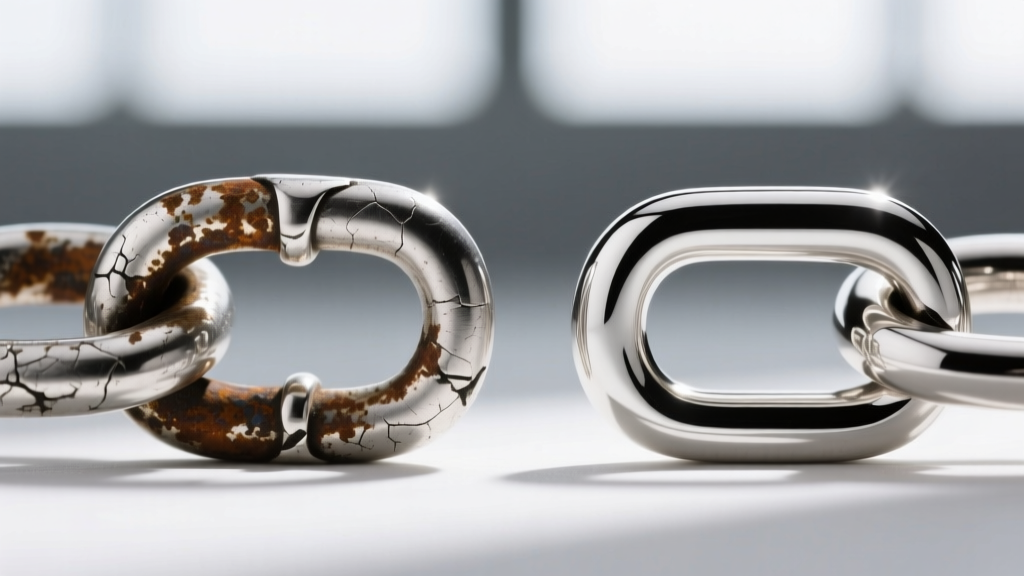
Traditional Sterling Silver (925)
Composed of 92.5% silver and 7.5% copper, sterling silver is the industry standard. The copper provides excellent work-hardening capabilities, allowing the wire to become incredibly rigid when drawn and twisted into links. However, copper is highly reactive to sulfur and moisture, meaning sterling silver requires regular polishing to remove tarnish. Furthermore, when soldered, traditional sterling is prone to 'firescale'—a deep copper oxide stain that requires aggressive polishing to remove.
Argentium Silver (935 or 960)
Argentium replaces some of the copper with germanium. This modern alloy is a game-changer for thick chains. The germanium forms a transparent, self-healing oxide layer on the surface that virtually eliminates tarnish. For a heavy chain that is difficult to polish in the crevices of interlocking links, Argentium's low-maintenance profile is invaluable. It also fuses to itself without the need for traditional solder, creating seamless, incredibly strong link closures.
Fine Silver (999)
While fine silver offers the brightest white luster and zero tarnish, its Vickers Hardness sits at a mere 25 HV (compared to 70+ HV for annealed sterling). A thick chain made of fine silver will stretch, warp, and deform under its own weight within months. As noted by The UK Assay Office, while 999 silver is excellent for cast pendants or bezel wire, it is entirely unsuited for the structural demands of heavy chain links.
Alloy Property Comparison Chart
| Alloy Type | Composition | Vickers Hardness (Annealed) | Tarnish Resistance | Best Use Case |
|---|---|---|---|---|
| Sterling (925) | 92.5% Ag, 7.5% Cu | 65 - 75 HV | Moderate | Classic heavy chains, high-stress links |
| Argentium (935) | 93.5% Ag, Cu, Ge | 60 - 70 HV | Exceptional | Low-maintenance thick chains, seamless links |
| Fine (999) | 99.9% Ag | 25 HV | High | Pendants only (Avoid for chains) |
Construction: Solid vs. Hollow and Link Soldering
When shopping for a thick silver chain necklace, the most deceptive metric is visual width. A 12mm chain can weigh 25 grams or 110 grams, depending on its internal construction.
The Hollow Trap
Hollow chains are manufactured using a silver strip wrapped around a base metal core, which is later dissolved in acid, or through electroforming. While they offer a massive visual footprint for a low price, they are structurally compromised. A hollow 10mm link will crush if grabbed or slept in. Worse, because the metal is paper-thin, a jeweler cannot apply a torch to solder a broken link without melting the entire section. Always check the gram weight: a solid 8mm Cuban link chain should weigh approximately 65 to 75 grams per 20-inch length. If it weighs 20 grams, it is hollow.
Soldered vs. Unsoldered Links
Mass-produced chains are often left unsoldered to save manufacturing time. In a lightweight chain, this is acceptable. In a heavy chain, the weight of the silver pulling against the friction of the links will eventually cause the unsoldered seams to pry open. For any chain exceeding 40 grams, insist on individually hand-soldered or laser-welded links to ensure permanent closure.
Link Styles and Structural Integrity
The geometry of the link dictates how the chain distributes weight and handles friction. Based on Rio Grande's metal fabrication guidelines, certain shapes naturally resist deformation better than others.
- Cuban Link: The undisputed king of heavy chains. The interlocking, flat-filed oval links distribute tension evenly across a wide surface area. They lay flat against the chest, minimizing kinetic twisting that leads to metal fatigue.
- Curb Link: Similar to the Cuban but with a more pronounced twist and rounded edges. Excellent durability, though the rounded surfaces show scratches more readily than the flat facets of a Cuban.
- Figaro: Features a pattern of one long link followed by two or three short links. While visually striking, the varying link sizes create uneven stress points. Ensure the long links are heavily soldered to prevent stretching.
- Rope Chain: Creates a thick, spiraling illusion. However, the intricate twisting traps skin oils and is notoriously difficult to clean. If a rope chain snaps, repairing the spiral tension is nearly impossible without visible scarring.
Clasp Mechanics for Heavy Silver Chains
The clasp is the single most common point of failure on a heavy necklace. A standard 15mm lobster clasp relies on a tiny internal steel spring. When subjected to the constant 80-gram downward pull of a thick silver chain necklace, combined with the shock of head movements, the spring will eventually fatigue, or the thin cast lever will bend outward, causing the chain to slip off.
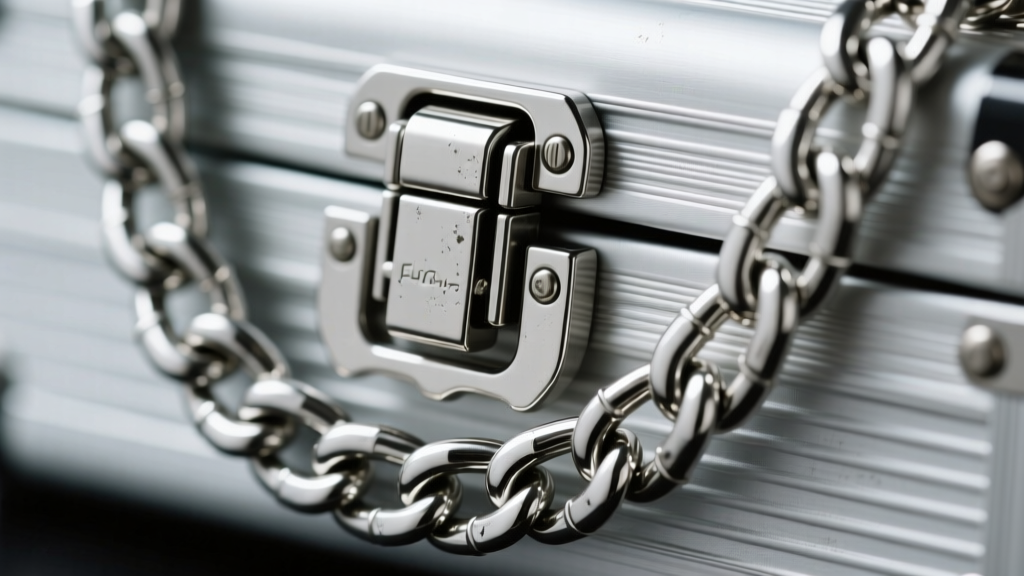
The Box Clasp with Safety Latches
For any chain over 50 grams, a tongue-in-groove (box) clasp is mandatory. The 'tongue' is a folded piece of spring-tempered silver that compresses to enter the 'box' and expands to lock securely into place. This mechanism relies on the tension of the metal itself rather than a microscopic coil spring. Furthermore, high-end box clasps feature dual 'figure-8' safety latches—small wire loops that snap over a bead on the opposite side of the clasp. If the primary box mechanism fails, the safety latches will catch the chain before it hits the floor.
Maintenance and Tarnish Prevention
Thick chains require specific care routines. Avoid liquid silver dips on heavy Cuban or Curb links, as the harsh chemicals can become trapped in the tight crevices between links, leading to localized corrosion over time. Instead, use a high-quality micro-abrasive polishing cloth infused with precipitated calcium carbonate. For deep cleaning, an ultrasonic cleaner with a mild, ammonia-free detergent will safely dislodge sebum and environmental grit from the link seams without degrading the silver alloy or compromising the solder joints.


