Expert Care and Cleaning Guide for a Purple Jade Necklace
Learn how to safely clean, store, and maintain your purple jade necklace. Expert tips on washing lavender jadeite and preserving silk cords.

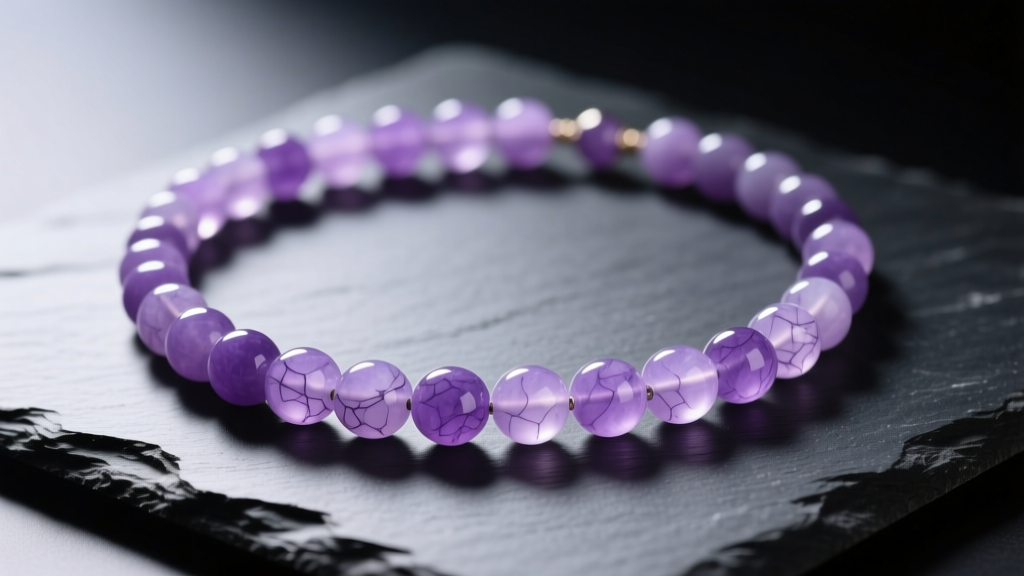
Understanding Your Purple Jade: Natural vs. Treated
Before you introduce any moisture or cleaning agents to your purple jade necklace, it is critical to understand the gemological nature of the stones you own. Purple jade, often referred to in the trade as lavender jadeite, derives its delicate hue from trace amounts of manganese within the crystalline structure. According to the Mindat.org mineral database, natural jadeite possesses a Mohs hardness of 6.5 to 7, making it relatively resistant to scratching. However, its toughness—resistance to breaking—is what truly sets it apart, thanks to a dense, interlocking microcrystalline matrix.
Yet, not all purple jade on the market is entirely natural. Because high-quality, untreated lavender jadeite is exceedingly rare and commands premium auction prices, the market is flooded with treated alternatives. Understanding your jade's treatment grade dictates your entire maintenance strategy.
Type A, B, and C Jadeite Explained
- Type A (Natural): Completely untreated except for a traditional plum juice waxing. This wax fills microscopic surface pores and enhances luster. It is safe for gentle washing.
- Type B (Polymer-Impregnated): The jade is bleached with harsh acids to remove brown or grey inclusions, which destroys the crystalline matrix. It is then vacuum-impregnated with a polymer resin to restore structural integrity and translucency. Heat and harsh chemicals will melt or cloud this resin.
- Type C (Dyed): The stone is artificially dyed to achieve a vibrant purple hue. Type C jade is highly susceptible to fading when exposed to UV light, heat, and acidic cleaning solutions.
According to the Gemological Institute of America (GIA), identifying Type B and C treatments requires specialized gemological equipment. If you lack a lab certificate, you must assume your necklace could be treated and adopt the most conservative, gentle cleaning protocol available.
Step-by-Step Cleaning Routine for Lavender Jade
Dirt, body oils, and cosmetic residues can quickly accumulate between jade beads and within the carved crevices of a pendant, dulling the stone's natural luster. To safely clean your purple jade necklace without risking damage to the surface wax or internal polymers, follow this precise methodology.
The Tools You Need
- 1 cup of room-temperature distilled water (avoid tap water, as chlorine and hard minerals leave a stubborn film)
- 1/2 teaspoon of pH-neutral liquid soap (pH 7.0, such as clear castile soap or a mild, lotion-free dish soap)
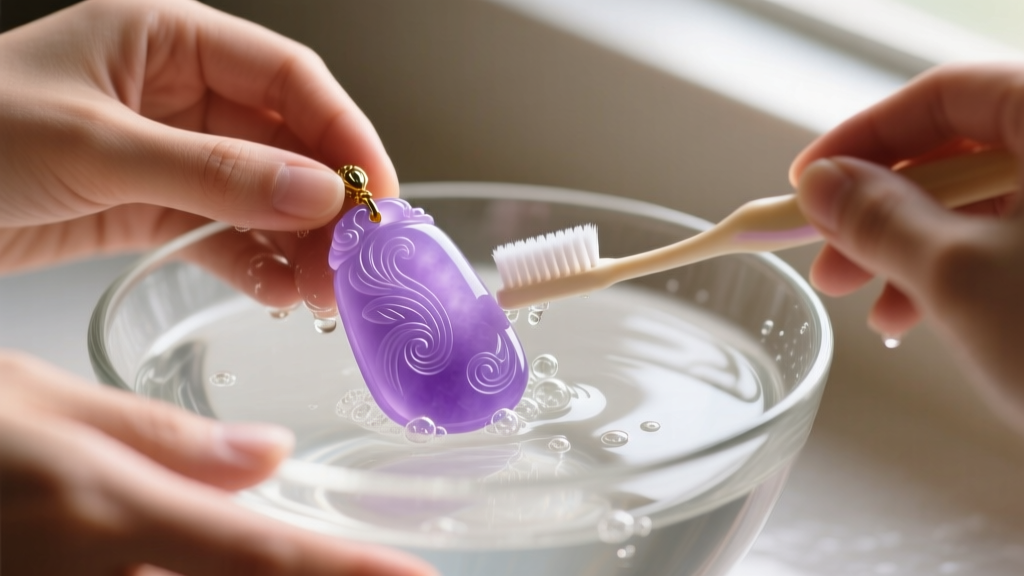
- An extra-soft baby toothbrush (bristle diameter of 0.1mm or less)
- A lint-free microfiber polishing cloth
- A clean, dry cotton towel
The Cleaning Process
- Mix the Solution: Combine the distilled water and pH-neutral soap in a glass bowl. Stir gently until suds form. Ensure the water is lukewarm (around 85°F or 29°C). Hot water can expand polymer resins in Type B jade, causing permanent internal clouding.
- Soak Briefly: Submerge the purple jade necklace in the solution for no more than 3 to 5 minutes. This loosens sebum and cosmetic buildup without compromising the stone's traditional wax coating.
- Agitate Gently: Using the extra-soft baby toothbrush, lightly brush the surface of the beads or pendant. Pay special attention to the areas around the drill holes and the clasp, where grime concentrates. Never apply heavy pressure; let the bristles do the work.
- Rinse Thoroughly: Rinse the necklace under a gentle stream of lukewarm distilled water to remove all soap residue. Soap left behind will dry into a hazy, white film that mimics the look of damaged jade.
- Dry Immediately: Do not let the necklace air dry. Lay it flat on a clean cotton towel and pat it dry. Follow up by gently buffing each bead with your microfiber cloth to restore the surface luster.
What to Avoid: The Enemies of Purple Jade
Maintenance is as much about knowing what not to do as it is about active cleaning. Many standard jewelry cleaning methods are highly destructive to jadeite, particularly if it has been subjected to acid bleaching or dyeing.
| Cleaning Method | Safety Level | Why It Damages Purple Jade |
|---|---|---|
| Ultrasonic Cleaners | Never Use | High-frequency vibrations will shatter treated jade and cause polymer resin to separate from the stone matrix. |
| Steam Cleaners | Never Use | Extreme heat melts surface waxes and internal polymers, leaving the jade porous, dry, and prone to cracking. |
| Ammonia / Bleach | Never Use | Harsh alkalines and acids strip the stone's polish, dull the manganese color, and degrade silk cords instantly. |
| Commercial Silver Dips | Never Use | Thiourea-based chemicals will permanently etch the surface of the jadeite beads and discolor the lavender hue. |
Cord and Clasp Maintenance
A purple jade necklace is only as secure as the material stringing it together. Jade beads are surprisingly dense and heavy, meaning they exert significant gravitational and frictional stress on the cord. Neglecting cord maintenance is the leading cause of catastrophic necklace failure and lost gemstones.
Silk vs. Nylon-Coated Wire
Traditional jade necklaces are strung on 100% natural silk, which provides a beautiful, supple drape. For beads up to 8mm in diameter, Griffin Silk Size No. 2 (0.45mm) is ideal. For heavier beads ranging from 10mm to 14mm, upgrade to Size No. 3 (0.50mm) or Size No. 4 (0.55mm). However, silk degrades over time due to exposure to sweat, perfumes, and natural skin acids.
If your necklace features massive, heavy beads (15mm+), silk may not provide adequate shear strength. In these cases, jewelers recommend using a 49-strand nylon-coated beading wire, such as Soft Flex .019-inch wire. While it sacrifices the traditional knot-between-each-bead aesthetic, it guarantees structural integrity for heavy stone loads.
The Importance of French Wire (Gimp)
Check the ends of your necklace where the silk cord loops through the metal clasp. The friction of the metal sawing back and forth against the silk will eventually cut the thread. High-quality jade necklaces utilize French wire (also known as gimp)—a tiny, coiled metal spring (usually 0.3mm sterling silver or gold-filled)—to protect the silk loop. If your necklace lacks French wire, have a jeweler add it during the next restringing to double the cord's lifespan.
When to Restring Your Necklace
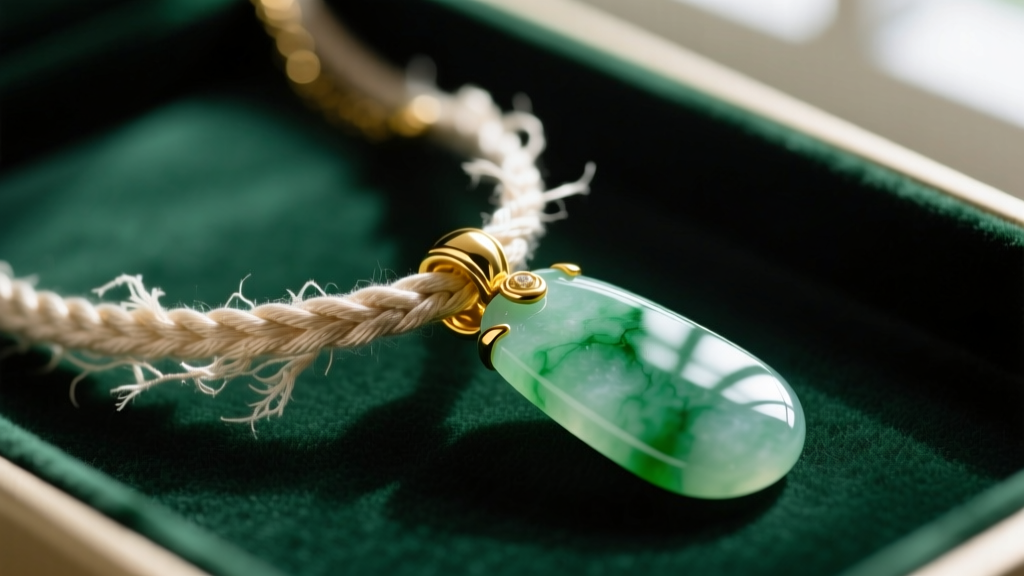
Do not wait for the cord to snap. Inspect your necklace every six months by gently pulling the beads apart and examining the thread. If you see fraying, discoloration, or if the cord feels stiff and brittle, it is time to restring. As a general rule, if you wear your purple jade necklace weekly, it should be professionally restrung every 18 to 24 months. If worn daily or exposed to heavy perspiration, restring annually.
Proper Storage Techniques to Prevent Scratching
While jadeite is tough, it can still be scratched by harder gemstones like diamonds, sapphires, and topaz (Mohs 8-10). Conversely, jade can easily scratch softer materials like pearls, opals, and silver metal components.
Always store your purple jade necklace in its own dedicated compartment in a fabric-lined jewelry box, or place it inside a soft, anti-tarnish flannel pouch. Never toss it loosely into a jewelry drawer where it can tangle with other chains or be crushed under heavier metal pieces. Additionally, because Type C dyed jade is sensitive to prolonged UV exposure, keep the necklace away from direct sunlight or brightly lit display windows to prevent the purple pigment from fading into a dull, washed-out grey.
Conclusion
Maintaining a purple jade necklace requires a departure from standard jewelry cleaning habits. By abandoning harsh chemicals and ultrasonic machines in favor of distilled water, pH-neutral soaps, and gentle microfiber drying, you protect both the delicate manganese coloration and the structural polymers of the stone. Combine this careful cleaning routine with vigilant silk cord inspections and proper isolated storage, and your lavender jadeite will retain its ethereal beauty and structural security for generations to come.


