Isaac Friendship Necklace: Technical Specs & Care Guide
Explore the technical construction of the Isaac friendship necklace, from micro-macrame tension to 14k gold clasp mechanics and material grades.

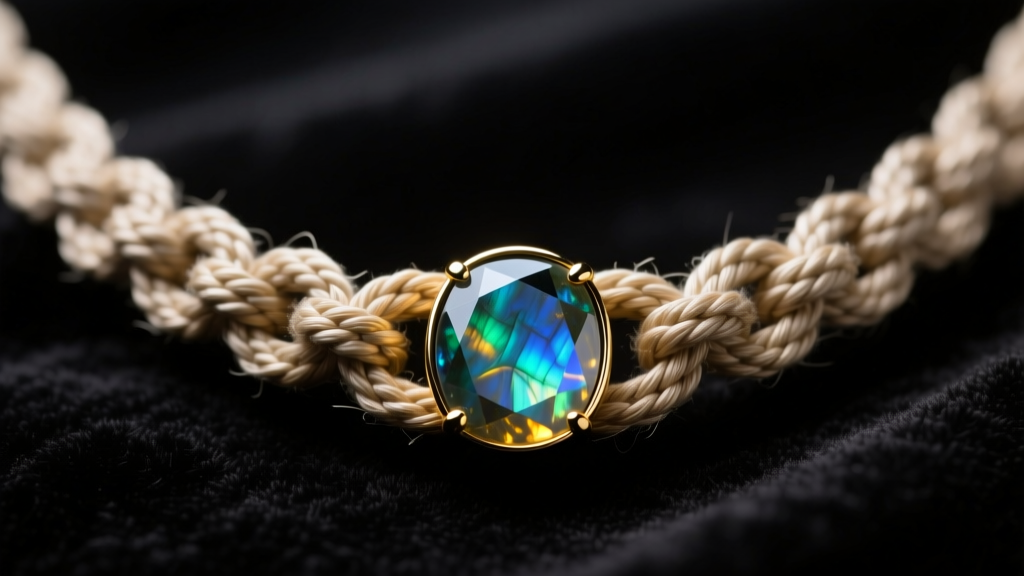
The Evolution of the Isaac Friendship Necklace
The traditional friendship bracelet has undergone a radical metallurgical and structural transformation in the luxury accessory market. At the forefront of this shift is the Isaac friendship necklace, a piece that elevates camp-craft macrame into a domain of precise tensile engineering and high-end material science. Unlike mass-produced woven jewelry, the Isaac design relies on a specific matrix of micro-macrame knotting, high-tenacity synthetic threads, and precision-machined hardware. For jewelry collectors and horology-adjacent enthusiasts, understanding the technical specifications of the Isaac friendship necklace is essential for authentication, maintenance, and appreciating its structural integrity.
This deep dive deconstructs the material composition, hardware mechanics, and failure modes of the Isaac friendship necklace, providing a 2026 perspective on what separates artisan-grade woven jewelry from fast-fashion imitations.
Material Science: Thread Composition and Tensile Strength
The core structural element of any woven necklace is the thread. While traditional crafters rely on standard cotton embroidery floss, the Isaac friendship necklace utilizes high-mercerization cotton or waxed synthetic polymers to ensure longevity and structural rigidity.
Mercerized Cotton vs. Waxed Polyester
Authentic Isaac pieces predominantly feature Linhasita waxed polyester or DMC Cordonnet mercerized cotton. The mercerization process treats cotton fibers with sodium hydroxide under tension, which alters the fiber's cross-section from a flattened ribbon to a perfect cylinder. This increases the thread's tensile strength by up to 30% and significantly improves dye uptake, resulting in the deep, saturated colors characteristic of the Isaac palette.
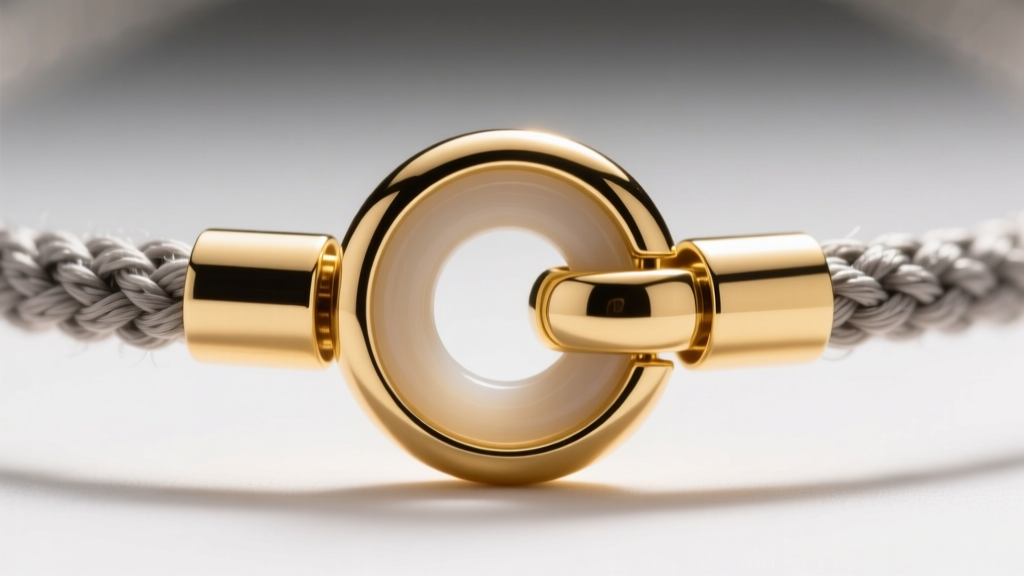
Waxed polyester, on the other hand, offers superior hydrophobic properties. A standard 0.5mm strand of the waxed polyester used in Isaac designs boasts a breaking strength of approximately 12 to 14 pounds. The micro-crystalline wax coating not only repels water and sebum but also creates inter-fiber friction that locks complex knots in place without the need for cyanoacrylate (super glue) adhesives, which can degrade and yellow over time.
| Material Grade | Tensile Strength (0.5mm) | Hydrophobic Index | UV Degradation Resistance |
|---|---|---|---|
| Standard 6-Strand Cotton | ~3.5 lbs | Low (Absorbs moisture) | Poor (Fades in 6-12 months) |
| Mercerized Cotton (Cordonnet) | ~5.2 lbs | Moderate | Good (Reactive dye stability) |
| Waxed Polyester (Linhasita) | ~13.0 lbs | High (Water-repellent) | Excellent (Solution-dyed) |
Hardware and Clasp Mechanics
The transition from a slip-knot closure to a permanent, secure clasp is where the Isaac friendship necklace demonstrates serious jewelry engineering. The signature closure is a friction-fit barrel clasp, machined from 14k gold-filled tubing.
The 14/20 Gold-Filled Standard
According to the Federal Trade Commission's Jewelry Guides, a piece must contain at least 1/20th of its total metal weight in 14k gold to be legally stamped as 14k Gold-Filled (14/20 GF). The Isaac barrel clasp adheres strictly to this standard, utilizing a thick outer layer of 14k gold mechanically bonded to a brass or copper core via heat and pressure. This ensures the clasp will not flake or wear through to the base metal, even with daily friction against the skin.
Internal O-Ring Tension
The security of the barrel clasp does not rely on a fragile mechanical click or a weak magnetic attraction. Instead, it utilizes an internal medical-grade silicone O-ring. When the male end of the clasp is inserted into the female barrel, the silicone compresses, creating a high-friction vacuum seal. This requires approximately 4.5 lbs of direct linear pull-force to disengage intentionally, completely eliminating the risk of accidental unclasping during wear.
Micro-Macrame Tension and Knot Architecture
The visual density and structural drape of the Isaac friendship necklace are dictated by knot tension. In mass-market woven jewelry, inconsistent tension leads to warping, curling, and structural weak points. Artisan Isaac pieces are crafted using a standardized tension matrix.
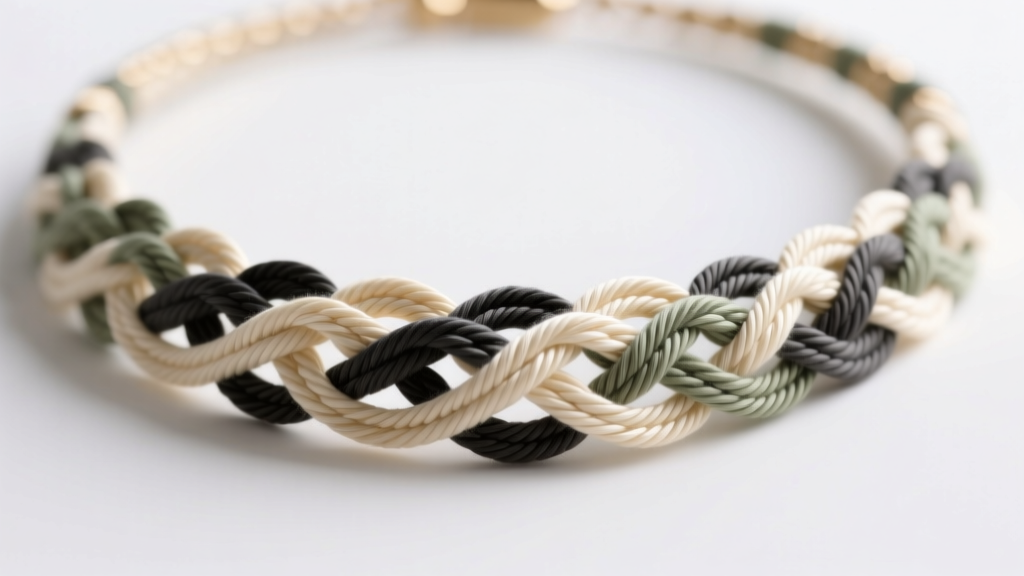
The Square Knot Matrix
The foundational architecture relies on alternating half-square knots (the spiral stitch) and full square knots (the cobra weave). To achieve the signature flat, ribbon-like drape without lateral curling, the artisan must maintain a consistent pull-force of roughly 400 to 600 grams on the working threads while keeping the warp (core) threads under a steady 200-gram tension.
- Warp Threads: The structural core, usually consisting of 4 to 6 strands of 0.5mm waxed polyester, providing the longitudinal tensile backbone.
- Weft Threads: The decorative working threads, often incorporating micro-beads (2mm seed beads) or precision-cut gemstone rondelles integrated directly into the half-hitch knots.
- Picot Edging: Advanced Isaac designs feature a picot edge, created by looping the weft thread around a temporary gauge pin before tightening the knot, resulting in a uniform, scalloped border that prevents edge fraying.
Failure Modes and Preventative Maintenance
Despite the high-tensile materials, any textile-based jewelry is subject to environmental degradation. Understanding the specific failure modes of the Isaac friendship necklace allows owners to implement proper preventative care.
Sebum and Particulate Accumulation
The primary enemy of micro-macrame is the accumulation of sebum, dead skin cells, and environmental dust within the knot matrix. Over time, this organic buildup acts as an abrasive paste, slowly degrading the wax coating on polyester threads and dulling mercerized cotton. Maintenance Protocol: Submerge the necklace in a solution of warm distilled water and a pH-neutral textile detergent (such as Orvus WA Paste) for 15 minutes. Agitate gently with a soft-bristled dental brush, rinse thoroughly, and air dry flat to maintain knot geometry.
UV and Photodegradation
While solution-dyed polyesters are highly UV resistant, certain natural fiber blends and specific organic dye lots can suffer from photodegradation. The Smithsonian Museum Conservation Institute notes that prolonged exposure to ultraviolet light breaks down the polymer chains in natural fibers, leading to embrittlement. Store the necklace in a UV-blocking jewelry box or a dark velvet pouch when not in use.
Galvanic Corrosion at the Clasp Junction
If the necklace features integrated sterling silver beads alongside the 14k gold-filled clasp, exposure to saltwater or heavy perspiration can create a galvanic cell. The dissimilar metals, connected by an electrolyte (sweat), will cause the less noble metal (silver or the brass core if the gold layer is scratched) to corrode rapidly. Always rinse the piece with fresh water after ocean swimming or intense exercise.
Authentication and 2026 Market Pricing
As the popularity of elevated woven jewelry has surged, the secondary market has seen an influx of counterfeit pieces. Authenticating an Isaac friendship necklace requires close inspection of the hardware and thread termination.
- Clasp Stamping: Authentic clasps will bear a microscopic "1/20 14K GF" stamp on the interior rim of the female barrel. Fakes often use gold-plated brass with a vague "14K" stamp, which violates FTC guidelines for plated items.
- Thread Termination: Inside the clasp, authentic Isaac threads are heat-sealed (for polyester) or secured with a microscopic crimp bead and jeweler's epoxy (for cotton). Fakes often rely on visible blobs of cyanoacrylate glue that seep out of the clasp housing.
- Knot Uniformity: Under a 10x jeweler's loupe, the spacing between adjacent square knots should be mathematically uniform, with no visible gaps exposing the warp threads.
In 2026, the retail pricing for an authentic, single-strand Isaac friendship necklace with standard gold-filled hardware ranges from $180 to $280. Pieces featuring integrated precious gemstones (such as bezel-set labradorite or turquoise) or solid 14k gold hardware easily command between $450 and $850. By understanding the material science and mechanical engineering behind these pieces, collectors can confidently navigate the market and appreciate the true craftsmanship of luxury micro-macrame.


