The Ultimate Care Guide for Your Choker Heart Necklace
Learn expert cleaning, maintenance, and storage tips to keep your choker heart necklace pristine. Discover material-specific care protocols.

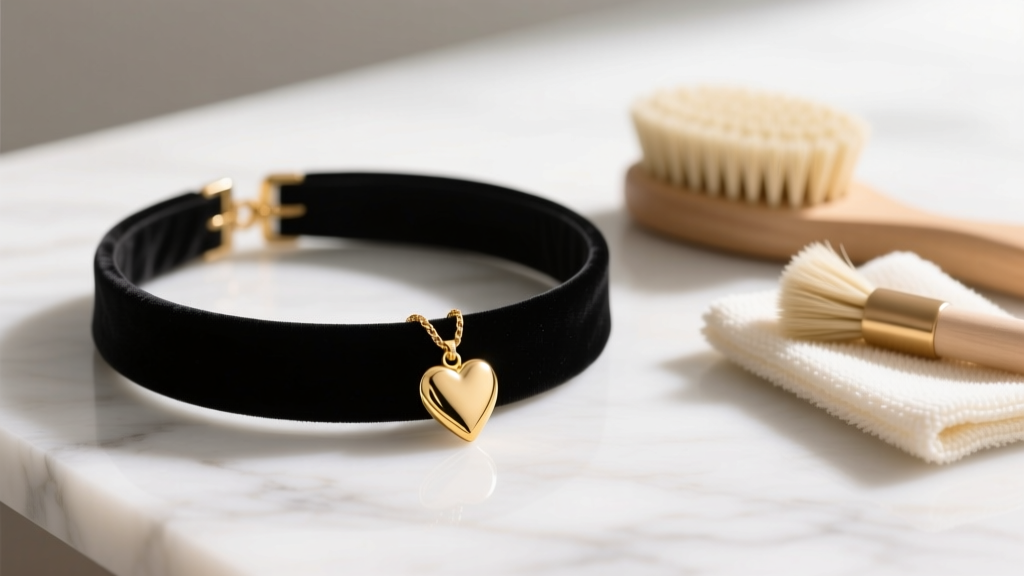
The choker heart necklace is a definitive staple in modern jewelry, seamlessly bridging 90s nostalgia with contemporary elegance. However, because these pieces often combine disparate materials—such as delicate fabric bands, metal chains, and intricate pendants—they require a highly specific approach to maintenance. As we navigate 2026's jewelry trends, mixed-media chokers are more popular than ever, but treating a velvet band with the same harsh chemicals used for solid gold will quickly ruin the piece.
This comprehensive guide provides actionable, material-specific protocols to clean, maintain, and store your favorite necklaces, ensuring they remain pristine for years to come.
Material Anatomy: Understanding Your Necklace
Before applying any cleaning solution, you must identify the exact materials composing your jewelry. A typical piece consists of three distinct zones, each with unique vulnerabilities:
- The Band: Often made of velvet, leather, lace, or a solid metal collar. Soft materials are highly porous and trap sebum, sweat, and environmental pollutants.
- The Hardware: Includes the chain, jump rings, and lobster clasp. Usually crafted from 925 sterling silver, 14k/18k gold vermeil, or 316L surgical steel.
- The Heart Pendant: The focal point, which may feature cold enamel, cubic zirconia (CZ), freshwater pearls, or solid metal casting.
Common Failure Modes & Daily Wear Impact
Understanding how jewelry degrades is the first step in preventing it. According to the Jewelers of America, the majority of jewelry repairs stem from preventable daily wear damage rather than manufacturing defects.
Clasp Spring Fatigue
The lobster clasp is the most common point of failure. Daily application of lotions, perfumes, and natural skin oils creates a viscous buildup inside the clasp's microscopic spring mechanism. Over time, this sludge hardens, preventing the lever from snapping shut securely and increasing the risk of losing your pendant.
Velvet Structural Degradation
Velvet chokers rely on an internal stiffener to maintain their shape against the neck. Submerging a velvet band in water or using harsh alkaline soaps breaks down this stiffener, resulting in a warped, wrinkled band that no longer sits flat against the collarbone.
Jump Ring Tension
The heart pendant is typically suspended from a soldered jump ring. Repeated pulling, tugging, or sleeping in the necklace introduces lateral tension, eventually prying the jump ring open and causing the pendant to detach.
Step-by-Step Cleaning Protocols
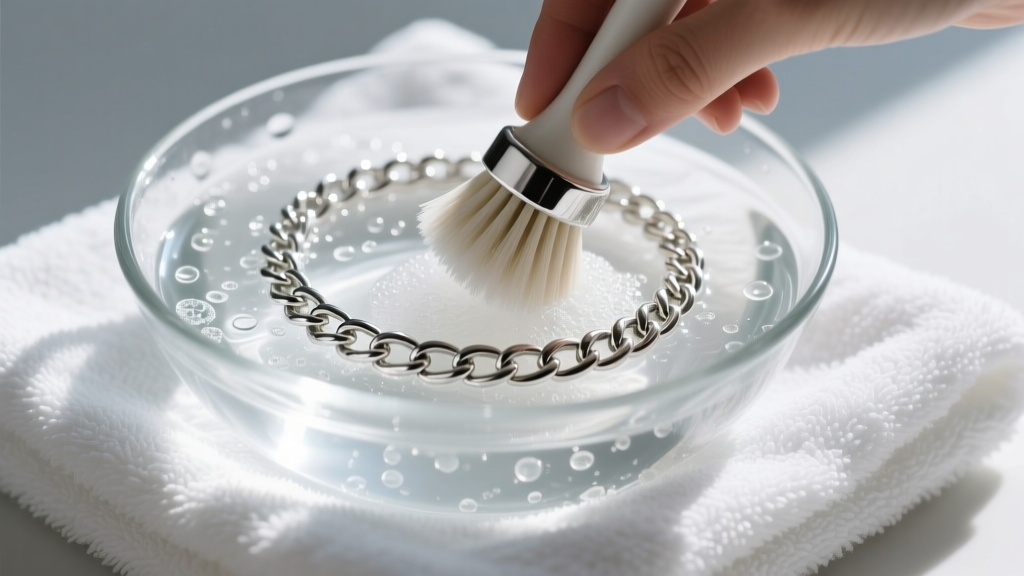
Never use ultrasonic cleaners or commercial silver dips on mixed-media jewelry. The high-frequency vibrations can shatter enamel and loosen CZ prongs, while chemical dips will strip gold vermeil and stain porous fabrics.
Protocol 1: Metal Chains and Hardware
For 925 sterling silver or 316L surgical steel chains attached to a fabric band, you must clean the metal without wetting the fabric.
- Mix a solution of warm distilled water and a single drop of pH-neutral dish soap (such as Dawn) in a small glass bowl.
- Dip a soft-bristled baby toothbrush into the solution, shaking off excess moisture so it is only damp, not dripping.
- Gently brush the metal chain links and the lobster clasp. Use a wooden toothpick to carefully dislodge hardened lotion from the clasp's crevice.
- Wipe the metal clean with a damp microfiber cloth, then immediately dry with a lint-free polishing cloth.
Note on Gold Vermeil: By US standards, vermeil must have a gold layer of at least 2.5 microns over sterling silver. Avoid abrasive polishing cloths on vermeil, as they can wear through the gold layer and expose the silver beneath.
Protocol 2: Soft Bands (Velvet, Lace, and Leather)
Soft bands require dry or semi-dry cleaning methods. For velvet and lace, use a handheld fabric steamer held at least six inches away from the material to loosen dirt and kill odor-causing bacteria. Follow up by gently brushing the nap of the velvet with a specialized suede brush to restore its texture. For leather bands, apply a minuscule amount of pH-balanced leather conditioner to a cotton swab and rub it into the leather, avoiding the metal hardware entirely.
Protocol 3: The Heart Pendant
The cleaning method for the pendant depends entirely on its composition. The Gemological Institute of America (GIA) emphasizes that porous gems and treated surfaces require extreme caution.
- Cold Enamel: Wipe only with a damp, cool microfiber cloth. Heat and hot water can cause micro-cracking in the enamel glaze.
- Cubic Zirconia: Can tolerate mild soapy water and gentle brushing to remove the oily film that dulls its sparkle.
- Freshwater Pearls: Never submerge. Wipe with a dry, soft cloth after every wear to remove acidic skin oils that can etch the nacre.
Advanced Storage & Preservation Framework
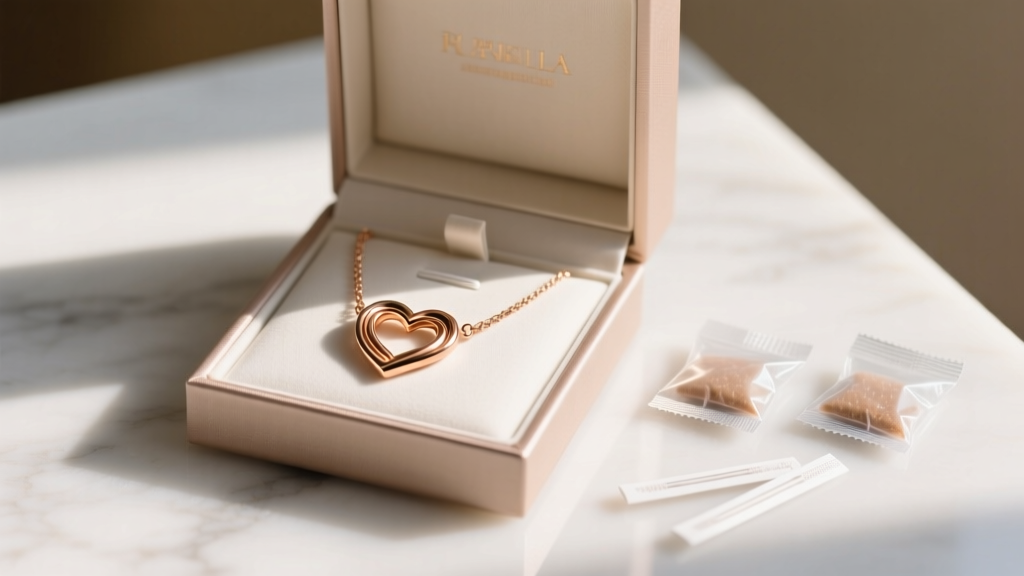
Proper storage is just as critical as cleaning. Tossing a choker into a crowded drawer guarantees kinked chains and crushed velvet.
Humidity and Tarnish Control
Sterling silver tarnishes when exposed to hydrogen sulfide and moisture in the air. Store your metal-accented chokers in individual, airtight polyethylene ziplock bags. Inside each bag, include a 3M anti-tarnish strip and a small silica gel packet to absorb ambient moisture. Modern 2026 anti-tarnish nanotechnology strips are highly effective and can protect silver for up to 12 months before needing replacement.
Physical Positioning
Never hang a velvet or leather choker on a standard jewelry hook; the weight of the pendant will stretch the band and create permanent creases. Instead, lay the choker flat in a lined jewelry box, fastening the lobster clasp to prevent the chain from tangling. If the heart pendant is heavy, place a small piece of acid-free tissue paper under the pendant to prevent it from pressing into the fabric band and leaving an indentation.
Troubleshooting Matrix
Use this quick-reference table to diagnose and resolve common issues with your jewelry.
| Issue | Root Cause | Expert Solution |
|---|---|---|
| Stiff Lobster Clasp | Lotion and sebum buildup inside the spring mechanism. | Use a wooden toothpick dipped in isopropyl alcohol to gently clean the crevice. Work the lever back and forth to distribute the alcohol, then dry completely. |
| Crushed Velvet Nap | Improper storage or heavy pendant indentation. | Hover a garment steamer 6 inches above the crushed area for 10 seconds, then gently brush the nap upward with a soft suede brush. |
| Dull Cubic Zirconia | Oily film from skin contact blocking light refraction. | Soak only the metal chain and pendant in warm distilled water with mild dish soap for 5 minutes. Brush the stone's pavilion (back) gently. |
| Foul Odor on Leather | Bacteria thriving in the porous leather due to sweat. | Wipe with a cloth lightly dampened with a 50/50 mix of distilled water and white vinegar. Air dry flat, then apply leather conditioner. |
When to Seek Professional Restoration
While routine maintenance can be handled at home, certain issues require a professional jeweler's bench. If your gold vermeil heart pendant has faded to reveal the silver core, a jeweler can electroplate it to restore the original finish. Similarly, if the jump ring holding the heart pendant has been pulled open, do not attempt to squeeze it shut with household pliers; this weakens the metal and risks snapping it. A jeweler will use precision parallel-jaw pliers to close the ring and may apply a microscopic drop of solder to ensure it remains permanently sealed.
"Regular, gentle cleaning and proper storage are the most cost-effective ways to preserve the structural integrity and aesthetic beauty of mixed-media jewelry." — Jewelers of America Care Guidelines
By treating your choker heart necklace not just as an accessory, but as a composite piece of wearable art requiring specialized care, you ensure its longevity. Implement these material-specific protocols, and your favorite pieces will continue to make a statement for years to come.