Phiton Necklace Care: Cleaning & Maintenance Tips
Learn how to clean, polish, and maintain your phiton necklace. Expert tips for removing tarnish, dirt from crevices, and protecting cord chains.
The Unique Challenges of the Phiton Necklace
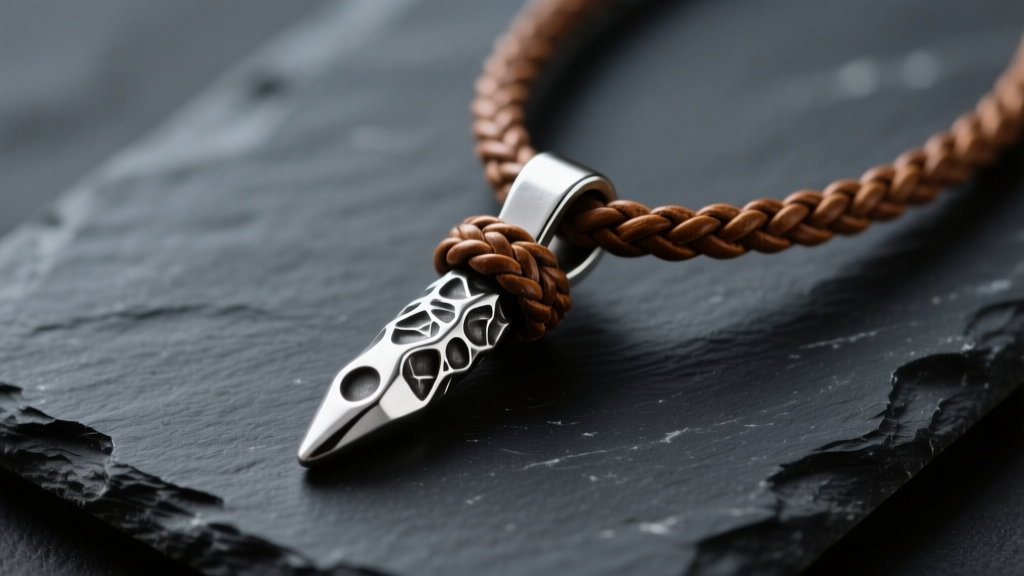
The rugged, textured design of a phiton necklace—often inspired by climbing pitons, heavy hardware, or intricate snake-chain motifs—makes it a standout piece in any jewelry collection. However, the very features that give this necklace its bold, industrial, or outdoor appeal also make it a magnet for dirt, sweat, and environmental grime. Deep metallic crevices, matte finishes, and mixed-material cords (like paracord or braided leather) require a specialized approach to maintenance.
Unlike a simple, high-polish gold chain that can be wiped down in seconds, a phiton necklace demands targeted cleaning protocols to preserve its structural integrity and aesthetic detail. Whether your piece is crafted from 925 sterling silver, Grade 5 titanium, or 316L stainless steel, understanding the chemistry of tarnish and the mechanics of fiber degradation is essential. In this comprehensive guide, we break down the exact steps, tools, and material-specific strategies required to keep your necklace in pristine condition.
Understanding Your Necklace Materials
Before applying any cleaning solution, you must identify the exact materials of your phiton necklace. The cleaning agents safe for one component may severely damage another.
Metals: Silver, Titanium, and Steel
- 925 Sterling Silver: Contains 92.5% silver and 7.5% copper. The copper makes it highly susceptible to oxidation and sulfur-induced tarnish (silver sulfide), especially when exposed to sweat and humid environments.
- Grade 5 Titanium (Ti-6Al-4V): Exceptionally lightweight and virtually immune to corrosion. Titanium does not tarnish, but its porous matte or brushed finishes easily trap skin oils, lotions, and microscopic dirt, dulling its appearance over time.
- 316L Stainless Steel: Highly durable and rust-resistant due to its molybdenum content. While it requires less maintenance than silver, it can still accumulate stubborn grime in textured grooves.
Cords and Chains: Leather vs. Paracord
Many phiton pendants are suspended on heavy-duty cords rather than traditional metal chains. 550 Nylon Paracord is incredibly strong but acts like a sponge for sweat, dead skin cells, and sunscreen. Braided Leather, on the other hand, is highly sensitive to moisture and alkaline soaps, which can strip its natural oils, leading to cracking and dry rot.
Environmental Hazards: What Degrades Your Jewelry?
Daily wear exposes your necklace to a cocktail of corrosive and clogging substances. According to the Gemological Institute of America (GIA), everyday chemicals are the leading cause of premature jewelry degradation. For a phiton necklace, the primary culprits include:
- Climbing Chalk & Magnesium Carbonate: If you wear your necklace outdoors or to the gym, chalk dust packs tightly into the metal crevices, creating a hardened, cement-like paste when mixed with sweat.
- Sebum and Urea: Human sweat contains urea, salts, and lactic acid. Over time, the acidic nature of sweat accelerates the oxidation of sterling silver and degrades leather cords.
- Sunscreens and Lotions: Zinc oxide and titanium dioxide particles found in mineral sunscreens are notorious for clinging to brushed metal finishes and nylon fibers, leaving a stubborn white film.
Your Professional Cleaning Kit
Ditch the harsh commercial jewelry dips. To properly clean a phiton necklace without damaging its finishes or cords, assemble the following kit:
- pH-neutral liquid dish soap (e.g., original Dawn, free of moisturizers and citrus additives)
- Extra-soft baby toothbrush (bristles must be soft enough not to scratch brushed metal)
- Wooden toothpicks or bamboo skewers (for deep crevice extraction)
- Lint-free microfiber polishing cloths
- Distilled water (for the final rinse to prevent hard water spotting)
- Isopropyl alcohol (70% or higher, for titanium and steel only)
Step-by-Step Cleaning Protocol for Metal Components
Follow this exact sequence to safely remove embedded grime from the textured surfaces of your phiton pendant and metal chain.
Step 1: The Warm Soak
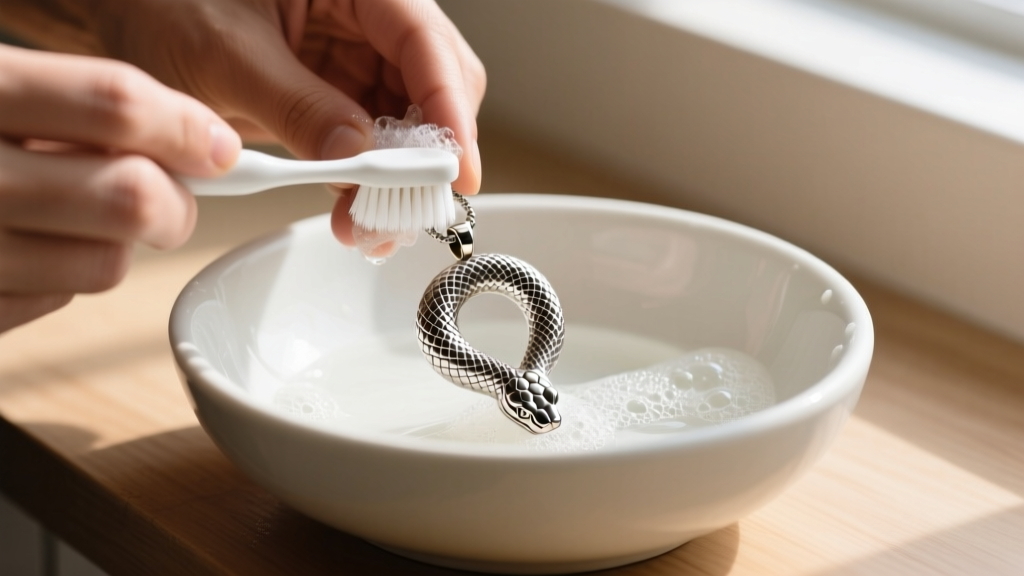
Fill a small ceramic or glass bowl with warm (not hot) distilled water. Add two drops of pH-neutral dish soap and agitate until sudsy. Submerge only the metal components of the necklace. If your pendant is attached to a leather cord, remove the pendant first to prevent the leather from waterlogging. Let the metal soak for 10 to 15 minutes to soften hardened oils and chalk dust.
Step 2: Crevices and Agitation
Remove the pendant from the bath. Using the extra-soft baby toothbrush, gently scrub the surface in circular motions. For the deep, narrow grooves characteristic of a phiton design, use a wooden toothpick to carefully dislodge packed dirt. Never use a metal needle or safety pin, as steel tools will easily scratch sterling silver and leave permanent gouges in the patina.
Step 3: The Distilled Rinse and Dry
Rinse the metal thoroughly under a gentle stream of distilled water. Tap water contains chlorine and dissolved minerals that can leave microscopic spots on titanium and accelerate silver tarnish. Immediately pat the piece dry with a microfiber cloth, then use a hair dryer on the 'cool' setting to blow moisture out of the deepest crevices.
Material-Specific Maintenance Chart
Different metals and cord materials react uniquely to cleaning agents. Use this reference table to ensure you are treating your specific phiton necklace variation correctly.
| Material | Safe Cleaners | Agents to Avoid | Drying Method |
|---|---|---|---|
| 925 Sterling Silver | Mild soap, silver polishing cloth | Bleach, ammonia, toothpaste | Microfiber, air dry completely |
| Grade 5 Titanium | Dish soap, 70% Isopropyl Alcohol | Hydrofluoric acid, harsh abrasives | Lint-free cloth |
| 316L Stainless Steel | Soap, alcohol, glass cleaner | Chlorine bleach (causes pitting) | Microfiber |
| Nylon Paracord | Mild soap, enzymatic fabric cleaner | High heat, fabric softeners | Air dry flat, away from sun |
| Braided Leather | Saddle soap, dedicated leather conditioner | Water immersion, alcohol, baking soda | Wipe with dry cloth |
Cord Care: Paracord vs. Leather
The cord holding your phiton pendant requires just as much attention as the metal hardware.
Reviving Nylon Paracord
Paracord absorbs body odor and sweat salts. To clean it, create a solution of warm water and a drop of enzymatic laundry detergent (which breaks down biological proteins). Submerge the cord for 20 minutes, gently massage it with your fingers, and rinse thoroughly. Never use fabric softener, as it coats the nylon fibers in a waxy residue that attracts more dirt. Allow it to air dry completely before reattaching the pendant.
Conditioning Braided Leather
Leather should rarely be submerged in water. Instead, wipe the cord down with a slightly damp cloth to remove surface dust. Once a month, apply a tiny amount of high-quality leather conditioner or mink oil to a soft cloth and rub it into the braids. This replenishes the lipids lost to environmental exposure and prevents the leather from snapping under the weight of a heavy metal pendant.
What to Avoid: Ultrasonic and Chemical Warnings
While ultrasonic cleaners are popular for diamond rings, they are highly risky for a phiton necklace. The Jewelers of America warns that the high-frequency cavitation bubbles generated by ultrasonic machines (typically operating at 40kHz) can cause severe damage to non-metal components. The vibrations can fray the internal yarns of a paracord, loosen glued inlays, and even crack semi-precious stones if your pendant features any gemstone accents.
Furthermore, avoid commercial 'silver dip' solutions. These liquid tarnish removers rely on thiourea and strong acids to strip silver sulfide instantly. While effective on smooth silver, these chemicals pool inside the deep crevices of a phiton design, leading to rapid re-tarnishing and potential corrosion of the copper alloy beneath the surface.
Proper Storage for Longevity
How you store your necklace when it is not being worn dictates how much cleaning it will require in the future. Sterling silver, in particular, must be protected from atmospheric sulfur and humidity.
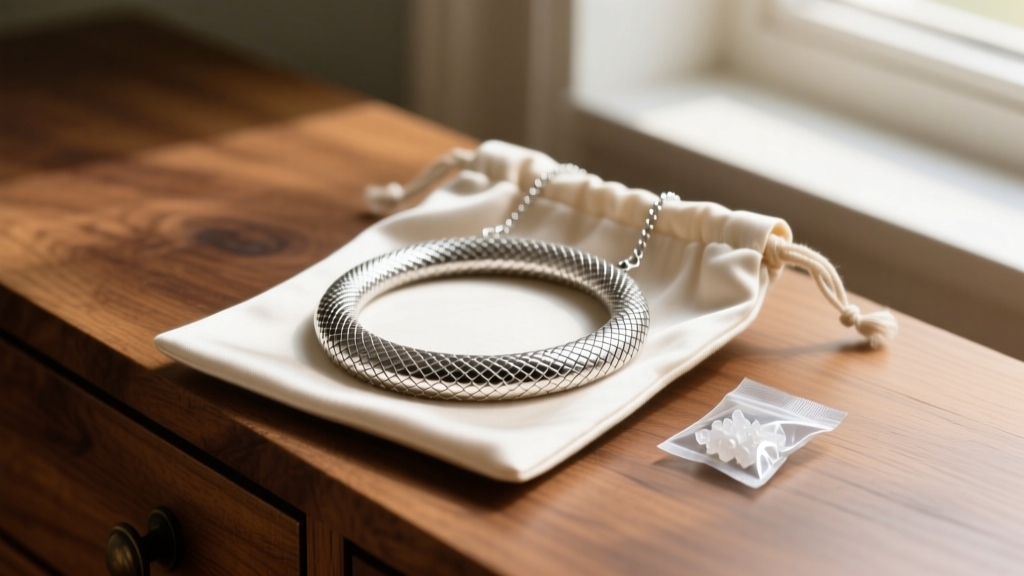
Pro-Tip: Store your phiton necklace in an individual, airtight ziplock bag equipped with an anti-tarnish strip (such as 3M Silver Protector strips) and a small silica gel desiccant packet. This micro-environment neutralizes sulfur gases and absorbs ambient moisture, effectively pausing the oxidation process.
Never toss your necklace loosely into a jewelry box drawer. The heavy metal pendant can easily scratch other pieces, and the cord can become tangled or kinked. Always coil the cord loosely in a circular motion to preserve its structural memory, and lay the pendant flat inside a soft flannel pouch. By adhering to these meticulous care and maintenance protocols, your phiton necklace will retain its rugged character, intricate detailing, and structural integrity for decades of wear.