How to Make a Chain Necklace Shorter: A Material Guide
Learn how to make a chain necklace shorter based on its metal type. Compare tools and techniques for gold, silver, platinum, and steel chains.

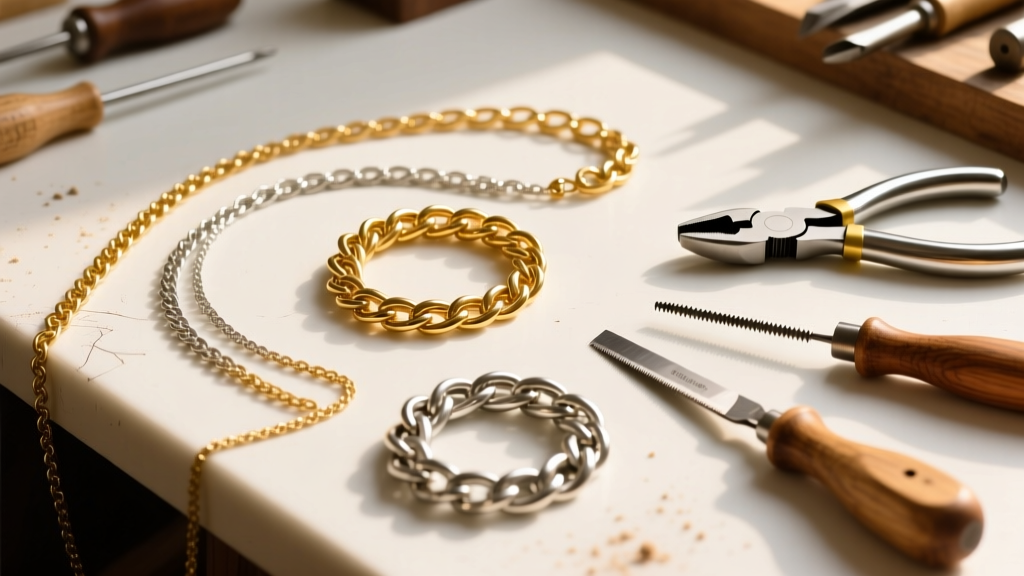
When a pendant sits too low or a choker hangs too loose, the immediate question is how to make a chain necklace shorter. However, treating all chain necklaces as identical is a fast track to ruined jewelry. The process of shortening a chain is fundamentally an exercise in applied metallurgy. A technique that works perfectly on a sterling silver cable chain can catastrophically crush a hollow 14-karat gold puffed mariner chain or destroy the cutting edges of your tools when applied to 316L stainless steel.
In this comprehensive guide, we move beyond generic DIY advice. We will break down exactly how to make a chain necklace shorter by analyzing the Vickers Hardness (HV), tensile strength, and work-hardening properties of the most common jewelry metals. Whether you are resizing a delicate platinum lariat or a heavy titanium curb chain, understanding the material properties is the only way to achieve a clean, professional-grade alteration.
The Metallurgy of Chain Resizing: Why Material Matters
Before picking up a tool, you must identify the metal and its specific alloy composition. The Gemological Institute of America (GIA) and leading jewelry suppliers like Rio Grande categorize jewelry metals not just by their base element, but by their hardness and malleability. These properties dictate how the metal will react to shear force (cutting) and compressive force (crushing).
- Sterling Silver (925): Relatively soft (approx. 65 HV when annealed). Highly malleable, meaning it cuts easily but is prone to stretching if pulled aggressively with pliers.
- 14k & 18k Gold: 18k gold (75% pure) is softer and more prone to denting than 14k gold (58.5% pure), which is alloyed with copper and zinc for increased durability (approx. 125-140 HV).
- Platinum (Pt950): Extremely dense with a high melting point. While its initial hardness is similar to 14k gold, platinum 'work-hardens' rapidly when stressed, meaning the more you bend or file it, the harder and more brittle it becomes at the stress point.
- Stainless Steel (316L) & Titanium: High tensile strength and extreme hardness (150-200+ HV). These metals resist shear force and will easily notch or snap standard jewelry cutters.
Tool Selection Based on Metal Hardness
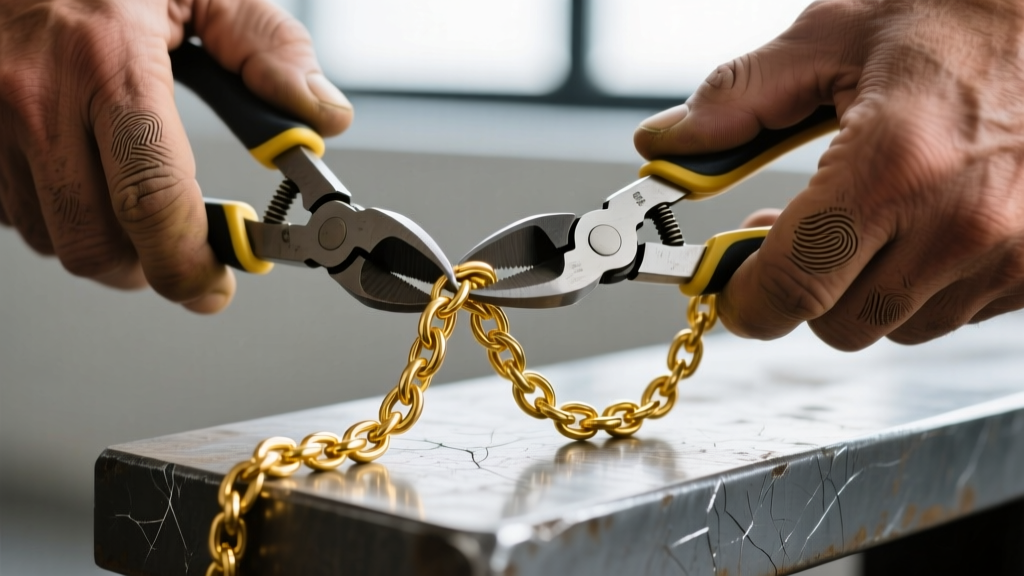
The most common mistake amateurs make when figuring out how to make a chain necklace shorter is using standard hardware store wire cutters. Wire cutters feature a beveled edge that creates a 'pinch point,' crushing the metal before severing it. For jewelry, you must match the tool to the metal's shear strength.
| Metal Type | Hardness / Density | Recommended Cutting Tool | Tools to Strictly Avoid |
|---|---|---|---|
| Sterling Silver & Karat Gold (Solid) | Low to Medium | Precision Flush Cutters (e.g., Lindstrom RX) | Standard bevel wire cutters, heavy pliers |
| Hollow Gold Chains (e.g., Puffed Mariner) | Low (but structurally fragile) | Jeweler's Saw (2/0 blade) with BurLife | ANY mechanical cutters (will crush the tube) |
| Platinum & Palladium | High Density / Work-Hardening | Jeweler's Saw (1/0 blade) or laser welder | Flush cutters (will ruin the blade edge) |
| Stainless Steel & Titanium | Extreme Tensile Strength | Dremel with EZ Lock Diamond Disc or heavy-duty diagonal cutters | Precision flush cutters, standard jeweler's saws |
Step-by-Step Execution: How to Make a Chain Necklace Shorter by Metal
1. Solid Sterling Silver & Karat Gold (Soft to Medium Hardness)
For solid cable, curb, or figaro chains in silver or gold, precision flush cutters are your best option. The goal is to achieve a perfectly flat cut that leaves no sharp burrs.
- Measure the desired length and mark the link to be severed with a fine-tip jeweler's marker.
- Position the flat side of the flush cutter against the side of the link you intend to keep. The beveled side should face the scrap piece.
- Apply steady, even pressure to shear the link. Do not twist the cutter, as this will torque and weaken the adjacent links.
- Use a fine-grit needle file or a cup bur in a flex shaft to gently round the cut edge, ensuring it won't catch on fabric or skin.
2. Platinum & Palladium (High Density, Work-Hardening)
Platinum's galling tendency and density make mechanical cutting difficult. If you use flush cutters, the platinum will push back, dulling the cutter's blades and leaving a deformed link.
- Secure the chain in a small bench vise with leather jaw covers to prevent marring.
- Use a jeweler's saw frame equipped with a lubricated 1/0 or 2/0 high-speed steel blade.
- Saw through the link using long, steady strokes. The lubricant (like BurLife) prevents the platinum from binding the saw blade.
- Because platinum work-hardens, do not attempt to bend the cut link open and closed repeatedly to remove it. Cut the link completely in two places to remove a small 'C' shaped segment, allowing the chain to separate without stressing the surrounding metal.
3. Stainless Steel & Titanium (Extreme Tensile Strength)
Figuring out how to make a chain necklace shorter when dealing with steel or titanium requires power tools or heavy leverage. These metals are notorious for destroying hand tools.
- For chains under 3mm in width, heavy-duty diagonal cutting pliers (often used for piano wire) can suffice, but expect to replace the pliers eventually.
- For thicker curb or Cuban link chains, secure the chain to a bench pin.
- Use a rotary tool (Dremel) fitted with a diamond-coated cutting disc. Wear a respirator and safety glasses, as cutting titanium or steel generates fine, hazardous particulate dust.
- Cut through the link slowly to avoid overheating the metal, which can alter its temper and cause discoloration.
Material-Specific Failure Modes & Troubleshooting
Even with the right tools, the physical structure of the chain dictates its failure points. Review these common troubleshooting scenarios before making your first cut.
Expert Warning: Never attempt to shorten a 'rope' chain using mechanical cutters without extreme caution. The twisted helical structure of a rope chain relies on continuous tension. Cutting a link often causes the adjacent twists to unravel instantly, destroying the chain's structural integrity. Always bind the cut area with painter's tape before severing a rope chain to hold the twists in place.
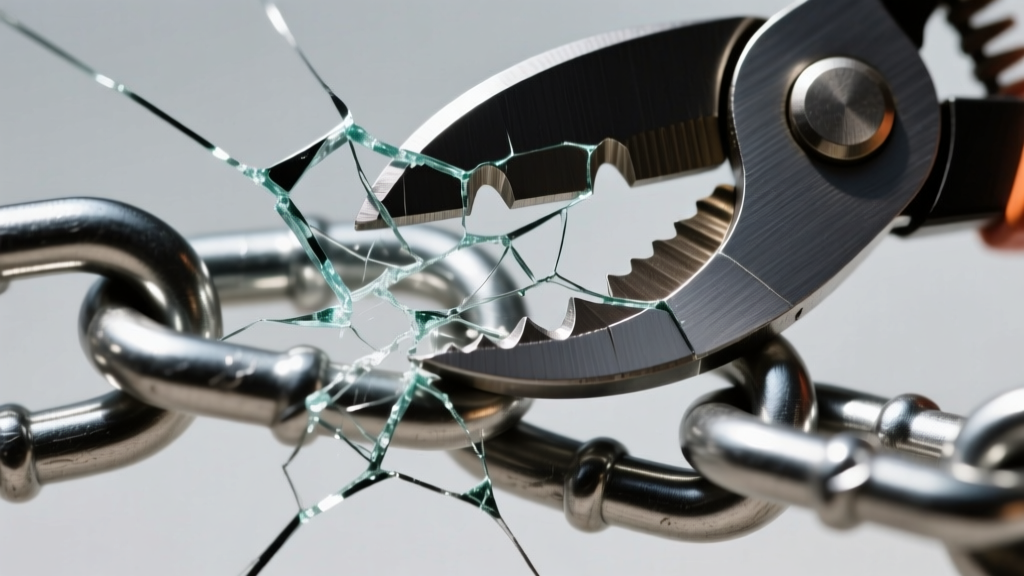
- Hollow Tube Chains: If you apply compressive force (cutters) to a hollow chain, the tube will collapse inward, creating a sharp, jagged edge that cannot be filed smooth. You must use a saw to slice through the hollow wall cleanly.
- Gold-Filled vs. Gold-Plated: Gold-filled chains have a thick mechanical bond of gold over a brass core. They cut similarly to solid gold. Gold-plated chains, however, have a microscopic layer of gold over base metal; filing the cut edge will expose the base metal, requiring specialized electroplating pens to touch up the raw edge.
- Spring-Back in Titanium: Titanium has a high modulus of elasticity. When cutting thick titanium links, the metal may 'spring back' and pinch your saw blade. Always use a slightly thicker saw blade and apply beeswax liberally.
Reattaching the Clasp: Soldering vs. Cold Connections
Once you have determined how to make a chain necklace shorter and removed the excess links, you must reattach the clasp. The method you choose depends entirely on the metal's melting point and your available equipment.
Soldering (For Silver, Gold, and Platinum)
For a permanent, invisible repair, soldering is required. You must use a solder grade that melts at a lower temperature than the chain itself.
- Sterling Silver: Use 'Easy' silver solder (flows at approx. 650°C). A standard butane micro-torch is sufficient.
- 14k/18k Gold: Use 'Easy' or 'Medium' gold solder matched to the karat and color of the chain. Requires a precise flame to avoid melting the delicate links.
- Platinum: Requires Platinum Easy solder (flows at approx. 1,350°C) and a high-temperature oxy-propane or oxy-hydrogen torch. Standard butane torches cannot reach the necessary flow temperature.
Cold Connections (For Steel, Titanium, and Heat-Sensitive Chains)
Stainless steel and titanium cannot be easily soldered outside of a professional laser-welding environment. Furthermore, if your chain features gemstone pendants attached directly to the links, the heat from soldering will shatter the stones. In these cases, use heavy-duty jump rings.
- Select a jump ring made of the same metal (or a stronger one, like steel for a silver chain).
- Ensure the jump ring wire gauge is at least 20% thicker than the chain's wire gauge to act as a structural anchor.
- Open the jump ring by twisting it laterally (never pull it apart, which weakens the circle).
- Thread the chain end and the clasp onto the jump ring, and twist it shut. Use chain-nose pliers to ensure the seam is completely flush, preventing it from catching on clothing.
Conclusion
Understanding how to make a chain necklace shorter is not merely about removing links; it is about respecting the metallurgical boundaries of the jewelry you are altering. By matching your cutting tools to the Vickers hardness of the metal, utilizing saws for hollow and high-density chains, and selecting the appropriate reattachment method, you ensure the longevity and structural integrity of the piece. When in doubt, particularly with high-value platinum or intricate hollow gold designs, consulting a professional bench jeweler equipped with laser welding technology remains the safest investment in your jewelry's lifespan.


