The Ultimate Beginner Guide to Choosing a Jade Donut Necklace
Learn how to choose, authenticate, and style a jade donut necklace. Our beginner guide covers jadeite vs. nephrite, grading, and cord tying.

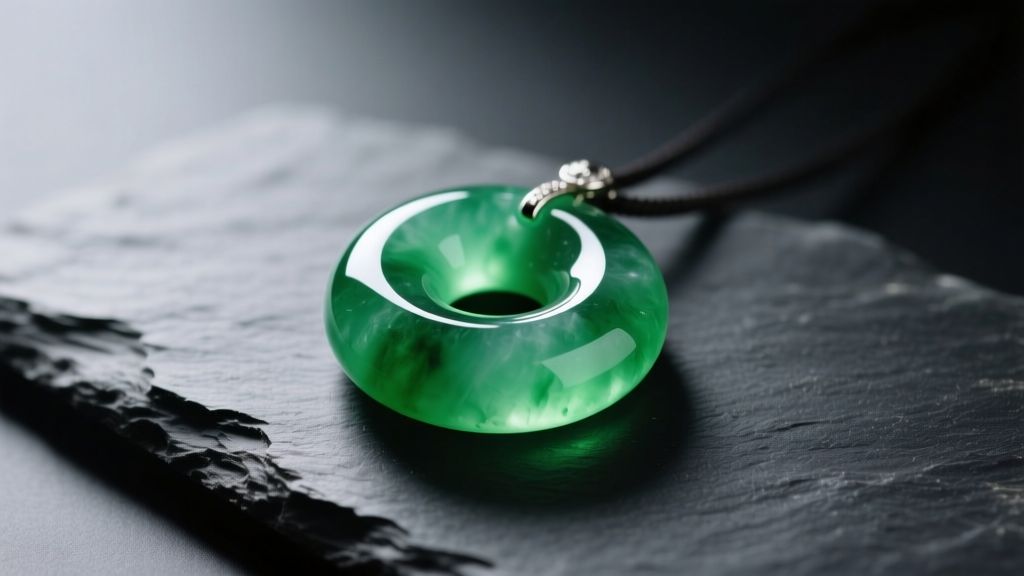
The Cultural Roots of the Jade Donut
Often referred to as a ping'an kou (safety buckle) in Chinese culture, the jade donut necklace is far more than a simple geometric accessory. For centuries, this unbroken circular form has symbolized heaven, eternity, and spiritual protection. For beginners stepping into the world of gemstone jewelry, the jade donut serves as the perfect entry point. It lacks the complex faceting of diamonds or the delicate prongs of gemstone rings, allowing the natural beauty, texture, and color of the stone to take center stage. However, navigating the jade market requires specific knowledge to avoid overpaying for treated stones or misidentified minerals.
Jadeite vs. Nephrite: The Mineral Breakdown
The most critical lesson for any beginner is understanding that 'jade' is actually an umbrella term for two distinct metamorphic minerals: jadeite and nephrite. According to the Gemological Institute of America (GIA), while both are tough and durable, their chemical compositions, optical properties, and market values differ vastly.
| Property | Jadeite (NaAlSi2O6) | Nephrite (Ca2(Mg,Fe)5Si8O22(OH)2) |
|---|---|---|
| Crystal Structure | Granular, interlocking crystals | Fibrous, felt-like interlocking matrix |
| Mohs Hardness | 6.5 to 7.0 | 6.0 to 6.5 |
| Specific Gravity | 3.30 - 3.38 | 2.90 - 3.03 |
| Visual Appearance | Higher luster, glassy, vivid colors | Greasy luster, muted/earthy tones |
| Market Value | Premium (Imperial Green is highest) | More accessible, valued for carving |
When shopping for a jade donut necklace, you are most likely looking at jadeite if the colors are vibrant (apple green, lavender, or icy white) and the finish is highly polished. Nephrite donuts tend to feature deeper, earthier greens (like spinach jade) or creamy mutton-fat whites and possess a softer, wax-like luster.
Decoding Jade Treatments: A, B, and C Grades
The jade market is notorious for chemical enhancements. As a beginner, you must familiarize yourself with the ABC grading system to ensure you are purchasing a natural stone. Mason-Kay Fine Jade Jewelry, a leading authority on jade, outlines these categories clearly:
- Type A (Natural): Completely untreated jade, aside from traditional wax polishing. This is the only type that holds long-term investment value and will not degrade over time.
- Type B (Bleached & Polymer-Impregnated): Acid-washed to remove brown or yellow impurities, then injected with polymer resin to improve translucency. Over time, the resin yellows and the stone becomes brittle.
- Type C (Dyed): Artificially colored using chemical dyes. The color will fade when exposed to sunlight and heat.
- Type B+C: Both bleached, polymer-impregnated, and dyed. Essentially a composite stone with little to no intrinsic gemological value.
Practical Authentication Tests for Beginners
While a certified gemologist is the only person who can guarantee authenticity, you can perform a few non-destructive tests when evaluating a jade donut necklace in person:
- The Temperature Test: Natural jade has high thermal inertia. When held against the cheek or wrist, it should feel noticeably cold and take several seconds to warm up to your body temperature. Glass or resin fakes will warm up almost instantly.
- The Light Test: Shine a strong LED flashlight through the edge of the donut. Natural jadeite will show a fibrous or granular internal structure. If you see air bubbles, you are looking at glass. If the color looks like it is sitting in 'veins' or web-like patterns, it is likely dyed (Type C).
- The Sound Test: Gently tap the donut with a piece of agate or another piece of jade. Natural, untreated jade produces a clear, resonant, bell-like chime. Polymer-impregnated (Type B) jade will emit a dull thud because the resin dampens the acoustic vibrations.
Proportions and Sizing: Finding Your Perfect Donut
The aesthetics of a jade donut rely heavily on its geometric proportions. The ideal ratio between the outer diameter and the inner hole diameter generally falls between 3:1 and 5:1.
Common Size Categories
- Petite (15mm - 20mm outer diameter): Best for delicate, minimalist layering or for children. Often strung on fine silk cords.
- Standard (25mm - 35mm outer diameter): The most versatile size for everyday wear. It sits perfectly at the collarbone or sternum depending on the cord length.
- Statement (40mm+ outer diameter): Worn as a bold, singular focal point. These require thicker, braided macramé cords to support the heavier weight of the stone.
The Importance of Cord Over Chain
A common beginner mistake is threading a jade donut onto a metal chain, such as sterling silver or gold. This is highly discouraged. Metal is harder than the polished inner surface of the jade hole. Over time, the friction of a metal chain will create micro-fractures, eventually chipping the inner ring and compromising the structural integrity of the pendant. Always string your jade donut on a soft, flexible material like waxed cotton, silk, or hand-braided nylon.

How to Tie a Traditional Adjustable Slip Knot
To achieve the perfect drop length without relying on a metal clasp, learn to tie a traditional macramé slip knot. This allows you to adjust the necklace from a choker length to a long pendant style.
- Fold your waxed cotton cord in half and place the loop over the top of the jade donut.
- Pass the two loose ends through the loop and pull tight to secure the stone.
- Bring the two ends around the back of your neck, overlapping them in opposite directions.
- Take the right cord and wrap it around both cords twice, then pass the end through the loops you just created. Pull tight to form a knot.
- Repeat the process on the left side with the opposite cord.
- Trim the excess cord and use a lighter to carefully melt the very tips of the waxed cotton to seal the knots.
Styling Your Jade Donut Necklace
The smooth, unadorned geometry of the jade donut makes it incredibly versatile for modern wardrobes. For a contemporary look, pair an icy white or pale lavender jadeite donut with a crisp, oversized linen button-down shirt, allowing the stone to rest against the skin. Darker, spinach-green nephrite donuts pair beautifully with earth-toned knitwear, turtlenecks, and autumnal layers.
Expert Care Tip: Never clean your jade donut necklace with ultrasonic cleaners or harsh chemical jewelry dips. The vibrations can shatter internal stress fractures, and chemicals can strip the natural wax polish. Simply wipe the stone with a soft, damp microfiber cloth after wearing to remove skin oils and environmental dust.
By understanding the mineralogy, treatments, and proper care techniques outlined above, you can confidently select a jade donut necklace that is not only a beautiful sartorial choice but a genuine, enduring piece of gemological history.


