Dolce Gabbana Necklace Cross: Authentication & Repairs
Learn how to authenticate, clean, and repair your Dolce Gabbana necklace cross. Expert tips on fixing tarnished plating, loose crystals, and broken chains.

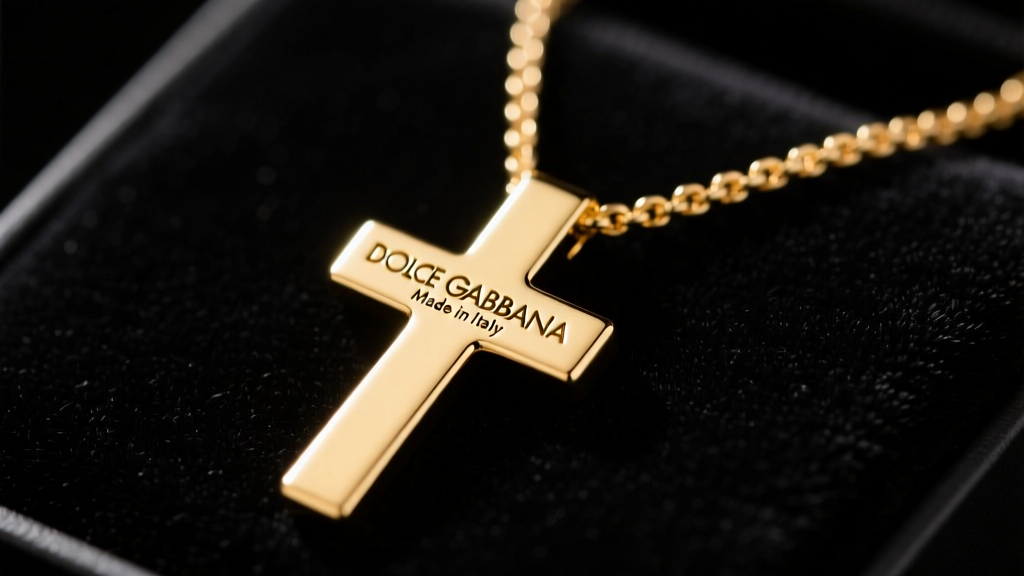
The secondary market for luxury fashion jewelry has exploded in recent years, and the iconic Dolce Gabbana necklace cross remains one of the most highly sought-after—and heavily counterfeited—pieces in the designer realm. Whether you own a classic crystal-embellished Latin cross, a Sicilian Carretto enamel rosary, or a minimalist gold-plated pendant, maintaining these pieces requires specialized knowledge. Unlike fine jewelry crafted from solid 18k gold or platinum, D&G fashion jewelry relies on complex galvanic plating, brass bases, and delicate micro-pave settings that demand specific troubleshooting techniques.
In this comprehensive 2026 guide, we will dissect the anatomy of these pendants, provide a rigorous framework for spotting counterfeits, and offer professional-grade repair solutions for the most common wear-and-tear issues.
The Anatomy of a Dolce Gabbana Cross Pendant
Before attempting any repairs or authentication, you must understand the materials at play. Authentic Dolce & Gabbana cross necklaces are predominantly crafted from ottone (jeweler's brass) rather than cheap zinc alloys. This brass base provides a satisfying, substantial weight and a smooth surface for plating. The gold finish is typically applied via galvanic electroplating or PVD (Physical Vapor Deposition), resulting in a layer that usually ranges between 0.1 and 0.5 microns thick. While beautiful, this thickness is far below the 2.5-micron minimum required for 'gold vermeil,' making it susceptible to wear over time.
The gemstones adorning these crosses are rarely natural diamonds or precious stones. Instead, D&G utilizes precision-cut Swarovski crystals, custom glass, and occasionally acrylic for larger, lightweight statement pieces. According to the Gemological Institute of America (GIA), distinguishing between high-leaded glass crystals and standard acrylic is crucial, as their refraction indices and scratch resistances vary wildly, dictating how they must be cleaned and repaired.
Troubleshooting Authenticity: Spotting the Fakes
Because the Dolce Gabbana necklace cross is a staple in pop culture and streetwear, counterfeiters have flooded the market with convincing replicas. However, mass-produced fakes consistently fail in three specific areas: hallmark depth, crystal setting, and chain soldering.
Hallmarks and Logo Stamps
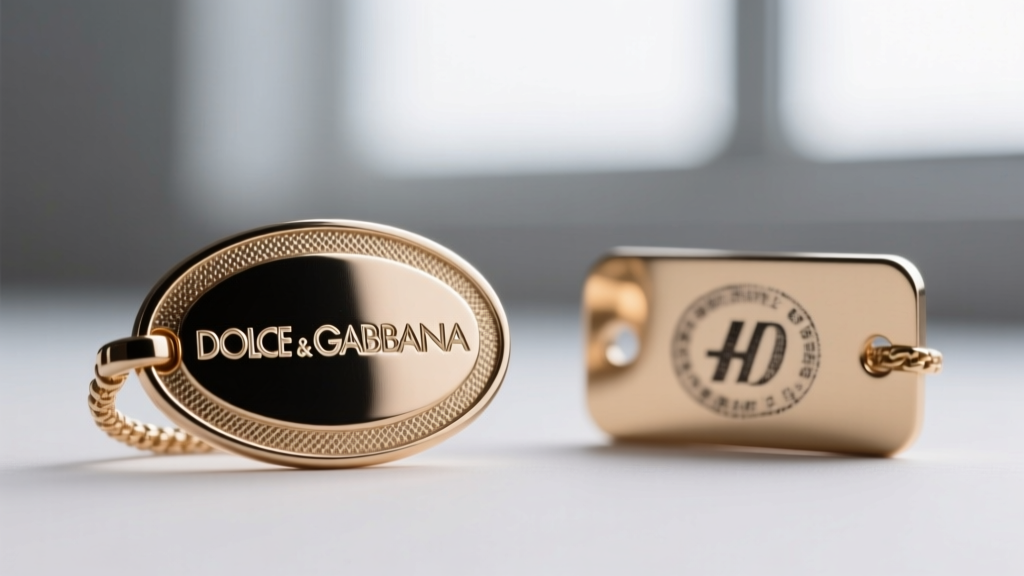
Authentic D&G pieces feature a distinct oval tag near the clasp. On a genuine piece, the 'D&G' logo and 'Made in Italy' hallmarks are deeply laser-engraved or stamped with a proprietary serif font. Counterfeit tags often feature shallow, blurry, or laser-etched markings that look scratched rather than stamped. Furthermore, genuine tags are soldered seamlessly onto the jump ring, whereas fakes often use split rings that can easily pry open.
Crystal Quality and Pave Settings
Examine the cross pendant under a 10x jeweler's loupe. Authentic micro-pave settings use tiny, uniform metal prongs or precision bezels to hold each crystal. Fakes frequently rely on excessive amounts of cloudy epoxy glue to secure uneven, poorly faceted acrylic stones. If the stones lack the signature 'fire' (dispersion of light) or if the foil backing is visible through the side of the setting, you are likely dealing with a replica.
| Feature | Authentic D&G | Counterfeit Replica |
|---|---|---|
| Base Metal | Solid Brass (Heavy, non-magnetic) | Zinc Alloy or Hollow Plastic (Lightweight) |
| Plating | Even galvanic gold/PVD coating | Painted or thin flash-plating (flakes easily) |
| Crystals | Swarovski/Glass (Sharp facets, high refraction) | Acrylic/Resin (Molded seams, dull appearance) |
| Chain Links | Uniform, smoothly soldered cable links | Uneven, unsoldered links that catch on fabric |
Common Wear Issues and How to Fix Them
Even authentic pieces are not immune to the realities of daily wear. Fashion jewelry interacts with environmental factors, skin chemistry, and physical friction, leading to specific failure modes that require targeted interventions.
Tarnished Gold Plating and Brass Bleed-Through
The most frequent complaint among D&G owners is 'brass bleed-through,' where the gold plating wears away to reveal the dark or greenish brass underneath. This is rarely a defect; rather, it is a chemical reaction. Human skin pH levels, combined with lactic acid, sulfur in the air, and the alcohol in perfumes, rapidly degrade thin galvanic layers. According to industry reports from Jewelers Circular Keystone (JCK), fashion jewelry plating has a functional lifespan of 1 to 3 years with daily wear.
The Fix: Never use abrasive polishing cloths (like Sunshine cloths) on plated D&G jewelry, as the micro-abrasives will strip the remaining gold instantly. Instead, wash the cross in a solution of lukewarm water and pH-neutral baby shampoo using a soft-bristled makeup brush. If the brass is fully exposed, you must take the piece to a professional jeweler for a 'gold flash' re-plating. They will polish the raw brass and apply a fresh 1-micron layer of 18k gold via electroplating, restoring the factory finish.
Missing or Loose Pave Crystals
Temperature fluctuations and exposure to UV light cause the factory adhesives used in micro-pave settings to become brittle and fail. If you notice a missing crystal on your cross pendant, do not ignore it; the empty setting will collect oils and dirt, making future repairs difficult.

The Fix: Avoid cyanoacrylate (Super Glue) at all costs. It cures with a white, frosty residue that will permanently cloud the surrounding crystals and ruin the metallic finish. Instead, purchase a tube of G-S Hypo Cement or E6000 Jewelry Adhesive. Using a wax-tipped gem stylus, pick up a correctly sized replacement flat-back crystal (usually SS10 or SS12 for D&G crosses). Apply a microscopic dot of adhesive into the empty bezel using a toothpick, gently seat the crystal, and let it cure undisturbed for 72 hours in a low-humidity environment.
Enamel Chips on Sicilian Carretto Crosses
Dolce & Gabbana's Sicilian Carretto (cart) collection features crosses adorned in vibrant, hand-painted cold enamel. Because enamel is essentially a hardened resin or glass fused to metal, it can chip if the necklace is dropped on a hard surface like tile or marble.
The Fix: Minor chips can be filled using a two-part jewelry cold enamel kit. You must carefully mix the resin with the exact pigment match, apply it into the chip using a fine-tipped needle, and allow it to self-level. Once cured (usually 24 hours), gently buff the surface with a microfiber cloth to blend the repair. For large, structural chips, the piece must be sent to Dolce & Gabbana Customer Care for a factory-level enamel restoration.
Chain Tangling and Clasp Failures
Many D&G cross necklaces feature rosary-style chains or delicate cable chains that are notoriously prone to knotting. Furthermore, the custom D&G lobster clasps, while visually striking, utilize internal springs that can fatigue and fail to snap shut securely.
Untangling: Never pull at a knot with tweezers, as you will permanently stretch and warp the soft brass links. Lay the chain flat on a glass surface, apply a generous dusting of talcum baby powder to reduce friction, and use two fine sewing needles to gently work the center of the knot outward.
Clasp Repair: If the lobster clasp lever feels loose or fails to return to the closed position, the internal tension spring has fatigued. Because these clasps are proprietary and soldered, you cannot easily replace just the lever. A bench jeweler will need to cut the jump ring, remove the broken D&G clasp, and solder on a high-quality 18k gold-filled replacement lobster clasp to maintain the structural integrity of the necklace.
Maintenance Checklist for Longevity
To preserve the structural and aesthetic integrity of your Dolce Gabbana necklace cross, adopt the following maintenance protocol:
- The 'Last On, First Off' Rule: Always put your necklace on after applying perfume, hairspray, and lotions, and remove it immediately upon returning home.
- Storage: Store the cross in an anti-tarnish flannel pouch. Never store it in a humid bathroom or in direct sunlight, which degrades both the plating and the adhesive backing of the crystals.
- Water Exposure: Remove the necklace before swimming. Chlorine in pools will aggressively eat through the gold plating and expose the brass base within minutes.
By understanding the specific material constraints of luxury fashion jewelry, you can effectively troubleshoot issues, confidently verify authenticity, and ensure your Dolce Gabbana cross remains a pristine statement piece for years to come.


