How to Clean and Protect Your Petrified Wood Necklace
Learn how to safely clean, store, and maintain your petrified wood necklace. Expert tips on polishing, avoiding damage, and preserving its natural beauty.

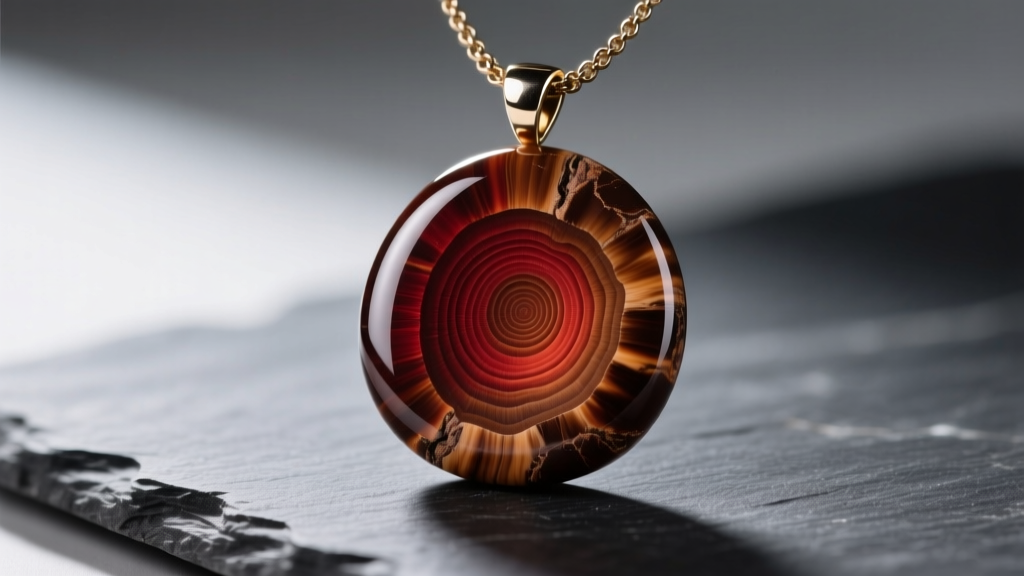
The Science of Petrified Wood: Hardness and Vulnerabilities
Despite its name, a petrified wood necklace is no longer organic wood. Through a process called permineralization, the original organic material has been replaced by minerals—primarily quartz, chalcedony, and jasper—over millions of years. Because its primary composition is silica-based, petrified wood registers between 6.5 and 7.0 on the Mohs hardness scale, according to the Gemological Institute of America (GIA). While this makes it relatively durable and resistant to everyday scratches from dust (which typically contains quartz particles at a 7.0 hardness), it introduces specific vulnerabilities that jewelry owners must understand.
The fossilization process rarely results in a perfectly uniform stone. Many petrified wood pendants contain matrix inclusions, clay pockets, or micro-fractures where the silica replacement was incomplete. These structural anomalies mean that while the surface may be hard, the internal integrity can be surprisingly fragile. Furthermore, the polish applied to petrified wood to reveal its stunning cellular structures and tree rings is a physical abrasion process. Harsh chemicals or improper cleaning techniques can degrade this polish, leaving the stone looking cloudy, dull, and lifeless.
Step-by-Step Cleaning Routine for Petrified Wood Pendants
Because of the potential for internal fractures and the sensitivity of the metal settings (often 925 sterling silver or gold vermeil), you must use a gentle, non-invasive cleaning method. Follow this exact protocol to safely remove oils, lotions, and environmental grime from your necklace.
1. Prepare the Cleaning Solution
Never use tap water, as the chlorine and dissolved minerals can leave microscopic hard water spots on the quartz surface and accelerate the tarnishing of sterling silver settings. Instead, mix one cup of lukewarm distilled water with two drops of a pH-neutral, dye-free dish soap (such as Dawn Free & Clear). Avoid soaps with heavy degreasers or moisturizing agents, which can leave a filmy residue in the crevices of the stone's natural wood grain patterns.
2. The Gentle Wash Technique
Do not soak the necklace. Prolonged submersion can allow water to seep into micro-fractures or degrade the adhesive if the pendant is glued into a bezel setting. Instead, dip a soft, lint-free microfiber cloth or a baby-soft toothbrush into the solution. Gently dab and wipe the surface of the petrified wood pendant. If cleaning a pendant with deep, unpolished bark textures or crevices, use the soft toothbrush to lightly sweep out trapped debris without applying downward pressure.
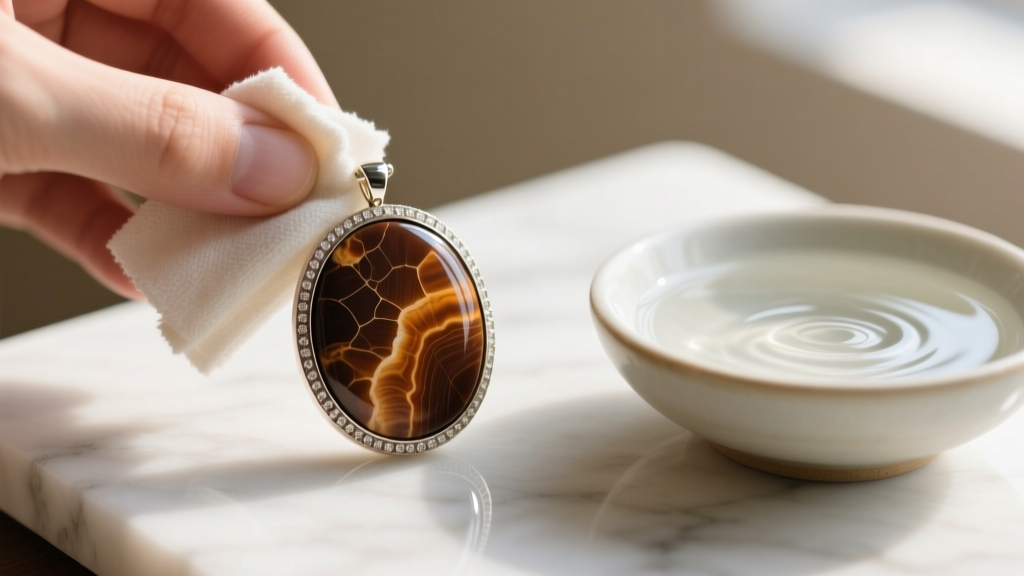
3. Rinsing and Drying
Rinse the pendant quickly under a slow stream of lukewarm distilled water to remove any soap residue. Immediately pat the stone and the metal setting dry with a clean, dry microfiber cloth. Follow up by using a hairdryer on the cool, low-air setting to blow out any remaining moisture from the chain links or the back of the setting. Leaving moisture trapped against the skin-facing side of the pendant can cause skin irritation and rapid silver oxidation.
What to Avoid: The "Never Do This" List
The most common way people ruin a petrified wood necklace is by treating it like a standard diamond or sapphire. Silica-based fossils require specialized care. Below is a breakdown of common jewelry cleaning methods and why they are dangerous for your petrified wood pieces.
| Cleaning Method | Safety Level | Why It Fails / Risks |
|---|---|---|
| Ultrasonic Cleaners | Highly Unsafe | High-frequency cavitation bubbles collapse against the stone, causing catastrophic internal fracturing, especially near matrix inclusions. |
| Steam Cleaners | Highly Unsafe | Sudden thermal shock from high-heat steam can cause the quartz and clay matrix to expand at different rates, cracking the pendant. |
| Commercial Silver Dips | Unsafe | The thiourea and acids in silver dips will etch the polished surface of the petrified wood, permanently dulling the finish. |
| Ammonia / Bleach | Unsafe | Harsh alkalis degrade the structural integrity of porous inclusions and will aggressively strip gold vermeil or rhodium plating. |
| Warm Soapy Water | Safe | When using distilled water and pH-neutral soap, this is the gold standard for safe, effective maintenance. |
Expert Insight: According to mineralogical data from the American Museum of Natural History, the presence of iron oxides (which give petrified wood its beautiful red and yellow hues) can be sensitive to prolonged UV exposure and harsh acids. Always keep your fossil jewelry away from direct, intense sunlight when not wearing it to prevent color fading over decades.
Chain, Cord, and Setting Maintenance
The care of your petrified wood necklace extends beyond the stone itself. The hardware holding the fossil is equally susceptible to wear and tear.
Sterling Silver and Gold Vermeil Chains
If your pendant hangs on a 925 sterling silver chain, you must manage tarnish. Silver reacts with sulfur compounds in the air and on human skin. After wearing your necklace, wipe the chain down with a dedicated silver-polishing cloth before storing it. Never use liquid silver polishes on the chain while the petrified wood pendant is attached, as the chemicals will ruin the stone's polish. For gold vermeil (a thick layer of gold over sterling silver), avoid any abrasive cloths entirely; simply wipe with a damp microfiber cloth and dry immediately to prevent wearing through the gold layer.
Leather and Waxed Cotton Cords
Many artisan petrified wood pendants are strung on leather or waxed cotton cords for a rustic, earthy aesthetic. These organic materials are highly sensitive to moisture and skin oils. If your cord becomes stiff or discolored, clean it by wiping it with a slightly damp cloth and a tiny amount of saddle soap. Condition leather cords once a year with a specialized leather balm to prevent dry rot and snapping. Always unclasp the cord and store it flat to avoid permanent kinking.
Bezel vs. Prong Settings
Petrified wood is frequently set in bezels (a metal rim wrapping around the stone) because the edges of the fossil can be brittle. If your piece is in a prong setting, inspect the metal prongs every six months. If a prong lifts even slightly, the stone is at risk of popping out and shattering on a hard floor. Take it to a jeweler for a professional tightening immediately.
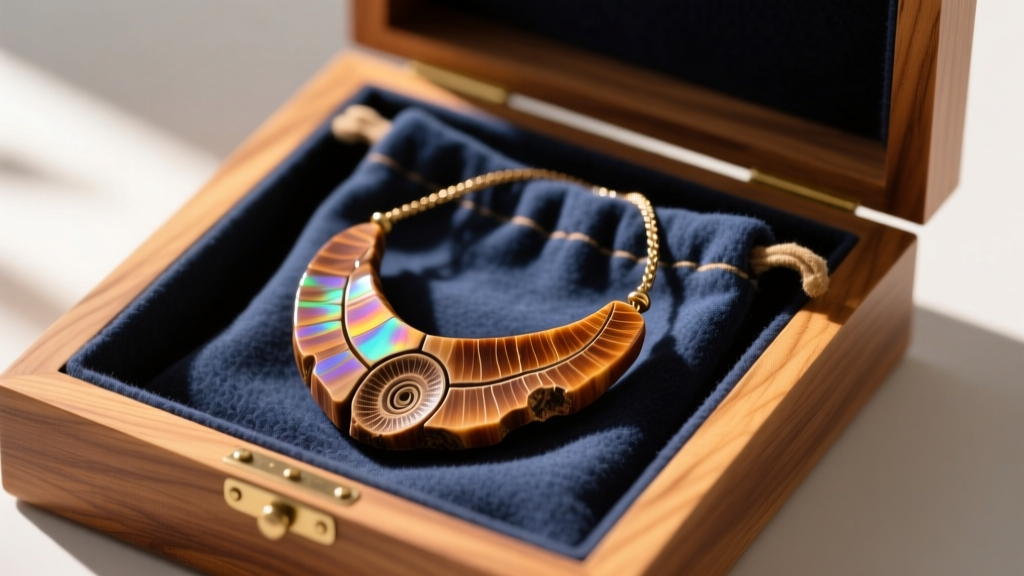
Proper Storage Techniques to Prevent Micro-Scratches
Because petrified wood shares a hardness rating with quartz, it is harder than most metals but softer than diamonds, sapphires, and topaz. If you toss your necklace into a communal jewelry box, the harder gemstones will easily scratch the surface of your fossil, while the petrified wood itself will scratch your silver and gold pieces.
The Golden Rule of Storage: Every petrified wood necklace must be stored individually. Use soft, anti-tarnish flannel pouches or separate compartments in a fabric-lined jewelry box. Ensure the clasp is fastened before storing to prevent the chain from tangling and pulling on the pendant's bail (the loop connecting the stone to the chain). Finally, store the jewelry box in a climate-controlled environment; extreme fluctuations in humidity and temperature can cause the metal settings to expand and contract, eventually loosening their grip on the fossilized stone.


