The necklace Dominic Toretto Wore: A Material Comparison
Analyze the metallurgical properties of the necklace Dominic Toretto made famous. We compare 925 silver, 316L steel, and titanium for daily wear.

The Anatomy and Physics of an Iconic Pendant
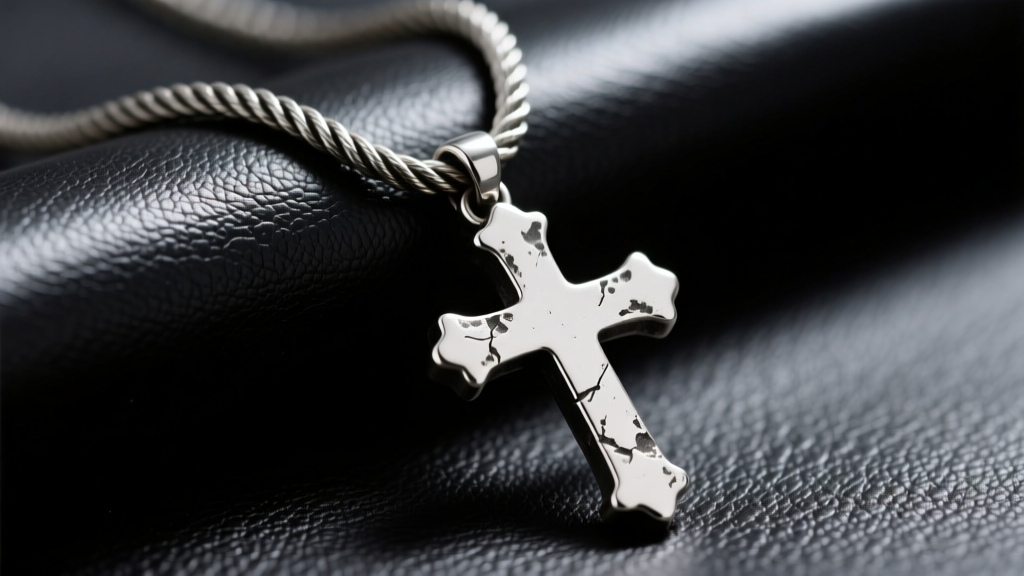
When discussing iconic cinematic jewelry, few pieces carry the cultural weight of the necklace Dominic Toretto wore throughout the Fast & Furious franchise. The oversized silver cross pendant is more than a prop; it is a symbol of family, faith, and resilience. However, replicating this piece for daily wear requires a deep understanding of jewelry metallurgy and kinetic physics. A pendant of this scale—typically measuring 2.5 to 3 inches in height and over an inch in width—acts as a pendulum. Every step you take transfers kinetic energy through the chain and directly into the bail (the loop connecting the pendant to the chain).
If the material lacks adequate tensile strength or the bail is improperly cast, the pendant will eventually snap off. Furthermore, the sheer volume of metal required to cast a solid cross of this size means that material density will dictate the final weight. A heavy pendant can cause neck strain or stretch out weaker chains over time. To choose the right iteration of this iconic piece, we must evaluate the specific metallurgical properties of the most common materials used in 2026: 925 Sterling Silver, 316L Stainless Steel, Grade 5 Titanium, and the dangerous cheap alloys flooding the market.
925 Sterling Silver: The Authentic, Heavyweight Choice
In the early films, the original props were crafted from sterling silver. Composed of 92.5% pure silver and 7.5% copper, this alloy offers a brilliant, reflective luster that perfectly captures the camera's lighting. According to the Gemological Institute of America (GIA), the addition of copper is essential, as pure silver (999) is far too soft to hold the detailed engraving and structural integrity required for a large cross pendant.
However, silver has a high specific gravity of 10.49 g/cm³. A solid 3-inch sterling silver cross can easily weigh between 85 and 120 grams. This substantial weight provides a premium, grounding feel on the chest, but it demands a heavy-duty chain. Additionally, the copper content makes 925 silver susceptible to tarnishing. When exposed to sulfur compounds in the air and the natural acids in human sweat, the copper reacts to form silver sulfide, creating a dark patina. For many fans, this oxidation in the crevices of the cross adds a rugged, vintage aesthetic that perfectly matches the character's gritty persona.
316L Stainless Steel: The Marine-Grade Daily Beater
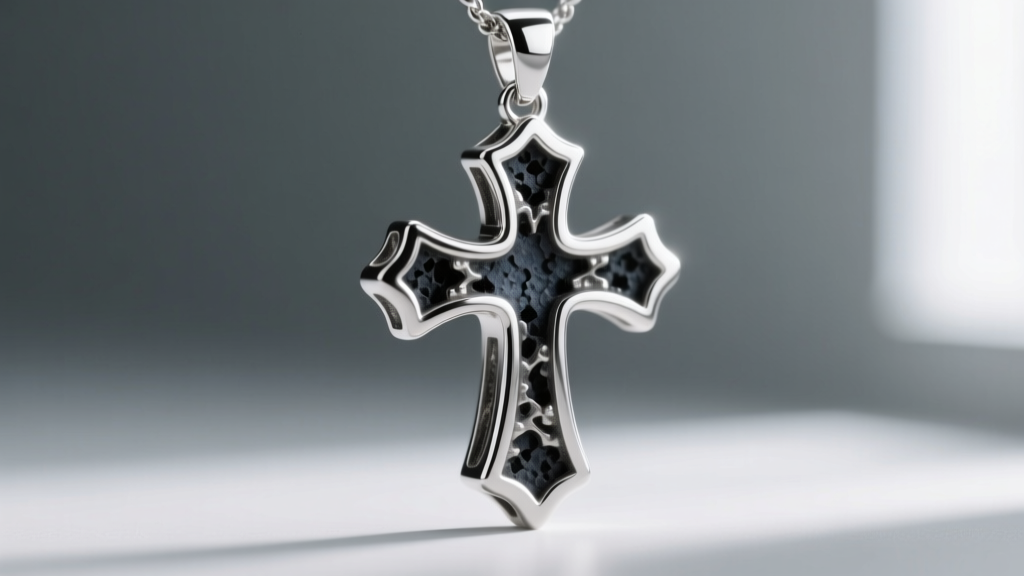
For those who want the aesthetic of the Toretto cross without the high maintenance or the $300+ price tag of solid silver, 316L stainless steel is the undisputed champion of daily wear. The "L" stands for low carbon, but the real magic lies in the addition of 2-3% molybdenum. As noted by the British Stainless Steel Association, molybdenum drastically increases resistance to pitting corrosion, particularly from chlorides (like saltwater and human sweat).
With a Vickers hardness rating of 150-190 HV (compared to silver's 60-65 HV), 316L steel is highly resistant to scratching and bending. Its density is roughly 8.0 g/cm³, making a steel cross about 20% lighter than its silver counterpart. While it lacks the deep, mirror-like reflectivity of polished silver, brushed or matte-finished steel offers an industrial, utilitarian look that aligns perfectly with a mechanic's lifestyle. It is also entirely hypoallergenic for the vast majority of people, as the nickel content is tightly bound within the chromium-oxide passive layer on the metal's surface.
Grade 5 Titanium: The Lightweight Anomaly
Titanium (specifically Ti-6Al-4V) is occasionally used for oversized pendants due to its incredible strength-to-weight ratio. With a density of just 4.43 g/cm³, a titanium cross will weigh less than half of a silver one. However, titanium is notoriously difficult to cast using traditional jewelry lost-wax methods due to its high melting point and reactivity with oxygen. Therefore, titanium crosses are usually CNC-machined from solid billets. This results in sharper, more geometric edges that lack the organic, hand-finished feel of the original movie prop. Unless you have severe metal allergies or neck issues that preclude heavy jewelry, titanium is generally not recommended for this specific replica.
The Danger of Zinc Alloys and Brass Replicas
The market is saturated with $15 replicas made from zinc alloy (often marketed as "Tibetan Silver") or hollow brass. These materials represent a catastrophic failure point. Zinc alloys are incredibly brittle; the kinetic swing of a heavy cross will cause microscopic fractures at the bail, leading to sudden breakage. Brass, an alloy of copper and zinc, will rapidly oxidize when exposed to the acidic pH of human sweat, leaving a permanent green stain on your chest. Always check the hallmark or request a material certification before purchasing.
Material Showdown: 2026 Property Matrix
| Material | Density (g/cm³) | Hardness (HV) | Tarnish Resistance | Avg. Price Range |
|---|---|---|---|---|
| 925 Sterling Silver | 10.49 | 60 - 65 | Low (Develops Patina) | $250 - $600 |
| 316L Stainless Steel | 8.00 | 150 - 190 | Excellent | $40 - $120 |
| Grade 5 Titanium | 4.43 | 334 | Excellent | $150 - $300 |
| Zinc Alloy (Replica) | 6.60 | 80 - 100 | Poor (Corrodes) | $10 - $25 |
Chain Selection: Supporting the Pendulum
The pendant is only half the equation. A 100-gram cross requires a chain with high tensile strength and secure link welding. The two most historically accurate and structurally sound choices are the Cuban Link and the Rope chain.
- Gauge Thickness: Never go below 4mm. For a large cross, a 5mm to 6mm width provides the correct visual proportion and the necessary structural support.
- Link Welding: Ensure every link is laser-welded or soldered shut. Open links will eventually pull apart under the dynamic load of a swinging pendant.
- Clasp Mechanics: Standard spring-ring clasps will fail. You must use a heavy-duty lobster claw clasp (minimum 12mm in length) or a custom barrel clasp to ensure the necklace stays secure during physical activity.
Final Verdict: Which Metal Should You Choose?
If you are a purist seeking screen-accurate authenticity and appreciate the evolving, rugged patina that comes from daily wear, 925 Sterling Silver is the only correct choice. The heavy drape and thermal conductivity of silver provide an unmatched premium experience. However, if you work with your hands, spend time in humid environments, or simply want a low-maintenance piece that retains its exact finish for decades, 316L Stainless Steel offers superior structural integrity at a fraction of the cost. Whichever metal you choose, prioritize a thick, soldered chain and a robust bail to ensure your necklace survives the test of time.


