Mini Gold Cross Necklace Value & Budget Buying Guide
Discover the true value of a mini gold cross necklace. Compare 10k, 14k, and 18k pricing, spot retail markups, and find the best budget options.

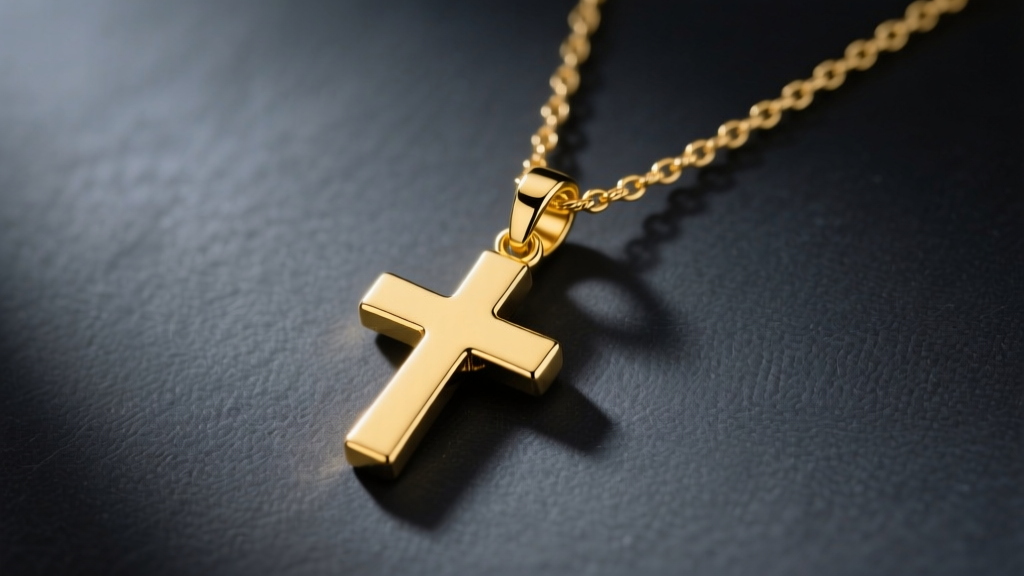
The Anatomy of a Mini Gold Cross Necklace
When shopping for a mini gold cross necklace, consumers are often met with a dizzying array of price points, ranging from $30 fashion pieces to $800 fine jewelry staples. To accurately assess budget and value, you must first understand the physical parameters that define a 'mini' pendant. In the jewelry industry, a mini cross typically measures between 10mm and 18mm in height, with a width proportionately scaled to roughly 7mm to 12mm. Because of these diminutive dimensions, the actual gold weight of the pendant itself is usually between 0.3 grams and 1.2 grams.
This low gold weight is precisely why mini pendants are heavily marked up by retailers. The labor cost to cast, polish, and attach a bail (the loop connecting the pendant to the chain) is virtually the same for a 0.5-gram mini cross as it is for a 3.0-gram standard cross. Therefore, budget-savvy buyers must look beyond the pendant and evaluate the entire necklace system, including the chain weight, karat purity, and manufacturing method, to determine true value.
Karat Breakdown: 10K vs. 14K vs. 18K Value
The karatage of the gold dictates both the durability and the baseline material cost of your necklace. According to the Gemological Institute of America (GIA), pure 24K gold is too soft for everyday jewelry, meaning it must be alloyed with metals like copper, silver, and zinc. Here is how the three most common karats perform in a budget assessment:
- 10K Gold (41.7% Pure): The most budget-friendly and durable option. It has a slightly paler yellow hue and is highly resistant to scratching. Ideal for buyers wanting a rugged, low-cost daily wearer.
- 14K Gold (58.3% Pure): The industry standard in the US. It offers the perfect equilibrium between rich color, structural integrity, and price. For a mini cross, 14K provides the best long-term value retention.
- 18K Gold (75.0% Pure): Prized for its deep, saturated yellow color and hypoallergenic properties. However, it is softer and commands a significant premium, making it less ideal for strict budget buyers.
Pricing Table by Karat and Weight
| Karat | Gold Purity | Typical Mini Weight | Estimated Melt Value | Fair Retail Range |
|---|---|---|---|---|
| 10K | 41.7% | 0.4g - 0.8g | $15 - $25 | $45 - $85 |
| 14K | 58.3% | 0.5g - 1.0g | $25 - $45 | $80 - $160 |
| 18K | 75.0% | 0.6g - 1.2g | $40 - $75 | $150 - $280 |
Note: Melt values fluctuate daily based on the gold spot market. Fair retail ranges assume a standard 100% to 200% markup over melt value to cover labor, overhead, and chain inclusion.
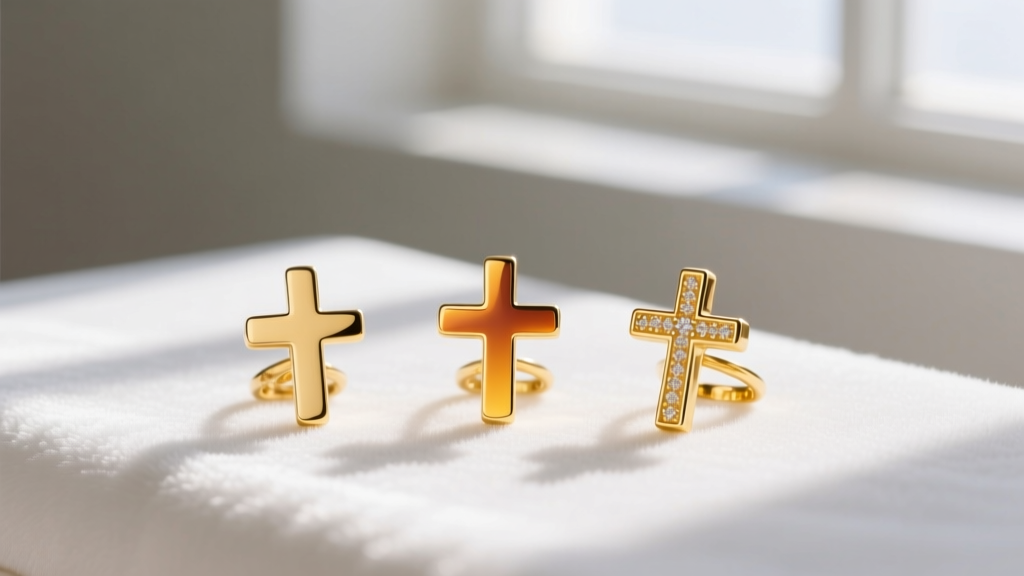
Solid, Hollow, and Pave: Where the Budget Traps Are
Not all gold jewelry is created equal. The manufacturing technique used to create your mini gold cross necklace drastically impacts its lifespan and true value.
The Hollow Gold Trap (Electroforming)
Many budget brands sell 'lightweight' gold crosses that appear large but weigh almost nothing. These are created via electroforming, a process that deposits a microscopic shell of gold over a wax core, which is later melted out. While this yields a large pendant for a low price, hollow gold is notoriously fragile. A single accidental snag or drop can dent the piece, and it is nearly impossible for a jeweler to repair. For a mini cross, which is already small, hollow construction is unnecessary and highly discouraged.
The Pave Diamond Illusion
Adding pave diamonds to a mini cross is a common retail tactic to inflate the price tag. Jewelers use 'melee' diamonds (typically 0.01 to 0.05 carats each). While a pave mini cross might feature 15 tiny diamonds, the total carat weight is often less than 0.10 carats, and the actual wholesale value of those melee stones is under $20. However, retailers will charge a $200 to $400 premium for the 'diamond' upgrade. If you are strictly assessing budget and material value, a solid, unadorned gold cross offers vastly superior intrinsic value compared to a pave counterpart.
Chain Selection: The Hidden Cost Multiplier
When buying a mini gold cross necklace, the chain will almost always contain more gold than the pendant itself. A standard 16-inch or 18-inch chain weighs between 1.5 grams and 4.0 grams, whereas the mini pendant weighs under 1.2 grams. Therefore, your budget assessment must heavily weigh the chain's construction.
- Solid Cable Chain (0.8mm - 1.0mm): The undisputed champion of value and durability. A solid 0.9mm cable chain in 14K gold will weigh roughly 1.8 grams, cost around $70-$90 at a fair retailer, and can withstand decades of daily wear without stretching or snapping.
- Hollow Rope or Box Chains (1.2mm - 1.5mm): These chains look thick and substantial but are hollow inside to save on gold costs. They are prone to kinking, crushing, and breaking. Avoid hollow chains entirely if you want long-term value.
- Gold Plated vs. Gold Vermeil: A $30 gold-plated brass chain contains less than $0.10 worth of actual gold and will tarnish or wear off within months. Always insist on solid gold for the chain to ensure the necklace holds any residual value.

Retail Markup vs. Melt Value: Assessing the Premium
To truly master the budget assessment of a mini gold cross necklace, you must learn to calculate the 'fair price' by reverse-engineering the retail markup. The jewelry industry operates on varying margin structures depending on the sales channel.
Traditional mall jewelers and luxury brands often apply a 300% to 500% markup. A 14K solid gold mini cross necklace that contains $60 worth of raw gold and labor might be priced at $350 in a high-end boutique. Conversely, direct-to-consumer (DTC) online jewelers and independent goldsmiths typically operate on a 100% to 150% markup, pricing that exact same necklace between $120 and $150.
To track real-time gold values and understand the baseline material cost before you buy, buyers should reference live market data from sources like Kitco. By checking the spot price of gold, dividing it by 31.1 (the number of grams in a troy ounce), and multiplying by the karat purity (e.g., 0.583 for 14K), you can determine the exact melt value per gram of the necklace. Add $20 for basic casting and polishing labor, and you have the absolute floor price. Any retail price exceeding double that floor price is a premium you are paying strictly for brand name or storefront overhead.
Final Verdict: Maximizing Your Investment
The ultimate sweet spot for a mini gold cross necklace—balancing upfront budget constraints with long-term intrinsic value—is a 14K solid gold pendant (weighing 0.6g to 0.9g) paired with an 18-inch solid 0.9mm cable chain. This configuration avoids the fragility of hollow jewelry, bypasses the inflated costs of melee diamonds, and utilizes the most structurally sound chain link available.
By focusing on gram weight, insisting on solid casting, and purchasing from transparent, low-overhead retailers, you can acquire a timeless, durable piece of fine jewelry that retains its material value and outlasts fleeting fashion trends. Always ask the jeweler for the exact gram weight of both the pendant and the chain before checkout; a reputable seller will provide this data instantly, while a brand relying on inflated markups will hesitate.


