How to Choose the Perfect 14k Gold Initial Necklace
Discover what to look for when buying a 14k gold initial necklace. Learn about chain types, gold stamps, font styles, and pricing in our expert guide.

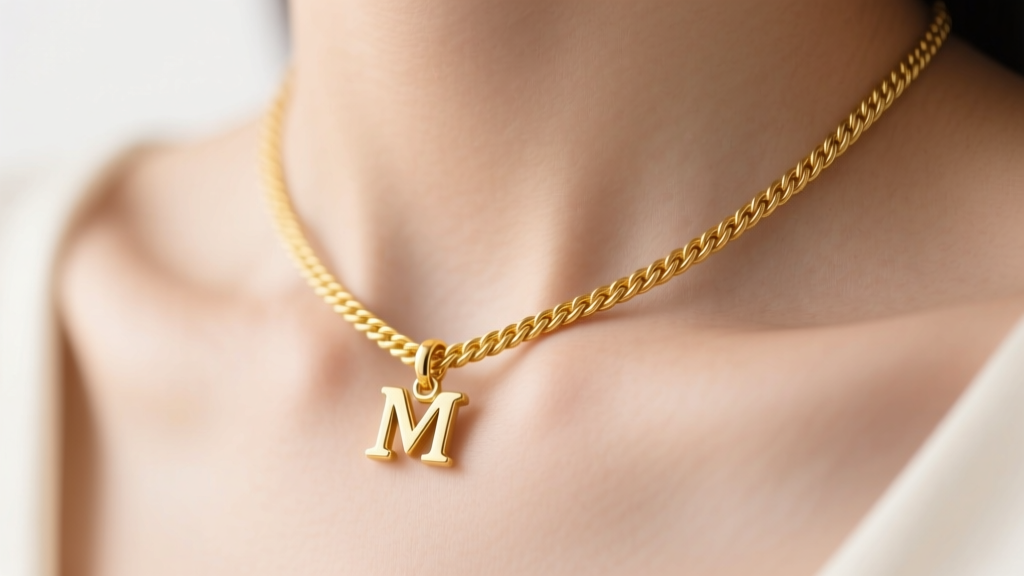
A personalized piece of jewelry is more than just an accessory; it is a wearable narrative. The 14k gold initial necklace has cemented its place as a cornerstone of modern fine jewelry, bridging the gap between deeply sentimental value and effortless everyday styling. Whether you are commemorating a child, a partner, or your own identity, selecting the right piece requires looking past the aesthetic and understanding the metallurgy, craftsmanship, and structural integrity of the jewelry.
In this comprehensive buying guide, we break down exactly what to look for when investing in a 14k gold initial necklace, ensuring your piece is durable, authentic, and perfectly proportioned for your wardrobe.
Decoding the 14k Stamp: Purity, Alloys, and Durability
When shopping for fine jewelry, the karatage dictates not just the color, but the structural lifespan of the piece. Pure 24k gold is far too soft for daily wear; it will bend, warp, and lose its shape within weeks. A 14k gold initial necklace strikes the optimal balance for everyday pendants. Composed of 58.5% pure gold and 41.5% alloy metals, 14k gold offers superior tensile strength and scratch resistance compared to 18k or 22k alternatives.
According to the Federal Trade Commission's Jewelry Guides, any piece sold in the United States as 14k gold must be accurately stamped. Look for the hallmarks 14k, 14K, or the numeric equivalent 585. The alloy metals mixed with the gold determine the final color:
- Yellow Gold: Alloyed with silver and copper to maintain a warm, classic hue.
- White Gold: Alloyed with nickel, palladium, or manganese, and typically plated with rhodium for a bright, silvery finish.
- Rose Gold: Alloyed with a higher percentage of copper to achieve its signature pinkish-red warmth.
For initial pendants, which are subject to constant friction against the skin and clothing, 14k yellow or rose gold is often preferred because it does not require the periodic rhodium replating that white gold demands.
Chain Styles and Gauge Specifications
The chain is the structural backbone of your necklace. A delicate initial pendant requires a chain that is lightweight enough to drape elegantly, yet strong enough to resist snapping under minor tension. The thickness, measured in millimeters (mm) or gauge, is critical. For standard initial pendants weighing between 1.5 and 3 grams, a chain thickness of 0.9mm to 1.2mm is ideal.
| Chain Style | Best Thickness | Durability | Aesthetic Profile |
|---|---|---|---|
| Cable | 0.9mm - 1.2mm | Moderate | Classic, minimalist, lets the pendant shine. |
| Box | 0.8mm - 1.1mm | High | Modern, geometric, highly resistant to kinking. |
| Rope | 1.0mm - 1.5mm | Very High | Textured, vintage-inspired, catches the light beautifully. |
| Figaro | 1.2mm - 1.5mm | High | Bold, patterned, better suited for heavier, larger initials. |
Always inspect the clasp mechanism. A lobster claw clasp is vastly superior to a spring ring clasp for longevity. Lobster clasps are typically cast solid and feature a stronger internal spring, whereas spring rings are often hollow and prone to jamming or breaking over time.
Pendant Anatomy: Manufacturing, Typography, and Bails
The way an initial pendant is manufactured drastically affects its price, weight, and edge definition. There are three primary manufacturing methods used in the industry today:
1. Die-Striking vs. Casting
High-quality 14k gold initial necklaces are often die-struck. This process involves using immense pressure to stamp the initial out of a solid sheet of gold. The result is a dense, highly polished piece with incredibly crisp edges and superior durability. Conversely, cast pendants (made via lost-wax casting) are more common for complex, custom script fonts but can be slightly more porous and softer. If you are buying a standard block or serif letter, always opt for die-struck.
2. Typography and Proportions
The font of the initial dictates the visual weight of the necklace. Serif and block letters offer a bold, architectural look and generally require a slightly thicker bail (the loop the chain passes through). Script and cursive fonts are more fluid and romantic, but the loops of the letters must be structurally reinforced by the jeweler to prevent snapping. Ensure the pendant height is proportionate to your frame; a 10mm to 12mm initial is the standard for a subtle, elegant look, while 15mm+ makes a bolder statement.
3. The Bail Connection
Pay attention to how the pendant connects to the chain. A standard top bail is visible and adds a decorative element, while a hidden bail (a small loop soldered to the back of the pendant) creates the illusion that the chain passes directly through the letter itself, offering a sleeker, more modern silhouette.
Sizing, Length, and Layering Mechanics
Where the initial falls on your chest changes the entire dynamic of the piece. The standard lengths for a 14k gold initial necklace are 16 inches and 18 inches, but understanding these measurements is key to achieving your desired look.
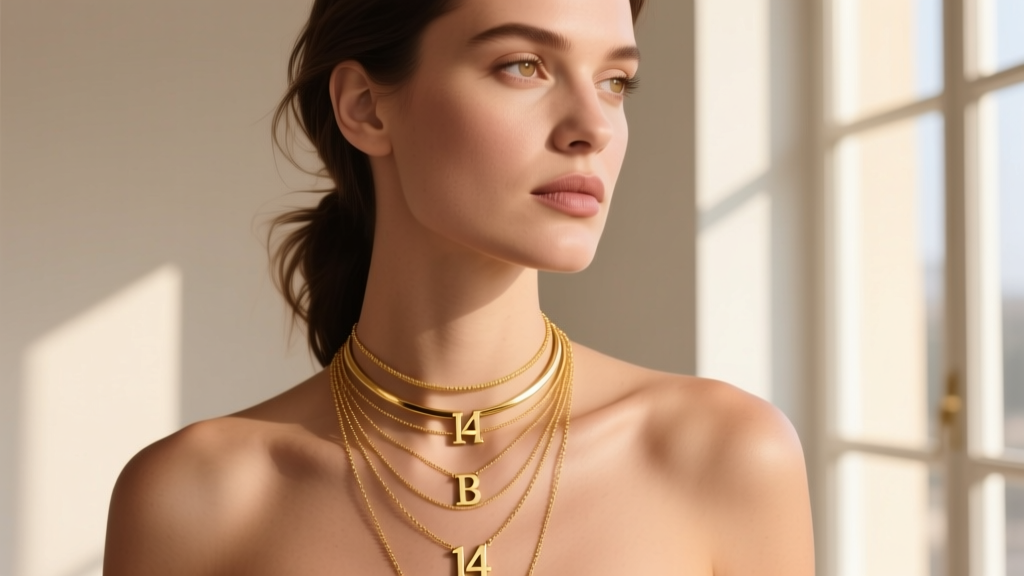
- 14 to 15 Inches (Choker/Collar): Sits snugly at the base of the neck. Ideal for wearing alone with V-necklines or off-the-shoulder tops.
- 16 Inches (Standard Princess): Falls perfectly on the collarbone. This is the most versatile length and the industry standard for initial pendants.
- 18 Inches (Drop/Matinee): Rests a few inches below the collarbone. Excellent for layering over crewneck sweaters or pairing with a shorter 14-inch chain.
If you plan to layer your initial necklace, ensure you maintain at least a 2-inch gap between chains to prevent the clasps and pendants from tangling. For example, pair a 14-inch plain cable chain with a 16-inch initial necklace and an 18-inch small coin pendant.
Pricing Expectations and Authenticity Red Flags
Understanding the true cost of gold is essential to avoid overpaying or accidentally purchasing counterfeit goods. As of the 2026 market landscape, the price of a solid 14k gold initial necklace is heavily dictated by its gram weight. A standard 16-inch 14k gold cable chain weighs approximately 1.5 to 2.5 grams, and a solid initial pendant adds another 1.2 to 2.5 grams.
Therefore, you should expect to pay between $220 and $450 for a high-quality, solid 14k gold initial necklace from a reputable jeweler. If you see a piece marketed as 'solid 14k gold' selling for $45, it is almost certainly gold-plated brass or sterling silver vermeil. The Gemological Institute of America (GIA) provides extensive resources on understanding gold quality factors and verifying authenticity, emphasizing that legitimate gold jewelry will always bear a clear, legible quality mark.
Red Flags to Avoid:
- Missing Hallmarks: If the clasp or pendant bail lacks a 14k, 585, or maker's mark, do not purchase it.
- Hollow Pendants: Some manufacturers create 'hollow' electroformed gold pendants to reduce weight and cost. These dent easily and cannot be repaired if crushed. Always ask the jeweler if the piece is solid or hollow.
- Magnetic Attraction: Gold is not magnetic. If a necklace is attracted to a magnet, the base metal is likely steel or iron, indicating a counterfeit piece.
Final Checklist Before Checkout
Before finalizing your purchase, run through this quick checklist to ensure you are getting a piece that will last a lifetime:
- Verify the 14k or 585 stamp on both the chain clasp and the pendant bail.
- Confirm the chain thickness is between 0.9mm and 1.2mm for optimal drape and strength.
- Ensure the clasp is a secure lobster claw rather than a fragile spring ring.
- Check the return policy and warranty, specifically regarding chain breakage and clasp repair.
A 14k gold initial necklace is an investment in personal history. By prioritizing structural integrity, precise manufacturing, and authentic metallurgy over fast-fashion trends, you secure a timeless piece that will gracefully weather the years alongside you.


