How to Fix, Untangle, and Repair a Gold Spiral Necklace
Learn how to fix kinks, untangle chains, and reshape your gold spiral necklace. Expert troubleshooting for 14k and 18k gold coil jewelry.

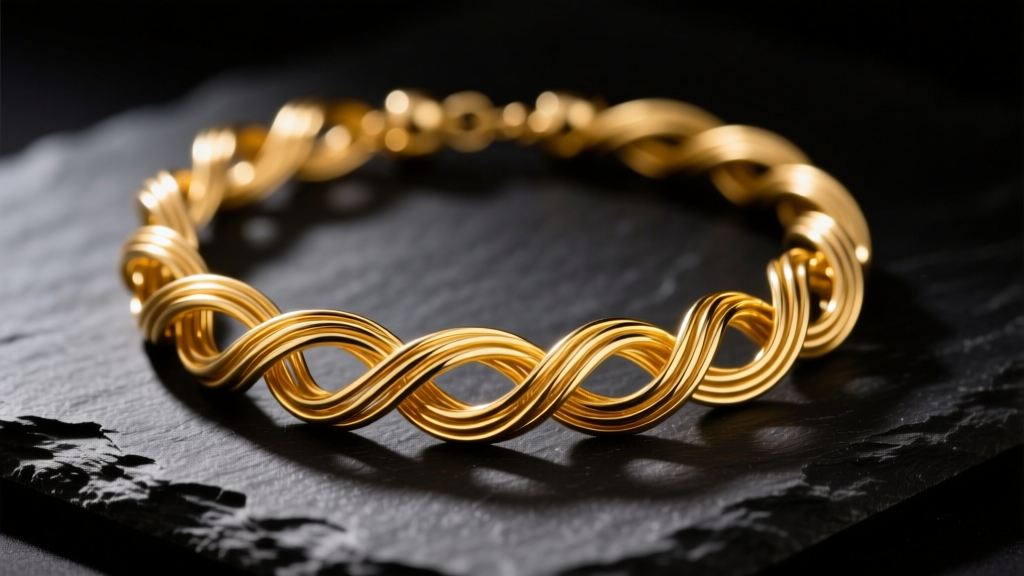
The Metallurgy of Spirals: Why Gold Bends and Kinks
A gold spiral necklace—whether it features a coiled wire choker, a Fibonacci spiral pendant, or a spring-like rope chain—is a masterclass in geometric jewelry design. However, the very nature of gold makes these intricate designs highly susceptible to structural failure. Gold is a noble, highly malleable metal. When alloyed with metals like copper, silver, or zinc to create 14k or 18k gold, it gains durability, but it still lacks the rigid memory of titanium or stainless steel.
When a spiral pendant loses its tension or a coiled chain kinks, it is usually due to compressive force or lateral stress. According to the Gemological Institute of America (GIA), the hardness of gold alloys varies dramatically based on karat weight. This metallurgical reality dictates exactly how you must approach troubleshooting and repairs. Attempting to bend a kinked 18k gold spiral back into place with bare hands often results in micro-fractures or work-hardening, which we will address later in this guide.
Step-by-Step: Reshaping a Bent Gold Spiral Pendant
If your spiral pendant has been crushed or bent out of its geometric alignment, do not use standard steel pliers. Steel-on-steel contact will mar the high-polish finish and leave permanent gouges in the soft gold.
Tools Required:
- Nylon-jaw or rawhide-tipped jewelry pliers
- A steel ring mandrel or wooden dowel (matching the inner diameter of the spiral)
- A rawhide or soft plastic mallet
- A soft leather bench block
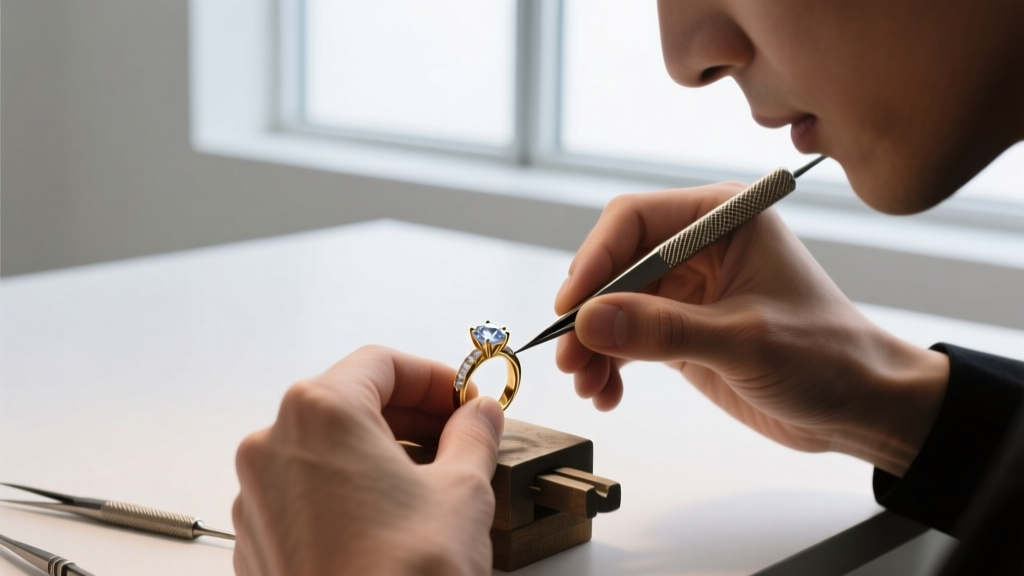
The Reshaping Process:
- Assess the Kink: Identify the exact point of deviation. If the wire is sharply creased (folded more than 45 degrees), stop. A sharp crease means the metal's crystalline structure is compromised, and bending it back will snap the wire. This requires professional soldering.
- Mandrel Support: Slide the spiral pendant onto a dowel or mandrel that perfectly matches its intended inner diameter. This provides internal support so the wire doesn't collapse inward while you apply pressure.
- Gentle Persuasion: Using your nylon-jaw pliers, apply slow, steady pressure to the bent section, pushing it back against the mandrel. Never use a hammering motion for minor bends.
- Tap and Set: For broader warps, use the rawhide mallet to gently tap the outer edges of the spiral while it rests on the leather bench block. The leather absorbs shock, preventing the gold from flattening out.
Untangling the Coil: The Powder and Pin Method
Spiral chains and coiled wire necklaces act like mechanical springs. When compressed in a jewelry box, the overlapping coils can slip past one another and lock into a seemingly impossible knot. Pulling on the ends will only tighten the coils, potentially stretching the gold wire permanently.
To solve this, jewelry professionals use a friction-reduction technique:
- Lay the tangled necklace flat on a smooth, non-porous surface like a glass table or a ceramic plate.
- Dust the knot generously with talc-free baby powder (cornstarch-based) or fine jeweler's rouge. This eliminates the microscopic friction between the gold coils.
- Take two fine sewing needles or beading awls. Insert the tips into the center of the knot and gently wiggle them in opposite directions to loosen the tension.
- Work from the outside of the knot inward, teasing the coils apart millimeter by millimeter. Once the primary tension is released, the spiral will naturally unspool.
Structural Upgrades: Jump Rings, Clasps, and Gauges
A frequent failure point in gold spiral necklaces is the suspension hardware. Solid gold spiral pendants are surprisingly heavy, often weighing between 5 and 15 grams. The constant pendulum motion of walking causes the jump ring to rub against the clasp and the pendant bail, eventually sawing through the metal or warping the ring open.
| Hardware Component | Minimum Gauge Required | Recommended Upgrade |
|---|---|---|
| Pendant Jump Ring | 20-Gauge (0.8mm) | 18-Gauge (1.0mm) Soldered Ring |
| Chain End Rings | 22-Gauge (0.6mm) | 20-Gauge (0.8mm) Oval Rings |
| Clasp Mechanism | Standard Spring Ring | Heavy-Duty Lobster or Magnetic Lock |
The Soldered Jump Ring Fix: If your spiral pendant frequently slips off or the jump ring keeps pulling open, take it to a jeweler to have the split jump ring replaced with a soldered jump ring. A soldered ring has no seam, meaning it is physically impossible for the pendant to slip through, and it offers vastly superior tensile strength against the lateral pulling of a heavy spiral.
Deep Cleaning: Removing Grime from Tight Coils
The tight, overlapping grooves of a spiral necklace are magnets for sebum, dead skin cells, lotion, and environmental dust. Over time, this buildup creates a dull, grayish film that masks the gold's luster and can even cause contact dermatitis.
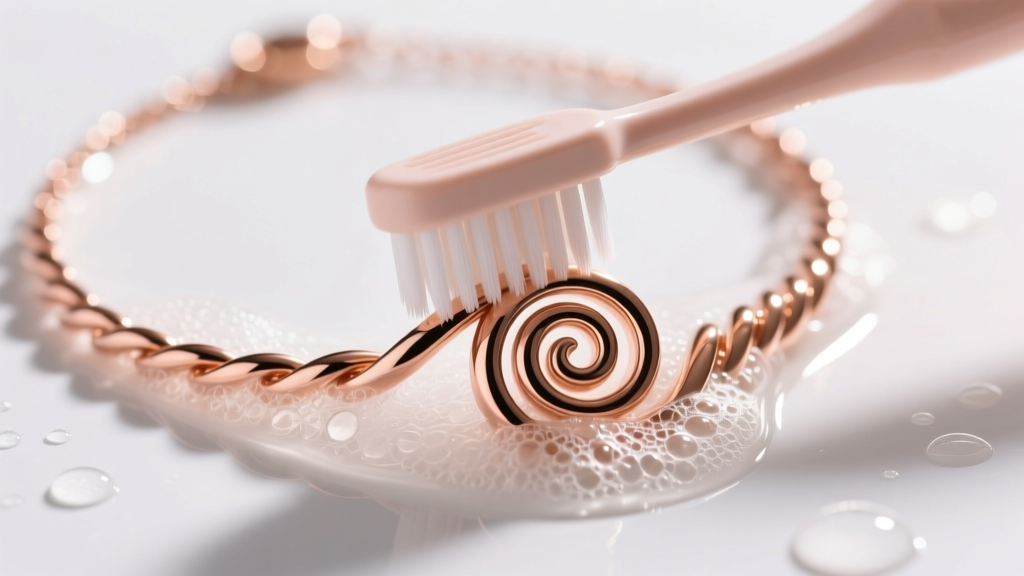
While ultrasonic cleaners are excellent for many jewelry types, they pose a specific risk to spiral designs. The high-frequency cavitation bubbles can force grime deeper into micro-gaps if the piece isn't pre-rinsed, and the intense vibrations can sometimes loosen tension-set stones if your spiral incorporates gems.
The Safe Soak-and-Agitate Protocol:
- Preparation: Mix a solution of warm distilled water and a few drops of mild, phosphate-free dish soap (like Dawn) in a glass bowl. Avoid hard tap water, as mineral deposits can leave spots on the gold.
- Soaking: Submerge the necklace for 15 to 20 minutes. This softens the hardened sebum trapped between the spiral coils.
- Agitation: Use an extra-soft baby toothbrush. Standard toothbrushes have bristles that are too stiff and can leave micro-scratches on high-polish 18k gold. Brush in the direction of the spiral's curve, never against it, to avoid catching and bending the wire edges.
- Rinsing and Drying: Rinse thoroughly under lukewarm running water. Pat dry with a lint-free microfiber cloth, and use a hairdryer on the "cool" setting to blast water out of the tightest inner coils.
For ongoing maintenance, the Jewelers of America recommends wiping down gold jewelry with a soft polishing cloth after every wear to prevent oils from accumulating in the crevices in the first place.
The Danger of Work-Hardening: When to See a Professional
There is a strict limit to how many times you can bend a gold spiral necklace at home. Every time you bend gold, you induce "work-hardening." The crystalline lattice of the metal becomes compressed and rigid. While this makes the gold harder, it also makes it incredibly brittle.
If your spiral chain feels stiff, or if the wire resists bending and makes a faint "clicking" sound when manipulated, it has reached its work-hardened limit. If you attempt to force it back into shape, it will snap cleanly.
To fix this, a professional jeweler must perform a process called annealing. Using a specialized jeweler's torch, they heat the gold spiral to a specific temperature (usually around 1200°F to 1300°F for 14k gold, indicated by a dull cherry-red glow) and then quench it in water or let it air cool. This thermal shock relaxes the crystalline structure, returning the gold to its soft, malleable "dead-soft" state. Only after annealing can the spiral be safely reshaped on a mandrel without the risk of catastrophic fracture.
By understanding the metallurgical limits of your gold jewelry and utilizing the correct friction-reduction and reshaping techniques, you can keep your spiral necklaces perfectly coiled, structurally sound, and brilliantly polished for decades.


