Master Bandana Necklaces: Step-by-Step Knots & Styling
Learn how to tie and style bandana necklaces with our step-by-step guide. Discover the best fabrics, knot techniques, and hardware pairings.

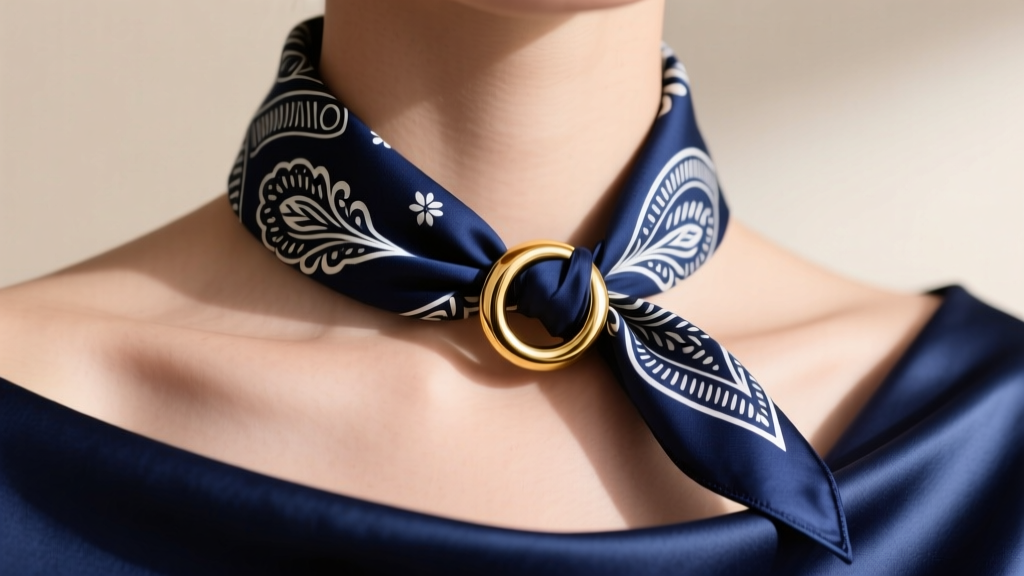
The bandana necklace has evolved far beyond its Americana and workwear roots. Today, it is a sophisticated styling tool that bridges the gap between casual streetwear and elevated Parisian chic. However, treating a bandana merely as a piece of cloth to wrap around your neck is a common styling mistake. Creating a polished bandana necklace requires an understanding of structural tension, fabric weight, bias folding, and hardware integration. Whether you are aiming for a sleek choker or a draped ascot, this step-by-step guide will teach you how to engineer the perfect bandana necklace for any neckline.
The Physics of Fabric: Selecting Your Bandana
Not all bandanas are created equal. The success of your knot depends entirely on the fabric's weight, weave, and dimensions. According to textile standards, you must evaluate the material before attempting complex styling.
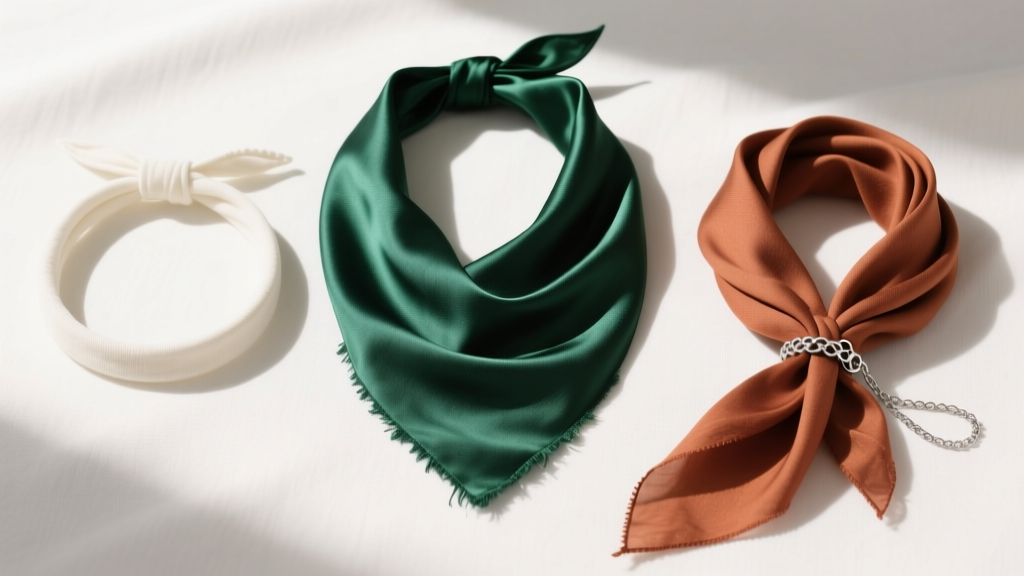
- Silk Twill (12 to 19 Momme): Silk is the gold standard for elevated bandana necklaces. A 12-momme silk is too lightweight and will slip out of knots. Opt for 16 to 19-momme silk twill. The twill weave provides microscopic ridges that create friction, allowing knots to hold securely without strangling the wearer. As noted by MasterClass, silk twill also reflects light beautifully, acting as a soft reflector for the face.
- Cotton (120 to 140 GSM): For a casual, matte-finish choker, 100% cotton is ideal. However, brand-new cotton bandanas are treated with starch and sizing, making them stiff. You must pre-wash and tumble-dry your cotton bandanas to break down the fibers, ensuring they drape like a necklace rather than standing out like cardboard.
- Dimensions: A standard 20x20 inch (50x50 cm) bandana is perfectly proportioned for chokers and slip knots. For draped ascots or deep V-neck styling, you need a larger 35x35 inch (90x90 cm) foulard.
Step-by-Step: 4 Essential Bandana Knots
The way you fold the fabric dictates the final silhouette. Never simply bunch the fabric; always use intentional folding techniques to create clean lines.
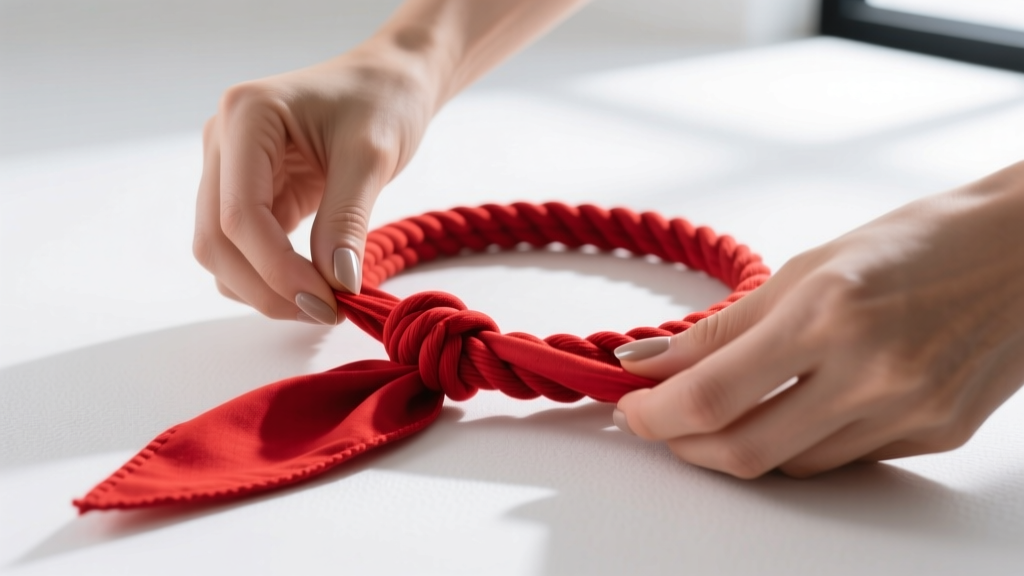
1. The Bias-Fold Choker (The Rope)
The bias fold utilizes the diagonal stretch of the fabric, allowing it to conform snugly to the cervical spine without gaping.
- Lay your 20x20 inch bandana flat and fold it in half diagonally to form a triangle.
- Starting at the longest edge (the bias), roll the fabric tightly inward toward the opposite corner until you have a uniform 'rope' about 1 inch thick.
- Wrap it around your neck, leaving a 2-inch tail on one side and a longer tail on the other.
- Tie a simple overhand knot, pull it snug to the collarbone, and tuck the tails discreetly under the band of the choker.
2. The Asymmetrical Slip Knot
Best for 35x35 inch silk bandanas, this knot creates a modern, off-center drape that pairs beautifully with asymmetrical tops.
- Fold the large bandana into a triangle, then fold the top corner down to meet the bottom edge, creating a long, flat ribbon.
- Drape it around your neck so one end hangs 6 inches lower than the other.
- Take the longer end and loop it over and under the shorter end, pulling it through to create a loose slip knot.
- Slide the knot to rest just above your right or left clavicle. Adjust the tension so the fabric lies flat against the skin.
3. The Hardware-Threaded Ascot
This technique replaces traditional knotting with metal hardware, offering a highly polished, jewelry-like finish.
- Roll your silk bandana into a 1.5-inch wide ribbon using the straight fold method.
- Drape it evenly around your neck.
- Thread both ends through a 20mm metal scarf ring.
- Pull one end through the ring, then loop it back through the ring in the opposite direction, creating an interlocking friction hold. Fan out the tails over your chest.
4. The Braided Foulard
For a bohemian, textured look that prevents long silk scarves from blowing in the wind.
- Fold your large bandana into a wide ribbon and drape it around your neck with even ends.
- Twist the left end clockwise and the right end counter-clockwise.
- Wrap the two twisted ends around each other in a rope braid down to the sternum.
- Secure the bottom with a small, clear silicone elastic, then tuck the ends into your blouse or jacket.
Hardware Integration Matrix
To elevate a bandana from a casual accessory to a statement necklace, integrating metal hardware is essential. The hardware must be proportionate to the fabric weight. Below is a decision framework for selecting the right components, drawing on insights from accessory styling guides like those featured in InStyle.
| Hardware Type | Ideal Fabric Weight | Recommended Dimensions | Best Use Case |
|---|---|---|---|
| Interlocking Scarf Rings | 16-19 Momme Silk Twill | 18mm - 22mm interior diameter | Ascots, deep V-necks, blazer lapels |
| Screw-Clasp Pendant Bails | 120-140 GSM Cotton | 10mm - 15mm bail opening | Adding heavy metal pendants to cotton chokers |
| Lobster Chain Extenders | Modal or Lightweight Silk | 2-inch to 4-inch adjustable chain | Creating adjustable, precise-length chokers |
| Magnetic Clasp Converters | Any rolled bias fold | 8mm magnetic barrel | Quick-release chokers for active wear |
Neckline Pairing Framework
A bandana necklace must complement, not compete with, your garment's neckline. Use this matrix to ensure visual harmony:
- The Crew Neck Tee: Pair with a tight, 20-inch bias-fold cotton choker. The contrast between the casual cotton and the high, tight neckline creates a deliberate, vintage-inspired silhouette.
- The Deep V-Neck or Wrap Dress: Use a 35-inch silk bandana tied in the Hardware-Threaded Ascot style. The metal ring acts as a focal point, drawing the eye down the V-line and elongating the neck.
- The Button-Down Oxford: Leave the top two buttons undone. Thread a thinly rolled silk bandana through the collar points, tying it in a small, tight square knot at the base of the throat. This mimics the look of a traditional cravat but with a modern, relaxed edge.
- The Strapless or Sweetheart Neckline: Avoid chokers, which can visually chop the neck. Instead, opt for a long, braided foulard that drapes past the collarbone, filling the negative space on the chest without crowding the shoulders.
"The secret to a successful bandana necklace is treating the fabric with the same respect you would give to a fine gold chain. The fold must be intentional, the tension precise, and the hardware proportionate."
Care & Maintenance for Longevity
Bandanas worn tightly against the neck are exposed to sweat, perfumes, and skin oils, which can rapidly degrade both silk and cotton.
- Silk Care: Never machine wash silk twill. Hand wash in cool water with a pH-neutral detergent designed for delicates. Roll the wet bandana in a clean towel to press out moisture, then lay flat to dry. Iron on the lowest setting using a press cloth to prevent water spots and shine marks.
- Cotton Care: Cotton bandanas can be machine washed, but avoid high-heat drying, which warps the bias grain. To maintain a crisp edge for choker styling, use a light spray starch before ironing.
- Storage: Never hang silk bandanas on wire hangers, as this stretches the bias and ruins the square shape. Roll them loosely around acid-free tissue paper and store them in a drawer to prevent permanent crease lines.
By mastering these folding techniques, understanding fabric physics, and integrating the right hardware, you can transform a simple square of cloth into a versatile, high-impact necklace that elevates any wardrobe.


