The Movitex Necklace: Technical Specs, Weave & Sizing Guide
Explore the engineering of the Movitex necklace. Discover technical specs, link articulation, metallurgy, and sizing for this precision chain.

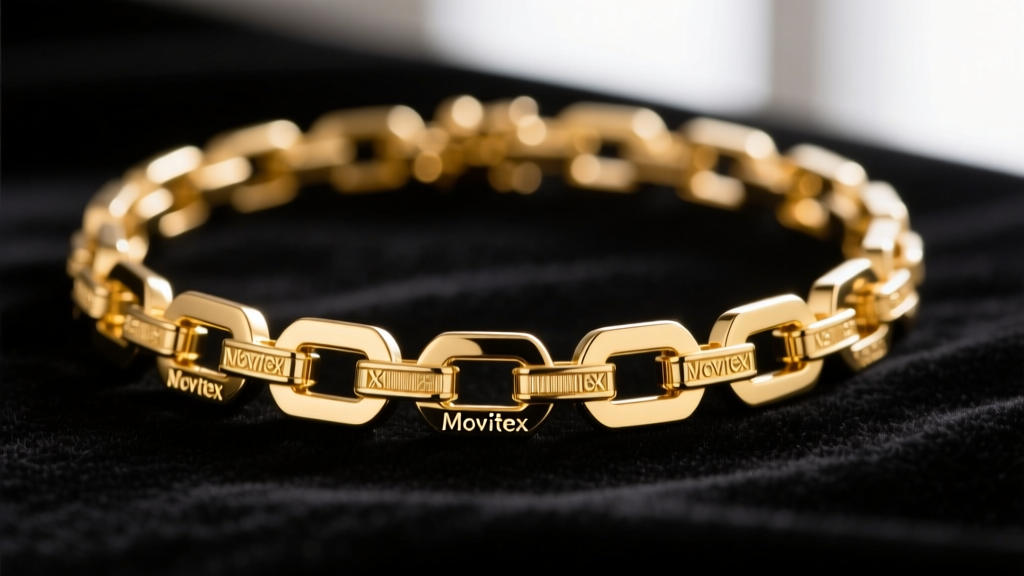
The Architecture of the Movitex Weave
The Movitex necklace represents a pinnacle of precision engineering in articulated jewelry design. Unlike traditional chain weaves such as the curb, figaro, or rolo, which rely on simple single-plane interlocking loops, the Movitex chain utilizes a proprietary dual-axis micro-hinge system. This architectural distinction allows the necklace to achieve a fluid, fabric-like drape that mimics the behavior of a mesh or Omega chain, but without the inherent structural vulnerabilities and kink-memory associated with those styles. Each individual link in a genuine Movitex weave is stamped from a single sheet of precious metal or surgical steel, featuring an integrated male-female interlocking joint secured by a microscopic internal pivot pin.
The engineering brilliance of the Movitex weave lies in its rotational tolerance. Standard chains pivot on a single axis, meaning they can twist and knot if subjected to lateral torque. The Movitex link, however, is designed with a 15-degree rotational tolerance on both the X and Y axes. This multi-directional articulation ensures that the chain naturally conforms to the complex topography of the human neck and collarbone, distributing tension evenly across the entire length of the necklace rather than concentrating stress on isolated links. According to manufacturing standards documented by the Gemological Institute of America (GIA), this type of complex articulation requires extreme precision in die-stamping to prevent the micro-hinges from binding or exhibiting excessive lateral play.
Metallurgy and Tensile Strength Data
The structural integrity of a Movitex necklace is heavily dependent on the metallurgical properties of the base material. Because the micro-hinges endure continuous friction and micro-impacts during wear, the metal must possess an optimal balance of ductility and surface hardness. If the alloy is too soft, the hinge pins will deform, leading to link separation. If the alloy is too brittle, the stamped joints will fracture under tensile load. For gold variants, manufacturers typically utilize heavily alloyed 14k or 18k gold, specifically formulated with higher copper and silver ratios to increase the Vickers hardness (HV) without compromising the metal's resistance to oxidation.
In premium 18k yellow gold Movitex chains, the internal pivot pins are rarely made of gold due to its inherent softness. Instead, master jewelers frequently employ 0.8mm titanium-alloy or platinum-iridium core pins. This bi-metallic construction ensures that the hinge mechanism retains its structural rigidity even when the outer gold shell experiences superficial wear. The World Gold Council notes that specialized alloying and internal armoring are critical for maintaining the longevity of complex, articulated gold jewelry subjected to daily mechanical stress.
| Material Grade | Vickers Hardness (HV) | Yield Strength (MPa) | Drape Coefficient | Hinge Pin Material |
|---|---|---|---|---|
| 316L Surgical Steel | 150 - 190 HV | 215 - 250 MPa | High (Fluid) | 316L Steel (Integrated) |
| 14k Yellow Gold (Alloyed) | 130 - 150 HV | 350 - 400 MPa | Medium-High | Steel or Titanium Core |
| 18k Yellow Gold (Alloyed) | 110 - 135 HV | 250 - 300 MPa | Medium (Structured) | Platinum-Iridium Core |
| Platinum 950 (Ru Alloy) | 135 - 155 HV | 400 - 450 MPa | Low (Rigid) | Platinum-Ruthenium |
Manufacturing Tolerances and Quality Control
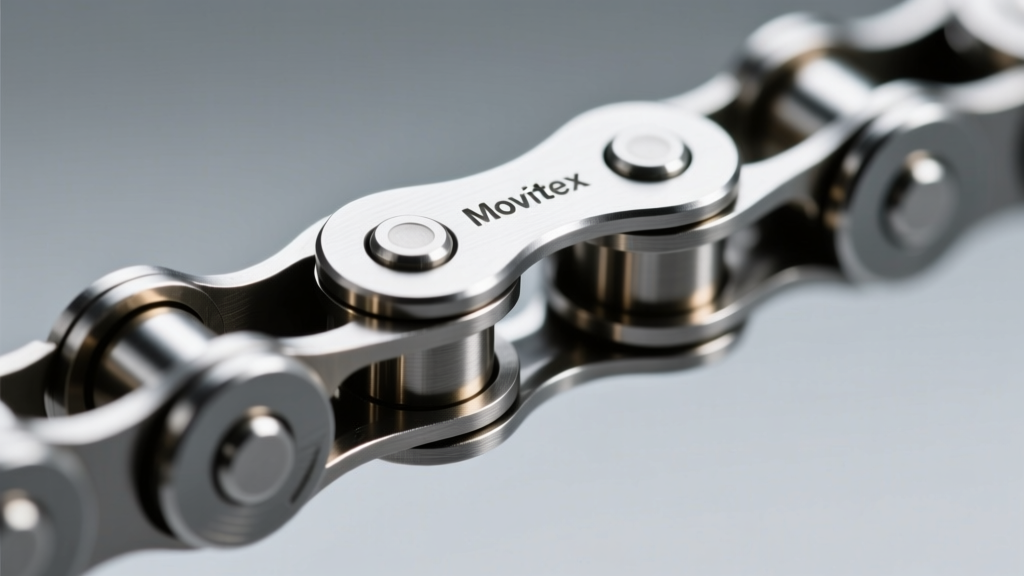
Producing a flawless Movitex necklace requires CNC-machined stamping dies that operate within incredibly tight tolerances. The male and female interlocking segments of each link must align with a maximum deviation of 0.02 millimeters. If the tolerance is too loose, the chain will exhibit a 'rattling' acoustic signature and suffer from premature wear at the friction points. If the tolerance is too tight, the chain will lack the necessary flexibility, resulting in a stiff, unnatural drape that resists laying flat against the skin.
Following the stamping and pin-insertion phases, the chain undergoes a specialized tumbling and deburring process. Unlike standard chains that are polished in bulk, Movitex chains are often tumbled in a low-abrasion ceramic media bath to smooth the internal hinge surfaces without rounding off the sharp, geometric exterior edges that define the weave's aesthetic. This meticulous quality control ensures that the chain articulates silently and smoothly, a hallmark of high-end European jewelry manufacturing.
Sizing, Gauge, and Drape Mechanics
Selecting the correct gauge and length for a Movitex necklace requires an understanding of how the chain's thickness influences its drape mechanics. Because the links are geometrically dense and feature internal armoring, a Movitex chain is significantly heavier than a hollow-curb or standard rope chain of the same visual width. This weight distribution affects how the necklace sits on the clavicle.
Standard Gauge Profiles and Tolerances
- 2.0mm - 2.5mm (Micro-Drape): At this gauge, the Movitex chain behaves almost like a liquid rope. It is highly flexible, ideal for threading through pendant bails, and exhibits minimal kink-resistance issues due to the small mass of the individual links.
- 3.5mm - 4.5mm (Standard Articulation): The most popular gauge for standalone wear. This thickness provides enough structural mass to lay flat against the chest without flipping over, while maintaining enough flexibility to comfortably contour the neck.
- 6.0mm - 8.0mm (Structural Collar): At wider gauges, the cumulative friction of the dual-axis hinges creates a semi-rigid structure. These chains act more like collars or torcs, requiring precise neck measurements as they cannot easily bend to accommodate a larger cervical circumference.
When sizing a Movitex necklace, particularly in the 4.5mm to 8.0mm range, it is critical to account for the physical displacement of the links. A standard measuring tape pulled flush against the skin will result in a chain that is too tight. Jewelers recommend adding 1.5 to 2.0 inches to the base neck measurement for chains exceeding 5.0mm in width to ensure the internal diameter of the clasped necklace clears the larynx and thyroid cartilage comfortably.
Clasp Integration and Structural Failure Points
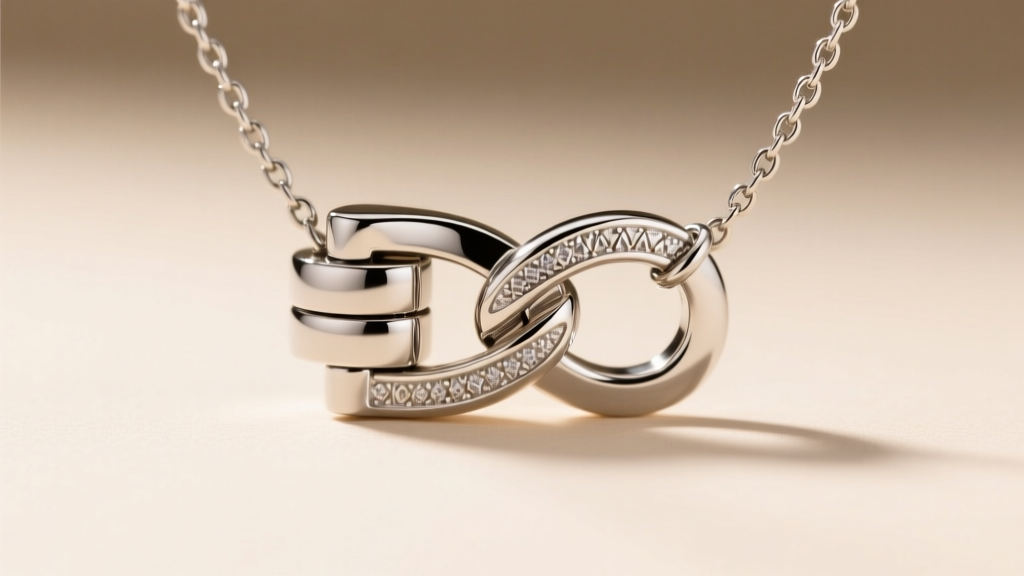
The clasp is universally the weakest point in any articulated necklace, and the Movitex design is no exception. Due to the geometric profile of the links, standard spring-ring or lobster clasps are aesthetically and mechanically incompatible; they create a jarring visual break and introduce a localized stress point that can lead to link deformation. Instead, authentic Movitex necklaces utilize a hidden box clasp with a tongue-and-groove mechanism, seamlessly integrated into the terminal links.
The integration process relies on laser welding rather than traditional torch soldering. Torch soldering introduces broad heat zones that can anneal (soften) the surrounding work-hardened links and potentially fuse the micro-hinges, locking the chain in place. Laser welding, conversely, delivers a highly focused thermal pulse that secures the clasp housing without altering the crystalline structure of the adjacent chain links. Furthermore, high-quality Movitex clasps are equipped with dual figure-eight safety catches stamped from sheet metal, providing redundant security in the event the primary tongue mechanism experiences metal fatigue or accidental depression.
Maintenance and Ultrasonic Cleaning Protocols
Maintaining a Movitex necklace requires specific protocols to preserve the integrity of the micro-hinges. The most common failure mode in articulated chains is the accumulation of microscopic debris—such as dead skin cells, cosmetic powders, and environmental dust—within the hinge joints. Over time, this debris acts as an abrasive lapping compound, slowly grinding away the internal pivot pins and causing the chain to stretch and loosen.
To mitigate this, regular ultrasonic cleaning is highly recommended. However, the frequency and medium must be carefully controlled. A 40kHz ultrasonic cleaner utilizing a mild, low-viscosity aqueous degreaser is ideal. The high-frequency cavitation bubbles are small enough to penetrate the 0.02mm gaps in the Movitex hinges, dislodging trapped particulates without requiring mechanical brushing. It is imperative to avoid high-viscosity polishing compounds or heavy ultrasonic jewelry dips, as these liquids can become trapped inside the hinges. Once trapped, they dry into a hardened resin that restricts the dual-axis movement, effectively turning a fluid, flexible chain into a stiff, brittle wire. After ultrasonic cleaning, the necklace should be immediately rinsed in distilled water and dried using compressed air to ensure no moisture remains within the internal link architecture.


