The Titanic Blue Heart Necklace: Gemology & Replica Guide
Explore the gemology of the Titanic blue heart necklace, from the original 177-ct sapphire to modern replica materials, settings, and chain mechanics.

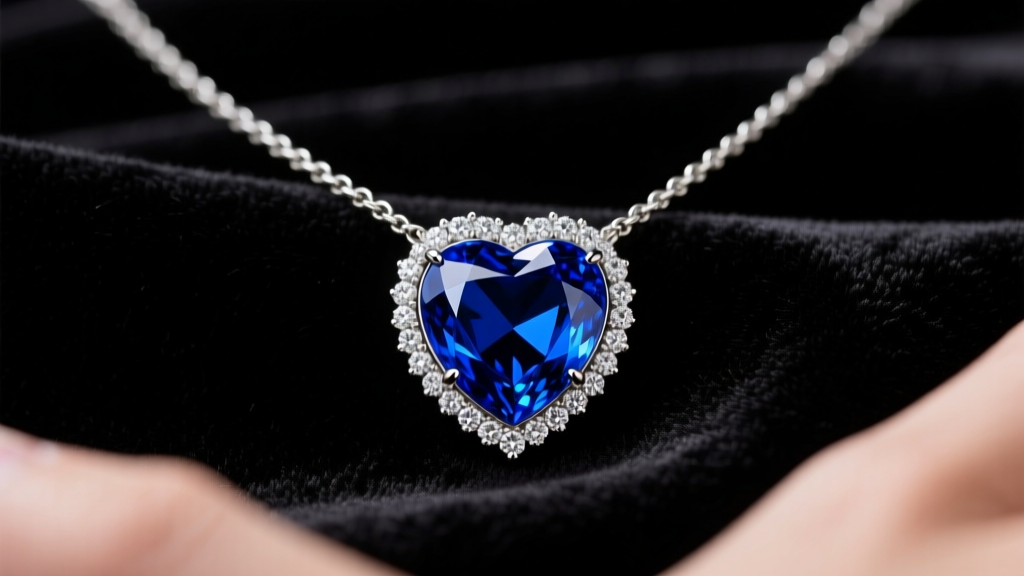
The cultural footprint of the Titanic blue heart necklace—famously known as the 'Heart of the Ocean'—remains one of the most enduring phenomena in cinematic jewelry history. While millions have purchased costume versions, serious collectors and jewelry enthusiasts approach this iconic piece through a lens of horological and gemological scrutiny. Recreating the breathtaking scale and deep cerulean hue of the original pendant requires a mastery of lapidary arts, structural engineering, and material science. In 2026, with the advent of advanced lab-grown corundum and precision CNC casting, achieving a museum-quality replica is more accessible than ever, provided you understand the technical specifications required to execute it flawlessly.
The Gemological Myth vs. Reality
To understand how to evaluate or commission a high-end Titanic blue heart necklace, we must first separate Hollywood fiction from jewelry history. The original movie prop was not a diamond and sapphire. London jewelers Asprey & Garrard were commissioned to create the piece on a tight deadline, resulting in a pendant featuring a heart-cut blue tanzanite surrounded by cubic zirconia, set in white gold.
However, following the film's massive success, Asprey & Garrard created a genuine, high-jewelry iteration for Celine Dion to wear to the 1998 Academy Awards. This authentic piece featured a staggering 177-carat Ceylon sapphire and 103 brilliant-cut diamonds. According to the Gemological Institute of America (GIA), Ceylon sapphires are prized for their vivid, medium-light blue saturation, which perfectly mimics the cinematic color grading of the prop. Today, sourcing a natural 177-carat Ceylon sapphire is virtually impossible outside of royal archives, making lab-created alternatives the standard for elite replicas.
Evaluating Modern Replicas: Stone Materials
When shopping for or designing a premium replica, the center stone dictates the piece's longevity, brilliance, and value. Below is a technical comparison of the most common materials used in high-end reproductions today.
| Material | Mohs Hardness | Refractive Index (RI) | Durability & Wearability | Est. Price Per Carat |
|---|---|---|---|---|
| Lab-Created Sapphire | 9.0 | 1.76 - 1.77 | Exceptional; ideal for daily wear | $40 - $120 |
| Natural Tanzanite | 6.0 - 7.0 | 1.69 - 1.70 | Poor; prone to scratching and cleavage | $300 - $600 |
| London Blue Topaz | 8.0 | 1.62 - 1.63 | Good; but color is too dark/inky | $15 - $35 |
| Cubic Zirconia (CZ) | 8.0 - 8.5 | 2.15 - 2.18 | Fair; clouds over time, overly fiery | $1 - $5 |
For a true heirloom-quality Titanic blue heart necklace, flux-grown or Verneuil lab sapphires are the superior choice. They offer the exact chemical composition (Al2O3) and optical properties of natural sapphires without the inclusions that weaken large stones. Tanzanite, while historically accurate to the movie prop, is far too soft for a pendant of this size; a single knock against a granite countertop can fracture a 40-carat tanzanite heart.
The Anatomy of the Setting and Halo
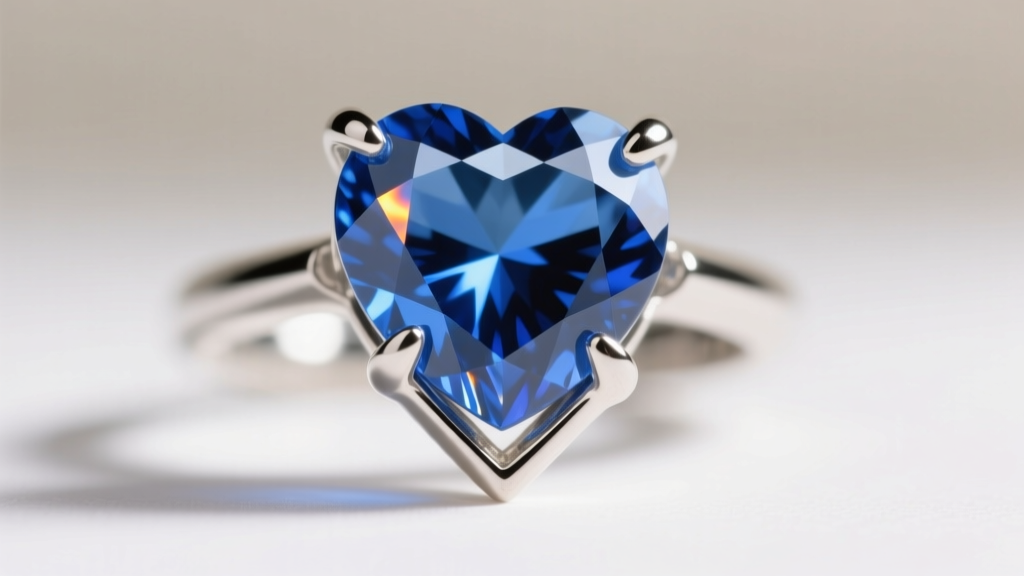
The heart brilliant cut is notoriously difficult to execute and even more challenging to set securely. The anatomy of the stone features a cleft (the dip at the top), lobes (the top curves), wings (the sides), and a point (the bottom tip).
Protecting the Point and Cleft
The bottom point of a heart-cut gemstone aligns with the crystal's natural cleavage planes, making it highly susceptible to chipping. Standard prongs are insufficient. A master jeweler will utilize a V-prong (or chevron prong) that wraps entirely around the acute angle of the point, distributing impact pressure across a wider surface area. Similarly, the cleft requires a specialized double-prong or bezel wrap to prevent the stone from snapping at its narrowest bridge.
The Diamond Halo Mechanics
The iconic halo of the Heart of the Ocean consists of melee diamonds. In high-end replicas, jewelers use 1.2mm to 1.5mm round brilliant cut lab diamonds (approximately 0.01 carats each). The setting technique should be a micro-pavé or bright-cut setting, where beads of metal are pushed over the girdle of the melee stones. Avoid 'shared prong' settings for the halo, as they leave the delicate edges of the small diamonds exposed to snagging on textiles.
Chain Mechanics and Clasp Hardware
A frequent failure point in large pendant necklaces is the chain. A 30-carat lab sapphire set in 18k white gold or platinum can easily weigh between 15 and 25 grams. Standard 1.0mm cable chains or snake chains will stretch, kink, or snap under this dynamic load.
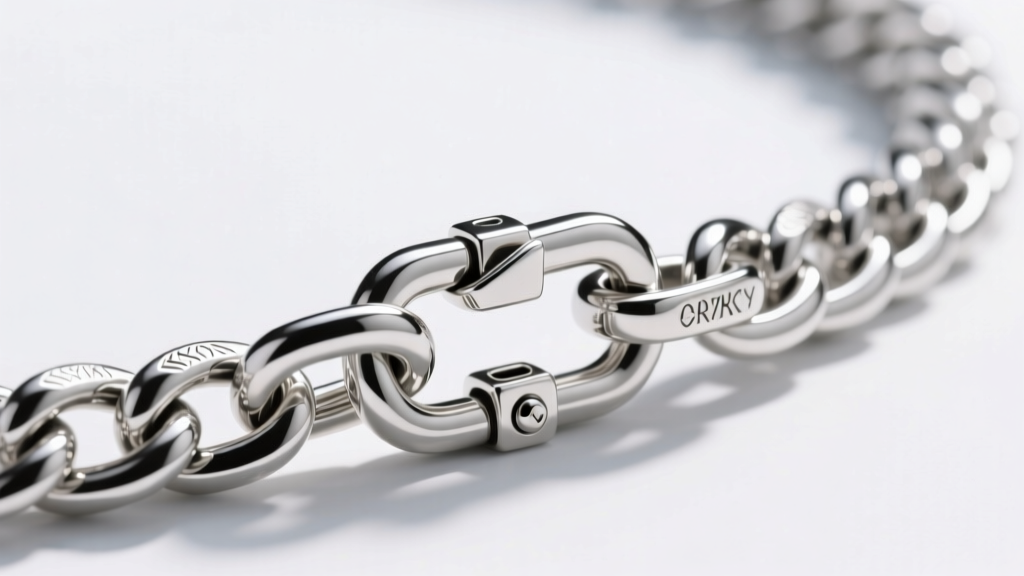
- Box Chains (2.0mm - 3.0mm): The interlocking square links provide excellent tensile strength and resist kinking. A 2.5mm solid 14k or 18k white gold box chain is the optimal choice for supporting heavy pendants while maintaining a luxurious drape.
- Wheat (Spiga) Chains: Woven in a braided pattern, wheat chains offer superior flexibility and strength, though their textured surface can sometimes compete visually with the intricate halo of the pendant.
- Clasp Hardware: Never use a spring-ring clasp for a heavy pendant. The internal spring mechanism is a known point of failure. A trigger lobster clasp with a reinforced jump ring, or a concealed box clasp with a figure-eight safety catch, is mandatory for securing high-value, heavy jewelry.
Sizing and Proportions: Carat to Millimeter
One of the most common mistakes consumers make when ordering a custom Titanic blue heart necklace is requesting a '1:1 scale' replica based on the movie prop. The Asprey & Garrard Oscar piece was roughly 45mm wide and 50mm long. A sapphire of those dimensions would exceed 150 carats, resulting in a pendant that is not only prohibitively expensive but physically uncomfortable to wear, pulling heavily on the cervical spine and resting awkwardly on the sternum.
According to the GIA Gem Encyclopedia, scaling is critical for wearable high jewelry. For a piece that sits elegantly on the décolletage without overwhelming the wearer's frame, the ideal proportions are:
Optimal Wearable Dimensions: 22mm wide x 25mm long. This translates to a center stone of approximately 25 to 30 carats. This size commands attention, accurately reflects the visual weight seen on screen, and remains perfectly balanced on a 16-inch or 18-inch box chain.
When commissioning or purchasing a premium Titanic blue heart necklace, demand transparency regarding the stone's origin (lab vs. natural), the exact millimeter dimensions of the cut, and the gauge of the chain. True luxury lies not just in the cinematic romance of the design, but in the uncompromising engineering that ensures it survives generations of wear.


