Gold Ruby Heart Necklace Value Guide 2026: Pricing & Quality
Assess the true value of a gold ruby heart necklace in 2026. We break down pricing tiers, ruby treatments, gold karats, and how to spot overpriced jewelry.

The Anatomy of a Gold Ruby Heart Necklace
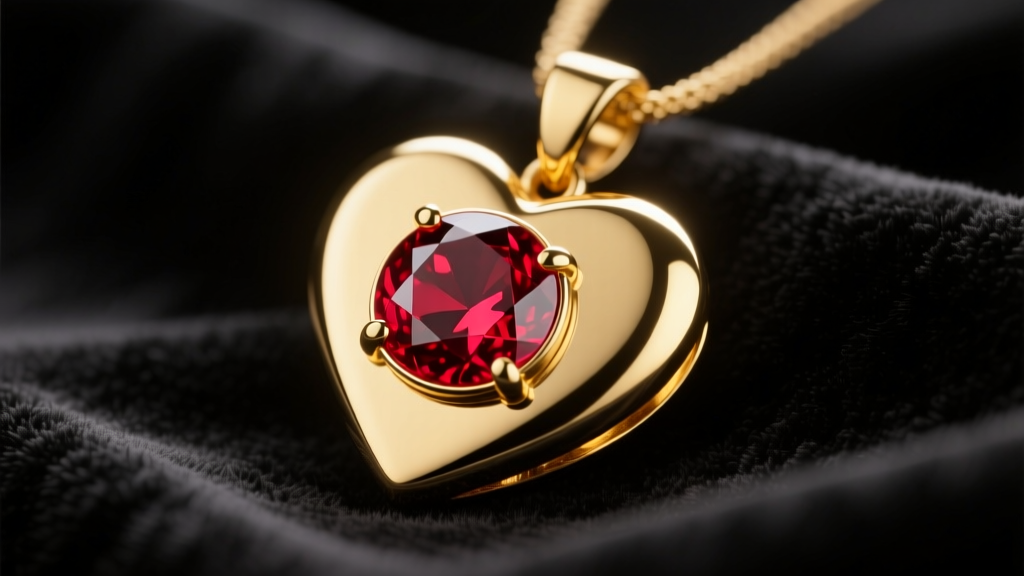
The romantic appeal of a gold ruby heart necklace makes it a perennial favorite for anniversaries, Valentine's Day, and milestone birthdays. However, the 2026 jewelry market is heavily saturated with pieces that range from exceptional fine jewelry to overpriced costume pieces masquerading as luxury. When evaluating a gold ruby heart necklace, the untrained eye might only see a beautiful red stone in a warm metal setting. A savvy buyer, however, looks at the metallurgical weight, the gemological origin, and the specific treatments applied to the stone.
Understanding the true value of these necklaces requires breaking down the piece into its two core components: the gold setting and chain, and the ruby gemstone itself. Whether you are spending $200 or $5,000, knowing where your money is actually going is the key to making a sound investment.
Gold Purity and Weight: The Foundation of Value
The metal framework of your necklace dictates its baseline intrinsic value and long-term durability. In 2026, with gold spot prices remaining historically high, the karat weight and physical gram weight of the piece are critical metrics for budget assessment.
10K vs. 14K vs. 18K Gold
- 10K Gold (41.7% pure): Highly durable and scratch-resistant, but lacks the rich, buttery yellow hue associated with fine jewelry. Often used in budget-tier mall jewelry.
- 14K Gold (58.3% pure): The sweet spot for the US market. It offers an excellent balance of rich color, structural integrity for prong settings, and reasonable pricing.
- 18K Gold (75.0% pure): The standard for high-end and luxury jewelry. It has a deeper yellow color and is hypoallergenic, but it is softer, meaning prongs holding the ruby may require more frequent maintenance.
The Weight Deception: Solid vs. Hollow
A major value trap in the heart pendant market is hollow or electroformed gold. A standard, solid 14K gold heart pendant (approximately 15mm x 15mm) should weigh between 1.8 and 2.5 grams. If the pendant weighs less than 0.8 grams, it is likely hollowed out or stamped from ultra-thin sheet metal. While hollow pieces look large for their price, they dent easily, cannot be resized or repaired by a jeweler, and possess virtually no resale melt value. Always ask for the exact gram weight of the pendant and the accompanying chain before purchasing.
Ruby Quality: The Real Price Driver
While gold provides the baseline value, the ruby is the primary variable that can drive the price of a necklace from $300 to $30,000. Rubies are a Type II gemstone, meaning they naturally form with inclusions. The presence of inclusions is not inherently bad; in fact, it is often the primary way gemologists prove a stone is natural rather than lab-created.
Color: The Pigeon Blood Premium
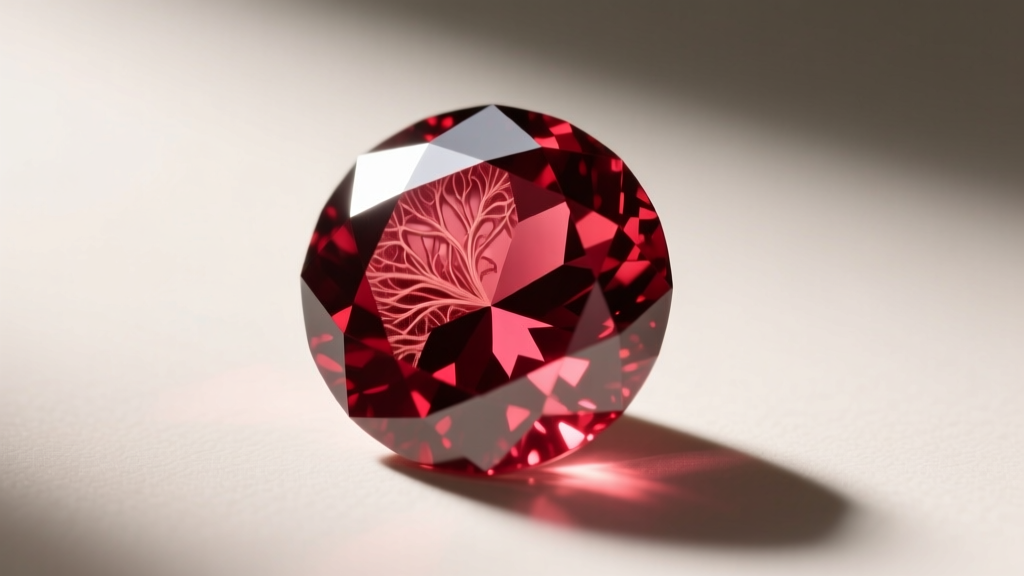
Color accounts for up to 80% of a ruby's value. The most coveted hue is historically termed Pigeon's Blood—a vivid, highly saturated red with a very slight purplish secondary hue and a soft red fluorescence. In the modern market, top-tier Mozambique rubies have largely taken over the commercial fine jewelry space, offering exceptional clarity and vivid color at a fraction of the cost of historically significant Burmese (Myanmar) rubies. If a retailer claims a stone is "Burmese" without a certificate from a top-tier lab like GRS, SSEF, or Gübelin, consider it a major red flag.
Treatments: Natural, Heated, and Fracture-Filled
Understanding ruby treatments is non-negotiable for budget assessment. According to the Federal Trade Commission (FTC) Jewelry Guides, sellers must disclose treatments that significantly affect a gem's value or durability.
- Unheated (No Treatment): Exceedingly rare. Commands a massive premium (often 3x to 5x the price of heated equivalents).
- Heat Treatment: The industry standard. Over 90% of natural rubies on the market are heat-treated to dissolve silk inclusions and improve color. This is a permanent, stable, and universally accepted practice.
- Lead-Glass Filled (Composite): A deceptive practice where low-grade, opaque ruby rubble is infused with lead-glass to make it transparent. These stones are worth pennies per carat, are highly unstable (household cleaners and lemon juice will destroy them), and should never be set in fine gold.
2026 Pricing Tiers: What Should You Actually Pay?
To help you navigate the market, we have categorized the current pricing landscape for a standard 14K or 18K gold heart pendant necklace featuring a 1.00 to 1.50-carat ruby center stone.
| Value Tier | Material Specifications | Estimated Retail Price (2026) | Value Verdict |
|---|---|---|---|
| Budget / Fashion | 10K Gold, Lead-Glass Filled Ruby or Verneuil Lab Ruby | $80 - $250 | Poor long-term value. Acceptable only for temporary costume wear. |
| Commercial Fine | 14K Solid Gold, Heat-Treated Natural Mozambique Ruby | $450 - $1,200 | Excellent everyday value. The best balance of natural beauty and budget. |
| Premium Lab-Grown | 14K or 18K Gold, Flux-Grown Lab Ruby (e.g., Chatham) | $600 - $1,500 | Great for flawless clarity lovers. Ensure you are paying for flux-grown, not cheap flame-fusion. |
| Investment / Luxury | 18K Gold, Unheated Natural Burmese Ruby (Certified) | $4,000 - $15,000+ | Collector grade. Requires strict third-party gemological certification. |
Chain Selection: Don't Ignore the Hardware
A common mistake buyers make is focusing entirely on the heart pendant while ignoring the chain. A heavy, solid gold pendant requires a chain with adequate tensile strength. Delicate chains (under 1.0mm in width) are prone to snapping, which can result in the loss of your valuable pendant.
For a solid gold heart pendant weighing over 2 grams, opt for a 1.2mm to 1.5mm cable chain, box chain, or rope chain. These styles offer superior structural integrity compared to snake chains, which are notorious for kinking and trapping hair. Furthermore, ensure the clasp is a sturdy lobster claw with a properly stamped karat hallmark on the jump ring.
Red Flags: How to Avoid Overpaying
When shopping for a gold ruby heart necklace, be highly skeptical of the following marketing tactics:
Expert Insight: "Beware of the word 'Genuine'. In the gemological industry, 'Genuine' simply means the material is not entirely synthetic plastic or glass. A lead-glass filled composite ruby can legally be sold as 'Genuine Ruby' in some jurisdictions, even though it lacks the durability and value of a true natural ruby. Always ask: Is this ruby natural, lab-created, or composite?"
- Vague Origin Claims: If a seller advertises a "Rare Pigeon Blood Ruby" for under $400 without a lab report, it is almost certainly a lab-created stone or a heavily treated composite.
- Missing Hallmarks: By law, gold jewelry sold in the US and UK must bear a quality stamp (e.g., 14K, 585, 18K, 750) and a maker's mark. If the clasp or pendant bail is unstamped, walk away.
- In-House Appraisals: Do not rely on an "in-house certificate of authenticity" provided by the retailer to determine value. Only independent labs like GIA, AGL, or GRS provide unbiased gemological grading.
Final Verdict: Maximizing Your Budget
The true value of a gold ruby heart necklace lies in the transparency of its materials. For the vast majority of buyers in 2026, the "sweet spot" for budget and value is a solid 14K gold setting paired with a heat-treated, natural Mozambique ruby. This combination offers the rich, romantic aesthetic of fine jewelry, the durability required for daily wear, and a price point that reflects the actual market value of the raw materials. By demanding exact gram weights, asking direct questions about gemstone treatments, and insisting on proper hallmarks, you can confidently purchase a piece that holds both sentimental and intrinsic value for decades to come.