How to Clean, Fix, and Protect a Tourmaline Stone Necklace
Is your tourmaline stone necklace chipped, dull, or tarnished? Discover expert troubleshooting tips, cleaning methods, and repair solutions.

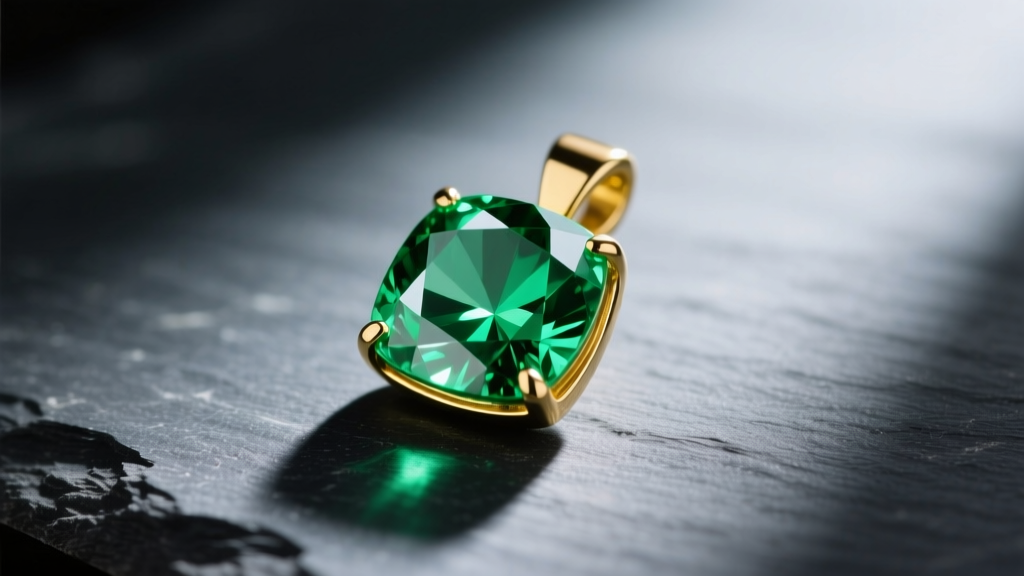
The Hidden Vulnerabilities of Tourmaline Jewelry
Tourmaline is a stunning boron silicate mineral celebrated for its intense pleochroism and vast color spectrum, ranging from deep rubellite reds to vibrant Paraiba blues. However, owning a tourmaline stone necklace comes with unique structural challenges that many jewelry enthusiasts overlook. Despite registering a 7 to 7.5 on the Mohs hardness scale, tourmaline is notorious for its high internal stress and complex crystal structure. According to mineralogical data from Mindat.org, tourmaline's chemical variability often results in liquid-filled capillary inclusions and microscopic growth tubes. While these inclusions prove the stone's natural origin, they also act as internal fault lines, making the gem highly susceptible to thermal shock, pressure fractures, and chemical degradation.
If your favorite pendant has suddenly developed a cloudy appearance, a visible chip, or if the chain keeps snapping under the stone's weight, you are dealing with a structural mismatch or an environmental hazard. This comprehensive troubleshooting guide will help you diagnose, repair, and prevent the most common failures associated with tourmaline pendants and chains.
Troubleshooting Guide: Common Tourmaline Necklace Problems
Before attempting any repairs, it is crucial to accurately diagnose the failure point. Use the matrix below to identify your specific issue and the corresponding immediate action required to prevent further degradation of your tourmaline stone necklace.
| Observed Problem | Root Cause | Immediate Action |
|---|---|---|
| Sudden internal cracking | Thermal shock or ultrasonic vibrations expanding liquid inclusions | Remove necklace immediately; avoid all temperature fluctuations |
| White, cloudy fractures | Loss of fracture-filling agents (cedar oil or epoxy resins) | Stop cleaning; store in a stable humidity environment |
| Chain stretching or snapping | High specific gravity (3.06) of the stone overwhelming a weak chain gauge | Transfer pendant to a heavier, soldered-jump-ring chain |
| Prong lifting or stone rattling | Improper setting tension or metal fatigue from daily impacts | Apply clear tape over the stone to secure it; see a jeweler |
Problem 1: Micro-Fractures and Chipping
One of the most devastating issues a collector can face is the sudden appearance of a micro-fracture radiating from the girdle of the stone. Tourmaline lacks true cleavage, but its conchoidal fracture pattern means that once a crack begins, it can easily propagate through the entire pavilion. This is almost always caused by ultrasonic jewelry cleaners. The high-frequency acoustic cavitation creates microscopic implosions that force liquid trapped inside the tourmaline's natural growth tubes to expand violently, shattering the stone from the inside out. Furthermore, steam cleaners introduce rapid thermal shock. If your tourmaline has chipped, the stone must be removed from its setting by a professional lapidary to be re-polished or, in severe cases, re-cut into a smaller cabochon or faceted gem.
Problem 2: Cloudiness and Loss of Luster
If your once-vibrant green or pink tourmaline stone necklace now looks milky or features stark white lines, you are likely witnessing the failure of a fracture-filling treatment. Because heavily included tourmaline is common in the market, lapidaries frequently treat stones with cedar oil, Opticon, or clear epoxy resins to mask internal fractures and improve clarity. Over time, exposure to harsh soaps, hand sanitizers, and even natural skin oils can dissolve or cloud these fillers. When the filler degrades, the internal fractures become visible again, scattering light and killing the stone's brilliance. Unfortunately, this cannot be fixed at home. The stone must be sent to a gemological lab to have the old filler safely dissolved and the stone re-oiled under a vacuum chamber.

Chain and Setting Failures: Supporting Heavy Gemstones
Tourmaline is a remarkably dense gemstone, boasting a specific gravity of approximately 3.06. This means a moderately sized 15-carat tourmaline pendant will be significantly heavier than a diamond or quartz of the exact same physical dimensions. This density creates immense gravitational stress on the necklace's chain and the pendant's bail, leading to frequent mechanical failures if the jewelry is not properly engineered.
Bail and Prong Stress Points
The bail—the loop that connects the pendant to the chain—is the primary failure point for heavy tourmaline necklaces. Standard cast bails with thin walls will eventually warp and snap under the pendulum-like swinging motion of a heavy stone. When inspecting or purchasing a tourmaline pendant, look for a reinforced, solid-cast bail or a diamond-cut bail with a minimum thickness of 1.5mm. If your stone is set in a prong setting, ensure the prongs are crafted from a durable alloy like 14k or 18k gold, or platinum. Pure 24k gold or high-karat alloys are too soft to securely grip the girdle of a heavy tourmaline, leading to the stone slipping out and shattering on the floor.
Selecting the Right Chain Gauge
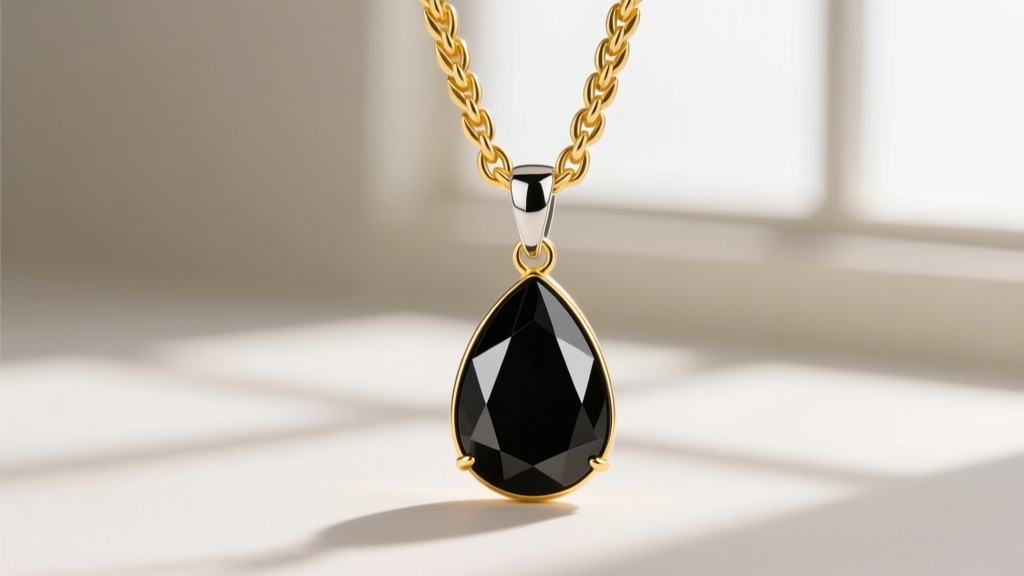
Pairing a heavy tourmaline pendant with a delicate 0.8mm cable chain is a recipe for disaster. The constant friction of the bail against the chain links will act like a saw, eventually cutting through the metal. For any tourmaline stone necklace featuring a gem over 5 carats, you must upgrade to a minimum 1.2mm to 1.5mm chain. Wheat chains, box chains, and rope chains offer superior tensile strength and distribute the weight of the pendant more evenly. Additionally, always verify that the jump ring connecting the clasp to the chain is soldered shut. An unsoldered jump ring will easily pull apart under the dynamic weight of a swinging tourmaline stone.
Safe Cleaning Protocols for Treated vs. Untreated Stones
Proper maintenance is the cornerstone of preserving your tourmaline stone necklace. The Gemological Institute of America (GIA) strictly advises against the use of ultrasonic and steam cleaners for tourmaline of any variety. To safely remove accumulated sebum, cosmetics, and environmental dust, follow this precise, low-impact cleaning protocol:
- Preparation: Fill a small glass bowl with lukewarm distilled water (approximately 85°F or 29°C). Avoid hot water to prevent thermal shock.
- Surfactant: Add two drops of a mild, ammonia-free dish soap (such as original Dawn). Avoid harsh detergents containing moisturizers or degreasers that can strip fracture fillers.
- Agitation: Submerge the necklace for no more than 3 to 5 minutes. Gently agitate the water with your fingers to loosen debris.
- Detailing: Use an extra-soft, baby-bristle toothbrush to lightly sweep the back of the stone (the pavilion) and the setting prongs. Never apply downward pressure on the table (top facet) of the stone.
- Drying: Rinse briefly under a gentle stream of lukewarm water. Pat dry with a lint-free microfiber cloth, ensuring no moisture is trapped beneath the bail or inside the setting basket.
When to Seek a Professional Lapidary
While routine cleaning and chain upgrades can be managed at home or by a standard bench jeweler, severe tourmaline damage requires a specialist. If your tourmaline stone necklace has suffered a deep chip, a fractured culet, or severe clouding due to filler degradation, do not attempt DIY polishing compounds. Tourmaline's pleochroic nature means that altering the angles of the facets even slightly can drastically change the stone's perceived color, potentially turning a vibrant green into a muddy brown. Seek out a certified lapidary artist who specializes in colored gemstones. They possess the specialized dop sticks, diamond laps, and optical knowledge required to re-polish your tourmaline while preserving its carat weight and optical symmetry.
By understanding the unique mineralogical traits of tourmaline and respecting its physical limitations, you can ensure your necklace remains a vibrant, structurally sound heirloom for decades to come.


