Opera Necklace Length Guide: How to Style 28-36 Inch Chains
Discover everything about opera necklace length. Learn how to style, knot, and layer 28-36 inch chains for any neckline with our beginner-friendly guide.


When building a versatile jewelry collection, understanding chain proportions is just as critical as selecting the right metal or gemstone. Among the most dramatic and historically rich options is the opera necklace length. Falling well below the bust line, this specific measurement offers a canvas for creative styling, from vintage-inspired knotting to modern, minimalist layering. Whether you are investing in your first fine jewelry piece or looking to maximize the wearability of an existing chain, this beginner-friendly explainer will break down the exact specifications, styling frameworks, and maintenance requirements of the 28-to-36-inch silhouette.
What Exactly is Opera Necklace Length?
In the standardized jewelry industry, chain lengths are categorized into specific tiers. The opera necklace length strictly refers to chains measuring between 28 and 36 inches (71 to 91 cm). To put this in perspective, a standard choker sits at 14-16 inches, a princess length rests at 18 inches, and a matinee length falls between 20 and 24 inches. The opera length is designed to drape over the sternum and rest near the diaphragm or top of the waist.
Historically, this length was popularized in the early 20th century, often crafted from continuous strands of pearls or beads. According to the Victoria and Albert Museum's jewelry archives, the roaring twenties saw a massive surge in long, swinging sautoir and opera-length pearl necklaces, designed to accentuate the dropped waistlines of flapper dresses. Today, the opera length remains a staple for both formal evening wear and elevated casual layering, bridging the gap between traditional elegance and contemporary street style.
The Anatomy of an Opera Chain
Because an opera-length chain covers a significant surface area of the body, its physical construction dictates both its durability and its comfort. When shopping for this length, you must pay close attention to the gauge (thickness) and the link style.
Gauge and Durability
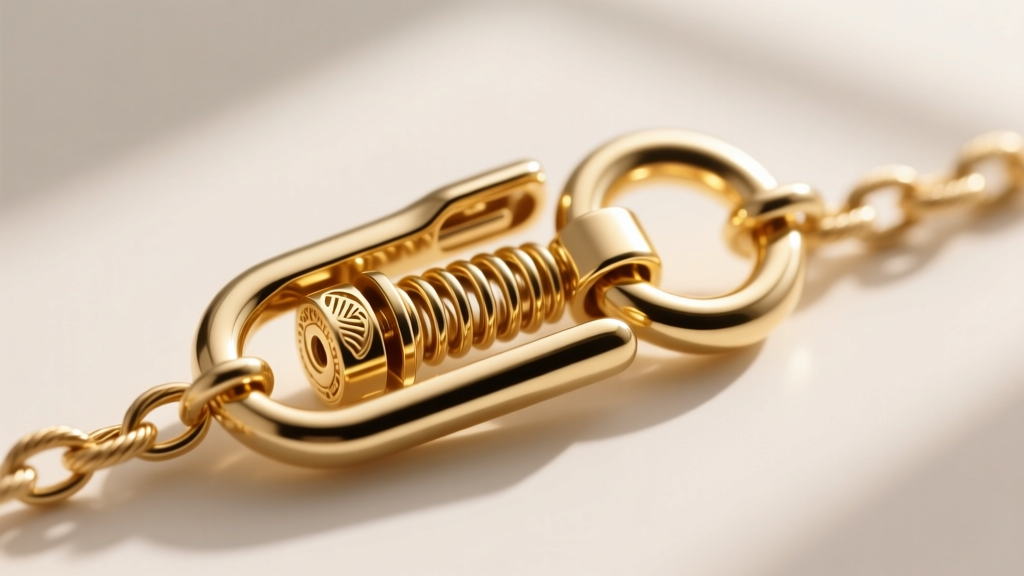
For an opera necklace length, structural integrity is paramount. A longer chain experiences more friction against clothing and is more prone to catching on objects. Ideal gauge sizes range from 1.2mm to 2.5mm. Anything thinner than 1.0mm in a 30-inch chain is highly susceptible to tangling, micro-kinks, and eventual snapping under its own kinetic movement. If you are buying a solid 14k or 18k gold chain, expect to pay a premium for the increased metal weight of a thicker gauge.
Link Styles and Snagging
Not all links behave the same way over a 32-inch span. Here is a quick breakdown of how different link styles perform at the opera length:
- Box Chains: Excellent for opera lengths. The geometric, square links lie flat, resist tangling, and rarely catch on body hair or knitwear.
- Wheat (Spiga) Chains: Woven in a continuous, braided pattern. Highly durable and tangle-resistant, making them ideal for heavy pendants.
- Rope Chains: Visually striking and highly reflective, but the twisted grooves can easily catch on fine hair or lace fabrics.
- Cable Chains: The classic oval link. While timeless, standard cable chains over 28 inches are notorious for tangling if stored improperly.
How to Style Opera Lengths with Different Necklines
The beauty of the opera necklace length lies in its ability to elongate the torso. However, pairing it with the wrong neckline can result in a cluttered or disproportionate look. Use the decision matrix below to match your chain to your outfit.
| Neckline Type | Styling Strategy | Best Chain Width |
|---|---|---|
| Turtleneck / Mock Neck | Wear the chain on the outside of the fabric to break up the solid block of color. Add a geometric pendant for a focal point. | 1.5mm - 2.5mm |
| Deep V-Neck | Follow the natural line of the V. The opera length will extend past the neckline, drawing the eye downward and elongating the neck. | 1.0mm - 1.8mm |
| Button-Down Shirt | Wear the chain underneath the collar, tucked slightly into the placket for a subtle, layered '70s-inspired aesthetic. | 1.2mm - 2.0mm |
| Scoop or Crew Neck | Double the chain using a knot or slider to create a 16-inch and 20-inch layered look directly against the skin. | 1.5mm - 3.0mm |
The Art of the Knot and Loop
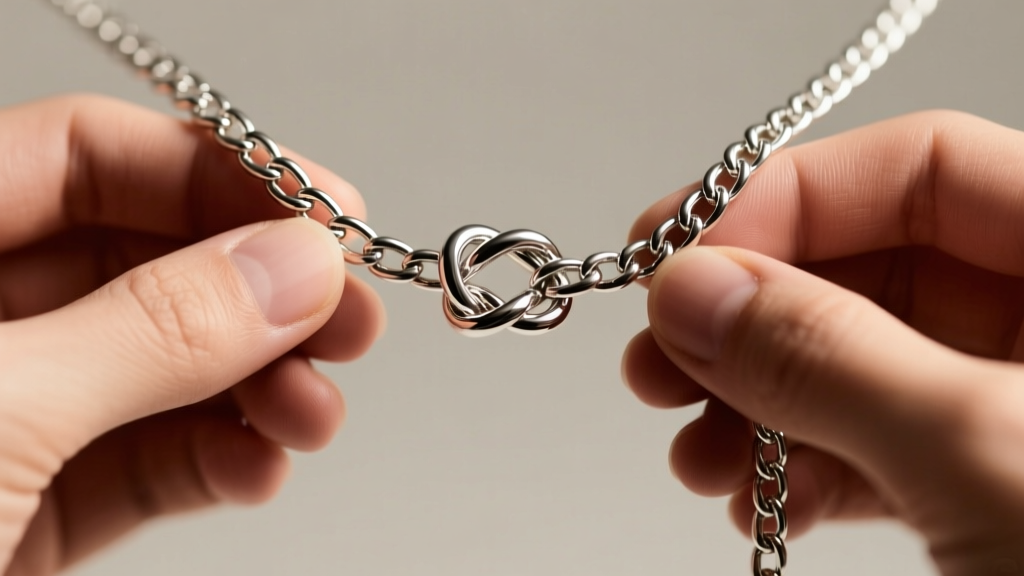
One of the most practical advantages of the opera necklace length is its convertibility. By doubling the chain, you instantly create a multi-strand look. However, tying a literal knot in a metal chain can cause permanent kinking, especially in softer metals like 24k gold or pure silver. Expert Tip: Use a silicone jewelry slider tube or a specialized knotting ring. You simply fold the chain in half, pull the loop through the silicone ring, and feed the ends back through. This secures the doubled look without putting stress on the metal links.
Layering Opera Chains Without Tangling
Layering is a dominant trend in 2026, but mixing multiple long chains often results in a frustrating, tangled mess. The Gemological Institute of America (GIA) frequently notes that metal-on-metal friction can cause premature wear, especially when mixing different karat weights or hardness levels. To layer an opera chain successfully, follow the 'Rule of Four'.
The Rule of Four dictates that there should be at least a 4-inch gap between layered necklaces to prevent the clasps and links from interlocking. If your opera chain is 32 inches, your next shortest chain should be no longer than 28 inches (a long matinee), and your shortest should be a 16-inch choker. Furthermore, vary the chain textures. Pairing a 32-inch wheat chain with a 24-inch smooth herringbone chain drastically reduces the surface friction that causes tangling.
Common Mistakes Beginners Make (And How to Fix Them)
Even seasoned collectors make errors when managing longer silhouettes. Avoid these three critical pitfalls to extend the lifespan of your jewelry:
- Improper Storage: Never toss a 30-inch chain into a jewelry box. The kinetic movement will guarantee a knot. Always hang opera-length chains on a multi-tiered jewelry stand, or coil them loosely in a figure-eight pattern secured with a twist tie before placing them in a velvet pouch.
- Ignoring the Clasp Weight: A heavy 32-inch chain requires a robust clasp. Standard 5mm spring rings will fail under the swinging tension of a long, heavy chain. Always upgrade to a lobster clasp or a magnetic box clasp for chains weighing more than 15 grams.
- Wearing During Sleep or Exercise: The longer the chain, the higher the catch-risk. Sleeping in an opera-length chain almost guarantees micro-bends in the links, while sweat can rapidly degrade gold-plated or gold-filled long chains due to the extended surface area exposed to acidity.
Buying Guide: Materials and Price Ranges
When investing in an opera necklace length, your budget will dictate the material. Here is what you can expect in the current market:
- Sterling Silver (925): The most accessible entry point. A 1.5mm sterling silver box chain at 30 inches typically ranges from $40 to $90. Ensure it is rhodium-plated to delay tarnishing.
- Gold-Filled (14k GF): A great mid-tier option. Unlike gold-plated, gold-filled chains have a thick mechanical bond of gold. Expect to pay $80 to $150. However, be aware that friction wear over the years can eventually expose the brass core on longer chains.
- Solid 14k Gold: The standard for fine jewelry. A 1.2mm to 2.0mm solid 14k gold opera chain will range from $450 to $1,200+, depending on the exact gram weight and current gold spot prices.
Ultimately, mastering the opera necklace length is about understanding proportion, physics, and personal style. By selecting the right gauge, utilizing smart knotting techniques, and storing your pieces correctly, a single 30-inch chain can serve as the most versatile anchor in your entire jewelry wardrobe.


