Translating Necklace Drawings Into Fine Jewelry: 2026 Trends
Discover how 2026's top bespoke jewelry trends start with detailed necklace drawings. Learn the technical specs, CAD translation, and custom design process.

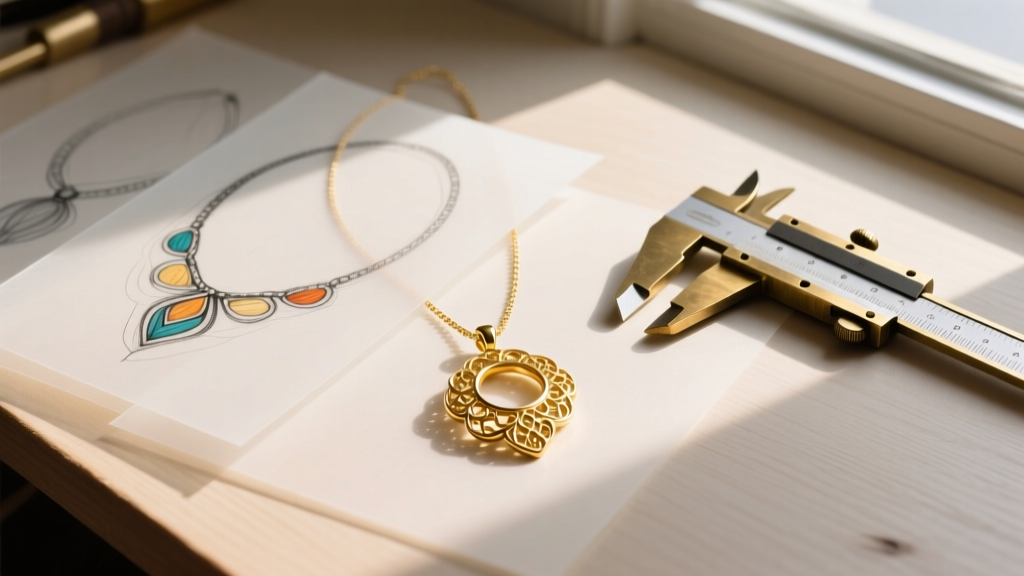
The journey from a fleeting concept to a wearable masterpiece begins long before metal is melted or stones are set. In 2026, the custom jewelry sector is experiencing a massive renaissance, driven by consumers who demand narrative, precision, and individuality over mass-produced algorithmic designs. At the heart of this bespoke movement are necklace drawings—the critical blueprints that bridge the gap between artistic imagination and metallurgical reality.
The Renaissance of Bespoke: Why Necklace Drawings Are Dominating 2026
According to recent market analyses highlighted by JCK Industry News, custom and bespoke jewelry commissions have grown by over 18% year-over-year, largely fueled by a desire for hyper-personalization. Modern consumers are no longer satisfied with selecting from a catalog; they want to co-create. This shift has elevated the humble sketch from a mere sales tool to a collaborative engineering document.
When a client brings their own necklace drawings to a bench jeweler, or when a designer drafts a new collection, these sketches dictate the structural integrity of the final piece. A beautiful concept that ignores the tensile strength of 14k gold or the cleavage planes of a tanzanite gemstone will fail at the casting or setting stage. Therefore, understanding how to read, draft, and interpret these drawings is essential for both designers and informed collectors.
Anatomy of a Technical Jewelry Sketch
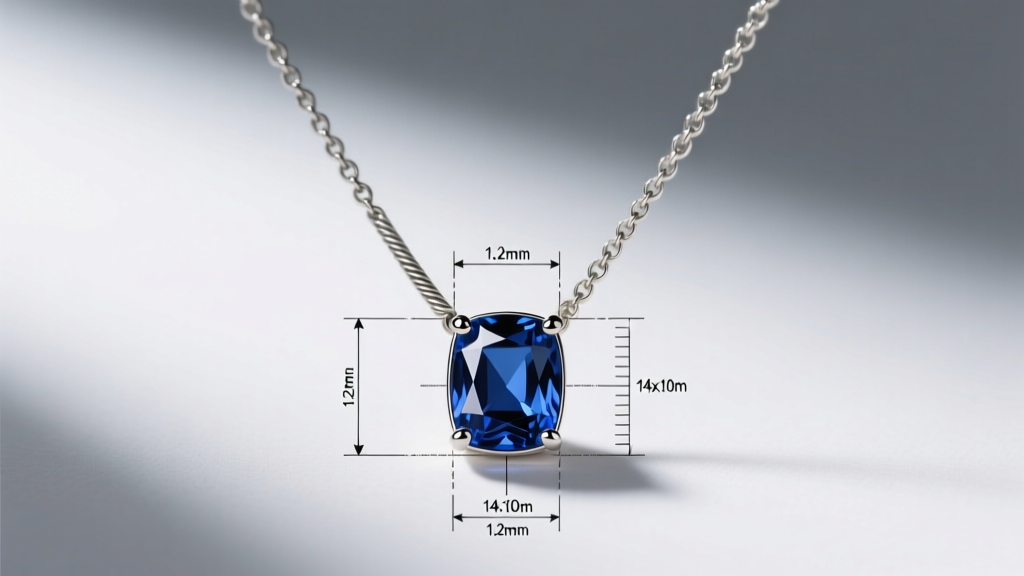
Not all sketches are created equal. A fashion illustration focuses on mood, drape, and stylistic flair, often exaggerating proportions to sell a lifestyle. A technical bench drawing, however, is a rigid set of instructions for the CAD modeler and the casting house. Below is a breakdown of how these two approaches differ in practice.
| Feature | Fashion Illustration | Technical Bench Drawing |
|---|---|---|
| Primary Goal | Evoke emotion and showcase styling | Provide exact manufacturing specifications |
| Proportions | Often exaggerated or stylized | Strictly to scale (usually 1:1 or 2:1) |
| Measurements | Rarely included | Exact mm dimensions for every component |
| Material Notes | Generic (e.g., 'gold chain') | Specific (e.g., '1.2mm 18k yellow gold cable') |
| Cross-Sections | Never shown | Crucial for hollow or layered pendants |
For a necklace drawing to be technically viable, it must account for the specific gravity of the chosen metal. A pendant designed in 925 sterling silver will weigh significantly less than the exact same volume cast in 18k yellow gold, which affects how the piece sits on the collarbone and the gauge of chain required to support it without stretching.
2026 Trend Forecast: What the Sketchbooks Are Revealing
By analyzing the technical necklace drawings emerging from top independent design studios this year, we can identify three distinct structural and aesthetic trends dominating the fine jewelry landscape.
1. Asymmetrical Tension Pendants
Moving away from traditional bezel and prong settings, 2026 sketches are heavily featuring tension-set stones suspended in asymmetrical wire frameworks. Designers are specifying 0.9mm to 1.1mm spring-hard wire (often in platinum or palladium) to create the necessary outward pressure to hold a gemstone securely without a full bezel. These drawings require meticulous notation of the stone's exact girdle thickness to ensure the metal grips securely without chipping the gem.
2. Mixed-Gauge Chain Layering
The layered look has evolved from simply wearing multiple necklaces to engineering a single, multi-strand clasp system. Technical drawings for these pieces specify extreme contrasts in chain gauges. A popular 2026 blueprint pairs a delicate 1.1mm diamond-cut cable chain with a heavy 5.2mm hollow paperclip chain. The drawings must detail the structural reinforcement at the solder points where these vastly different wire thicknesses meet the unified clasp, preventing weak links from snapping under the pendulum effect of the heavier chain.
3. Kinetic and Modular Locket Mechanisms
Nostalgia is meeting horological engineering. Modern locket necklace drawings are incorporating kinetic elements—spinning interior bezels or sliding modular doors. Sketches for these pieces now include exploded-view diagrams detailing 0.5mm stainless steel hinge pins and microscopic rare-earth magnets (measuring just 1.5mm x 0.5mm) to ensure the locket snaps shut with a satisfying, secure click.
From Paper to Precious Metal: The Translation Process
The most challenging aspect of custom jewelry design is the translation from a 2D drawing to a 3D object. Metal behaves unpredictably under extreme heat, and a drawing that looks perfect on paper can result in a warped or porous casting if the jeweler does not account for metallurgical realities. The Gemological Institute of America (GIA) frequently emphasizes the importance of understanding material limitations during the design phase to prevent structural failure.
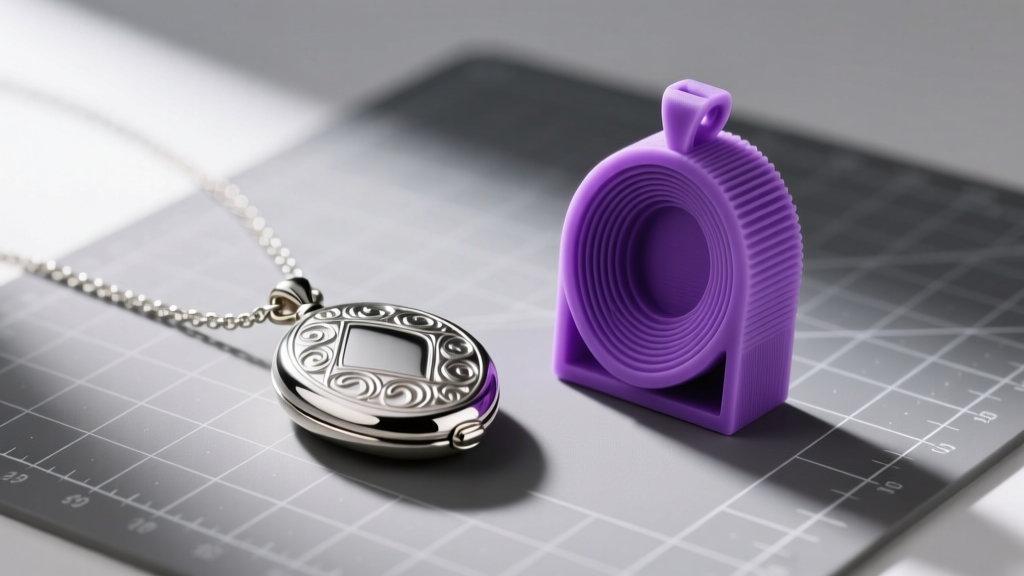
When a bench jeweler reviews your necklace drawings, they are mentally calculating the following critical factors:
- Shrinkage Rates: When cast metal cools, it shrinks. 14k and 18k gold typically shrink by 1.5% to 2.0%, while platinum can shrink up to 2.5%. The CAD modeler must scale up the digital model based on the drawing to ensure the final cast piece matches the intended millimeter dimensions.
- Prong Minimums: A sketch might depict incredibly delicate, needle-like prongs to maximize light return in a diamond. However, for everyday wear, a jeweler will insist on a minimum prong thickness of 0.8mm at the base, tapering to no less than 0.6mm at the tip, to prevent the prongs from shearing off if the necklace is snagged.
- Sprue Placement and Porosity: The drawing must allow for a 'sprue'—the channel through which molten metal enters the mold. If a pendant is designed with a massive, thick center and extremely thin outer edges, the metal will cool unevenly, causing porosity (tiny air bubbles) in the thick sections. Good drawings account for gradual transitions in metal volume.
A Client’s Framework for Commissioning Custom Work
If you are preparing to commission a bespoke piece and plan to provide your own necklace drawings, follow this framework to ensure a smooth collaboration with your jeweler:
- Provide Orthographic Views: Do not just draw the front of the pendant. Include a profile (side) view and a top-down view. This helps the jeweler understand the depth, the bail (loop) orientation, and how the piece will lay flat against the sternum.
- Specify the Bail Type: The bail is the connector between the chain and the pendant. Note whether you want a hidden bail (soldered behind the pendant for a seamless look), a standard loop, or a European-style snap-on bail for thicker chains.
- Define the Finish: Use shading or written notes to indicate surface textures. Specify if you want a high polish, a brushed satin finish, or a sandblasted matte texture, as these drastically change how light interacts with the metal.
- Establish a Realistic Budget Early: Complex drawings with intricate milgrain detailing, multiple micro-pave stones, and mixed-metal inlays require hundreds of hours of bench time. Share your budget ceiling during the sketch review so the jeweler can advise on where to simplify the design without losing its core aesthetic.
Ultimately, necklace drawings are the foundational language of fine jewelry. By understanding the technical constraints and trending aesthetics of 2026, you can transform a simple sketch into an heirloom-quality piece that is as structurally sound as it is visually breathtaking.


