The Ultimate Blue Statement Necklace Material Guide
Discover how to choose the perfect blue statement necklace by comparing gemstones, glass, and resin. Expert insights on durability, weight, and value.

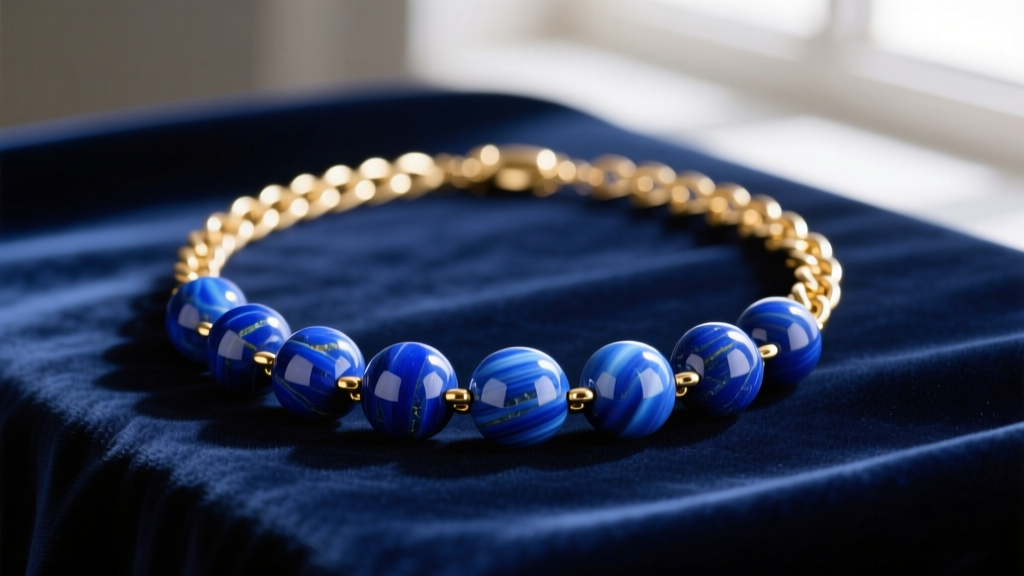
The Anatomy of a Blue Statement Necklace
When curating a bold, eye-catching look, few accessories command attention quite like a blue statement necklace. The deep, oceanic hues of sapphire, the vibrant azure of turquoise, and the inky depths of lapis lazuli offer unparalleled versatility. However, the visual impact of these pieces is only half the equation. As a jewelry specialist, I frequently see collectors and everyday wearers make the mistake of prioritizing color over material composition. In 2026, with the rise of advanced bio-resins and ethically sourced lab-grown alternatives, understanding the physical properties of your jewelry is more critical than ever.
The longevity, weight profile, and maintenance requirements of your necklace are entirely dictated by its base materials. A massive, heavy gemstone collar might look spectacular on a mannequin but can cause severe neck strain after two hours of wear. Conversely, lightweight alternative materials might offer dramatic scale but can suffer from rapid UV degradation if not properly stabilized. This comprehensive guide breaks down the exact material properties you need to consider before investing in your next centerpiece.
Natural Gemstones: Lapis Lazuli, Sodalite, and Blue Topaz
Natural stones are the traditional choice for high-end statement jewelry, offering unique inclusions and a premium feel. However, their crystalline structures dictate how they can be cut, worn, and maintained.
Lapis Lazuli and Sodalite: The Porous Blues
Lapis lazuli is not a single mineral but a rock composed primarily of lazurite, calcite, and pyrite. Its Mohs hardness ranges from 5 to 6, making it relatively soft. More importantly, the calcite matrix makes lapis highly porous. If you wear a lapis statement piece while applying perfume or hairspray, the chemicals can penetrate the stone, causing permanent dulling or discoloration. According to the Gemological Institute of America (GIA), lapis should never be cleaned in ultrasonic baths, as the vibrations can shatter the calcite veins.
Sodalite is frequently marketed as a more affordable alternative to lapis. While it shares a similar Mohs hardness (5.5 to 6), sodalite lacks the metallic pyrite flecks and is generally more uniform in color. However, sodalite is prone to 'tenebrescence'—a phenomenon where prolonged exposure to direct sunlight can cause the vibrant blue color to fade to a dull grayish-white. For statement pieces intended for outdoor summer events, sodalite requires careful storage when not in use.
London Blue Topaz: The Irradiated Showstopper
For maximum brilliance and faceted drama, London Blue Topaz is a favorite among jewelers. With a Mohs hardness of 8, it is highly resistant to scratching. However, topaz possesses perfect basal cleavage, meaning a single hard knock against a marble countertop can split the stone cleanly along its crystalline plane. When selecting a topaz statement necklace, ensure the setting features protective bezels or heavy prongs at the stone's vulnerable girdle edges.
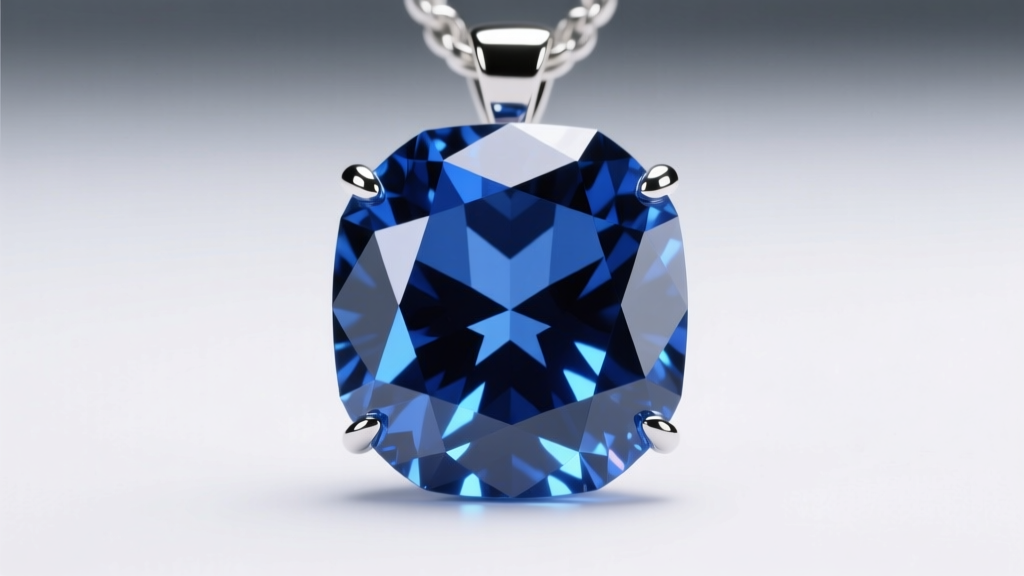
Alternative & Synthetic Materials: Enamel, Resin, and Glass
As contemporary jewelry design pushes the boundaries of scale and geometry, alternative materials have taken center stage. These materials allow artisans to create massive, architectural blue statement necklaces that remain comfortable for all-day wear.
Vitreous Enamel vs. Cold Enamel
Vitreous enamel is essentially glass fused to a metal substrate at temperatures exceeding 1,400°F. It offers unparalleled color saturation and will never fade or yellow. The drawback is brittleness; a dropped enamel pendant will likely chip or shatter. Cold enamel, conversely, is an epoxy-based resin poured into metal recesses. While it lacks the glassy depth of vitreous enamel, it is highly impact-resistant and significantly cheaper to produce, making it ideal for oversized, geometric statement collars.
The 2026 Bio-Resin Revolution
Historically, large resin jewelry suffered from the 'yellowing effect' caused by UV exposure. Today, high-end statement pieces utilize UV-stabilized polyurethane and plant-based bio-resins. These advanced polymers maintain their vibrant cerulean and cobalt tones indefinitely. Resin's specific gravity is remarkably low (around 1.1 to 1.2 compared to topaz at 3.5), meaning a massive, 4-inch resin pendant will weigh less than a standard silver coin. This allows for dramatic, avant-garde silhouettes without the physical burden of heavy metals or stones.
Comprehensive Material Comparison Matrix
To help you make an informed decision, I have compiled a technical comparison of the most common materials used in blue statement jewelry. This data reflects current market realities and physical properties essential for daily wear.
| Material | Mohs Hardness | Weight Profile | Vulnerability | Best Use Case |
|---|---|---|---|---|
| London Blue Topaz | 8.0 | Heavy | Cleavage chipping | Evening wear, secure settings |
| Lapis Lazuli | 5.0 - 6.0 | Medium-Heavy | Acids, porosity | Occasional wear, winter events |
| Murano Glass | 5.5 - 6.5 | Medium | Shattering on impact | Artisan pieces, careful handling |
| UV-Stabilized Resin | 2.0 - 3.0 | Ultra-Light | Surface scratching | Oversized daily wear, travel |
| Vitreous Enamel | 5.0 - 6.0 | Medium (depends on base) | Chipping, thermal shock | Structured collars, heirloom pieces |
Hardware & Chain Considerations for Heavy Pendants
A common failure point in statement jewelry is not the focal material itself, but the hardware supporting it. A blue statement necklace featuring a 50-gram lapis lazuli pendant requires drastically different structural support than a 10-gram resin piece.
'The integrity of a statement necklace is only as strong as its weakest jump ring. I always recommend inspecting the solder points on the bail and the clasp mechanism before purchasing any heavy pendant.' — Master Jeweler & Bench Technician
Gauge Sizes and Chain Types
For pendants exceeding 30 grams, avoid delicate chains like standard cable or rope chains under 1.2mm. Instead, opt for a 14-gauge (1.6mm) or 12-gauge (2.0mm) box chain or wheat chain. These weaves distribute weight evenly and resist kinking. Furthermore, the clasp must be proportionate to the chain. A heavy pendant will constantly pull a small lobster clasp open. Look for a solid-cast lobster clasp or a reinforced toggle clasp, which uses the weight of the necklace to keep the bar securely seated in the ring.
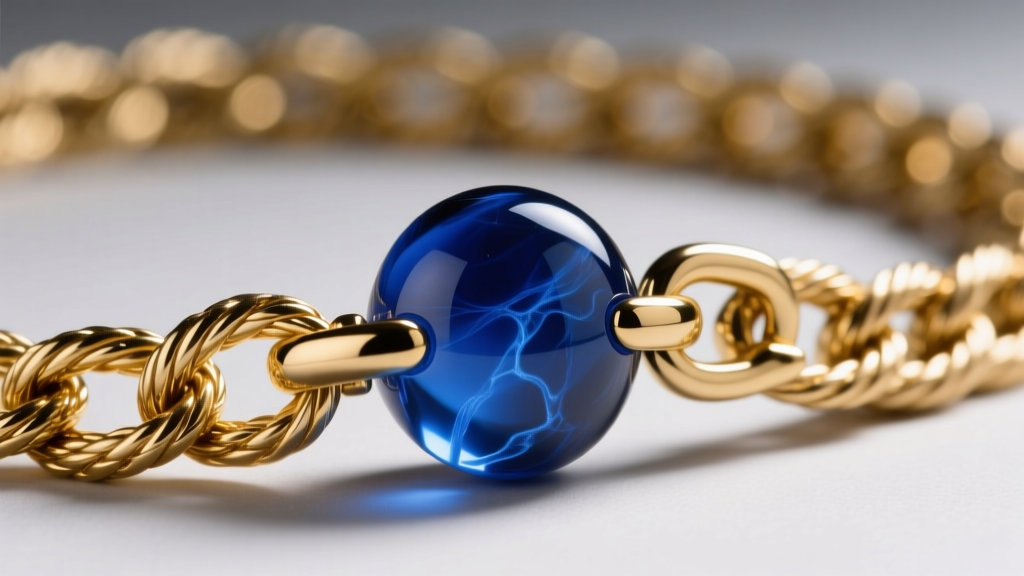
The Importance of the Bail
The bail is the loop that connects the pendant to the chain. In mass-produced jewelry, bails are often glued into a drilled hole in the stone. For heavy blue gemstones, this is a recipe for disaster. Always seek out pendants with mechanically fastened or bezel-integrated bails, where the metal wraps entirely around the stone's perimeter, ensuring the weight is supported by the metal setting rather than a weak adhesive bond.
Final Verdict: Matching Material to Lifestyle
Choosing the right blue statement necklace requires aligning the material's physical properties with your lifestyle. If you lead an active life and prefer bold, oversized pieces for daily wear, UV-stabilized resins and cold enamels offer the best combination of dramatic scale and lightweight comfort. If you are curating a collection for formal evening events and value traditional luxury, a well-protected London Blue Topaz or high-grade Afghan Lapis Lazuli will provide unmatched depth and prestige. By looking beyond the surface color and evaluating the Mohs hardness, weight distribution, and hardware integrity, you can invest in statement pieces that remain as structurally sound as they are visually stunning.
For further reading on gemstone durability and care, consult the Mindat Mineral Database for specific gravity data, and review the Federal Trade Commission Jewelry Guides to ensure you understand the legal definitions of gemstone treatments and disclosures.


