Choosing the Best Travel Necklace Organizer Material
Discover the best travel necklace organizer materials for 2026. Compare leather, EVA foam, and anti-tarnish fabrics to protect chains from tangling.

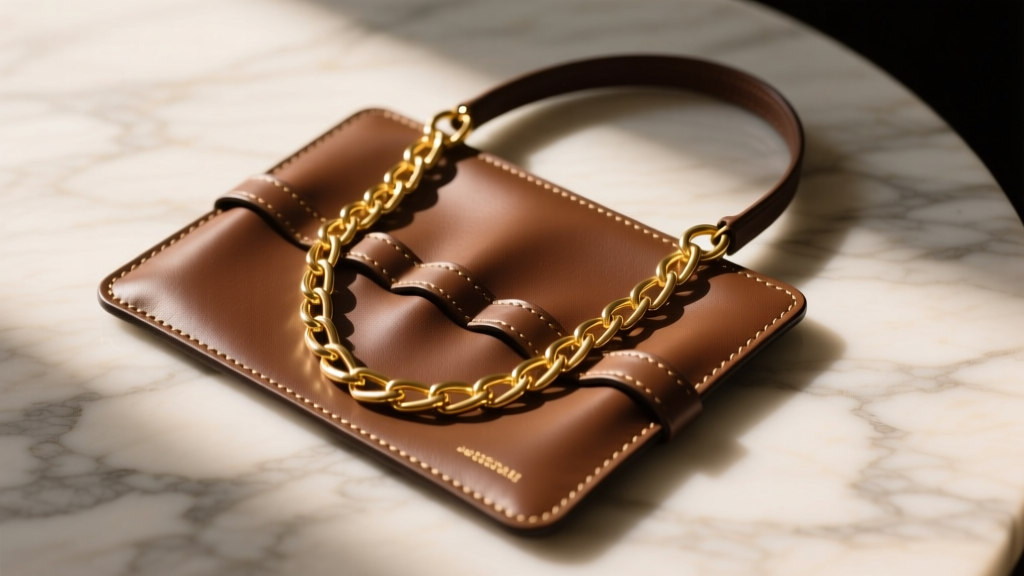
Traveling with fine jewelry introduces three primary threats to your necklaces and pendants: mechanical tangling, environmental tarnishing, and impact damage to delicate gemstone inlays. In 2026, the market for the travel necklace organizer has evolved far beyond simple velvet pouches into highly engineered storage solutions. However, not all organizers are created equal. The specific materials used in both the outer shell and the inner lining dictate how well your jewelry will survive a trip in a carry-on or checked bag.
As a domain expert in jewelry care and material science, I have tested dozens of storage solutions to determine which fabrics, foams, and leathers actually protect your investments. This guide breaks down the material properties of the best travel necklace organizer options, helping you match the right storage medium to your specific chain types and pendant weights.
The Science of Chain Tangling and Material Friction
To understand why certain organizer linings fail, we must first look at the physics of chain tangling. Tangling is not merely a result of chains being jostled together; it is driven by the coefficient of friction (COF) between the metal links and the fabric lining. Delicate chains—specifically those in the 0.8mm to 1.2mm gauge range, such as herringbone, snake, and rope chains—feature interlocking links with microscopic surface barbs.
When these chains are dragged across high-pile fabrics like standard velvet or brushed suede, the micro-barbs catch individual textile fibers. This creates a ratchet effect, locking the chains together and making them nearly impossible to separate without professional ultrasonic intervention or risking permanent kinking. According to the Gemological Institute of America (GIA), improper storage is a leading cause of micro-abrasions on precious metals, as trapped dust and high-friction fabrics act like fine sandpaper against high-polish finishes.
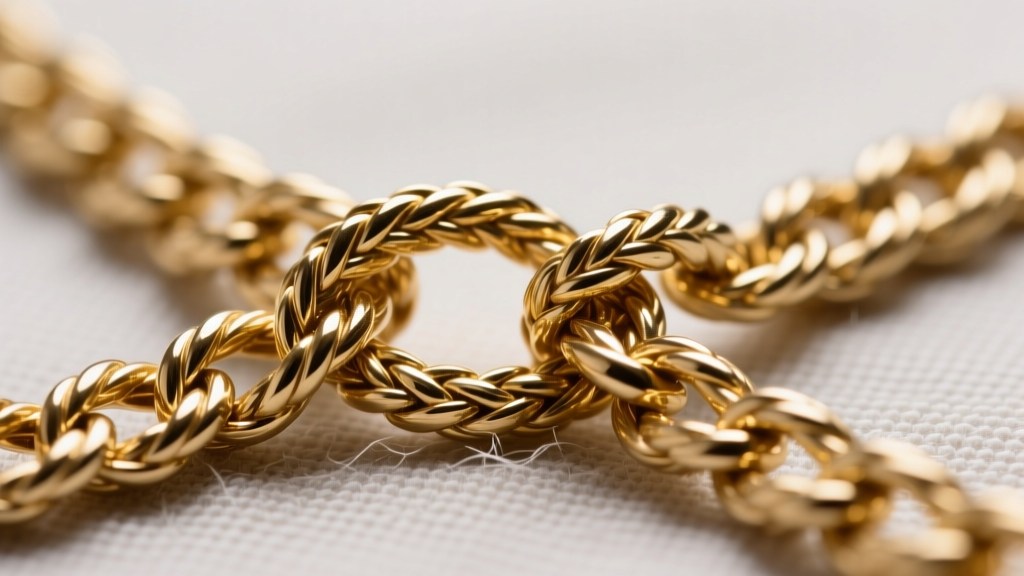
Conversely, smooth linings like silk, satin, or specialized microfiber offer a low-friction surface that allows chains to glide rather than catch. However, low-friction linings must be paired with secure internal restraint systems, or the necklaces will simply slide out of their designated compartments and tangle with one another in the main cavity.
Material Breakdown: Pros, Cons, and Tarnish Resistance
Full-Grain Leather vs. PU Leather
Full-grain leather is the premium choice for the exterior shell of a travel necklace organizer. It offers exceptional structural integrity, protecting the contents from being crushed by heavier items in a suitcase. Over time, it develops a rich patina. However, leather is naturally porous and can trap ambient moisture, which accelerates tarnishing if the interior is not properly lined. Polyurethane (PU) leather is a lighter, water-resistant alternative, but it lacks the breathability and longevity of full-grain, often peeling after 2-3 years of frequent travel.
Velvet, Suede, and Silk Linings
Velvet provides a luxurious feel and excellent cushioning for heavy pendants, but as noted, its high pile is a nightmare for herringbone and snake chains. Suede offers slightly less friction but can transfer natural oils and dyes onto porous gemstones like turquoise or opals. Silk and high-denier satin remain the gold standard for interior linings when storing delicate, high-polish chains, as their tightly woven fibers prevent snagging.
Anti-Tarnish Pacific Silvercloth
For sterling silver necklaces, standard fabrics are insufficient. Sterling silver (92.5% silver, 7.5% copper) tarnishes when the copper alloy reacts with hydrogen sulfide and moisture in the air. Pacific Silvercloth is a specialized flannel embedded with thousands of micro-particles of pure silver. These particles act as a sacrificial anode, tarnishing themselves to absorb sulfur compounds before they can reach your jewelry. This material is highly effective but has a finite lifespan; it typically saturates after 3 to 5 years of active use and must be replaced.
Hard-Shell EVA Foam
Ethylene-vinyl acetate (EVA) foam is a dense, shock-absorbing polymer used in hard-shell organizers. It is the only material capable of protecting hollow electroformed pendants, delicate opal inlays, and tension-set diamonds from the compressive forces of a packed suitcase. EVA foam is also entirely non-reactive, meaning it will not off-gas chemicals that could degrade gold vermeil or rhodium plating.
Material Comparison Matrix
| Material Type | Tarnish Resistance | Friction Level | Best Used For | Avg. Price Range |
|---|---|---|---|---|
| Full-Grain Leather (Exterior) | Low (Requires Lining) | N/A (Exterior) | Durability & Luxury | $65 - $140 |
| Silk / Satin (Interior) | Neutral | Very Low | Delicate Herringbone & Snake Chains | $30 - $60 |
| Pacific Silvercloth | Extremely High | Medium | Sterling Silver & Oxidized Metals | $40 - $85 |
| Hard-Shell EVA Foam | High (Non-Reactive) | Low | Hollow Pendants & Fragile Gemstones | $25 - $55 |
| Standard Velvet | Low | High | Heavy, Smooth Cuban Links | $15 - $35 |
Internal Architecture: Snaps, Elastics, and Zippers
The exterior material of your travel necklace organizer is only half the equation; the internal restraint hardware dictates whether your chains stay put. When evaluating an organizer, pay close attention to the following components:
- Elastic Restraint Loops: Standard spandex elastics degrade over time, becoming brittle and sticky, which can ruin gold vermeil finishes. Look for organizers that use silicone-lined or fabric-wrapped elastic bands to create a barrier between the rubber and your metal chains.
- Snap Closures and Clasps: Many budget organizers use nickel-plated iron snaps that rust when exposed to the humidity of a hotel bathroom or a tropical destination. Always verify that the hardware is made from 316L stainless steel or solid brass to prevent rust stains from bleeding onto your jewelry.
- Zipper Tracks: Metal zippers can snag delicate chains if the interior flap is not wide enough. Nylon coil zippers with wide, fabric-backed interior storm flaps are the safest choice for preventing accidental snags when opening and closing the case.
Choosing the Right Organizer for Your Jewelry Portfolio
Matching the organizer to your specific collection is critical for optimal protection. If your portfolio consists primarily of heavy, solid-gold Cuban links or thick rope chains, a soft-sided, full-grain leather organizer with a velvet interior will provide ample cushioning without the risk of snagging, as these thicker gauges (3.0mm+) lack the micro-barbs of finer chains.
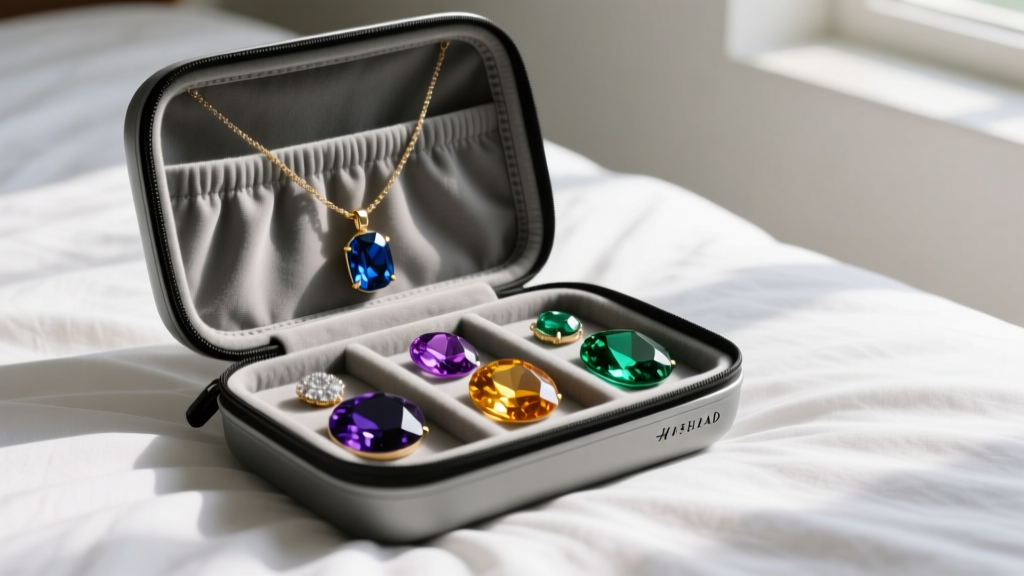
However, if you favor the layered look with multiple delicate 14k gold chains (0.9mm to 1.5mm box and cable chains) featuring fragile gemstone pendants, a hard-shell EVA foam organizer with individual, silk-lined compartments and silicone-wrapped elastic tie-downs is mandatory. The rigid EVA shell prevents the pendants from being crushed, while the silk lining ensures the fine links cannot catch on the fabric during transit.
Maintenance and Care for Your Organizer
To maintain the efficacy of your travel necklace organizer, proper maintenance is required. Never wash anti-tarnish Pacific Silvercloth; water and detergents will strip the embedded silver particles and destroy its sacrificial properties. Instead, use a soft, dry brush to remove dust. For leather exteriors, apply a light coat of carnauba-based leather conditioner every six months to prevent the hide from drying out and cracking in arid cabin environments. By understanding the material science behind jewelry storage, you can ensure your necklaces remain tangle-free, untarnished, and ready to wear the moment you arrive at your destination.


