In-House: What's My Necklace Made Of? Testing Guide
Discover how to test your jewelry at home. Our in-house guide reveals what's my necklace made of using hallmarks, magnets, and acid tests.

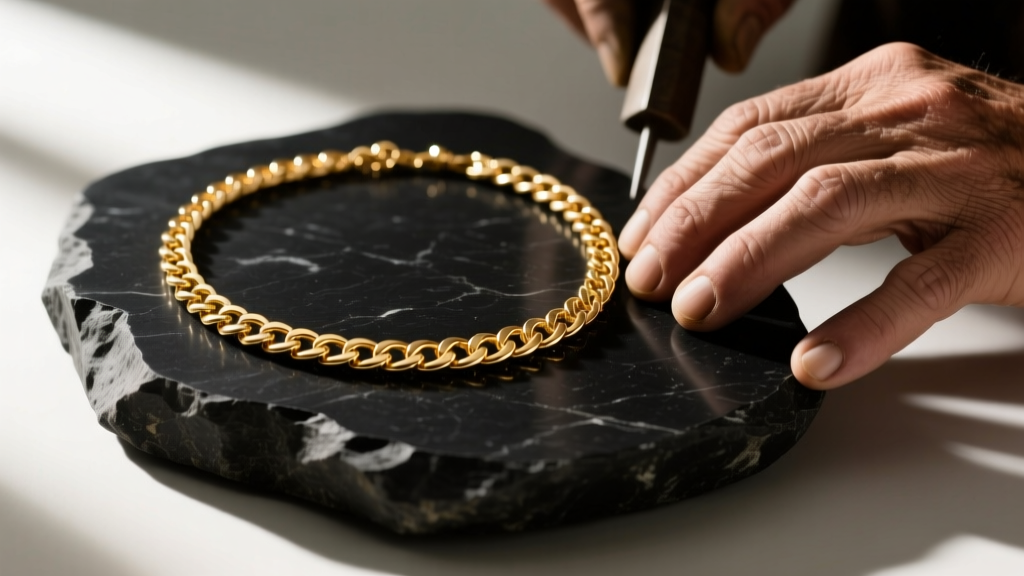
Inheriting a vintage pendant, finding a tarnished chain at an estate sale, or simply losing the original receipt for a favorite piece often leads to the same burning question: what exactly is this metal? When you bring the appraisal process in-house, "what's my necklace made of" becomes a question you can answer with science rather than guesswork. While a certified gemologist or an X-ray fluorescence (XRF) spectrometer provides the ultimate source of truth, there is a wealth of diagnostic data you can extract right at your kitchen table.
This comprehensive guide will walk you through the precise methodologies used by jewelers to identify precious metals, separate solid gold from heavy electroplate, and decode the microscopic stamps hidden on your necklace clasps. Grab a magnifying glass; it is time to investigate.
Decoding Hallmarks and Millesimal Stamps
The very first step in any in-house metal identification is a visual inspection of the hallmarks. In the United States, the Federal Trade Commission (FTC) mandates that any item stamped with a karatage mark must also bear a registered trademark, though vintage pieces often lose these secondary stamps to decades of polishing. According to the FTC Jewelry Guides, a 14K stamp guarantees the piece is at least 58.3% pure gold, but international standards use a completely different lexicon.
Global Stamp Translation Chart
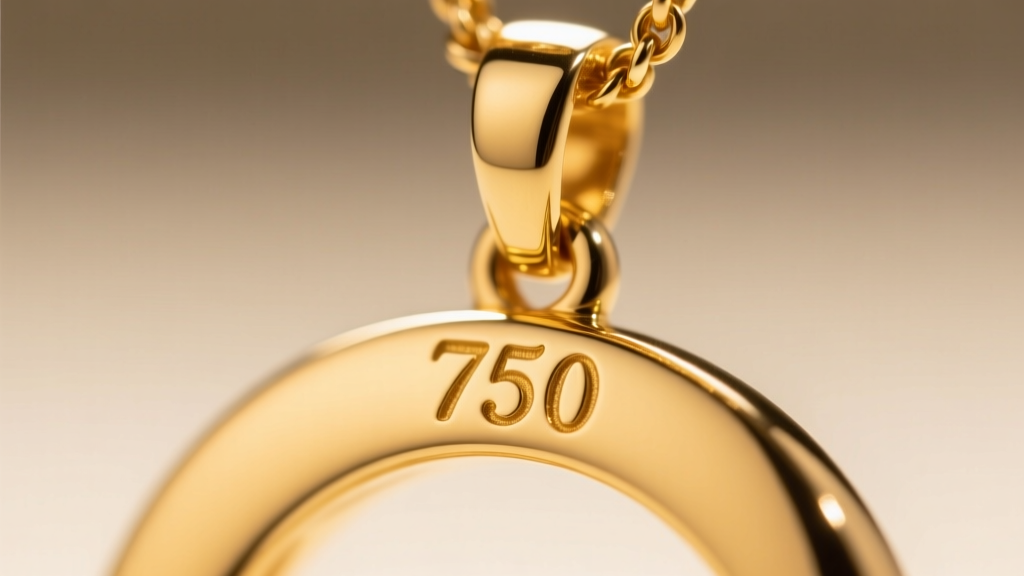
European and Asian markets primarily rely on millesimal fineness, which denotes the parts per thousand of pure precious metal in the alloy. Use this table to decode your necklace's clasp:
| Stamp | Metal Type | Purity Percentage | Common Origins |
|---|---|---|---|
| 925 | Sterling Silver | 92.5% | Global Standard |
| 585 | 14K Gold | 58.5% | Europe, Russia |
| 750 | 18K Gold | 75.0% | Italy, France, Japan |
| 999 | 24K Gold / Fine Silver | 99.9% | China, Middle East |
| PT950 | Platinum | 95.0% | Global Standard |
| 417 | 10K Gold | 41.7% | United States |
The Magnet Test: Separating Ferrous from Precious
Precious metals like gold, silver, and platinum are entirely non-magnetic. However, the magnet test is frequently botched by amateurs using weak refrigerator magnets. To perform a legitimate in-house diagnostic, you need a Neodymium N52 grade rare-earth magnet.
Hold the N52 magnet near the chain of the necklace. If the chain jumps to the magnet or exhibits a strong pull, the core metal is ferrous—likely steel, iron, or a cheap magnetic alloy. However, note the clasp exception: Many solid 14K or 18K gold necklaces utilize a steel spring inside the lobster claw or spring-ring clasp mechanism to ensure it snaps shut securely. A slight magnetic pull at the clasp is normal; a pull on the chain links indicates a fake or heavily plated steel core.
Expert Note: Some counterfeiters use copper or brass cores, which are also non-magnetic. Passing the magnet test only proves the necklace is not made of steel; it does not guarantee the piece is solid gold or silver.
Acid Testing: The Chemical Truth
When hallmarks are missing and the magnet test is inconclusive, it is time for chemistry. A standard jeweler's acid testing kit, available for under $25 online, uses varying concentrations of nitric and hydrochloric acid to react with the copper or brass alloys mixed into gold and silver.
How to Perform the Scratch Test
- Prepare the Stone: Use a black basalt testing stone. Do not scratch the necklace directly, as this will damage the piece.
- Create a Streak: Rub a discreet, heavy part of the necklace (like the back of the pendant or a thick link) firmly against the stone to leave a visible metallic streak.
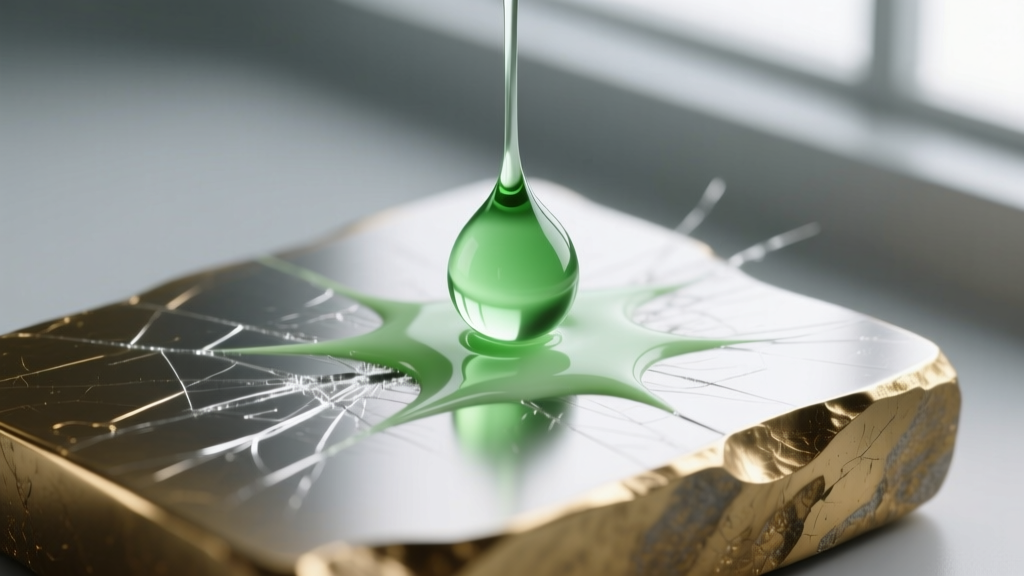
- Apply the Acid: Place a single drop of the corresponding testing acid (e.g., 14K gold acid) onto the streak.
- Observe the Reaction:
- Solid 14K Gold: The streak remains bright and unchanged.
- Gold Plated over Brass: The streak will immediately dissolve, bubble, and turn a milky green or dark brown.
- Sterling Silver: Using silver testing acid, a solid 925 streak will turn a deep, dark blood-red.
- Silver Plate over Copper: The acid will eat through the thin plating and turn a brownish-green.
As highlighted by the Gemological Institute of America (GIA), acid testing is highly effective for identifying the surface metal, but it can be fooled by extremely heavy gold electroplate (sometimes called "gold filled" or "rolled gold plate"). If the acid eats through the top layer but leaves a secondary gold-colored streak beneath, you are likely dealing with a layered bimetallic wire.
Identifying Plating Failure Modes and Wear Patterns
If you do not want to use harsh chemicals, a 10x or 30x jeweler's loupe can reveal the truth through structural failure modes. Electroplating involves bonding a microscopically thin layer of precious metal to a base metal core using an electrical current. Over time, this layer fails in predictable ways.
- Flaking and Peeling: Solid gold and silver wear down smoothly over decades. If you see jagged edges, flaking, or a "scabbing" effect on the high-friction areas of the necklace, you are looking at gold electroplate over a brittle base metal like zinc or pot metal.
- The Brass Bleed-Through: Inspect the areas where the necklace links rub against each other. If you see a dull, mustard-yellow color emerging from the friction points, the piece is brass. True gold will remain a rich, warm yellow even when heavily worn.
- Vermeil vs. Flash Plating: Gold vermeil is legally required to be at least 2.5 microns of gold plated over a sterling silver base. If you scratch a vermeil necklace deeply, you will reveal bright silver underneath. "Flash plated" jewelry, commonly sold in fast-fashion retail, uses less than 0.5 microns of gold over brass or copper, which will tarnish and turn your skin green within weeks of wear.
When In-House Testing Falls Short
While these in-house methods will confidently identify 90% of vintage and modern necklaces, they have limitations. They cannot identify the specific alloy mix (e.g., rose gold vs. yellow gold karatage variations), nor can they detect modern tungsten-core counterfeits, which mimic the specific gravity of 18K gold almost perfectly. Furthermore, acid testing is destructive to the microscopic surface layer and poses safety risks if proper ventilation and gloves are not used.
If your necklace features high-value gemstones, intricate antique filigree that cannot be scratched, or if you suspect a sophisticated modern counterfeit, it is time to take the piece to a professional. A certified appraiser will use X-ray Fluorescence (XRF) technology, which fires X-rays into the metal and reads the energy signatures of the atoms, providing a non-destructive, 100% accurate elemental breakdown of your jewelry from the surface down to the core.
By mastering hallmarks, magnetic resonance, and chemical reactions, you transform from a passive jewelry owner into an informed collector. The next time you find yourself asking what your necklace is made of, you will have the tools to uncover its true metallurgical identity.


