Arrowhead Necklace Materials: Obsidian, Silver & Titanium
Compare obsidian, sterling silver, and titanium arrowhead necklaces. Discover Mohs hardness, durability, and care tips for every material.

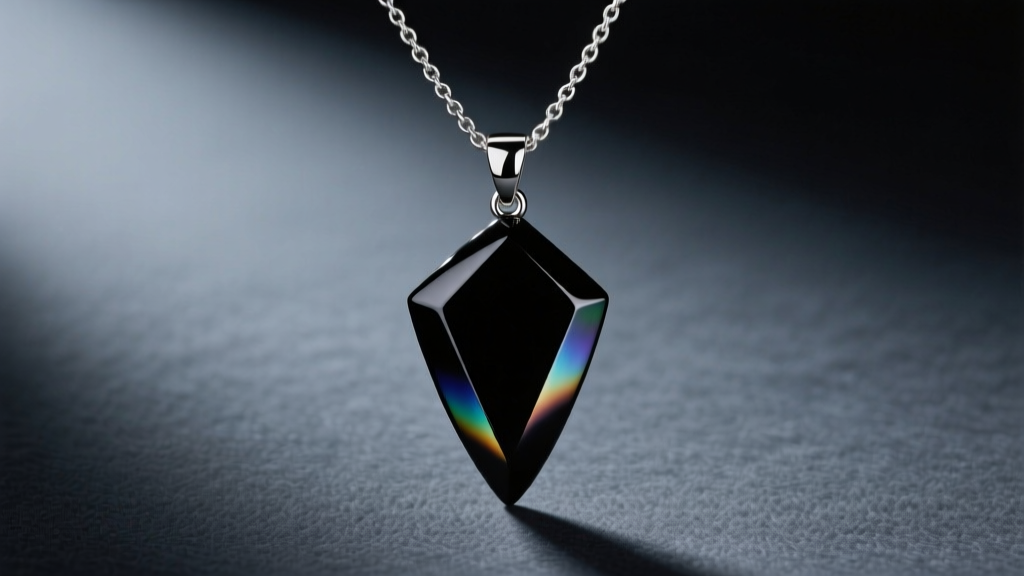
The Allure and Anatomy of the Arrowhead Pendant
The arrowhead is one of the oldest and most enduring symbols in human history, representing focus, protection, and forward momentum. In contemporary jewelry, an arrowhead necklace serves as both a talisman and a striking geometric statement piece. However, as buyers move beyond fast fashion and seek out 'everyday carry' (EDC) jewelry that can withstand the rigors of daily life, the material composition of the pendant becomes the most critical factor in the purchasing decision.
In 2026, the market for arrowhead pendants is distinctly bifurcated between natural lapidary stones and advanced metallurgy. Choosing between a hand-knapped obsidian piece, a cast 925 sterling silver artifact, or a CNC-machined titanium talisman requires an understanding of material science. This guide breaks down the exact properties, failure modes, and maintenance requirements of the most popular arrowhead necklace materials, ensuring you select a piece that aligns with your lifestyle.
Material Deep Dive: Stone vs. Metal
Natural Obsidian and Agate (The Traditionalists)
Obsidian is naturally occurring volcanic glass, formed when felsic lava cools rapidly with minimal crystal growth. It is the most historically accurate material for an arrowhead pendant, prized for its deep black hue and glassy luster. According to the Gemological Institute of America (GIA), obsidian ranks between 5 and 5.5 on the Mohs hardness scale. While this makes it harder than a steel knife blade, it is significantly softer than quartz or sapphire.
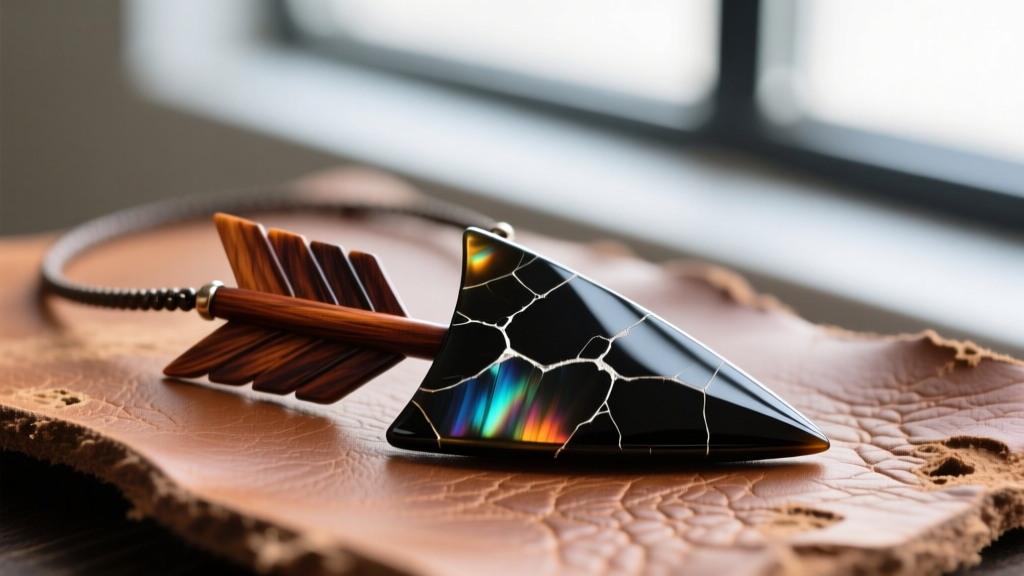
The defining characteristic of obsidian is its conchoidal fracture. When knapped (shaped by striking), it produces edges that are molecularly sharp—historically used for surgical scalpels. In a jewelry context, this means the edges of an obsidian arrowhead can be razor-sharp. Pro Tip: Always inspect the edges of a stone arrowhead. If they are not tumbled or capped with a metallic bezel, they will eventually slice through cotton or leather necklace cords, leading to catastrophic loss of the pendant.
Agate and Jasper are excellent alternatives to obsidian. Ranking at a 7 on the Mohs scale, these cryptocrystalline quartz varieties offer superior scratch resistance and a vastly lower risk of chipping if dropped against a hard surface. They also allow for intricate banded patterns that make each arrowhead entirely unique.
Sterling Silver and Brass (The Artisan Metals)
For those who want the arrowhead silhouette without the fragility of stone, cast metals are the standard. Sterling silver (an alloy of 92.5% silver and 7.5% copper, commonly stamped '925') offers a brilliant, reflective finish that captures light beautifully. However, the copper content makes it highly susceptible to tarnishing. When exposed to hydrogen sulfide in the air or sulfur compounds in human sweat, the copper reacts to form silver sulfide (Ag2S), resulting in a dark, dull patina.
Brass (an alloy of copper and zinc) offers a warmer, golden tone and is highly favored in artisan and bohemian jewelry. Unlike silver, brass does not blacken; instead, it oxidizes to a deeper, richer brown. However, brass is notorious for causing 'green skin' due to the copper reacting with the acidity in the wearer's sweat. To mitigate this, look for brass arrowheads that have been sealed with a micro-crystalline wax or a clear lacquer coating.
Titanium and Tungsten (The Modern Armor)
As the demand for hypoallergenic and ultra-durable jewelry has surged, aerospace-grade metals have entered the pendant market. Titanium, specifically Grade 5 (Ti-6Al-4V), is an alloy containing 6% aluminum and 4% vanadium. It boasts a tensile strength comparable to many steels but weighs roughly 45% less. An arrowhead necklace crafted from Grade 5 titanium is virtually indestructible in everyday scenarios; it will not bend, rust, or trigger nickel allergies.
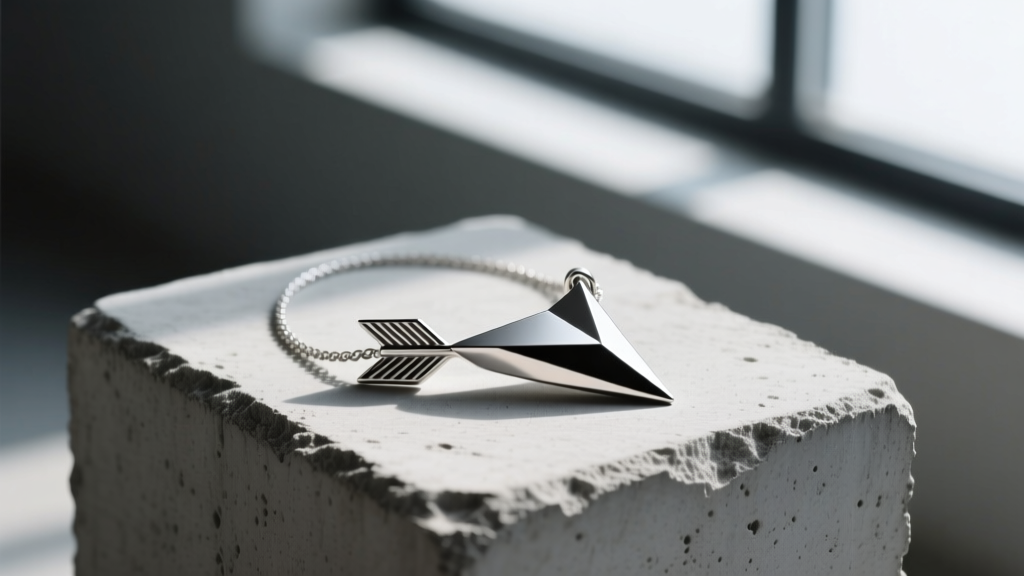
Tungsten carbide is another modern option, ranking an impressive 8.5 to 9 on the Mohs scale. A tungsten arrowhead pendant will never scratch, maintaining its polished or brushed finish indefinitely. However, its extreme hardness comes with a trade-off: high brittleness. While it resists scratching, a severe impact against concrete or tile can cause a tungsten pendant to shatter, much like a ceramic plate.
Comprehensive Material Comparison Matrix
Use the following data table to evaluate which arrowhead material best suits your environmental exposure and maintenance tolerance.
| Material | Mohs Hardness | Weight Profile | Tarnish / Rust Resistance | Avg. Price Range | Primary Failure Mode |
|---|---|---|---|---|---|
| Obsidian (Volcanic Glass) | 5.0 - 5.5 | Medium | Immune to tarnish | $25 - $90 | Chipping from impact; cord slicing |
| Agate / Jasper (Quartz) | 7.0 | Medium-Heavy | Immune to tarnish | $40 - $150 | Bail detachment due to weight |
| 925 Sterling Silver | 2.5 - 3.0 | Medium | Poor (requires polishing) | $60 - $250 | Surface scratching; sulfur tarnish |
| Brass (Unsealed) | 3.0 - 4.0 | Heavy | Poor (oxidizes green/brown) | $20 - $80 | Skin discoloration; patina buildup |
| Grade 5 Titanium | 6.0 | Ultra-Light | Excellent (fully inert) | $50 - $180 | Cannot be repaired if deeply gouged |
| Tungsten Carbide | 8.5 - 9.0 | Very Heavy | Excellent | $45 - $120 | Shattering under blunt force impact |
Chain Pairing and Hardware Considerations
The structural integrity of your arrowhead necklace relies just as much on the chain and bail (the loop connecting the pendant to the chain) as the pendant itself. A common mistake is pairing a heavy stone arrowhead with a delicate chain, leading to inevitable breakage.
- For Stone Arrowheads (Obsidian/Agate): These pendants often feature a drilled hole or a wire-wrapped bail. If drilled, avoid thin cords that can fray against the sharp interior edges. Opt for a 2.0mm to 3.0mm leather cord or a heavy-duty 2.5mm stainless steel wheat chain. If using a wire wrap, ensure the artisan uses at least 20-gauge dead-soft silver or copper wire for structural stability.
- For Metal Arrowheads (Silver/Titanium): Cast metal pendants usually come with a soldered sterling silver or titanium jump ring. A 1.5mm to 2.0mm box chain or rope chain provides an excellent balance of tensile strength and aesthetic proportion. Ensure the jump ring is fully soldered closed; open jump rings will slowly pull apart under the pendulum motion of a heavy arrowhead.
Real-World Maintenance and Failure Modes
Proper maintenance extends the lifespan of your jewelry, but the required care varies wildly by material. According to the Silver Institute, sterling silver requires regular intervention to maintain its luster, whereas modern metals are largely 'set and forget.'
Ultrasonic Cleaners: Never place an obsidian or agate arrowhead in an ultrasonic jewelry cleaner. The high-frequency vibrations can exploit microscopic internal fractures, causing the stone to split in half. Ultrasonic cleaners are, however, perfectly safe and highly recommended for titanium and tungsten pendants to remove trapped sebum and skin cells from textured surfaces.
Polishing: For sterling silver arrowheads, keep a treated jeweler's cloth (impregnated with micro-abrasives and anti-tarnish agents) on hand. Wipe the pendant down after wearing it in high-humidity environments or after heavy sweating. Avoid liquid silver dips, as they can strip the rhodium plating that many modern silver pendants use to delay tarnishing.
Impact Avoidance: If you work in a physical trade, gym, or outdoor environment, remove obsidian and tungsten pendants. The kinetic energy from dropping a weight or striking a tool can easily shatter these brittle materials. Titanium and silver will dent or scratch, but they will not catastrophically fail.
Final Verdict: Choosing Your Everyday Carry
Selecting the right arrowhead necklace is an exercise in balancing aesthetics with material science. If you value historical authenticity, organic textures, and deep, light-absorbing colors, a tumbled agate or bezel-set obsidian pendant is unmatched—provided you commit to cord maintenance and impact avoidance.
For those seeking a bright, classic look with a touch of artisan heritage, a heavily textured 925 sterling silver arrowhead offers beautiful light play, though it demands a regular polishing routine to combat sulfur tarnish. Finally, for the active individual who demands a zero-maintenance, hypoallergenic, and feather-light talisman, a CNC-milled Grade 5 Titanium arrowhead is the undisputed champion of modern EDC jewelry. By matching the metallurgical and lapidary properties to your daily environment, your arrowhead necklace will remain a steadfast companion for decades.


