Trending Necklaces for Women 2026: Technical Deep Dive
Explore the technical construction, alloy grades, and chain mechanics behind 2026's trending necklaces for women. An expert jeweler's deep dive.

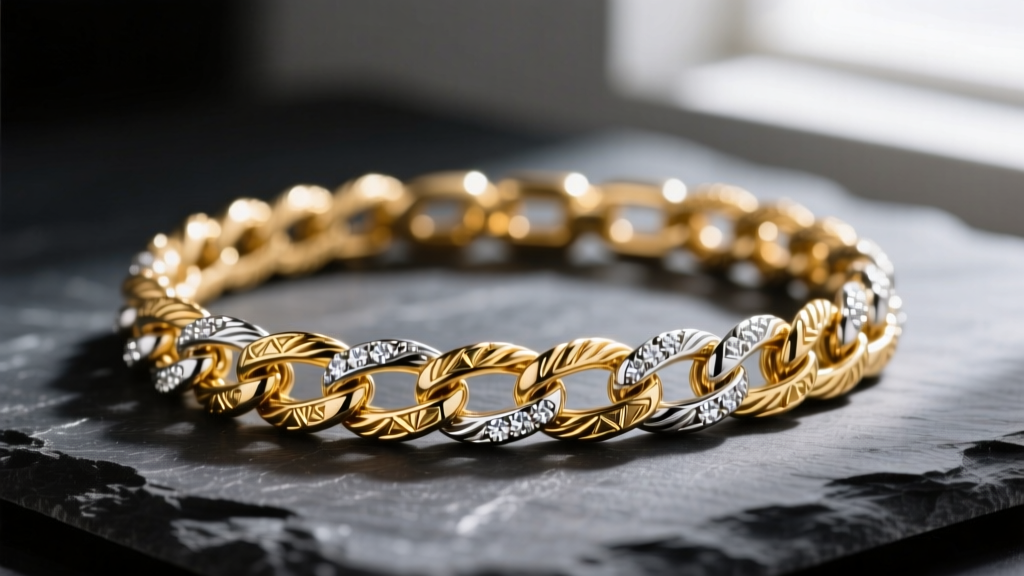
When analyzing the trending necklaces for women in 2026, the conversation among master jewelers, gemologists, and metallurgists has shifted dramatically away from fleeting aesthetic fads toward structural longevity, material science, and precision engineering. Consumers are no longer just asking what a necklace looks like; they are demanding transparency regarding alloy compositions, chain weave tensile strength, and clasp fatigue rates. This expert deep dive bypasses the superficial style guides to examine the technical anatomy of this year's most significant necklace trends.
The Metallurgy of 2026: Alloy Grades and Tarnish Resistance
The foundation of any high-end necklace is its base metal, and 2026 has seen a definitive pivot toward advanced alloys that minimize maintenance. Standard sterling silver (92.5% silver, 7.5% copper) is increasingly being replaced in luxury tiers by Argentium silver. By substituting a portion of the copper with germanium, Argentium (typically 93.5% or 96% silver) forms a transparent, self-healing germanium dioxide layer on the surface. This virtually eliminates the silver sulfide tarnish that plagues traditional sterling, making it a superior choice for intricate, hard-to-polish chain weaves.
In the gold category, the trend is moving decisively toward palladium white gold (alloyed with 10-12% palladium rather than nickel or zinc). While standard nickel-based white gold requires rhodium plating every 12 to 18 months to mask its yellowish-gray undertone, palladium white gold is naturally bright and hypoallergenic. According to the FTC Jewelry Guides, accurate karat markings are strictly regulated, but consumers must understand that the solder used in chain links often contains lower-karat gold to lower the melting point, which can slightly affect the overall assay of the piece. Master jewelers now utilize laser-welding techniques that require minimal solder, preserving the structural purity of 14k and 18k chains.
Chain Weave Mechanics: Tensile Strength vs. Aesthetic Drape
The architecture of the chain dictates both its visual footprint and its mechanical survival rate. The trending necklaces for women this year heavily feature complex, interlocking weaves that require precise wire-drawing and annealing processes. Below is a technical breakdown of the dominant chain styles and their mechanical properties.
| Weave Type | Standard Wire Gauge | Tensile Strength | Drape Flexibility | 2026 Trend Status |
|---|---|---|---|---|
| Diamond-Cut Rope | 2.0mm - 4.5mm | High (if solid core) | Moderate (torque-resistant) | Peak Trend (Mixed Metals) |
| Byzantine | 1.5mm - 3.0mm | Very High (interlocking) | High (fluid drape) | Rising (Statement Pieces) |
| Box / Venetian | 0.8mm - 1.5mm | Low (prone to crushing) | Low (rigid structure) | Stable (Minimalist Pendants) |
| Cuban Link | 3.0mm - 8.0mm | Extreme | Low (heavy, stiff) | Declining (Oversaturated) |
A critical technical warning for buyers: avoid electroformed or hollow-core chains. While they offer a massive visual footprint at a fraction of the gram-weight cost, their thin metallic shells (often less than 0.2mm thick) are highly susceptible to irreversible crushing. Once a hollow box or rope chain kinks, the structural integrity is compromised, and laser-welding a repair is nearly impossible without melting the surrounding hollow links.
Clasp Engineering: The Hidden Failure Point
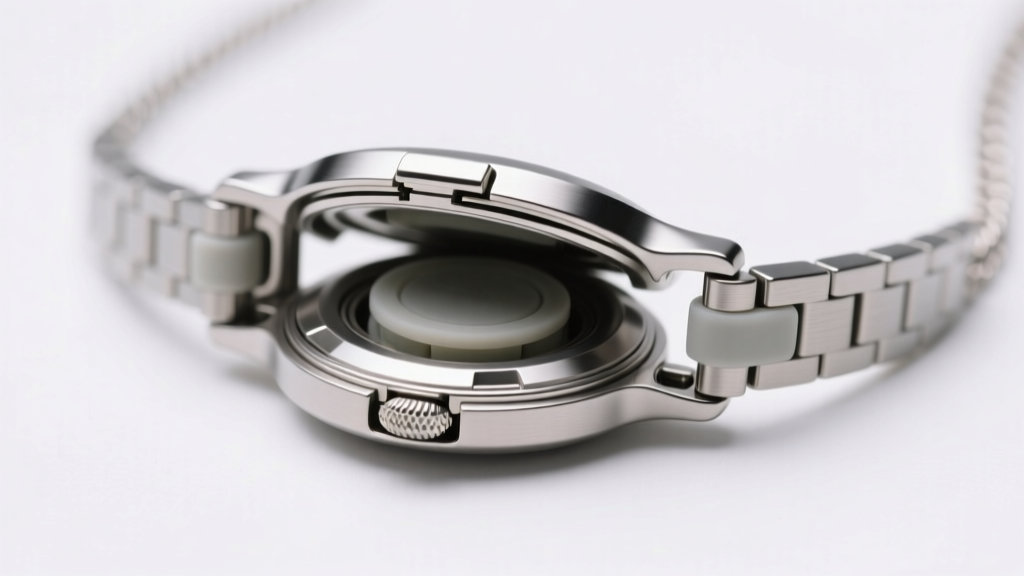
The clasp is the most mechanically stressed component of any necklace, yet it is frequently an afterthought in mass production. The standard spring-ring clasp, ubiquitous in entry-level jewelry, relies on a microscopic internal steel spring. Metallurgical fatigue typically causes these springs to fail or lose tension after approximately 2,000 to 3,000 actuation cycles. For a daily-wear necklace, this translates to a mechanical failure within 18 to 24 months.
In 2026, high-end trending necklaces are adopting neodymium magnetic clasps encased in 18k gold or grade-5 titanium housings. These clasps utilize N52-grade rare-earth magnets, providing up to 15 lbs of sheer pull-force. However, magnets alone are a liability if subjected to lateral shear forces. The engineering solution now standard in luxury pieces is the integration of a mechanical tongue-and-groove safety catch or a silicone-lined locking sleeve that prevents accidental decoupling. For heavier pendant necklaces exceeding 15 grams, the T-bar toggle remains the gold standard, provided the bar is at least 20% longer than the interior diameter of the receiving ring to prevent slippage during dynamic movement.
Stone Setting Techniques in Tennis and Pendant Necklaces
The explosion of lab-grown diamonds has fundamentally altered setting techniques in trending tennis necklaces and modular pendants. According to GIA research and gemological standards, lab-grown diamonds possess the exact same Mohs hardness (10) and cleavage planes as natural diamonds. However, because they are often grown with fewer internal strain fractures, master setters are pushing the boundaries of bezel and flush-setting techniques.
- Articulated Bezel Settings: Traditional 4-prong martini settings are notorious for snagging on knitwear and silk. The 2026 trend favors CAD/CAM-milled bezel settings where a precise 0.15mm lip of metal is burnished over the diamond's girdle. Articulated joints between each bezel allow the necklace to drape like liquid metal rather than a rigid collar.
- Tension-Assisted Channels: For baguette and emerald-cut stones in pendant halos, jewelers are utilizing precision-milled channels with microscopic tension ridges, eliminating the need for prongs entirely and maximizing light return from the crown facets.
Pricing Frameworks and Value Retention
Understanding the pricing mechanics of trending necklaces for women requires separating raw material value from manufacturing complexity. A solid 14k yellow gold diamond-cut rope chain (18 inches, 3.0mm width) typically weighs between 18 and 22 grams. With gold spot prices fluctuating, the intrinsic melt value is easily calculable, but the retail premium for laser-welded, diamond-cut faceting (which requires specialized CNC machinery) should reasonably sit between $1,400 and $1,900.
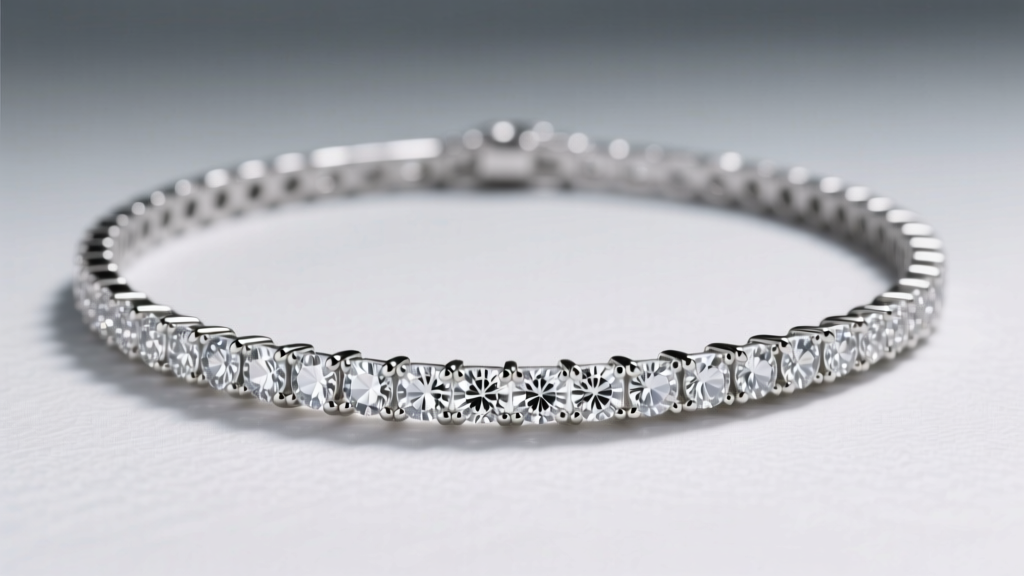
Conversely, when evaluating lab-grown diamond tennis necklaces, the price is heavily dictated by the cutting precision and color/clarity matching of the stones, rather than just total carat weight. A 5-carat total weight (CTW) tennis necklace featuring ideal-cut, D-E color, VVS clarity lab diamonds set in 950 platinum will command a premium ($4,500 - $7,000) due to the immense labor required to calibrate the stones for a seamless gradient drape. Buyers should always request the CAD render or loupe inspection of the setting joints to ensure no microscopic gaps exist between the stones, which can lead to dirt accumulation and eventual metal wear.
Conclusion: Investing in Engineering
The landscape of women's necklaces in 2026 is defined by a sophisticated consumer base that values horological-level engineering in their jewelry. By prioritizing advanced alloys like Argentium and palladium white gold, demanding solid-core complex weaves, and insisting on fatigue-resistant clasp mechanisms, buyers can acquire pieces that are not only aesthetically dominant but mechanically immortal. When evaluating your next acquisition, look past the showcase lighting and examine the solder joints, the clasp tolerances, and the alloy stamps—the true markers of modern luxury.


