How to Stop Your B Diamond Necklace From Flipping & Tangling
Learn how to fix a flipping B diamond necklace. Expert troubleshooting for chain tangling, bail weight distribution, and prong snagging.

The Unique Anatomy of a Letter B Pendant
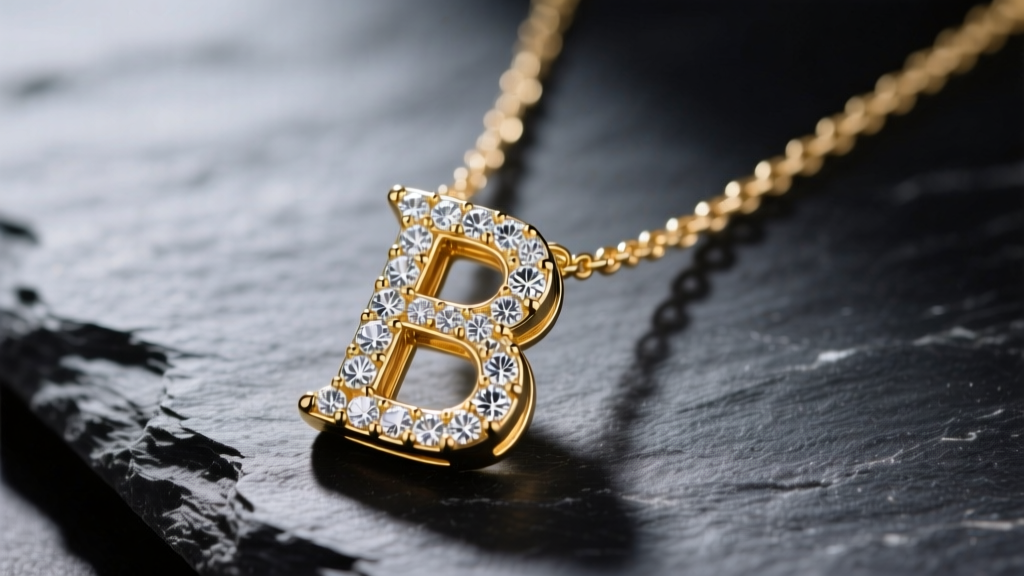
Initial necklaces remain a dominant force in personalized fine jewelry, but not all letters are created equal. When it comes to structural integrity and wearability, the letter B presents a unique set of engineering challenges. Unlike symmetrical letters such as A, O, or V, a B diamond necklace features a distinct asymmetrical mass distribution. The right side of the pendant, comprising the two rounded 'bowls' of the letter, contains significantly more precious metal and, consequently, a higher density of pave or bezel-set diamonds. The left side consists of a single, relatively lightweight vertical stem.
This inherent imbalance is the root cause of the most common complaints we see in 2026: the pendant constantly flipping upside down, the chain slipping through the negative space and tangling, and the sharp left-hand corners snagging on delicate fabrics. Troubleshooting a B diamond necklace requires an understanding of jewelry physics, specifically center-of-gravity manipulation and chain-profile geometry. Below, we break down the exact mechanical failures associated with this specific initial and provide master-jeweler-approved solutions to stabilize your piece.
Troubleshooting Chain Tangling in the B Loops
The negative space inside the upper and lower loops of the letter B acts as a natural trap for fine jewelry chains. When the pendant shifts, a thin chain can easily slip through the inner curve of the bottom bowl. Once the chain passes through this negative space and the wearer moves, the chain folds back on itself, creating a microscopic slipknot that tightens against the diamond setting.
Chain Profile Comparison: What Works and What Fails
To prevent the chain from passing through the inner loops of the B, the physical width and rigidity of the chain links must exceed the narrowest aperture of the pendant's negative space. Most standard initial pendants measure between 15mm and 22mm in height, with inner loop gaps ranging from 1.5mm to 3.0mm.
| Chain Type | Standard Width | Flexibility | Tangling Risk with 'B' Pendant |
|---|---|---|---|
| Cable Chain | 0.8mm - 1.0mm | High (Fluid) | Extreme: Easily slips through loops and knots. |
| Box Chain | 1.1mm - 1.5mm | Medium (Structured) | Low: Wider geometric profile blocks loop entry. |
| Snake Chain | 1.0mm - 2.0mm | High (Fluid but wide) | Medium: Can slip through larger 'B' bowls if under 1.5mm. |
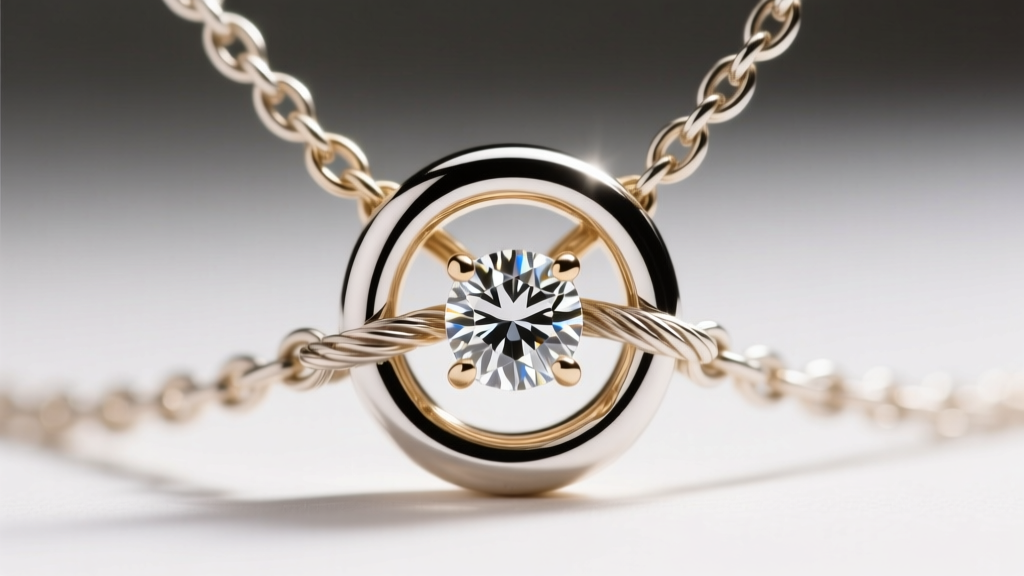
| Rope Chain | 1.2mm - 1.8mm | Medium (Textured) | Low: Twisted links catch on the bail rather than the loops. |
The Fix: If you are experiencing persistent knotting, upgrade your chain to a 1.2mm or 1.5mm box chain. The square, interlocking links of a box chain create a rigid profile that physically cannot bend at the sharp angle required to thread through the inner curve of the B's negative space. Alternatively, a jeweler can laser-weld a tiny, discreet horizontal crossbar (a 'staple') across the widest part of the bottom loop to reduce the aperture size without altering the visual design of the initial.
Fixing the Upside-Down B Pendant Issue
A B diamond necklace flipping upside down or resting at a severe diagonal angle is almost always a bail placement issue. The bail is the loop at the top of the pendant through which the chain threads. In mass-produced initial jewelry, the bail is often soldered at the exact geometric top-center of the letter. However, because the bottom-right of the B is heavier than the top-left, a center-placed bail creates a pendulum effect. Gravity pulls the heavy bottom-right downward, causing the pendant to rotate until it finds a new, often upside-down, equilibrium.
Solutions for Bail Weight Distribution
- Repositioning the Bail: A master jeweler can carefully detach the existing bail using a laser welder (which prevents thermal shock to the surrounding diamonds) and re-solder it 1.5mm to 2.0mm to the right. This shifts the suspension point closer to the center of mass, allowing the pendant to hang perfectly vertical.
- Adding a Counterweight: If repositioning the bail is impossible due to the diamond layout, a jeweler can add a microscopic counterweight. This involves soldering a tiny 0.5mm sphere of matching gold or platinum to the bottom-left tip of the vertical stem. This added mass on the lighter side perfectly balances the heavy right side.
- Switching to a Floating Enhancer: Instead of a fixed soldered bail, utilizing a floating pendant enhancer (a separate tube or loop that slides freely along the chain) allows the chain to self-adjust through the enhancer, naturally finding the pendant's true center of gravity.
Pro Tip: Before taking your necklace to a jeweler, test the center of gravity yourself. Balance the pendant horizontally on your fingertip. The exact point where it balances perfectly is where the top bail should ideally be positioned directly above.
Prong Snagging & Diamond Security on Curved Initials
The letter B features several sharp transitions: the top-left corner, the bottom-left corner, and the sharp inward 'pinch' where the two right-side bowls meet the vertical stem. When these corners are paved with diamonds, standard round prongs act like tiny hooks, catching on silk blouses, cashmere sweaters, and even hair.
Upgrading to V-Prongs and Bead Settings
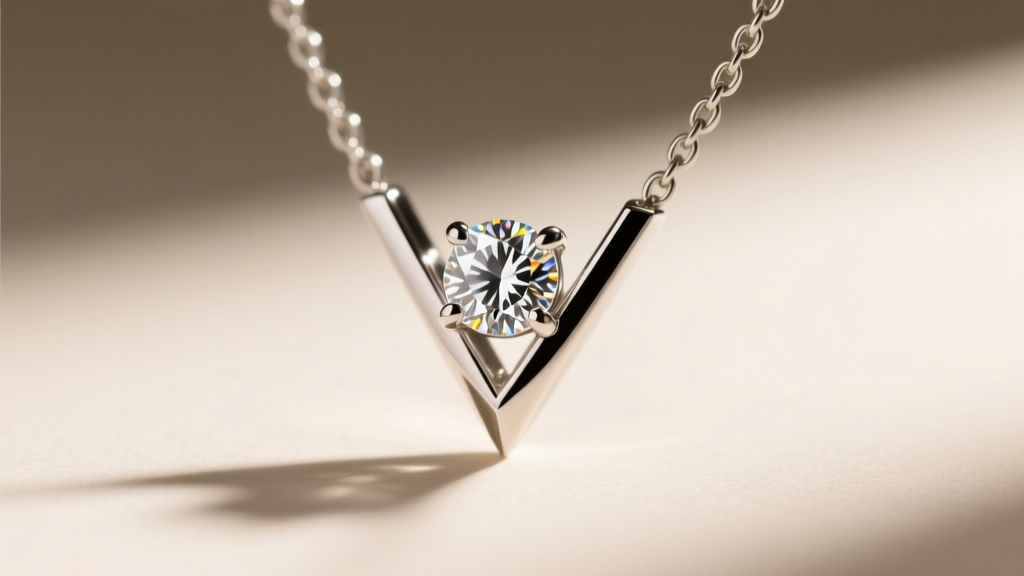
According to the Gemological Institute of America (GIA), protecting the girdle and pointed edges of diamonds is critical for long-term stone security. For the sharp outer corners of your B diamond necklace, standard prongs leave the diamond's edge exposed and prone to chipping upon impact. You should consult a bench jeweler about retrofitting these specific corner stones with V-prongs. A V-prong wraps securely around the sharp 90-degree angle of the stone, eliminating the snag point while offering superior impact protection.
For the tight inner curve (the pinch of the B), shared prong settings are highly problematic. The lateral stress of the necklace flipping can bend shared prongs outward, leading to stone loss. The optimal setting for the inner curves of an initial pendant is a bead setting (or micro-pave), where the jeweler raises tiny beads of metal directly from the shank to hold the stones. This creates a smooth, continuous metal surface that is entirely snag-free and highly resistant to lateral stress.
Ultrasonic Cleaning Risks for Paved Initials
Maintaining the brilliance of a B diamond necklace requires careful cleaning, particularly because the tight curves of the letter trap skin oils, lotions, and environmental dust. While ultrasonic cleaners are standard for many diamond solitaires, they pose a specific risk to paved initial pendants.
The Jewelers of America warns that ultrasonic waves create microscopic cavitation bubbles that implode with intense localized force. In the tight, concave inner curves of the letter B, these sound waves can reflect and concentrate, creating 'hotspots' of cavitation energy. Over time, or with frequent use, this concentrated vibration can fatigue the tiny metal beads holding your pave diamonds, leading to catastrophic stone loss.
The Safe Cleaning Protocol
Instead of ultrasonic machines, adopt a manual cleaning protocol tailored for intricate initial jewelry:
- Soak the necklace in a lukewarm bath of distilled water and two drops of ammonia-free, phosphate-free dish soap for 15 minutes.
- Use an extra-soft, baby-hair toothbrush to gently agitate the soap around the diamonds, paying special attention to the underside of the pendant where the pavilion of the diamonds collects the most grease.
- Rinse thoroughly under a gentle stream of tepid water, ensuring the drain is securely plugged.
- Dry with a lint-free microfiber cloth, avoiding cotton swabs which can leave microscopic fibers caught in the prongs.
When to See a Master Jeweler
While upgrading your chain to a 1.2mm box profile is an easy at-home fix for tangling, structural modifications like moving a bail, laser-welding a counterweight, or re-tipping worn V-prongs require professional intervention. If your B diamond necklace continues to flip after trying a heavier chain, or if you feel any roughness on the corners of the letter that catches on your clothing, schedule an inspection with a certified bench jeweler. Addressing the asymmetrical weight distribution and securing the prongs early will ensure your personalized piece remains secure, comfortable, and perfectly displayed for decades to come.


