3 Prong Tennis Necklace Buying Guide: What to Look For
Discover expert tips for buying a 3 prong tennis necklace. Learn about prong security, diamond quality, metal choices, and pricing in our complete guide.

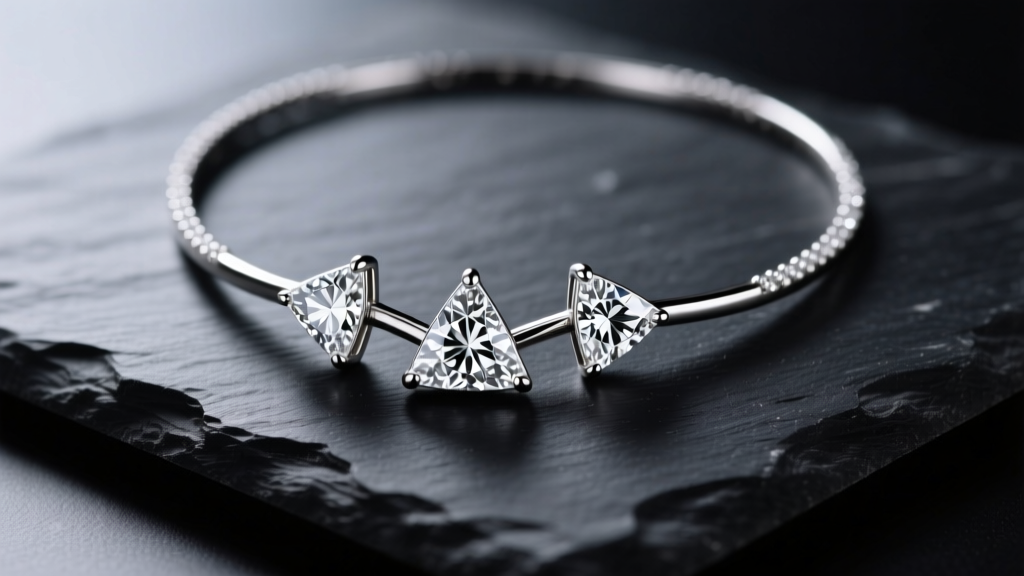
The Architecture of the 3 Prong Tennis Necklace
When evaluating diamond jewelry, the setting is just as critical as the stones themselves. While the traditional 4-prong setting creates a distinct square or "squircle" silhouette around each diamond, the 3 prong tennis necklace offers a radically different aesthetic and structural profile. By utilizing three prongs spaced at exact 120-degree intervals, jewelers create a scalloped, fluid, and distinctly geometric triangular motif. This design choice is not merely cosmetic; it fundamentally alters how light interacts with the diamonds and how the necklace drapes across the collarbone.
Because there is less metal obstructing the crown of the diamond, a 3-prong setting allows for marginally superior light entry from the top down, enhancing the stone's brilliance. However, this minimal metal approach demands absolute precision. If a single prong is misaligned by even a fraction of a millimeter, the diamond will sit crooked, disrupting the continuous flow of light that makes a tennis necklace so captivating. When shopping for this specific style, you must look for perfect symmetry in the setting and a seamless, flexible articulation between each link.
Why Prong Security Dictates Your Metal Choice
The most common point of failure in any tennis necklace is prong wear. In a 4-prong setting, if one prong fails, the stone may tilt but often remains caught by the adjacent prongs. In a 3 prong tennis necklace, the loss of a single prong almost guarantees the immediate loss of the diamond. Therefore, the tensile strength and malleability of the chosen metal are non-negotiable factors in your purchasing decision.
Platinum vs. White Gold for 3-Prong Settings
For a 3-prong design, Platinum 950 (alloyed with ruthenium for added hardness) is the undisputed gold standard. Platinum is a malleable, dense metal. When subjected to impact or snagging, a platinum prong will bend rather than snap, keeping the diamond secure until it can be repaired by a jeweler. Furthermore, platinum does not require rhodium plating. White gold, on the other hand, must be periodically re-plated to maintain its bright white color. The polishing process required before rhodium plating removes microscopic layers of metal. Over a decade, this polishing will thin out already delicate 3-prong settings, drastically increasing the risk of stone loss.
If you prefer the warmth of yellow or rose gold, ensure the prong wire gauge is at least 0.9mm to 1.0mm thick. Anything thinner in a 14k or 18k gold alloy is highly susceptible to shearing under the tension of a heavy diamond.
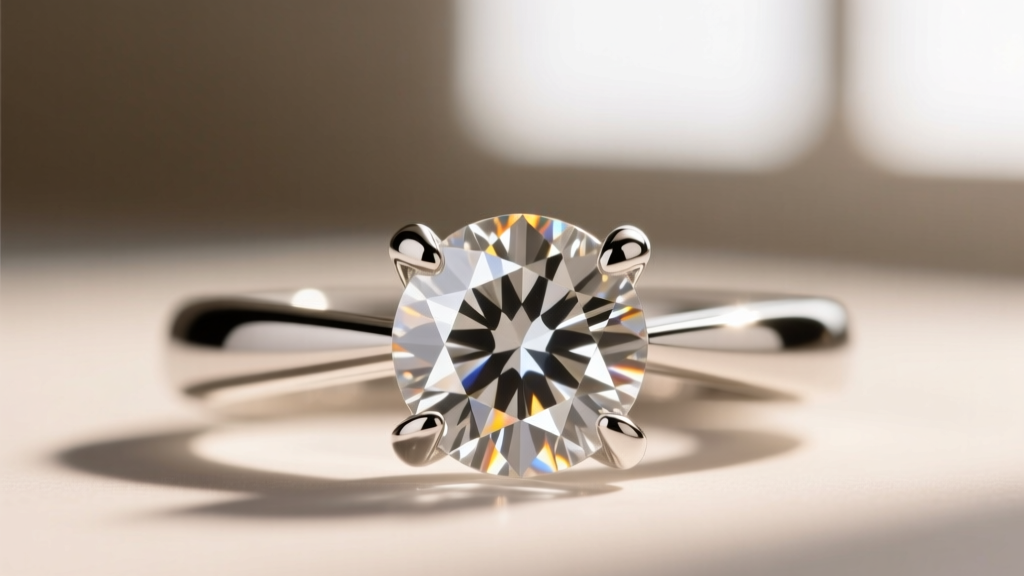
Diamond Grading: The Side-Profile Exposure Factor
The geometry of a 3 prong tennis necklace leaves significantly more of the diamond's pavilion and side profile exposed compared to bezel or 4-prong settings. This exposure has a direct impact on how you should select your diamond color and clarity grades. According to the Gemological Institute of America (GIA), a diamond's color is most easily detected from the side profile when looking through the pavilion.
Because the sides of the stones in a 3-prong setting are completely visible to the observer, lower color grades (like J, K, or L) will display a noticeable faint yellow or brown tint, disrupting the icy white continuity of the necklace. Therefore, you must set a strict floor for color grading.
| Grading Factor | 4-Prong Recommendation | 3-Prong Recommendation | Reasoning for 3-Prong |
|---|---|---|---|
| Color Grade | I - J | G - H (Minimum) | Exposed side profiles reveal lower color tints easily. |
| Clarity Grade | SI1 - SI2 | VS2 - SI1 | Fewer prongs mean inclusions near the girdle are less hidden. |
| Cut Quality | Very Good / Excellent | Excellent / Ideal | Maximizes top-down light return to compensate for less metal reflection. |
| Fluorescence | None / Faint | None | Milky fluorescence is more obvious in open, scalloped settings. |
Clasp Mechanics and Structural Integrity
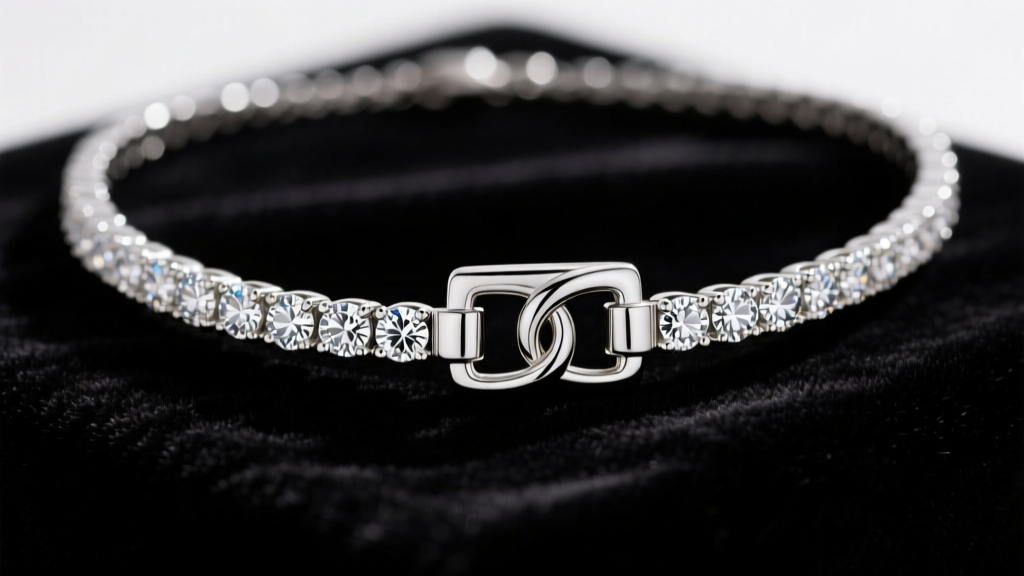
A 3 prong tennis necklace is a high-value, high-risk piece of jewelry if the clasp fails. The flexibility that makes the necklace drape beautifully also puts immense shear stress on the clasp mechanism when the necklace is pulled or caught. Never purchase a tennis necklace with a simple lobster clasp or a single-push tongue clasp.
According to the Jewelers of America care and structural guidelines, high-end tennis necklaces require redundant safety mechanisms. When inspecting a piece, look for the following specific clasp architecture:
- Interlocking Box Clasp: The tongue must fold into a boxed groove with a distinct, audible "click" that indicates a secure mechanical lock.
- Double Figure-8 Safety Catches: There must be two independent wire safety catches that snap over a metal pin on the exterior of the clasp. If the internal box mechanism fails, these figure-8 wires will hold the necklace together.
- Swivel Integration: A high-quality clasp will feature a tiny swivel loop where the chain meets the clasp, preventing the chain from twisting and putting torque on the locking mechanism.
2026 Pricing Matrix: Lab-Grown vs. Natural Diamonds
The market for tennis necklaces has bifurcated significantly. Lab-grown diamonds have stabilized in price, offering consumers the ability to purchase higher carat weights and better color grades for a fraction of the cost of mined stones. However, the labor cost to set a 3 prong tennis necklace remains identical regardless of the diamond's origin, as the precision required for 120-degree prong spacing demands master-level bench jewelers.
Below is a general pricing framework for a standard 16-inch, 10 Carat Total Weight (CTW) 3 prong tennis necklace in 2026:
- Lab-Grown (14k Gold, G-H Color, VS Clarity): $2,800 – $4,500
- Lab-Grown (Platinum 950, D-F Color, VVS Clarity): $5,000 – $8,500
- Natural Mined (14k Gold, G-H Color, VS Clarity): $18,000 – $28,000
- Natural Mined (Platinum 950, D-F Color, VVS Clarity): $35,000 – $55,000+
Note: Prices fluctuate based on the exact millimeter size of the diamonds. A 10 CTW necklace made of 50 larger stones will cost less in labor than a 10 CTW necklace made of 120 smaller stones, due to the sheer volume of prong-setting required.
Long-Term Maintenance and Wear Prevention
Owning a 3 prong tennis necklace requires a more disciplined maintenance routine than standard jewelry. The open nature of the setting makes it a magnet for skin oils, lotions, and airborne dust, which can quickly dull the diamonds and make the necklace look lifeless.
Expert Warning: Avoid using ultrasonic cleaners on 3 prong tennis necklaces. The high-frequency vibrations can easily shake loose a stone that has a slightly worn prong. Instead, use a dedicated jewelry steam cleaner or a soft-bristled baby toothbrush with warm water and a drop of mild dish soap, brushing gently from the back (pavilion) to push debris out through the top.
You should have the necklace professionally inspected every six months. A jeweler will use a 10x loupe to check for "prong lift"—a condition where the metal claw slightly pulls away from the diamond's girdle. Catching prong lift early allows the jeweler to simply push and re-polish the metal back into place, saving you from a catastrophic stone loss and an expensive replacement.


