How to Fix and Prevent Gold Dachshund Necklace Bending
Is your gold dachshund necklace bending or tangling? Learn expert troubleshooting tips to fix warped pendants, prevent chain sliding, and choose durable karats.

The Structural Geometry Problem of Elongated Pendants
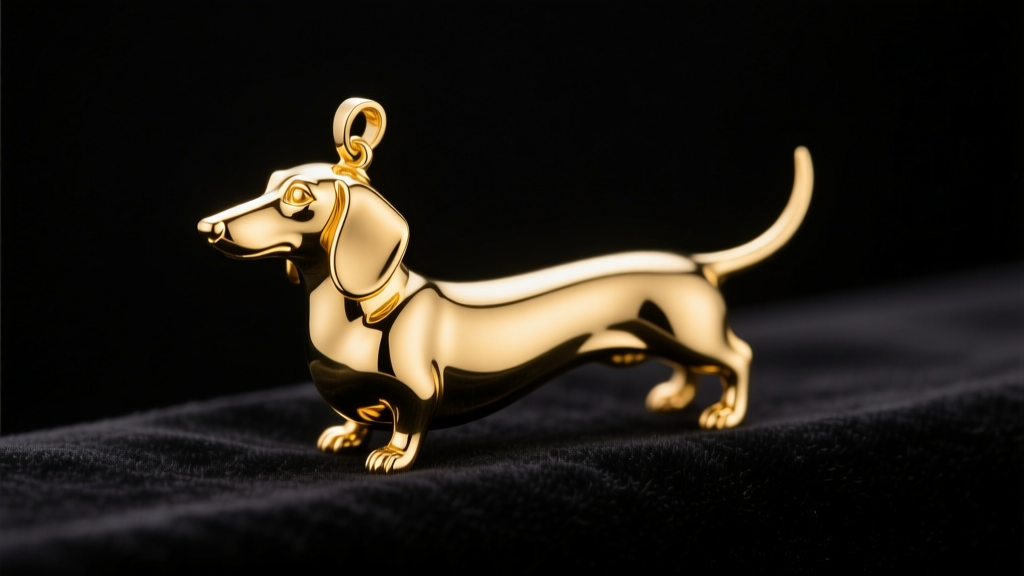
The gold dachshund necklace is a beloved staple for dog lovers, but its distinct silhouette presents a unique engineering challenge in jewelry design. Unlike circular or compact pendants, the dachshund’s elongated body, spindly legs, and protruding tail create multiple high-stress leverage points. When caught on a sweater or subjected to the sudden tug of an active dog owner’s lifestyle, the narrowest sections—specifically the ankles and the mid-back—bear the brunt of the kinetic force.
Many mass-produced breed necklaces are stamped from thin sheets of metal, often measuring a mere 0.6mm to 0.8mm in thickness. At this gauge, even 14k gold will warp under minimal pressure. To troubleshoot and prevent structural failure, we must first understand the metallurgy of your specific piece and the physics of how it interacts with your chain. According to the Gemological Institute of America (GIA), the alloy mix in gold jewelry directly dictates its tensile strength and malleability, which is the primary factor in whether your pendant will bend or snap entirely.
Troubleshooting Bent Legs and Tails
If your dachshund’s tail is bent at a sharp angle or its front legs are warped backward, do not attempt to bend it back into shape with your bare fingers. Human fingers apply uneven pressure, which can cause metal fatigue and lead to a clean snap. Gold work-hardens; every time you bend it, the crystalline structure becomes more brittle.
How to Safely Reshape Your Pendant
- Identify the Karat: If your necklace is 18k or 24k gold, it is highly malleable and can be reshaped relatively easily. If it is 10k or 14k, the higher copper and zinc content makes it harder and more prone to snapping if forced.
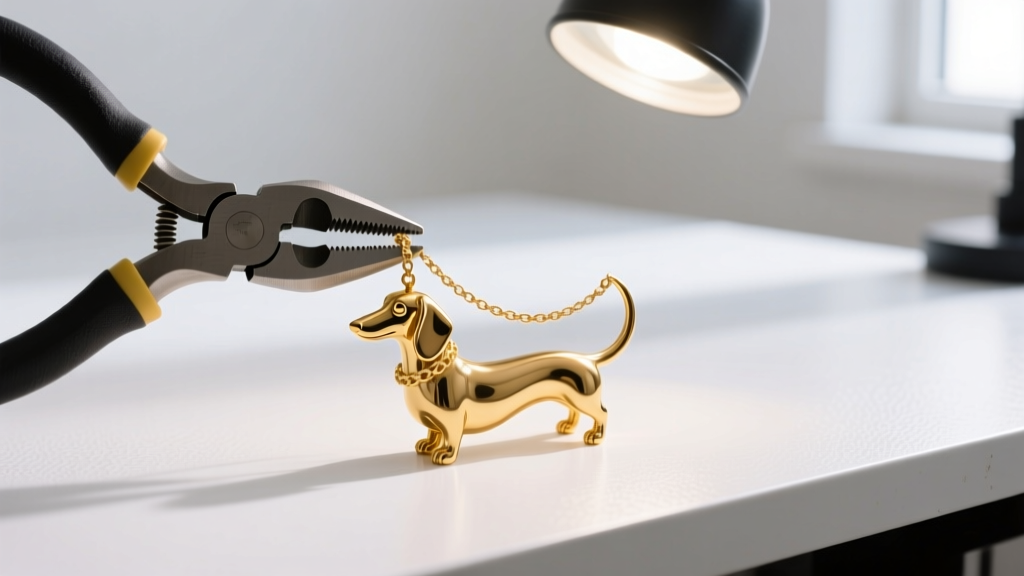
- Use the Right Tools: Never use standard steel pliers. You must use nylon-jaw pliers or wrap the tips of your flat-nose pliers in painter's tape to prevent marring the gold finish.
- Apply Gradual Pressure: Support the main body of the dachshund on a soft leather bench block. Gently apply counter-pressure to the bent leg or tail in micro-movements. Do not bend it past the point of straightness.
- Check for Micro-Fractures: Use a jeweler's loupe (10x magnification) to inspect the bend line. If you see a white, jagged line or a visible crease, the metal is compromised and requires professional laser welding.
Solving the "Crooked Pendant" Chain Issue
A frequent complaint among dachshund necklace owners is that the pendant refuses to sit centered on the chest. Because the bail (the loop that connects the pendant to the chain) is usually placed near the dog's upper back, the heavy front and rear ends act like a seesaw. On standard, smooth chains, the bail slides to the lowest point of gravity, making the dachshund look like it is sliding off a hill.
To solve this, you must increase the friction between the bail and the chain, or alter the chain profile entirely. Below is a troubleshooting matrix for selecting the correct chain pairing.
| Chain Type | Friction Level | Pendant Stability | Best For |
|---|---|---|---|
| Standard Cable Chain | Low | Poor (Slides constantly) | Lightweight, compact pendants |
| Box Chain (1.2mm+) | High | Excellent (Locks bail in place) | Elongated, heavy silhouettes |
| Wheat Chain | Medium-High | Very Good | Active wearers needing durability |
| Rope Chain | Medium | Fair (Can catch on protruding legs) | Textured aesthetic preference |
Quick Fix Hack: If you already own a cable chain and do not want to replace it, slide a clear silicone earring back onto the chain on either side of the bail. This acts as a custom stopper, locking the gold dachshund necklace perfectly in the center of your collarbone.
Gold Purity, Plating, and Friction Wear
Dog owners lead active lifestyles, and the friction of clothing, combined with exposure to pet hair, lotions, and sweat, accelerates the degradation of gold jewelry. Troubleshooting premature fading or tarnishing requires understanding exactly what type of "gold" you purchased.
- Gold Vermeil (Sterling Silver Base): Requires a minimum of 2.5 microns of gold plating over sterling silver. While beautiful, the friction from an elongated pendant rubbing against the skin will wear through the gold layer on the high-contact points (the dog's back and belly) within 6 to 12 months of daily wear.
- PVD Gold Coating: Physical Vapor Deposition is a modern vacuum-coating process. As of 2026, high-end PVD coatings over stainless steel or titanium bases offer 10x the scratch and friction resistance of traditional electroplating. If you are replacing a faded piece, seek out PVD-coated alternatives.
- Solid 14k Gold: The gold standard for troubleshooting longevity. At 58.5% pure gold mixed with strengthening alloys, it will never flake or reveal a base metal. Expect to invest between $180 and $350 for a solid 14k dachshund silhouette of adequate thickness (1.2mm+).
Preventative Care for Active Dog Owners
To stop your gold dachshund necklace from bending in the first place, you must adjust how and when you wear it. The most common cause of warped legs is the pendant getting caught in the hem of a shirt or the strap of a crossbody bag while walking the dog.
According to Jewelers of America, removing jewelry during physical exertion is the single most effective way to prevent mechanical damage. If you insist on wearing your necklace during dog walks or park visits, opt for a shorter chain length (16 inches or a choker fit). A shorter chain keeps the pendant resting securely against the clavicle, drastically reducing the pendulum effect that causes the pendant to swing outward and snag on objects.
When to Seek a Professional Jeweler
While minor bends in the tail can be addressed at home with nylon pliers, certain damage profiles require professional intervention. If the dachshund's ear has snapped off, or if the bail has torn away from the main body, do not attempt to use superglue. Cyanoacrylate adhesives will ruin the gold finish and create a brittle bond that will fail under stress.
A professional bench jeweler will use a laser welder to reattach the severed limb or bail. Laser welding concentrates heat in a microscopic area, meaning the surrounding gold will not melt, warp, or discolor. Expect to pay between $45 and $85 for a standard laser weld on a small silhouette pendant. Always ensure the jeweler polishes the piece afterward to blend the weld seam seamlessly into the dachshund's silhouette, restoring the necklace to its original, flawless condition.


