Fixing Cross Heart Necklace Tangles, Tarnish & Wear
Is your cross heart necklace tangling, tarnishing, or breaking? Learn expert troubleshooting tips to fix bail wear, chain knots, and metal damage.


The cross heart necklace is a deeply meaningful piece of jewelry, merging the universal symbols of faith and love into a single, striking silhouette. However, from a structural and metallurgical standpoint, combining a cross and a heart into one pendant creates unique engineering challenges. The asymmetrical weight distribution, intricate cutouts, and complex bail attachments make these necklaces particularly prone to specific failure modes, including chronic tangling, bail friction, and localized galvanic corrosion.
If your favorite pendant is constantly flipping, catching in knots, or showing signs of premature wear, you are not alone. This comprehensive troubleshooting guide dives deep into the mechanical and chemical vulnerabilities of cross heart pendants, providing actionable, expert-level solutions to restore and protect your jewelry.
The Structural Vulnerabilities of Cross Heart Pendants
Unlike simple geometric pendants (like a plain circle or teardrop), a cross heart necklace features an irregular center of gravity. The elongated vertical axis of the cross clashes with the wider horizontal lobes of the heart. When suspended from a delicate chain, this asymmetrical mass causes the pendant to swing and rotate unpredictably. Over time, this constant rotational friction wears down the interior of the bail (the loop connecting the pendant to the chain) and weakens the jump rings.
Furthermore, the intersection where the cross overlaps the heart is a natural stress point. If the piece was manufactured using low-pressure die casting rather than precision investment casting, micro-porosities (tiny air bubbles trapped in the metal) can form at this junction. A hard impact against a tabletop or collarbone can cause the pendant to snap cleanly at this exact intersection.
Troubleshooting Chain Tangling & Knotting
Because the cross heart pendant rotates so frequently, it acts as a spindle, twisting the chain until the links bind together. This is especially prevalent with chains in the 0.5mm to 0.8mm thickness range.
Why Box Chains Tangle Differently Than Rope Chains
Understanding your chain type is critical for safe detangling:
- Box Chains (0.8mm - 1.2mm): These square links interlock tightly. When they tangle, the sharp inner corners of the links can bite into one another, creating rigid, stubborn knots. Forcing them apart can permanently distort the square geometry.
- Rope Chains (0.5mm - 0.9mm): The twisted, helical nature of rope chains allows them to slip into micro-loops. A knot in a rope chain often looks like a tiny, impenetrable bead of metal.

The Professional Untangling Protocol
Never pull the chain taut to force a knot out; this will stretch the links and weaken the structural integrity of the metal. Instead, follow this jeweler-approved method:
- Isolate the Pendant: Unclasp the necklace and remove the cross heart pendant entirely if the jump ring allows. If not, slide the pendant to the far end of the chain, away from the knot.
- Apply a Dry Lubricant: Lay the chain flat on a non-slip surface (like a neoprene mat or a piece of velvet). Dust the knot generously with talcum powder or cornstarch. This reduces the friction coefficient between the metal links.
- Use Dual Needles: Take two fine sewing needles or beading awls. Insert the tips into the center of the knot and gently wiggle them outward in opposite directions. Do not pry; use a vibrating, loosening motion.
- Flush and Polish: Once untangled, wash the chain in warm water with a drop of mild dish soap to remove the powder, then dry completely with a microfiber cloth.
Solving Bail Friction and Chain Breakage
The bail of a cross heart necklace endures immense localized friction. If the chain is constantly snapping at the clasp or the bail is wearing through, you are likely dealing with a material mismatch or a gauge incompatibility.
The Danger of Galvanic Corrosion
Many fashion and semi-fine cross heart necklaces feature mixed metals—for example, a sterling silver chain paired with a gold-plated brass bail. When two dissimilar metals rest against each other in the presence of moisture (like sweat or humidity), an electrochemical reaction called galvanic corrosion occurs. The more anodic metal (often the brass or silver) will rapidly degrade, turning into a powdery substance and eventually snapping. According to the Gemological Institute of America (GIA), keeping mixed-metal jewelry completely dry is essential, but the only permanent fix is replacing the bail with a matching metal.
| Chain Material | Bail Material | Risk Level | Expert Solution |
|---|---|---|---|
| Sterling Silver (925) | Gold-Plated Brass | High (Galvanic) | Replace bail with solid 925 silver or 14k gold. |
| 14k Yellow Gold | 18k Yellow Gold | Low (Minor Wear) | Ensure bail interior is polished; use a 1.0mm chain. |
| Stainless Steel | Sterling Silver | Medium (Friction) | Steel is harder and will act like a file, sawing through the silver bail. |
Tackling Tarnish in Intricate Cutouts
Cross heart pendants frequently feature deep crevices, milgrain detailing, or overlapping layers where the cross meets the heart. These recessed areas trap sebum, dead skin cells, and sulfur compounds from the air, leading to stubborn black tarnish, particularly on sterling silver pieces.
The Ion-Exchange Cleaning Method
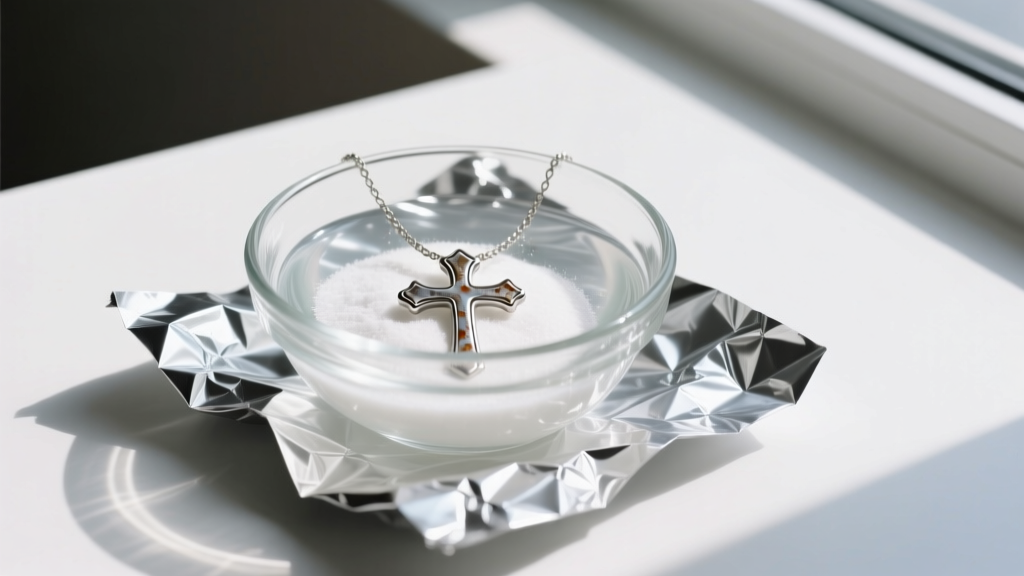
Polishing cloths cannot reach the deep interior angles of a layered cross heart design. Instead, use an electrochemical ion-exchange bath to reverse silver sulfide tarnish without removing any base metal. As noted in GIA's guide on silver properties, this method is highly effective but must be used with caution on oxidized pieces.
The Recipe:
- Line a glass bowl with crumpled aluminum foil (shiny side up).
- Add 1 tablespoon of baking soda and 1 teaspoon of sea salt.
- Pour boiling water into the bowl to activate the solution.
- Submerge the silver cross heart necklace, ensuring it physically touches the aluminum foil.
- Wait 3 to 5 minutes. You will smell a faint sulfur (rotten egg) odor as the tarnish transfers from the silver to the foil.
- Remove with plastic tongs, rinse in distilled water, and buff dry.
Warning: If your cross heart necklace features intentional oxidation (blackened crevices meant to highlight the design), this bath will strip it away, leaving the piece looking flat and overly bright.
Securing Micro-Pave Stones in the Intersection
Many premium cross heart necklaces feature micro-pave diamonds or cubic zirconia set precisely where the horizontal arms of the cross intersect the outer curves of the heart. This specific zone is subjected to torsional stress every time the pendant flips over. Over time, the tiny shared prongs can fatigue and snap, leading to stone loss.
To troubleshoot this, perform the "tap test" monthly. Hold the pendant close to your ear and gently tap it with a metal pin or your fingernail. If you hear a faint buzzing or rattling sound, a stone is loose within its bezel or prong setting. Stop wearing the necklace immediately and take it to a bench jeweler to have the prongs re-tipped using a laser welder, which prevents heat damage to the surrounding stones.
Preventative Maintenance Checklist
To ensure your cross heart necklace remains a lifelong heirloom rather than a source of frustration, integrate these specific maintenance habits into your routine:
- The Storage Rule: Never store the necklace hanging on a jewelry tree. The weight of the asymmetrical pendant will slowly stretch the lower links of a delicate chain. Always store it flat in a ziplock bag with an anti-tarnish silica tab.
- The Clasp Upgrade: If the pendant is heavy, upgrade the standard spring-ring clasp to a lobster clasp with a slightly heavier gauge. This prevents the clasp from slipping to the front of your neck due to the pendant's weight.
- The Bail Sleeve Trick: If the bail hole is too large and the chain keeps slipping through and bunching up, have a jeweler solder a tiny, 1mm sterling silver or gold bead inside the top of the bail to act as an internal stopper.
By understanding the unique mechanical stresses and chemical vulnerabilities inherent in the cross heart design, you can proactively address wear and tear, ensuring your meaningful pendant stays beautiful, secure, and tangle-free for decades to come.


