Troubleshooting Your Dalmatian Necklace: Fading, Fakes & Fixes
Is your dalmatian necklace fading or scratching? Learn expert troubleshooting tips to identify fake Dalmatian jasper, fix color bleeding, and restore beads.

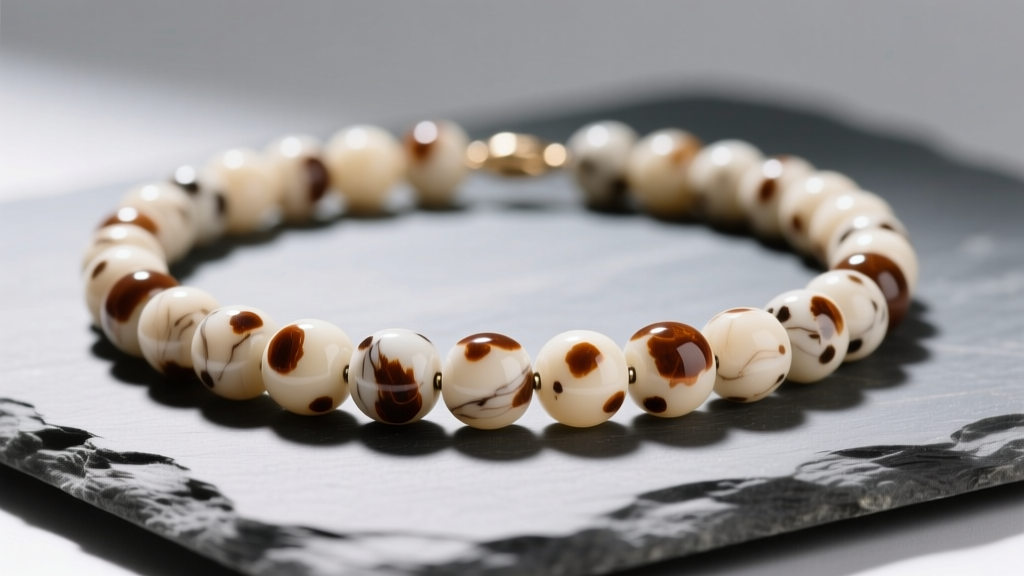
When you invest in a dalmatian necklace, you are likely drawn to its striking, playful contrast of creamy white and deep brown or black spots. However, as jewelry repair specialists and gemologists frequently note, this popular stone presents a unique set of challenges for long-term wearers. From unexpected color bleeding to severe stringing failures, owning this specific gemstone requires specialized knowledge. In this comprehensive 2026 troubleshooting guide, we will diagnose the most common issues plaguing Dalmatian stone necklaces and provide actionable, professional-grade solutions to restore and protect your jewelry.
The Mineralogy Misconception: Why Your Necklace is Fading
The first step in troubleshooting any gemstone issue is understanding its exact geological composition. Despite being universally marketed as 'Dalmatian Jasper,' this material is not a true jasper (which is an opaque, microcrystalline chalcedony). According to the Mindat.org mineral database, Dalmatian stone is actually an igneous rock—specifically an aplite or rhyolite—composed primarily of quartz and feldspar, with dark inclusions of arfvedsonite or iron oxide.
The Problem: If the brown spots on your dalmatian necklace are fading, or if the white matrix is taking on a yellowish, muddy tint, you are likely dealing with a dyed stone. Because the natural feldspar matrix is highly porous, lower-tier manufacturers routinely dye the stones to enhance the contrast of the spots or to mask low-quality, heavily included rough material. When exposed to the natural oils from your skin, UV light, or commercial jewelry cleaners, these unstable dyes break down and bleed.
The Acetone Test and Sealing Protocol
To confirm if your necklace is dyed, perform a spot test. Dampen a cotton swab with pure acetone (standard nail polish remover often contains additives that can damage the polish, so use 100% pure acetone). Rub the swab firmly against an inconspicuous bead near the clasp for 15 seconds. If the swab picks up a brown or yellowish tint, the stone is dyed.
The Fix: You cannot reverse the dyeing process, but you can halt the bleeding and protect the stone. Clean the necklace gently with a damp microfiber cloth and let it dry completely for 24 hours. Apply a thin, even coat of micro-crystalline wax (such as Renaissance Wax, a staple in museum conservation). Buff it gently with a soft horsehair brush. This creates a breathable, UV-resistant barrier that locks the dye in place and prevents skin oils from penetrating the porous feldspar matrix.
Differential Hardness: Troubleshooting Pitting and Scratches
Another frequent complaint we see in our repair queue is surface pitting. Owners often report that their dalmatian necklace looks 'chewed' or scratched after only a few months of regular wear, despite being told that jasper is a hard, durable stone.
The Problem: This damage is caused by differential hardness. While the quartz component of the stone ranks at a 7 on the Mohs hardness scale, the surrounding feldspar matrix is significantly softer, ranking around a 6. Furthermore, the dark arfvedsonite inclusions sit at roughly 5.5 to 6. When the necklace is tumbled during manufacturing, or when it rubs against your collarbone and clothing during daily wear, the softer feldspar and inclusions wear away faster than the quartz. This leaves microscopic divots, pits, and a rough texture that catches on fabrics.
Professional Polishing and Ultrasonic Warnings
Never place a Dalmatian stone necklace in an ultrasonic cleaner. The high-frequency vibrations will aggressively target the softer inclusions, causing them to pop out entirely and leaving deep, jagged craters in the beads.
The Fix: For minor surface pitting, you can restore the luster using a cerium oxide polishing compound. Mix the cerium oxide powder with a few drops of water to create a paste. Using a low-speed rotary tool with a soft felt buffing wheel, gently polish the surface of the beads. The cerium oxide is fine enough to smooth the feldspar without scratching the quartz. For deep craters where inclusions have completely fallen out, the bead must be replaced, as structural integrity has been compromised.
2026 Market Alert: Spotting Fake Dalmatian Jasper
As the popularity of earthy, grounding gemstones continues to surge through 2026 fashion trends, the market has been flooded with synthetic imitations. Troubleshooting a 'dalmatian necklace' often begins with verifying its authenticity. The most common fakes are dyed howlite and painted glass.
| Diagnostic Feature | Genuine Dalmatian Stone | Dyed Howlite Fake | Painted Glass Fake |
|---|---|---|---|
| Mohs Hardness | 6.5 - 7 (Scratches steel) | 3.5 (Scratches easily with a copper coin) | 5.5 (Steel can scratch it) |
| Thermal Conductivity | Cool to the touch, warms slowly | Slightly warm, porous feel | Instantly cold, warms very fast |
| Inclusion Edges | Diffused, natural blending into matrix | Dye concentrates in web-like fractures | Sharp, painted-on dots; may show brush strokes |
| Magnification (10x) | Crystalline structure visible in quartz areas | Chalky, uniform micro-porosity | Conchoidal fractures, trapped air bubbles |
Expert Tip: The GIA Gem Encyclopedia emphasizes that true jasper and quartz-family stones will exhibit a conchoidal (shell-like) fracture if chipped, whereas howlite will look chalky and granular. If your necklace chips and reveals a stark white, chalky interior while the outside remains dark brown, you are wearing dyed howlite.
The Sandpaper Effect: Solving Stringing Failures
Perhaps the most catastrophic failure mode for a dalmatian necklace is sudden string breakage. Because Dalmatian stone is heavily silicified, the drilling process used to create the bead holes often leaves behind microscopic, razor-sharp quartz serrations inside the channel.
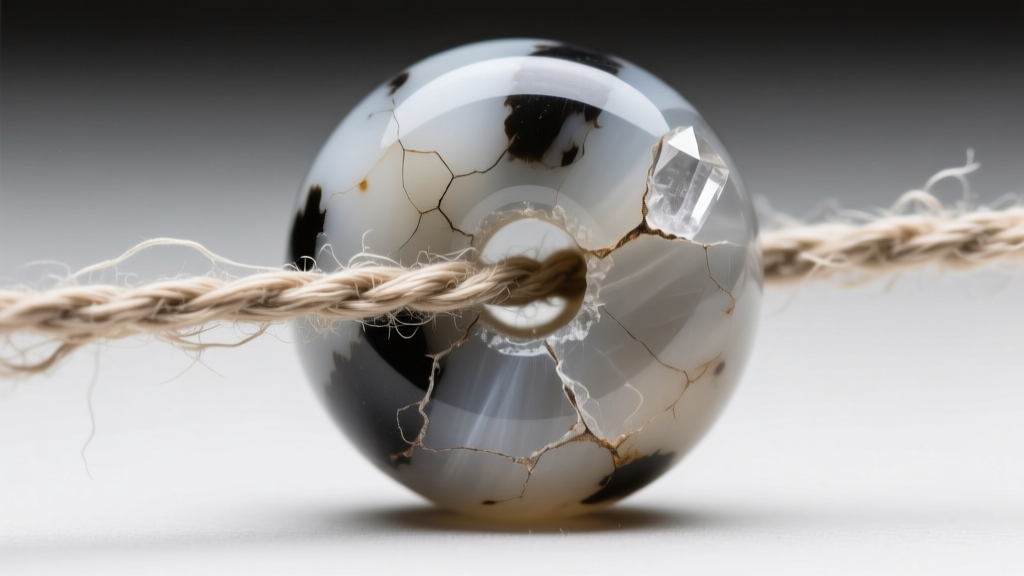
The Problem: If your necklace was strung on standard silk thread, nylon, or elastic cord, the hard quartz edges act like sandpaper. Every time the necklace moves, flexes, or is taken off, the internal edges saw through the stringing material. It is incredibly common for cheaply manufactured Dalmatian bead necklaces to snap within the first six months of wear.
Upgrading to Micro-Wire and French Protectors
If you are restringing a Dalmatian necklace, or if you are designing one from loose beads, you must abandon traditional threads.
- Use 49-Strand Micro-Wire: According to the Beadalon Stringing Guide, a 0.018-inch or 0.024-inch 49-strand stainless steel beading wire coated in nylon is mandatory for hard, abrasive silicate stones. The 49-strand construction provides the drape of silk but the tensile strength of steel.
- Install French Wire Protectors: Also known as wire guardians, these tiny horseshoe-shaped metal findings should be placed at the clasp loops. They prevent the abrasive edge of the end-bead from cutting into the wire where it experiences the most friction and bending stress.
- Ream the Bead Holes: Before restringing, use a diamond-coated bead reamer to gently smooth the inside of the drill holes. Run the reamer through each bead under a steady stream of water to prevent overheating and fracturing the stone.
Expert Maintenance Protocol for Longevity
To ensure your dalmatian necklace remains a staple in your wardrobe for years to come, adopt this strict maintenance routine:
- The 'Last On, First Off' Rule: Always put your necklace on after applying perfumes, lotions, and hairspray. The alcohol and chemicals in cosmetics will rapidly degrade the feldspar matrix and strip away any protective waxes.
- Monthly Cleansing: Wipe the beads down with a slightly damp, lint-free cloth. Never use chemical jewelry dips, ammonia, or ultrasonic machines.
- Bi-Annual Inspections: Every six months, inspect the wire near the crimp beads and the clasp. If you see any kinking or fraying of the nylon coating on the steel wire, restring it immediately to prevent total failure.
'Dalmatian stone is a beautiful, grounding material, but it demands respect for its complex mineralogy. Treating it like a uniform, single-mineral gemstone is the fastest route to ruining a perfectly good piece of jewelry.' — Senior Bench Jeweler, Jewel Style Radar
By understanding the unique geological makeup of your dalmatian necklace and implementing these targeted troubleshooting techniques, you can confidently wear, maintain, and repair your pieces without fear of fading, pitting, or sudden breakage.


