J Necklace Silver Care: Fixing Tangles, Tarnish, and Bends
Is your j necklace silver tarnished, tangled, or bent? Discover expert troubleshooting tips to restore, clean, and protect your initial pendant.

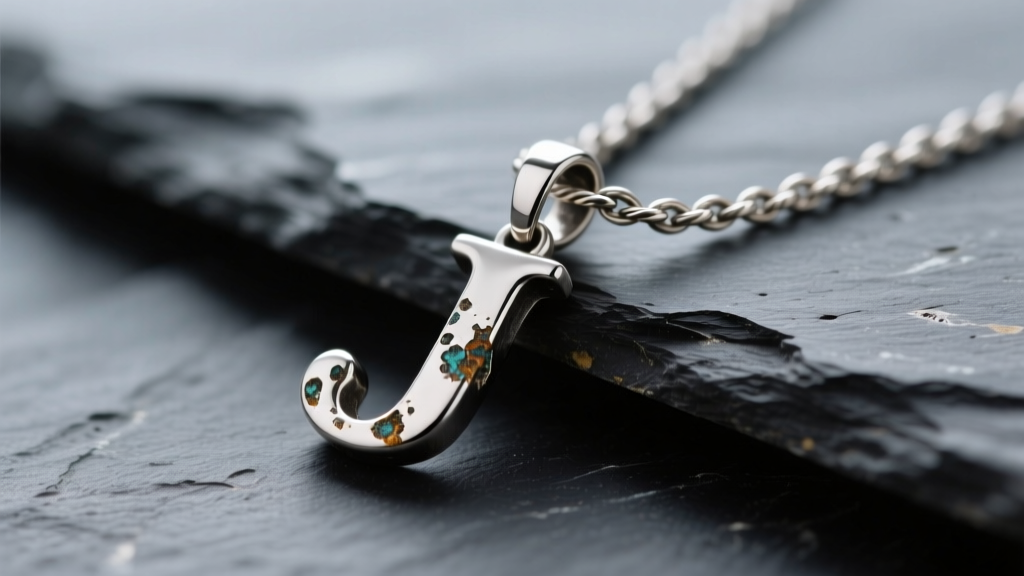
The initial necklace trend has cemented itself as a modern jewelry staple, and the "J" necklace in sterling silver remains one of the most sought-after letter pendants. Whether it represents your name, a loved one, or a meaningful word, a silver J necklace offers a sleek, personalized touch to any neckline. However, the very characteristics that make these necklaces beautiful—the delicate chains, the intricate curves of the letter J, and the reactive nature of sterling silver—also make them highly susceptible to specific wear-and-tear issues.
As a jewelry specialist, I frequently see owners struggling with three primary problems: stubborn tarnish in the pendant's crevices, the frustrating "spinning clasp" phenomenon, and warped or bent silver letters. In this comprehensive troubleshooting guide, we will move beyond generic cleaning advice and dive into the metallurgy and physics of your jewelry to provide actionable, expert-level solutions for your silver J necklace.
The Chemistry of Tarnish: Why Your Silver J Dulls
To effectively troubleshoot tarnish, you must first understand what you are dealing with. According to the Gemological Institute of America (GIA), sterling silver is an alloy composed of 92.5% pure silver and 7.5% other metals, almost always copper. Pure silver is highly resistant to tarnish, but the copper alloy is highly reactive to sulfur compounds and moisture in the air, forming copper sulfide—the blackish layer you see on your necklace.
The letter "J" presents a unique challenge because of its typography. The sharp inner corner where the vertical stem meets the curved hook traps skin oils, lotions, and environmental sulfur, accelerating localized oxidation.
The Aluminum Foil Ion-Exchange Bath
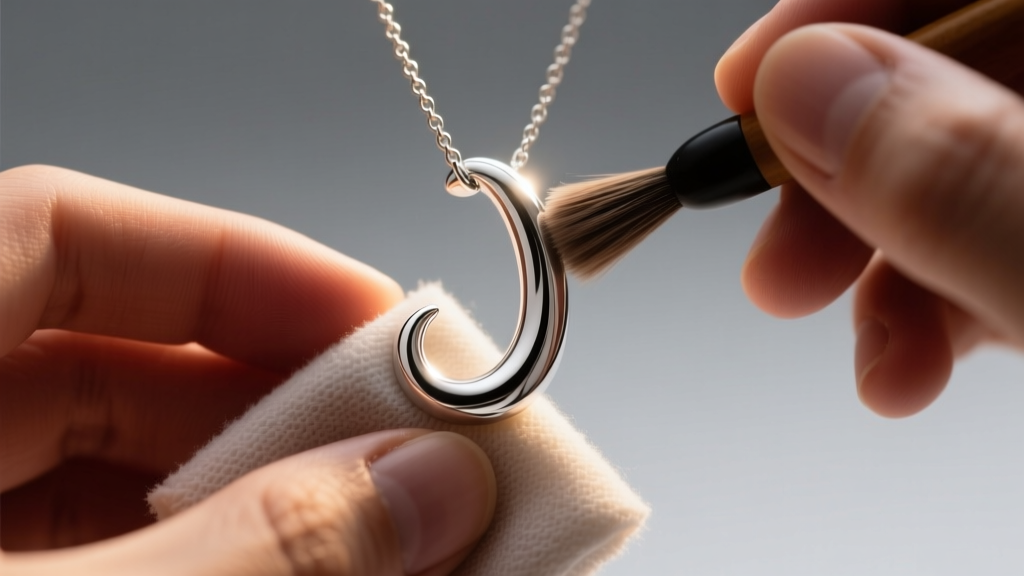
For heavily tarnished J pendants where polishing cloths cannot reach the inner crevices, an electrochemical reaction is the safest and most effective method. This process reverses the tarnish without removing any underlying silver.
- Step 1: Line a glass bowl with aluminum foil, shiny side up.
- Step 2: Add 1 tablespoon of baking soda and 1 tablespoon of kosher salt.
- Step 3: Pour boiling water into the bowl to activate the solution.
- Step 4: Submerge your silver J necklace completely, ensuring the pendant touches the aluminum foil.
- Step 5: Let it sit for 3 to 5 minutes. You will smell a faint sulfur (rotten egg) odor as the tarnish transfers to the foil.
- Step 6: Remove with wooden tongs, rinse thoroughly in distilled water, and pat dry with a microfiber cloth.
Critical Warning: If your J necklace features an intentional "oxidized" or "antiqued" finish (where the crevices are deliberately darkened by the jeweler to highlight the letter's shape), do not use this method. The ion-exchange bath will strip the intentional patina. Instead, use a treated silver polishing cloth and carefully buff only the raised, flat surfaces of the letter.
Solving the Spinning Clasp and Chain Tangling
One of the most common complaints with initial necklaces is the clasp continuously sliding from the back of the neck to the front, resting right next to the J pendant. This is not a defect; it is a simple matter of physics. The silver J pendant acts as a pendulum weight, anchoring the front of the chain. If the chain is too lightweight or lacks friction, the heavier clasp will naturally migrate toward the center of gravity.
Chain Gauge vs. Pendant Weight Matrix
To stop the spinning, the chain's gauge (thickness) and link style must be appropriately matched to the weight of the silver J pendant. Refer to the troubleshooting matrix below to diagnose your setup:
| Pendant Size / Weight | Recommended Chain Style | Optimal Gauge (mm) | Troubleshooting Note |
|---|---|---|---|
| Small (10mm - 12mm) | Cable or Rolo | 0.8mm - 1.0mm | Use a lobster clasp; avoid spring rings which are too light. |
| Medium (13mm - 16mm) | Box or Wheat | 1.0mm - 1.2mm | Box chains provide friction that prevents the clasp from sliding. |
| Large (17mm+) | Rope or Figaro | 1.2mm - 1.5mm | Requires a counterweight or a larger, heavier clasp at the back. |
The Counterweight Fix
If you love your delicate 0.8mm cable chain but hate the spinning clasp, you need to introduce a counterweight. You can purchase a tiny "clasp keeper" or a small silicone o-ring that slides onto the chain behind the clasp, creating friction against the skin and hair. Alternatively, a jeweler can solder a small 2mm silver bead directly onto the chain exactly one inch away from the clasp. This bead acts as a physical stopper and a counter-balance, keeping the clasp anchored at the nape of your neck.
Troubleshooting a Bent or Warped "J" Pendant
Sterling silver is a relatively soft and malleable metal. The distinct, sweeping curve of the letter "J" makes it structurally vulnerable. Sleeping in your necklace, catching it on a knit sweater, or pulling it over your head can easily warp the hook or bend the vertical stem.
Assessing the Damage and Work-Hardening
Before attempting to bend the silver back into shape, you must understand "work-hardening." Every time silver is bent, its crystalline structure compresses, making it harder but significantly more brittle. If your J pendant has been bent back and forth multiple times, the metal at the stress point is likely work-hardened and will snap if you try to force it back with your fingers.
Step-by-Step Reshaping Protocol
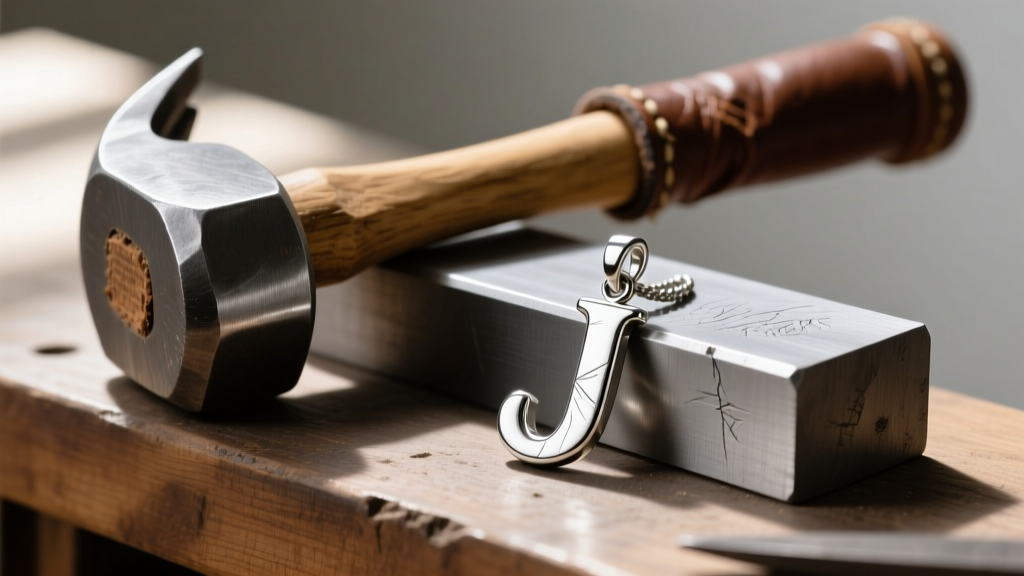
If the bend is minor and the silver still feels slightly pliable, you can reshape it at home using the proper tools. Never use standard steel pliers directly on your silver, as they will leave deep, permanent gouges.
- Preparation: Place a steel bench block on a stable surface. Lay a piece of thin leather or heavy felt over the block to protect the silver's polished face.
- Alignment: Lay the warped J pendant flat on the leather. Identify the exact point of deviation from the original curve.
- Tapping: Using a rawhide or nylon jewelry mallet (never a steel hammer), gently tap the bent area. Do not apply heavy downward force; use a series of light, controlled taps to coax the metal back into alignment.
- Curving the Hook: If the bottom hook of the "J" is flattened, wrap the pendant around a steel ring mandrel or a smooth, cylindrical wooden dowel. Use your thumbs to apply even, gradual pressure to re-establish the curve.
Expert Insight: If the silver feels stiff, resists bending, or emits a faint "cracking" sound (known as the "tin cry"), stop immediately. The metal is severely work-hardened and requires professional annealing—a process where a jeweler uses a torch to heat the silver to a specific temperature, relaxing the crystalline structure and restoring its malleability before reshaping it.
Preventative Maintenance and Storage
Troubleshooting is only half the battle; preventing these issues from recurring is where true jewelry care lies. The Federal Trade Commission (FTC) Jewelry Guides dictate the standards for silver stamping and quality, ensuring your 925 stamp guarantees a certain metallurgical makeup, but it is up to you to manage its environment.
- Anti-Tarnish Strips: Store your J necklace in an airtight ziplock bag with a 3M anti-tarnish strip. These strips absorb airborne sulfur compounds before they can reach the copper in your sterling silver.
- Pacific Silvercloth: For long-term storage, wrap the necklace in Pacific Silvercloth, a specialized flannel embedded with microscopic silver particles that trap tarnish-causing gases.
- The "Last On, First Off" Rule: Always put your silver necklace on after applying perfumes, hairsprays, and lotions, and take it off before showering or swimming. Chlorine and saltwater are highly corrosive to the copper alloy in sterling silver and can cause irreversible pitting.
By understanding the specific material properties of sterling silver and the physical dynamics of initial pendants, you can keep your J necklace looking pristine, lying flat, and shining brilliantly for decades to come.


