Troubleshooting Your Statement Necklace Gold: Clasps & Tarnish
Learn how to troubleshoot a heavy statement necklace gold piece. Fix broken clasps, prevent skin tarnish, and balance weight for comfortable wear.

The Hidden Engineering Flaws in Heavy Gold Jewelry
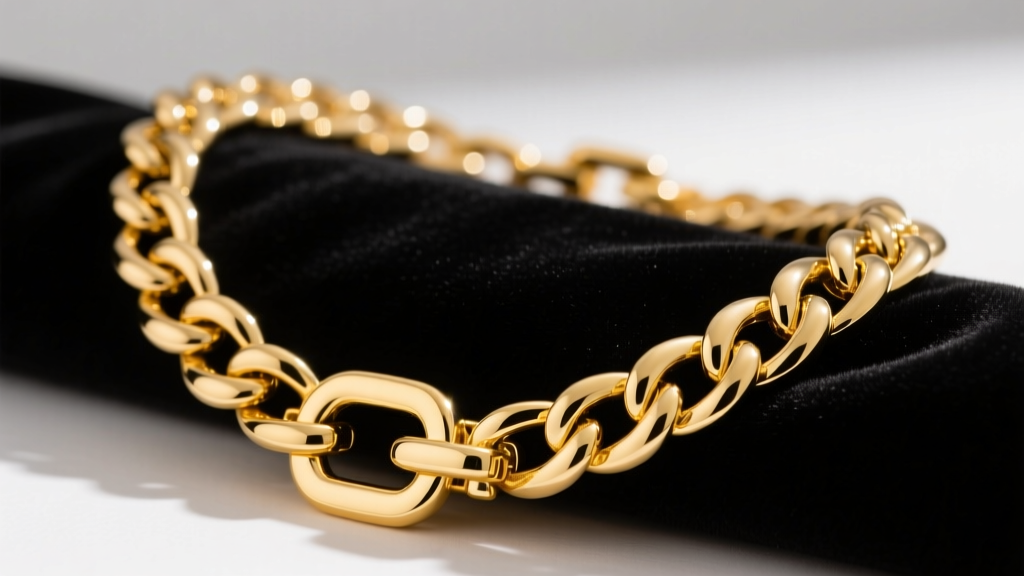
When you invest in a substantial piece of fine jewelry, you expect it to last a lifetime. However, a heavy statement necklace gold collectors and stylists covet often comes with hidden structural vulnerabilities. Unlike delicate pendants, oversized gold collars, bib necklaces, and thick Cuban link chains weighing 50 to 150 grams exert immense dynamic stress on their hardware. Every time you walk, turn your head, or lean forward, the kinetic energy transfers directly to the weakest points of the chain: the jump rings and the clasp mechanism. Furthermore, the metallurgical reality of gold alloys means that larger surface areas resting against the skin drastically increase the likelihood of oxidation and tarnish. In this comprehensive troubleshooting guide, we will diagnose the most common failure modes of heavy gold necklaces and provide master-jeweler-approved solutions to restore their functionality, comfort, and brilliance.
Troubleshooting Clasp Failures on Thick Chains
The most frequent point of catastrophic failure on any heavy gold necklace is the clasp. Many manufacturers mistakenly pair 60-gram statement chains with standard 10mm or 12mm spring ring clasps to cut costs. A standard spring ring is internally tensioned by a tiny steel spring that is highly susceptible to fatigue and is generally only rated for static weights under 15 grams. When subjected to the swinging weight of a heavy gold chain, the internal spring snaps, or the hollow outer casing crushes.
The Upgrade Path: Box Clasps and Lobster Hooks
To properly secure a heavy gold statement piece, you must upgrade the hardware based on the exact weight of the necklace:
- Under 30 grams: A 15mm solid-cast lobster clasp is sufficient. Ensure the jump ring connecting it to the chain is at least 1.2mm (16 gauge) thick and professionally soldered shut.
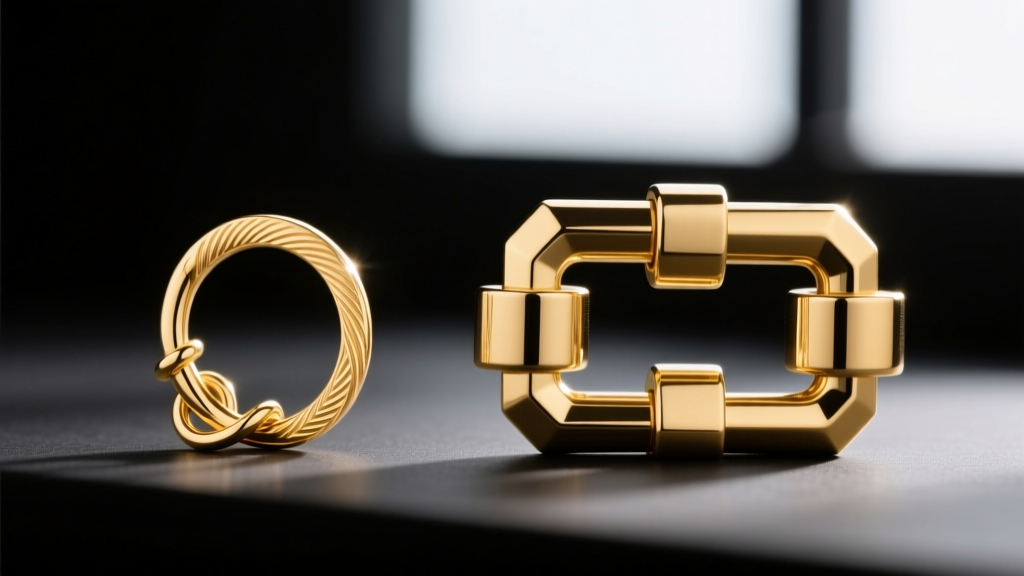
- 30 to 80 grams: Upgrade to an 18mm or 20mm double-locking box clasp (also known as a tongue-and-groove clasp). These distribute the tensile load across a wide metal surface area rather than a single tension point.
- Over 80 grams: You need a heavy-duty box clasp equipped with a figure-8 safety catch. The safety wire acts as a secondary failsafe; if the primary tongue bends or slips out of the groove, the figure-8 wire catches on the opposing jump ring, preventing the necklace from falling to the floor.
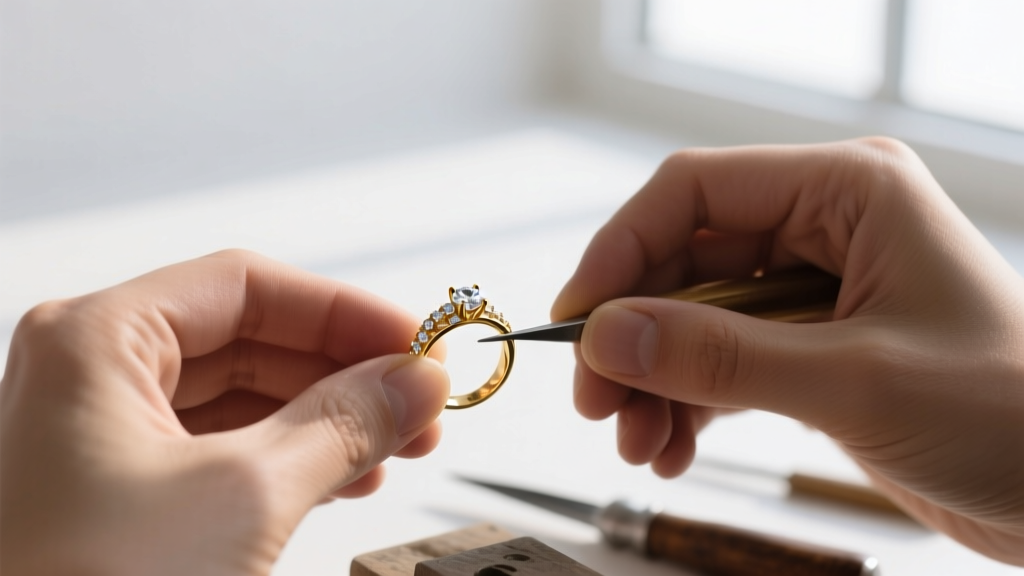
According to the Jewelers of America, having a professional jeweler laser-weld the jump rings on heavy chains is critical. Traditional torch soldering can sometimes weaken adjacent links if the heat is not perfectly controlled, whereas laser welding fuses the metal precisely without thermal damage to the surrounding gold.
Solving the "Green Skin" and Tarnish Problem
A common complaint among wearers of bold gold jewelry is skin discoloration or the dulling of the metal itself. Pure 24k gold is completely inert and will never tarnish, but it is far too soft to be used in heavy statement jewelry; a 24k chain would stretch and deform under its own weight. Therefore, statement pieces are typically cast in 14k (58.3% pure gold) or 18k (75% pure gold). The remaining percentage consists of alloy metals like copper, silver, nickel, and zinc.
It is the copper and silver in these alloys that react with the environment. Human sweat contains lactic acid, urea, and salts, with a pH typically ranging from 4 to 6. When a large gold collar rests against the collarbone and traps heat and moisture, the acids in your sweat react with the copper in the alloy, creating copper chloride. This compound transfers to your skin as a green or black smudge. According to the Gemological Institute of America (GIA), the specific alloy mix not only dictates the color of the gold (yellow, rose, or white) but also its susceptibility to oxidation.
Diagnostic Table: Gold Purity vs. Tarnish Risk
| Gold Karat | Alloy Composition | Tarnish Risk | Structural Durability |
|---|---|---|---|
| 24k (99.9%) | None (Pure Gold) | Zero | Very Poor (Bends easily) |
| 22k (91.6%) | 8.4% Copper/Silver | Very Low | Poor (Prone to scratching) |
| 18k (75.0%) | 25% Copper/Silver/Zinc | Low to Moderate | Excellent for fine jewelry |
| 14k (58.3%) | 41.7% Copper/Nickel/Zinc | Moderate to High | Superior (Highly durable) |
Actionable Anti-Tarnish Solutions
If your 14k or 18k statement necklace is causing skin discoloration, do not abandon it. Instead, implement these troubleshooting steps:
- Deep Degreasing: Soak the necklace in a solution of warm water and a few drops of ammonia-free dish soap for 15 minutes. Use a soft-bristled baby toothbrush to scrub the crevices of the links where lotion and dead skin cells accumulate, as these trap moisture against the metal.
- Micro-Crystalline Wax Barrier: Apply a microscopic layer of Renaissance Wax (a staple in museum conservation) to the inner links that touch your skin. This creates an invisible, non-toxic barrier that blocks lactic acid from reaching the copper alloys.
- Rhodium Flashing: For a permanent solution, take the piece to a jeweler and request a rhodium flash on the interior surface. Rhodium is a platinum-group metal that is entirely hypoallergenic and impervious to tarnish.
Weight Distribution: Stopping the Necklace from Flipping
Have you ever worn a heavy gold bib or pendant necklace, only to find the clasp constantly migrating to the front of your neck? This is not a design flaw; it is a basic physics issue related to the center of gravity. If the front decorative element of the necklace weighs 45 grams, and the back chain weighs only 15 grams, the pendulum effect will naturally pull the heaviest point downward, causing the chain to slide through the jump rings until the clasp rests on your collarbone.
The Counterweight Fix
To solve this, you must artificially restore equilibrium to the necklace. Master jewelers use a technique called counterbalancing. By attaching a dense, unobtrusive gold counterweight charm to the jump ring directly opposite the clasp, you shift the center of gravity back to the nape of the neck. For a necklace with a 30-gram weight differential, a simple 10-gram to 15-gram cylindrical gold bead or teardrop charm attached to the back ring will perfectly anchor the piece, allowing it to drape flawlessly without constant readjustment.
Professional Repair vs. DIY Fixes
When troubleshooting a high-karat gold statement piece, knowing when to seek professional help is vital to preserving the asset's value. Never attempt to bend a warped lobster clasp back into shape with pliers; gold alloys work-harden and will snap if subjected to repeated bending. Similarly, if a thick Cuban link suffers a cracked solder joint, do not use superglue or epoxy. These adhesives contain cyanoacrylate, which will permanently ruin the gold's polish and complicate future professional repairs.
"Heavy gold chains require structural integrity that only high-temperature hard solder or precision laser welding can provide. A compromised jump ring on a 100-gram chain is a dropped necklace waiting to happen." — Master Bench Jeweler
By understanding the metallurgy, physics, and mechanical engineering behind your jewelry, you can transform a problematic, uncomfortable piece into a flawless, heirloom-quality statement that wears beautifully for decades.


