How to Clean and Care for Your Lucky Brand Butterfly Necklace
Learn expert cleaning and maintenance tips to protect the enamel, plating, and crystals on your Lucky Brand butterfly necklace for lasting wear.

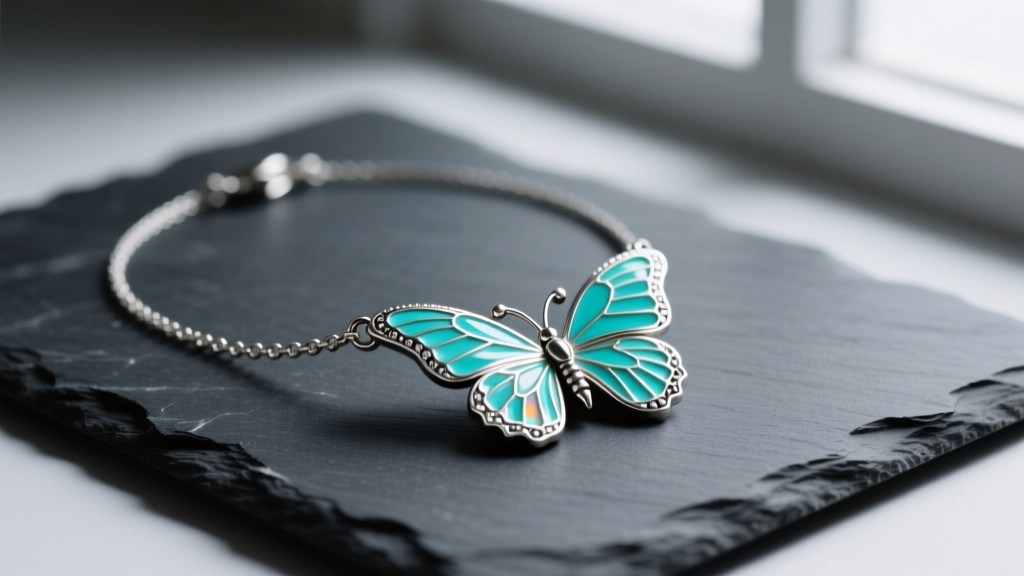
Lucky Brand jewelry is celebrated for its bohemian, vintage-inspired aesthetics, and the lucky brand butterfly necklace is a standout piece in their collection. Often featuring intricate mixed-media designs—such as cold enamel wings, crystal pavé accents, and antiqued metal plating—these necklaces require a highly specific care regimen. Unlike solid gold or platinum fine jewelry, fashion and bridge jewelry relies on delicate surface treatments that can easily degrade if exposed to the wrong chemicals or cleaning methods.
In this comprehensive guide, we break down the exact material anatomy of these pieces and provide a professional-grade maintenance protocol to prevent tarnish, enamel delamination, and crystal clouding, ensuring your necklace remains a staple in your wardrobe for years to come.
Understanding the Material Anatomy
To properly care for your necklace, you must first understand what it is made of. Lucky Brand typically constructs their butterfly pendants using a base metal (often brass or bronze) which is then plated with silver-tone or gold-tone alloys. The colorful wings are usually achieved through 'cold enamel' (a hardened epoxy resin) or painted acrylics, while the sparkling accents are typically glass crystals or rhinestones set with jewelry-grade epoxy.
| Component | Typical Material | Primary Vulnerability | Cleaning Restriction |
|---|---|---|---|
| Base Chain & Setting | Brass with Rhodium/Silver Plating | Plating wear, oxidation (tarnish) | No abrasive polishes or silver dips |
| Butterfly Wings | Cold Enamel (Epoxy Resin) | Chipping, yellowing, solvent melting | No alcohol, acetone, or ultrasonic waves |
| Crystal Accents | Lead Glass / Crystal Pavé | Micro-fractures, glue degradation | No ultrasonic cleaners or harsh ammonia |
The Safe Cleaning Protocol for Mixed Media
The most common mistake owners make is treating plated fashion jewelry like solid sterling silver. According to the Gemological Institute of America (GIA), porous materials and treated surfaces require gentle, non-chemical cleaning agents. Ultrasonic cleaners, which use high-frequency sound waves to dislodge dirt, will shatter glass crystals and cause the epoxy enamel on the butterfly wings to delaminate from the metal base.
What You Will Need
- Mild, phosphate-free dish soap (e.g., original blue Dawn)
- Lukewarm distilled water (tap water contains minerals that leave spots)
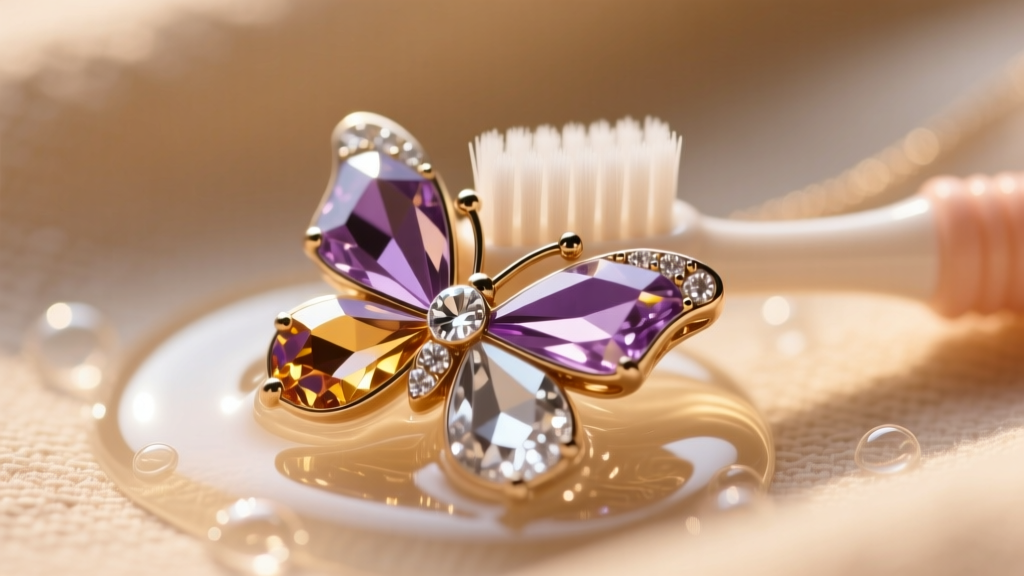
- An extra-soft baby toothbrush
- A lint-free microfiber cloth
- Cotton swabs
Step-by-Step Cleaning Method
- Prepare the Solution: Mix three drops of mild dish soap into a half-cup of lukewarm distilled water. Avoid hot water, as heat softens the epoxy glue holding the crystals in place.
- Target the Chain: Dip the microfiber cloth into the solution, wring it out until it is only slightly damp, and gently wipe down the chain. Do not submerge the entire necklace if it features heavy enamel or glued components.
- Clean the Crystals: Dip the baby toothbrush into the solution and gently tap the bristles against the crystal pavé. Use a circular motion to lift skin oils and lotion buildup from behind the stone settings.
- Detail the Enamel: Use a damp cotton swab to carefully trace the grooves of the butterfly wings. Never scrub the enamel, as micro-abrasions will dull its glossy finish over time.
- Dry Thoroughly: Pat the piece dry with a microfiber cloth. Allow it to air dry completely on a paper towel for at least two hours before storing to ensure no moisture is trapped under the crystal settings, which can cause the base metal to rust.
Preventing Tarnish and Environmental Damage
Tarnish is a chemical reaction between the copper or brass in the base metal and sulfur compounds in the air. Because the plating on a Lucky Brand necklace is relatively thin, once it wears away, the exposed brass will oxidize rapidly, turning your skin green and the metal black.
To prevent this, adhere to the 'Last On, First Off' rule. Perfumes, hairsprays, and lotions contain alcohols and volatile organic compounds (VOCs) that strip metal plating and cause cold enamel to cloud. Always apply your cosmetics and wait at least five minutes for them to dry before putting on your necklace. When you return home, the necklace should be the first thing you take off.
Troubleshooting Common Butterfly Necklace Issues
Even with meticulous care, everyday wear introduces physical stress to fashion jewelry. Here is how to handle the most common failure modes specific to intricate butterfly pendants.
Loose Rhinestones or Crystals
If a crystal becomes loose, never use cyanoacrylate (Super Glue). As Super Glue cures, it releases a vapor that creates a permanent, frosty white fog on the surface of glass crystals and rhinestones. Instead, use a specialized jewelry adhesive like Aleene's Jewelry & Metal Glue or Beacon Gem-Tac. Apply a microscopic dot using the tip of a toothpick, seat the stone with tweezers, and let it cure on a flat surface for 24 hours.
Enamel Chipping
Cold enamel is essentially hardened resin. If a chip occurs on the butterfly wing, it cannot be 'melted' back together. You can temporarily seal the exposed metal to prevent rust by applying a micro-layer of clear, non-yellowing nail polish top coat, though professional re-enameling by a jeweler is the only permanent fix.
Lobster Clasp Seizure
The micro-spring inside a lobster clasp is highly susceptible to seizing when exposed to thick body lotions or silicone-based serums. If your clasp becomes stiff, do not force it. Submerge only the clasp in a small cap of isopropyl alcohol for five minutes to dissolve the lipid buildup, then work the lever back and forth. Wipe dry and apply a microscopic drop of sewing machine oil to the hinge.
Long-Term Storage Strategy
How you store your lucky brand butterfly necklace when it is not being worn is just as critical as how you clean it. The American Gem Society emphasizes that environmental control is the key to preserving plated jewelry.
Expert Storage Tip: Never store plated jewelry in cardboard boxes or wrapped in cotton balls. Cardboard and cotton contain sulfur and acidic compounds that accelerate tarnishing.
For optimal preservation, store the necklace in an individual, airtight polyethylene zip-lock bag. Squeeze out as much air as possible before sealing. Place a 3M Anti-Tarnish Strip inside the bag; these strips absorb ambient sulfur and hydrogen sulfide gases, effectively neutralizing the tarnish process for up to 12 months. If you live in a high-humidity climate, add a small silica gel desiccant packet to the bag to prevent moisture-induced base metal corrosion. Keep the bags in a dark, climate-controlled drawer away from direct sunlight, which can cause the colored epoxy enamel on the butterfly wings to fade or yellow over time.


