The Ultimate Clover Heart Necklace Buying Guide & Style Tips
Discover how to choose the perfect clover heart necklace. Our expert buying guide covers metal grades, chain gauges, pricing tiers, and quality hallmarks.

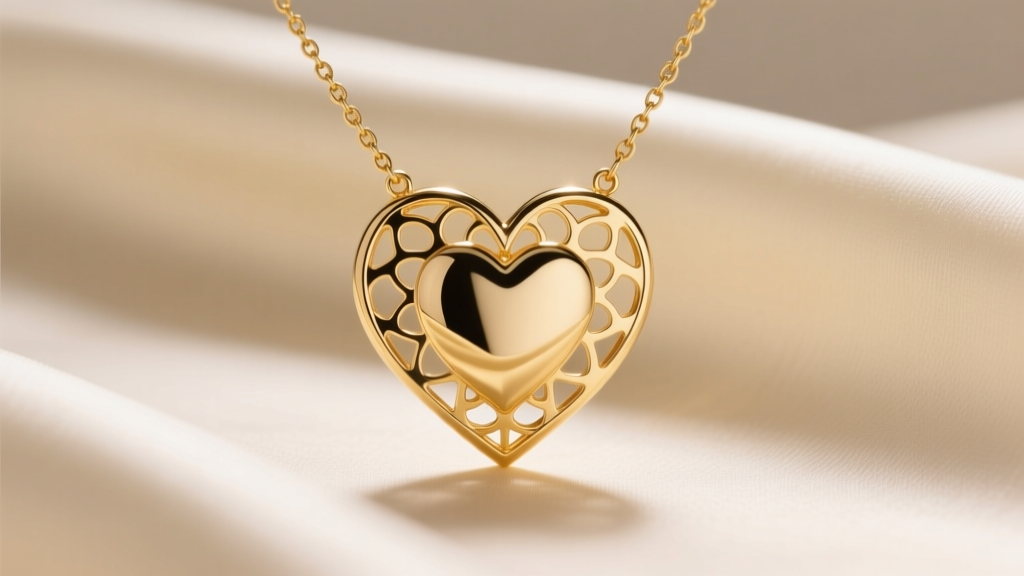
The Intersection of Luck and Love: Why the Clover Heart Necklace Endures
The clover heart necklace is a masterful study in symbolic jewelry design, merging the universal emblem of romance (the heart) with the ancient talisman of fortune (the clover or shamrock). Unlike single-motif pendants that can feel overly sentimental or strictly seasonal, this hybrid design offers a sophisticated duality. Whether you are investing in a solid 18k gold heirloom piece or selecting a durable sterling silver everyday staple, understanding the structural and metallurgical nuances of this specific pendant style is critical. This comprehensive buying guide will equip you with the exact specifications, material grades, and mechanical insights needed to make an informed purchase in 2026 and beyond.
Decoding the Design: Three Primary Motif Variations
Not all clover heart necklaces are constructed equally. The market generally categorizes these pendants into three distinct structural designs, each with its own wearability profile and aesthetic weight.
- The Interlocking Silhouette: This design features a heart and a four-leaf clover that overlap or interlock like puzzle pieces. Because the surface area is wider, these pendants typically require a thicker chain (1.5mm or above) to support the horizontal weight distribution and prevent flipping.
- The Cutout Clover-Heart: A single heart-shaped frame with a negative-space clover cut from the center. This is the most lightweight variation, ideal for delicate cable chains (0.8mm to 1.0mm) and layering with longer lariat necklaces.
- The Dual-Sided Reversible Pendant: A highly engineered piece featuring a heart on the obverse and a clover on the reverse, often set with different gemstones on each side. These are heavier and require a robust bail and a secure lobster clasp.
Material Metallurgy: What You Are Actually Paying For
The longevity of your necklace hinges entirely on its base metal and plating thickness. When evaluating a clover heart necklace, always look for stamped hallmarks on the bail or the clasp plate. According to the Federal Trade Commission (FTC) Jewelry Guides, specific terminology must be met for gold plating and vermeil claims.
| Metal Grade | Hallmark Stamp | Durability & Tarnish Resistance | Ideal Use Case |
|---|---|---|---|
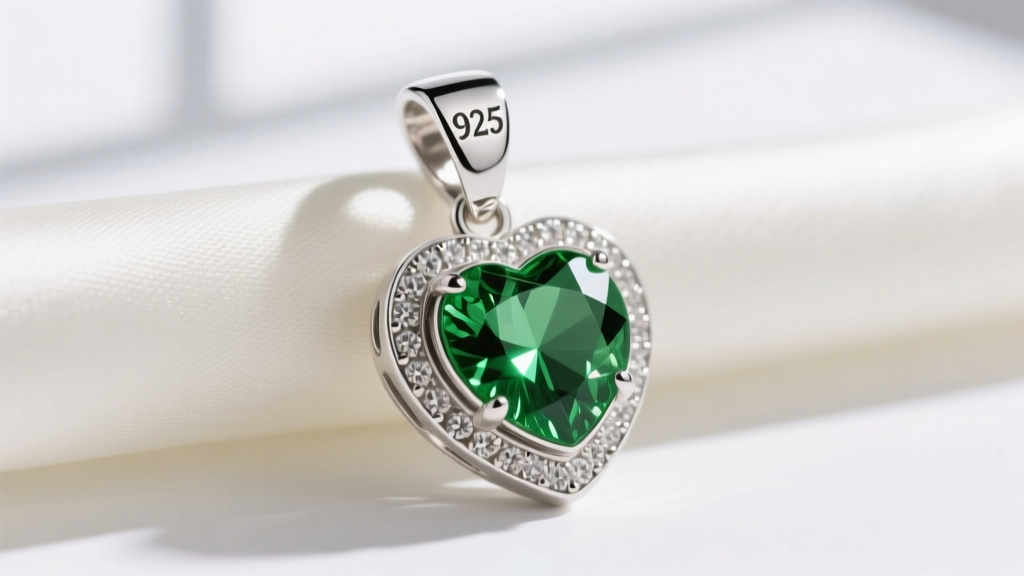
| Sterling Silver | 925 | Moderate; requires polishing to prevent oxidation. | Everyday wear, budget-conscious buyers. |
| Gold Vermeil | 925 + Gold Stamp | High; requires minimum 2.5 microns of gold over silver. | Demi-fine jewelry, occasional water exposure. |
| 14k Solid Gold | 585 or 14K | Exceptional; will not tarnish, highly scratch-resistant. | Heirloom pieces, daily shower/sleep wear. |
| 18k Solid Gold | 750 or 18K | High; softer than 14k, prone to micro-scratches over time. | High-end luxury, special occasion wear. |
Buyer Beware: Avoid pieces stamped with "14K HGE" (Heavy Gold Electroplate) or "14K GP" if you intend to wear the necklace daily. These are typically plated over brass or copper bases and will inevitably wear through, exposing the reactive base metal to your skin.
Chain Mechanics and Clasp Engineering
The pendant is only half the equation; the chain and clasp dictate the necklace's functional lifespan. A poorly matched chain will snap under the pendulum motion of a heavy clover heart pendant.
Matching Chain Gauge to Pendant Weight
For a standard 1-inch clover heart pendant weighing between 2 to 4 grams, a 1.2mm to 1.5mm cable or box chain is optimal. Box chains offer superior tensile strength due to their interlocking square links, making them less likely to kink or snap compared to delicate rope chains. If your pendant features heavy gemstone pavé, pushing the weight over 6 grams, you must upgrade to a 2.0mm wheat or curb chain to prevent bail friction from wearing through the chain links.
The Clasp: Spring Ring vs. Lobster Claw
Never accept a spring ring clasp on a chain thicker than 1.2mm. The internal tension spring in a standard spring ring lacks the torque to close completely over a thicker jump ring, leaving a gap that will catch on clothing and eventually pull open. Always insist on a lobster claw clasp for chains 1.5mm and above. For high-end solid gold pieces, look for a "hidden box clasp" with a figure-eight safety latch, which provides the ultimate security against accidental drops.
Pricing Tiers: Setting Realistic Budget Expectations
Understanding the market tiers will protect you from overpaying for plated metals disguised as solid gold. Here is what you should expect to pay for a quality clover heart necklace in the current market:
The Demi-Fine Sweet Spot ($120 - $350): This is where most informed buyers shop. In this tier, you should expect heavy gold vermeil (at least 2.5 microns) over a sterling silver base, or solid 10k/14k gold with a very lightweight, hollow-backed construction. Gemstones in this tier are typically lab-created or semi-precious (like peridot or amethyst) set in secure bezels.
- Fashion / Costume ($30 - $80): Brass or copper base with flash plating (less than 0.5 microns). Expect a lifespan of 6 to 12 months with regular wear before the base metal shows.
- Solid 14k Gold Standard ($450 - $1,200): Solid 14k gold with a weight of 3 to 8 grams. May feature small natural diamond accents (typically I1-I2 clarity, G-H color). This is the benchmark for permanent, everyday jewelry.
- Fine / Heirloom ($2,500+): Solid 18k gold or platinum, featuring high-clarity natural diamonds or precious gemstones (sapphires, emeralds) in intricate prong settings. Often features custom articulation or dual-sided reversible engineering.
Quality Assurance: The 4-Point Inspection Checklist
Before finalizing your purchase, whether in a boutique or online, run the piece through this rigorous inspection checklist. For deeper insights into gemstone setting integrity, the Gemological Institute of America (GIA) provides excellent resources on evaluating stone security.
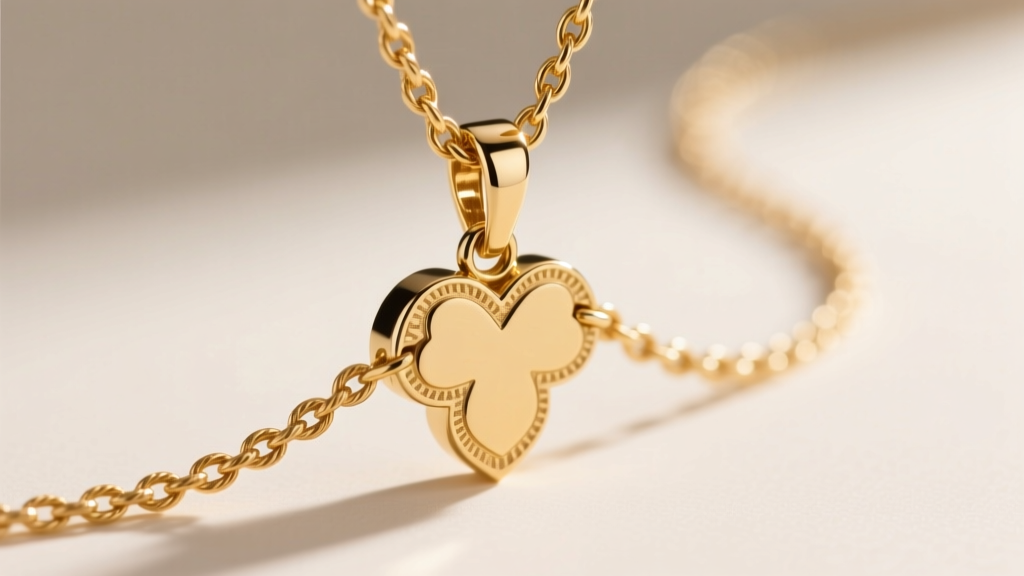
- Inspect the Bail Soldering: The bail (the loop connecting the pendant to the chain) should be seamlessly soldered closed. If there is a visible gap or if it relies on a tiny jump ring that can be pried open with a fingernail, the pendant will eventually slip off the chain.
- Check the Gemstone Settings: If your clover heart features gemstones, run a soft microfiber cloth over the face. If it catches, the prongs are too high or poorly filed, which will lead to snagging on knitwear and eventual stone loss. Bezel settings are vastly superior for everyday wear.
- Verify the Hallmarks: Use a jeweler's loupe or your smartphone's macro camera to verify the stamps. A legitimate maker's mark (usually a tiny logo or initials next to the metal purity stamp) is a strong indicator of accountability and quality control.
- Assess the Back Finish: High-quality pendants feature an "open back" or a meticulously polished closed back with a comfort-fit dome. Flat, unpolished backs can trap sweat and lotions, leading to skin irritation and accelerated metal degradation.
Styling Your Clover Heart Necklace for Maximum Impact
The hybrid nature of the clover heart pendant makes it incredibly versatile for styling. For a modern, editorial look, pair a 16-inch solid gold cutout clover heart with a 20-inch heavy Cuban link chain. The contrast between the delicate, romantic pendant and the industrial, heavy chain creates a striking visual tension that elevates basic wardrobe staples like white tees and cashmere crewnecks.
If you are wearing a V-neck or wrap dress, opt for an 18-inch interlocking silhouette pendant. The V-shape of the neckline naturally frames the pendant, drawing the eye directly to the center of the chest. Avoid wearing wide, complex clover heart pendants with high-neck collars or ruffled blouses, as the intricate cutouts will compete with the fabric's texture and get lost in the visual noise.
Final Thoughts on Your Investment
A clover heart necklace is more than a fleeting trend; it is a wearable narrative of luck and affection. By prioritizing structural integrity—such as proper chain gauges, secure lobster clasps, and verified metal hallmarks—you ensure that your piece transcends seasonal fashion and becomes a lasting fixture in your jewelry collection. Always buy from transparent jewelers who disclose exact metal weights and plating micron thicknesses, and treat your necklace with the care required to preserve its symbolic brilliance for decades to come.


