The 2026 Necklace Generator Addon Blender Buying Guide
Find the perfect necklace generator addon Blender tool for 3D jewelry CAD. Compare chain topology, gem setters, and casting export features.

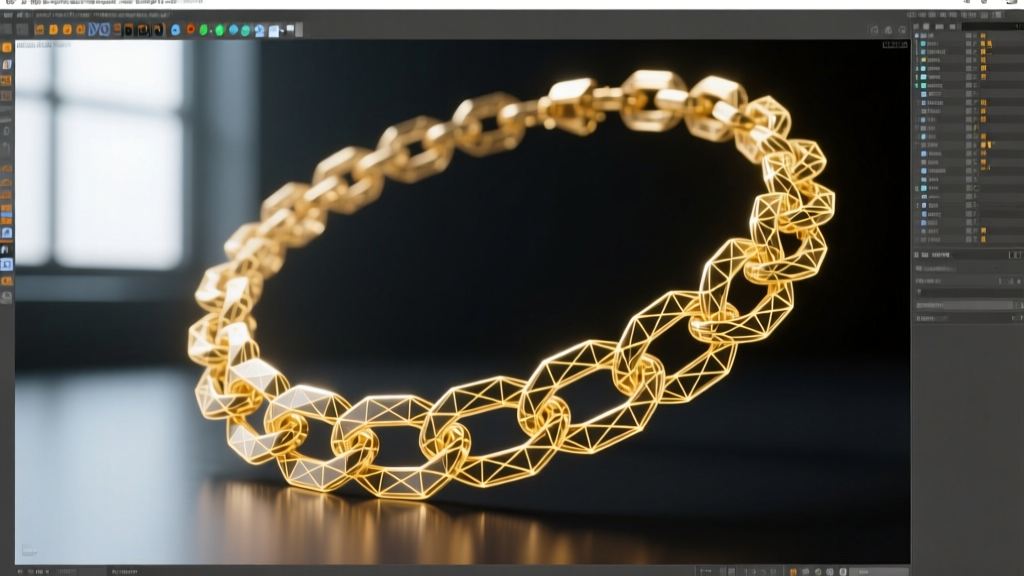
The landscape of independent jewelry design has been permanently altered by accessible 3D modeling and high-resolution resin printing. For modern CAD jewelers, the ability to rapidly prototype complex chains, intricate pendants, and precise gemstone settings is no longer a luxury—it is a baseline requirement. When emerging designers type 'necklace generator addon blender' into search engines, they are often looking for a magic bullet to automate the tedious process of chain link creation and pendant assembly. However, not all 3D jewelry tools are created equal, especially when the final digital mesh must survive the rigorous physics of lost-wax casting.
This comprehensive buying guide evaluates the essential features, topology requirements, and manufacturing tolerances you must consider when selecting a Blender addon for necklace design in 2026. Whether you are designing a delicate 14k gold paperclip chain or a heavy sterling silver statement pendant, understanding the bridge between digital generation and physical metallurgy is critical to your brand's success.
Why CAD is Essential for Modern Necklace Design
Traditional wax carving and hand-forging are beautiful arts, but they lack the mathematical precision required for modern micro-pave settings and interlocking geometric chains. Blender, originally built for animation and VFX, has evolved into a powerhouse for jewelry CAD thanks to its robust geometry nodes, non-destructive modifier stack, and open-source addon ecosystem. A dedicated necklace generator addon leverages these native Blender features to automate repetitive tasks—like arraying links along a bezier curve or generating prongs around a brilliant-cut diamond—saving designers dozens of hours per collection.
Furthermore, digital prototyping allows jewelers to calculate exact metal weights and scrap costs before a single gram of gold is melted. By utilizing accurate volume measurements within Blender, you can predict the final casting weight in 18k yellow gold or platinum, ensuring your pricing models remain profitable in a fluctuating precious metals market.
Critical Features to Demand from Your Addon
When evaluating a necklace generator addon, you must look beyond flashy viewport renders. The true test of a jewelry CAD tool is its ability to produce clean, manufacturable geometry. Here are the core features your toolkit must possess.
Non-Destructive Chain Generation and Topology
Generating a chain is not as simple as duplicating a torus. A high-quality addon will use curve modifiers and geometry nodes to array links while alternating their 90-degree orientations. More importantly, the resulting mesh must be manifold. Non-manifold geometry (such as internal faces, disconnected vertices, or zero-thickness edges) will cause catastrophic failures in slicing software like PreForm or Chitubox. The best addons automatically apply Boolean unions or remeshing algorithms to ensure every chain link is a single, continuous, watertight volume.
Automated Gemstone Setting and Prong Tolerances
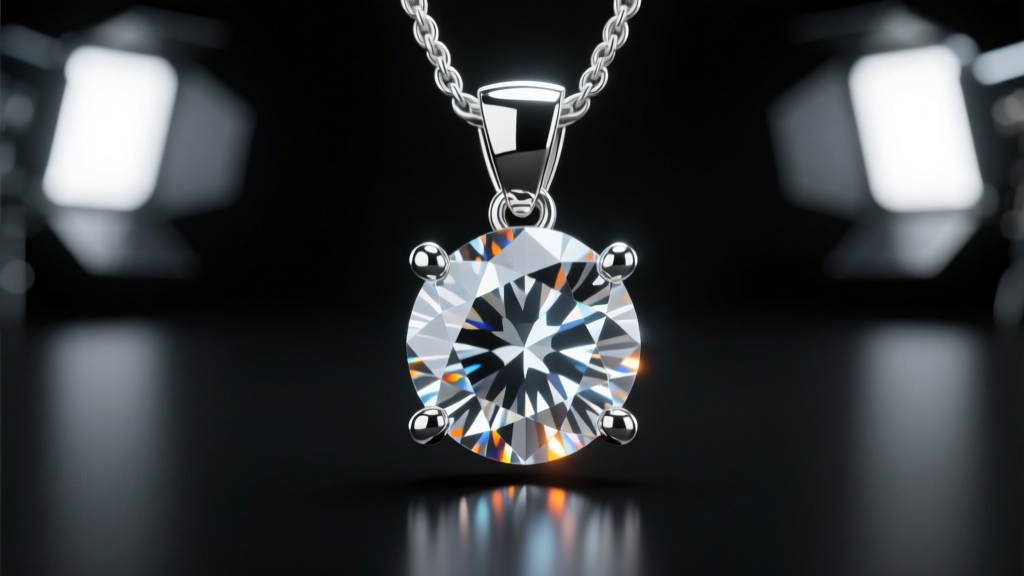
Setting stones in a digital environment requires strict adherence to physical tolerances. A premium addon will include a library of standard gemstone cuts (round brilliant, pear, marquise, emerald) and automatically generate galleries, seats, and prongs. For castable models, prong thickness should never drop below 0.6mm, and the bearing (the notch where the girdle sits) must be precisely 0.2mm to 0.4mm deep depending on the stone's hardness. Addons that allow you to adjust these parameters via a simple slider, rather than manual vertex pushing, are worth their weight in gold.
Export Compatibility and Mesh Validation
Your digital necklace is useless if it cannot be exported as a flawless STL or OBJ file. Top-tier addons integrate directly with Blender’s 3D Print Toolbox to highlight non-manifold edges, overhangs that require excessive support structures, and wall thickness violations before you ever hit the export button.
Comparing Top Blender Jewelry Addons (2026 Edition)
The market for Blender jewelry tools ranges from free, community-driven scripts to premium, professionally supported suites. Below is a comparison of the most prominent solutions utilized by CAD jewelers today.
| Addon / Tool | Best For | Chain Generation | Gem Setting | Price Range |
|---|---|---|---|---|
| JewelCraft | Comprehensive CAD | Basic Array | Advanced | Free / Open Source |
| Geometry Nodes (Native) | Complex Chains | Procedural | None | Free (Built-in) |
| HardOps / Boxcutter | Pendant Hard-Surface | None | None | $20 - $40 |
| Paid Gumroad Generators | Specific Chain Styles | Specialized | Minimal | $15 - $50 |
JewelCraft remains the undisputed champion for general jewelry design in Blender. It provides an extensive library of gems, prongs, and sizing tools. However, for intricate chainmaille or interlocking geometric chains, many designers rely on custom Geometry Node setups, which offer infinite procedural control over link tension and curvature without destructive Boolean operations.
Design for Manufacturing: Casting Tolerances
The most common mistake novice CAD jewelers make is designing features that are too delicate for the lost-wax casting process. When using a necklace generator addon, you must enforce strict manufacturing rules within your digital workspace.
- Minimum Wall Thickness: For 14k and 18k gold, maintain a minimum wall thickness of 0.8mm. For sterling silver, which is more viscous when molten, increase this to 1.0mm. Anything thinner risks incomplete fills or porosity.
- Shrinkage Compensation: Metal shrinks as it cools. According to industry data from Ganoksin, you must scale your final Blender mesh by 1.5% to 2.5% depending on the specific alloy and flask temperature before exporting.
- Draft Angles and Sprues: Flat, broad surfaces on pendants should feature a slight 2-degree draft angle to allow gases to escape the flask during the burnout process. Additionally, always model a small sprue base (at least 3mm in diameter) on a hidden edge of your pendant to ensure proper metal flow from the button.
Exporting for Castable Resins
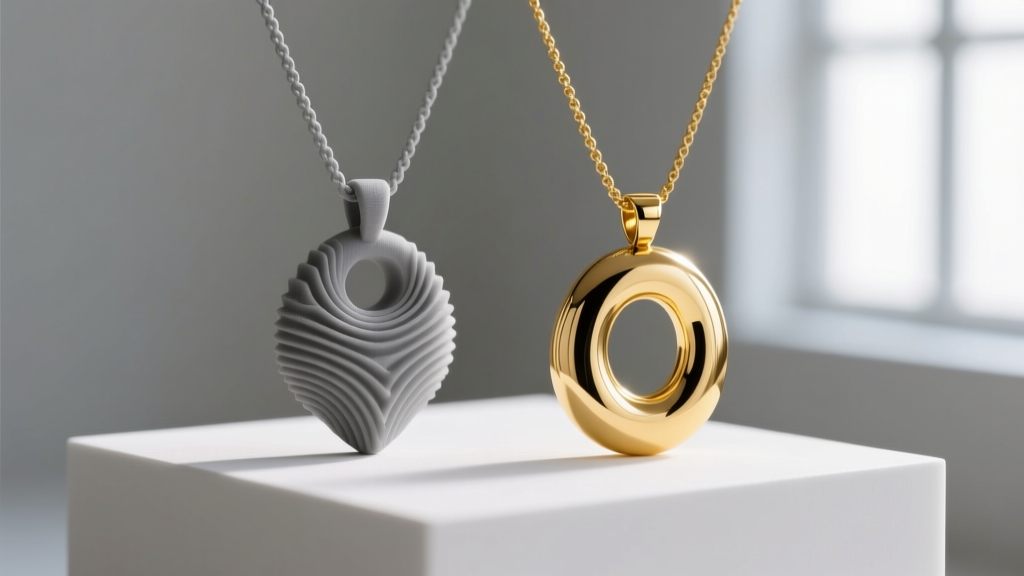
Once your necklace mesh is validated, the next step is 3D printing. The industry standard for direct casting is using high-wax-content resins like Formlabs Castable Wax 40 or Siraya Tech Cast. As noted in Formlabs' jewelry manufacturing guides, the orientation of your model on the build plate is critical. Pendants should be angled at 30 to 45 degrees to minimize support structure contact points on the visible face of the jewelry. When exporting your STL from Blender, ensure your scene scale is set to millimeters and the mesh is triangulated to prevent slicing errors in the resin printer's software.
Hardware and Viewport Optimization
Generating a 20-inch necklace chain composed of hundreds of interlocking links can easily push Blender’s polygon count into the tens of millions. To maintain a smooth workflow, utilize Blender’s instancing features. Instead of duplicating the actual geometry of every chain link, use Collection Instances or Geometry Node instancing. This allows the viewport to render thousands of links using the memory footprint of a single object. Furthermore, rely on Eevee for real-time viewport manipulation and reserve Cycles for the final high-resolution marketing renders, utilizing HDRI environment maps to accurately simulate the anisotropic reflections of polished gold and the refraction of diamonds.
Final Verdict: Investing in Your Digital Jewelry Toolkit
Finding the right necklace generator addon for Blender is less about discovering a single plugin that does everything, and more about assembling a workflow that bridges procedural generation with strict manufacturing realities. For pure chain creation, mastering Blender’s native Geometry Nodes is an invaluable investment of time. For gemstone setting and sizing, JewelCraft is an indispensable, free resource. By combining these tools and adhering to strict casting tolerances, independent jewelers can produce bespoke, high-end necklaces that rival legacy manufacturing houses, all from a single desktop workstation.


