How to Style and Layer a Vintage Gold Starburst Necklace
Master the art of layering a gold starburst necklace. Learn step-by-step styling techniques, chain pairings, and karat authentication tips.

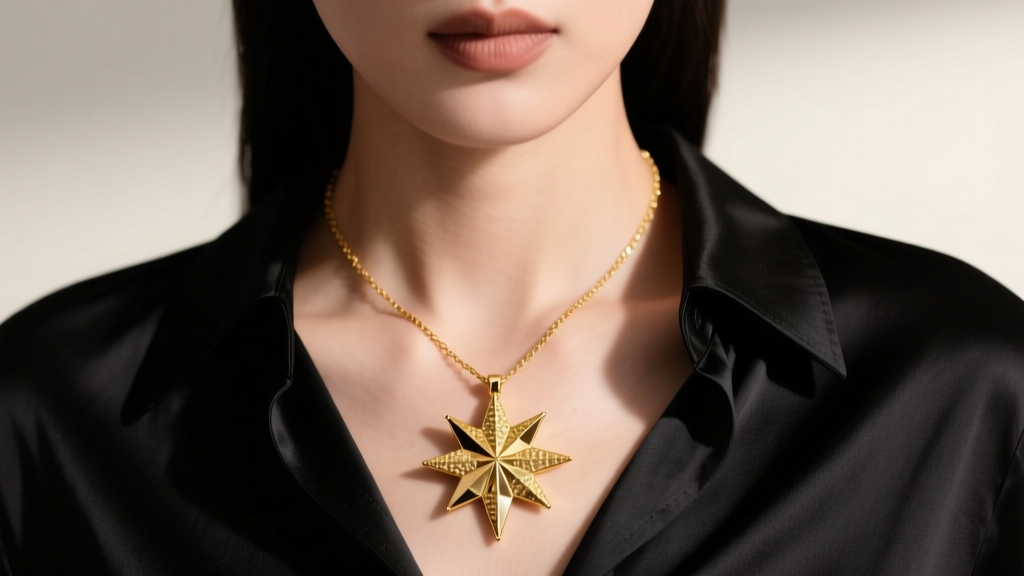
The Anatomy of a Gold Starburst Pendant
The gold starburst necklace is a masterclass in celestial jewelry design, tracing its most iconic iterations back to the bold, expressive 1970s. Characterized by a central focal point—often a bezel-set cabochon gemstone like lapis lazuli, turquoise, or a textured gold dome—surrounded by radiating metallic rays, this pendant demands attention. However, styling a gold starburst necklace in 2026 requires moving beyond the vintage cliché and integrating it into modern, sophisticated layering stacks. To do this effectively, you must first understand the physical anatomy of the piece. A standard vintage starburst pendant typically features between 12 and 24 individual rays, measuring anywhere from 25mm to 45mm in diameter. The weight usually ranges from 3.5 grams to 8 grams, which directly dictates the structural requirements of the chain you choose to pair it with.
Step-by-Step Guide to Layering Your Starburst Necklace
Layering is no longer just about throwing multiple chains together; it is an exercise in proportion, texture, and spatial awareness. The starburst design is inherently busy and visually heavy, meaning it must serve as the anchor or the definitive focal point of your stack. Follow this step-by-step framework to build a balanced, tangle-free arrangement.
Step 1: Establish the Anchor Chain (14-16 inches)
Begin with a minimalist chain that sits high on the collarbone. A 15-inch 14k gold box chain with a 2.0mm width provides a clean, geometric contrast to the organic, radiating lines of the starburst. Avoid adding a pendant to this first layer; its sole purpose is to frame the upper décolletage and establish a metallic baseline. Ensure this chain features a sturdy lobster clasp rather than a spring ring, as the repetitive friction of layering can easily warp smaller spring ring mechanisms over time.
Step 2: Position the Gold Starburst Necklace (18-20 inches)
The gold starburst necklace should sit exactly 3 to 4 inches below your anchor chain. An 18-inch length is ideal for crew necks and button-down shirts, allowing the pendant to rest on the upper sternum, while a 20-inch length is better suited for deep V-necks and open silk blouses. Because the starburst pendant is top-heavy, pair it with a 1.5mm to 2.0mm rope chain. The twisted links of a rope chain provide superior tensile strength and prevent the pendant bail from sliding excessively, keeping the sunburst motif perfectly centered.
Step 3: Add Textural Contrast (22-24 inches)
To complete the triad, introduce a third chain that drops below the starburst. In 2026, the trend leans heavily toward mixed textures rather than uniform chains. A 24-inch 14k gold snake chain or a delicate 1.2mm cable chain adorned with a single, tiny bezel-set diamond (approximately 0.05 carats) draws the eye downward, elongating the torso without competing with the intricate rays of the starburst pendant.
Pro Stylist Tip: When layering a gold starburst necklace, always use a 3-strand necklace spacer clasp at the nape of the neck. This inexpensive hardware upgrade physically separates the chains at the clasp point, reducing tangling by up to 80% and preventing the delicate starburst rays from getting scratched by heavier chain links.
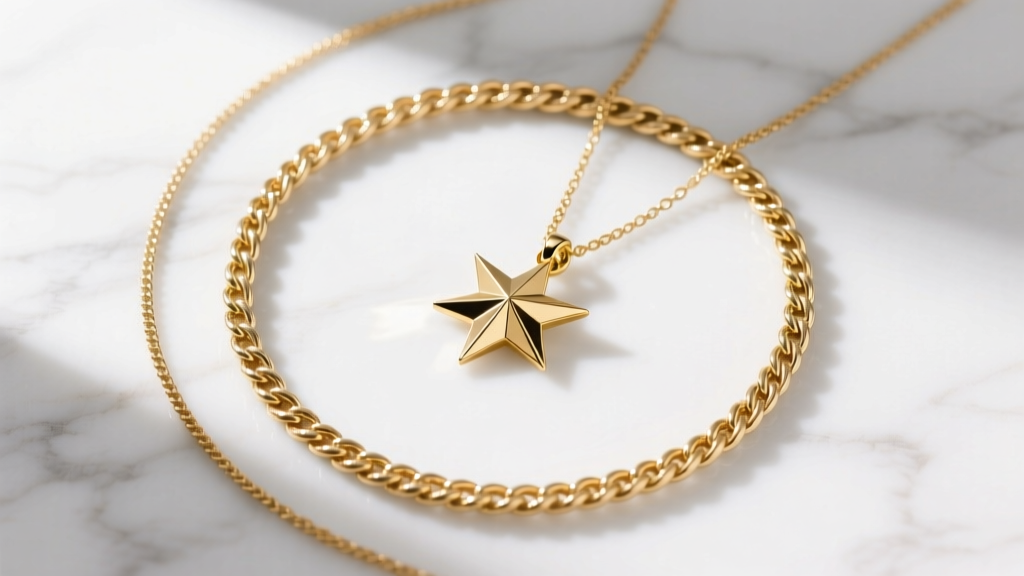
Chain Pairings: What Works and What Tangles
Not all chains are created equal, especially when supporting a textured, multi-pointed pendant like a starburst. The wrong chain will not only tangle but can actually cause structural damage to the pendant's bail or the rays themselves. Refer to the data table below to select the optimal chain for your specific starburst weight.
| Chain Type | Ideal Thickness | Max Pendant Weight | Tangling Risk | Best For |
|---|---|---|---|---|
| Cable Chain | 1.2mm - 1.5mm | Up to 5g | High | Minimalist, lightweight modern starbursts |
| Box Chain | 2.0mm - 2.5mm | Up to 12g | Low | Heavy vintage 1970s starbursts with gemstones |
| Rope Chain | 1.5mm - 2.0mm | Up to 8g | Medium | Textured gold-only starburst pendants |
| Snake Chain | 2.0mm - 3.0mm | Up to 15g | Very Low | Sleek, contemporary starburst designs |
Matching the Starburst to Your Neckline
The visual weight of a gold starburst necklace requires strategic neckline pairings to avoid looking overwhelming. Here is how to adapt your styling based on your wardrobe:
- The Classic Button-Down: Unbutton the shirt to the third or fourth button to create a natural V-shape. An 18-inch starburst layered with a 15-inch choker perfectly fills this negative space, bridging the gap between professional and bohemian.
- The High Crew Neck: If wearing a high-necked sweater or tee, opt for a longer 22-inch starburst necklace worn solo. Layering over thick, high-necked fabrics creates friction that can bend the delicate outer rays of the starburst pendant.
- The Off-the-Shoulder Top: This is where the starburst truly shines. Utilize the full three-layer stack (15", 18", 24") to cascade down the exposed skin, using the starburst as the undeniable centerpiece.
Authenticating Gold: 14k vs. 18k Starburst Pendants
When shopping for vintage or artisan-crafted gold starburst necklaces, understanding the metallurgy is crucial for both durability and aesthetics. According to the Gemological Institute of America (GIA), pure 24k gold is too soft for intricate jewelry, meaning starbursts are typically cast in 14k or 18k gold.
14k Gold (58.5% Pure): Stamped '585' or '14k', this alloy is mixed with higher amounts of copper, silver, or zinc. It offers a slightly paler yellow hue but provides exceptional tensile strength. If your starburst features extremely thin, elongated rays, 14k is the superior choice as it will resist bending if snagged on clothing.
18k Gold (75% Pure): Stamped '750' or '18k', this alloy boasts a rich, buttery yellow color that is highly prized in vintage 1970s European jewelry. However, 18k gold is notably softer. An 18k gold starburst necklace requires careful handling; the outer points of the starburst can warp or dent if dropped on a hard surface or crushed in a jewelry box.
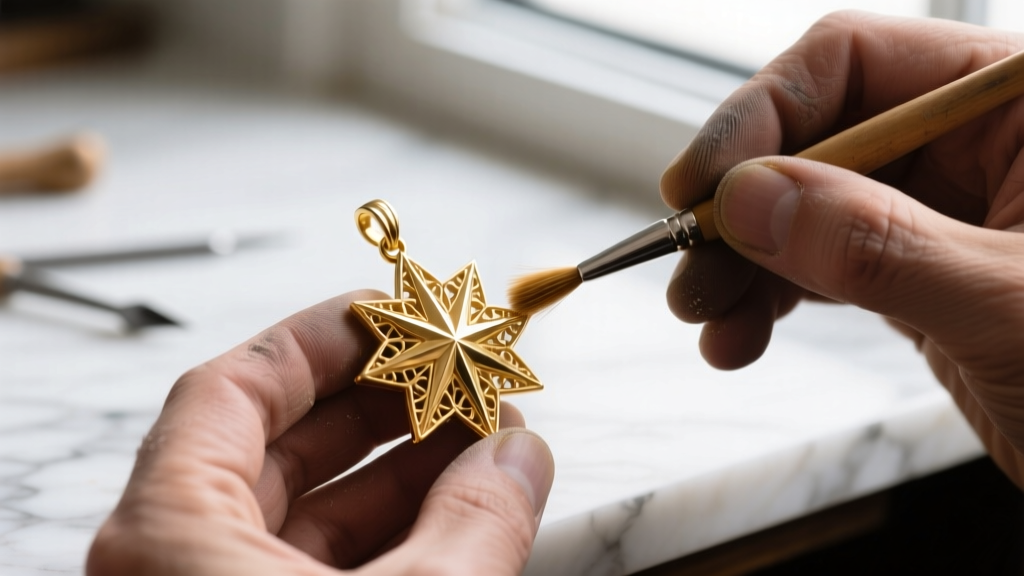
Maintenance: Cleaning Intricate Starburst Grooves
The very design that makes the gold starburst necklace beautiful—its radiating, textured rays—also makes it a magnet for skin oils, lotion residue, and environmental dust. The deep recesses between the rays trap grime, which can dull the gold's natural luster over time. Follow this meticulous cleaning protocol recommended by Jewelers of America to restore your pendant without damaging it.
The Safe Cleaning Protocol
- Prepare a Mild Solution: Mix a few drops of phosphate-free dish soap into a bowl of lukewarm water. Avoid hot water, which can expand the metal and loosen any adhesive holding a center cabochon stone in place.
- Soak Briefly: Submerge the gold starburst necklace for exactly 5 to 10 minutes. Do not exceed this time, especially if the pendant features porous stones like turquoise or opal, which can absorb water and crack.
- Agitate Gently: Using a brand-new, extra-soft baby toothbrush, gently sweep along the grooves between the starburst rays. Always brush from the center outward to push debris away from the pendant's core.
- Rinse and Dry: Rinse the necklace under a gentle stream of lukewarm water over a closed sink drain. Pat dry with a lint-free microfiber cloth, ensuring no moisture remains trapped in the bail where the chain connects.
What to Avoid
Never use ultrasonic cleaners on a vintage gold starburst necklace. The high-frequency vibrations can easily shatter bezel-set stones like lapis lazuli or malachite, and can weaken the solder joints where the delicate rays meet the central hub. Similarly, avoid commercial silver or gold dips, which often contain harsh thiourea compounds that can strip the patina from vintage pieces, leaving the gold looking unnaturally bright and flat.
Final Thoughts on the Starburst Silhouette
The gold starburst necklace remains a triumph of jewelry design, balancing organic celestial motifs with precise metallic craftsmanship. By treating it not just as a standalone accessory, but as a structural anchor in a carefully curated layering stack, you elevate the piece from a simple vintage find to a cornerstone of modern personal style. Pay attention to your chain gauges, respect the metallurgy of your specific karat weight, and maintain the intricate grooves with care, and your starburst will continue to radiate brilliance for decades to come.


