Expert Care & Cleaning Guide for the LV V Necklace
Discover expert cleaning, maintenance, and storage tips for your LV V necklace. Learn how to safely care for 18k gold, diamonds, and porous stone inlays.

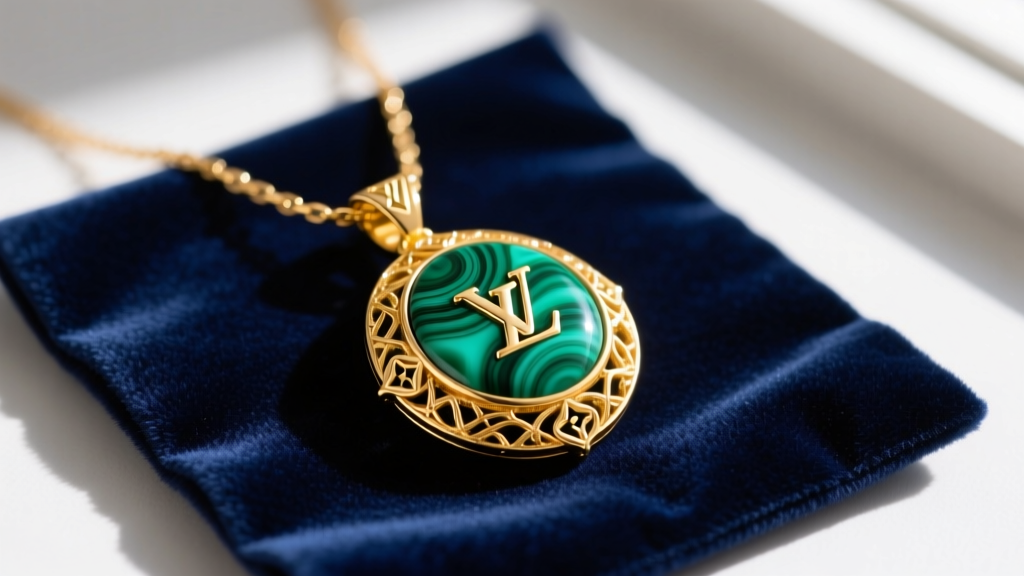
Understanding the Metallurgy and Gemology of Your LV V Necklace
The Louis Vuitton V necklace is a masterclass in modern luxury, blending the brand's iconic typography with high-end horological and jewelry materials. Whether you own the Color Blossom V, the Empreinte V, or a classic diamond-pavé iteration, proper maintenance requires a deep understanding of its specific material composition. Most LV V pendants are crafted from 18k gold (yellow, white, or rose). This means the alloy is 75% pure gold, mixed with metals like copper, silver, zinc, or palladium to achieve structural integrity and specific hues. While 18k gold is highly resistant to tarnish, the alloyed metals remain susceptible to microscopic pitting when exposed to harsh environmental chemicals.
Beyond the gold, many LV V necklaces feature intricate inlays. Materials like malachite, onyx, and mother-of-pearl (MOP) are not merely decorative; they are delicate geological and organic structures. Malachite, for instance, is a copper carbonate hydroxide mineral. It is highly porous, sensitive to heat, and reacts violently to acids. Treating an 18k gold and malachite LV V necklace with the same ultrasonic cleaning method used for solid diamond jewelry will result in irreversible structural damage to the stone. In this comprehensive 2026 guide, we break down the exact protocols for preserving the brilliance and structural integrity of your necklace.
The 'Last On, First Off' Protocol for Daily Wear
The most common cause of premature dulling in luxury pendants is cosmetic contamination. The golden rule of jewelry maintenance is 'Last On, First Off.' Your LV V necklace should be the final item you put on when dressing and the first item you remove when undressing.
- Perfumes and Body Sprays: Alcohol-based fragrances can degrade the epoxy resins used to secure delicate stone inlays and leave a cloudy film over diamond pavé, reducing light refraction by up to 40%.
- Skincare and Emollients: Lotions and oils create a microscopic barrier over gemstones. Over time, this buildup attracts dust and dead skin cells, embedding into the crevices of the 'V' motif and the chain links.
- Chlorine and Halogens: Never wear your necklace in swimming pools or hot tubs. Chlorine reacts with the copper and zinc alloys in 18k gold, causing 'stress corrosion cracking' and microscopic pitting that weakens the prongs and chain links.
According to the Gemological Institute of America (GIA), porous gems like malachite and organic gems like mother-of-pearl require strict avoidance of all household chemicals, as their Mohs hardness scales (3.5 to 4) make them exceptionally vulnerable to abrasion and chemical etching.
Material-Specific Cleaning Techniques
Because the LV V collection utilizes diverse materials, a one-size-fits-all cleaning approach is dangerous. You must tailor your cleaning method to the specific variant of your necklace.
18k Gold and Diamond Pavé (No Porous Stones)
If your LV V necklace is crafted entirely of 18k gold and features only diamond accents, it can withstand gentle aqueous cleaning.
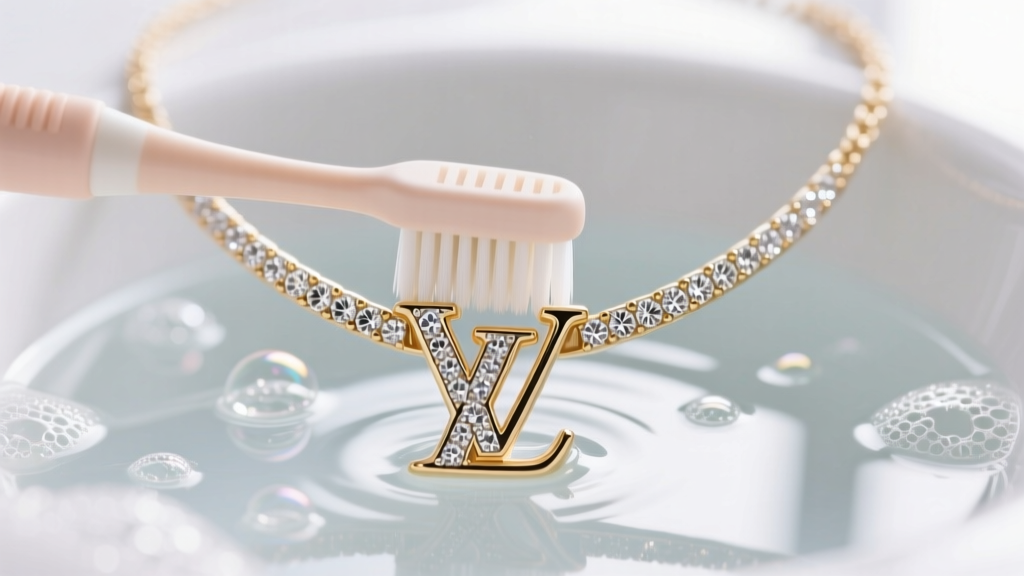
- Prepare the Solution: Mix lukewarm distilled water with three drops of mild, phosphate-free dish soap (such as original Dawn) in a glass bowl. Avoid tap water, as hard water minerals can leave micro-scratches.
- Soak: Submerge the necklace for exactly 5 to 7 minutes. This loosens sebum and cosmetic buildup without compromising the metal.
- Agitate: Use a brand-new, ultra-soft baby toothbrush. Gently brush the underside of the 'V' pendant and the diamond pavé settings. Do not use hard bristles, which can scratch the gold alloy.
- Rinse and Dry: Rinse under a gentle stream of distilled water. Pat dry with a lint-free microfiber cloth, ensuring no moisture is trapped in the lobster clasp.
Porous and Organic Stone Inlays (Malachite, Onyx, Mother-of-Pearl)
If your LV V necklace features stone inlays, never submerge it in water and never use an ultrasonic cleaner. Ultrasonic waves create microscopic cavitation bubbles that can shatter the internal crystalline structure of malachite or cause mother-of-pearl to delaminate from its gold bezel.
- Dry Dusting: Use a clean, dry, untreated microfiber cloth to gently wipe the surface of the stone. This removes daily oils and dust.
- Targeted Gold Cleaning: If the 18k gold border needs cleaning, dip a cotton swab (Q-tip) into your mild soapy solution, squeeze out 90% of the moisture, and carefully trace the gold edges. Avoid touching the stone.
- Immediate Drying: Immediately buff the area with a dry cloth to prevent any stray moisture from seeping into the stone's pores or the adhesive boundary.
Cleaning Do's and Don'ts Matrix
| Material Variant | Mild Soap & Water | Ultrasonic Cleaner | Commercial Silver/Gold Dip | Steam Cleaner |
|---|---|---|---|---|
| 18k Gold & Diamonds Only | ✅ Safe | ✅ Safe | ❌ Avoid | ✅ Safe |
| 18k Gold & Malachite | ❌ Never | ❌ Never | ❌ Never | ❌ Never |
| 18k Gold & Onyx | ⚠️ Damp Cloth Only | ❌ Never | ❌ Never | ❌ Never |
| 18k Gold & Mother-of-Pearl | ❌ Never | ❌ Never | ❌ Never | ❌ Never |
Chain Kinking and Lobster Clasp Maintenance
The chains accompanying LV V pendants are typically fine cable or box chains, engineered for delicate drape but prone to kinking if crushed. A kinked chain weakens the structural integrity of the links, leading to eventual snapping. If your chain kinks, lay it flat on a glass surface, apply a single drop of baby oil to the knot, and use two fine sewing needles to gently tease the links apart. Clean the oil off afterward with a microfiber cloth.
The lobster clasp contains a microscopic internal spring. Over time, lint, hand cream, and dust accumulate in the hinge mechanism, causing the clasp to stick or fail to close securely. To maintain the clasp, use a wooden toothpick or a dry, soft-bristled interdental brush to gently sweep the hinge crevice. Never apply liquid lubricants like WD-40, as these will attract more grit and degrade the gold finish.
Archival Storage Solutions
Proper storage is just as critical as active cleaning. When not being worn, your LV V necklace should be protected from environmental humidity, direct UV light, and physical abrasion.
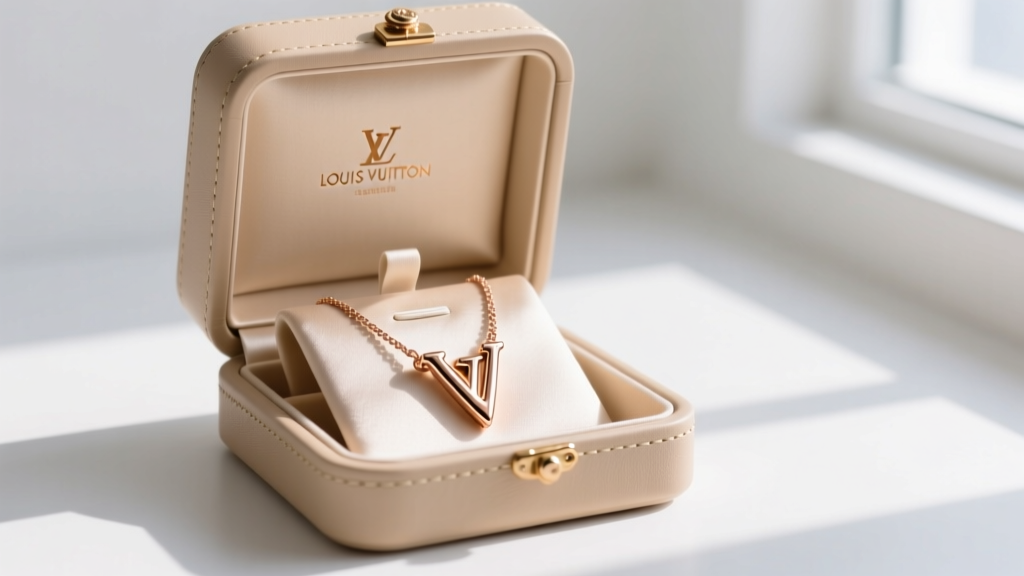
- The Original LV Box: Louis Vuitton jewelry boxes are lined with specialized anti-tarnish felt. Always store the necklace in its original presentation box or a soft flannel pouch.
- Preventing Tangles: To prevent the delicate chain from tangling with itself or other jewelry, thread one end of the chain through a plastic drinking straw before clasping it. Alternatively, hang the necklace on a dedicated, velvet-lined jewelry stand.
- Climate Control: Organic stones like mother-of-pearl require a small amount of ambient humidity to prevent cracking. Avoid storing your necklace in airtight plastic bags or near heating vents, which will desiccate the organic material.
Professional Boutique Servicing in 2026
Even with meticulous home care, your LV V necklace will accumulate micro-scratches on the gold surfaces from daily friction. As of 2026, Louis Vuitton offers professional polishing and servicing at their global boutiques. However, polishing is an abrasive process that removes a microscopic layer of gold to reveal the pristine metal beneath.
To preserve the crisp, architectural edges of the 'V' motif and the integrity of the stone bezels, limit professional polishing to once every three to four years. If the clasp mechanism becomes loose or a diamond pavé stone falls out, do not attempt DIY repairs with jewelry glue. Take the piece to a certified LV jewelry specialist who can laser-weld the gold and source perfectly matched replacement stones, ensuring your necklace retains its structural and horological value for decades to come.
For more foundational knowledge on preserving luxury gemstones, refer to the GIA Gem Care Guidelines, which provide extensive laboratory-backed data on the physical properties of precious and semi-precious inlays used in high jewelry.


