How to Clean a Gold 24 Carat Necklace Without Scratching It
Learn how to safely clean and maintain your gold 24 carat necklace. Expert tips on preventing scratches, proper washing, and storing pure 24k gold.

The Metallurgical Reality: Why 24K Gold Demands Unique Care
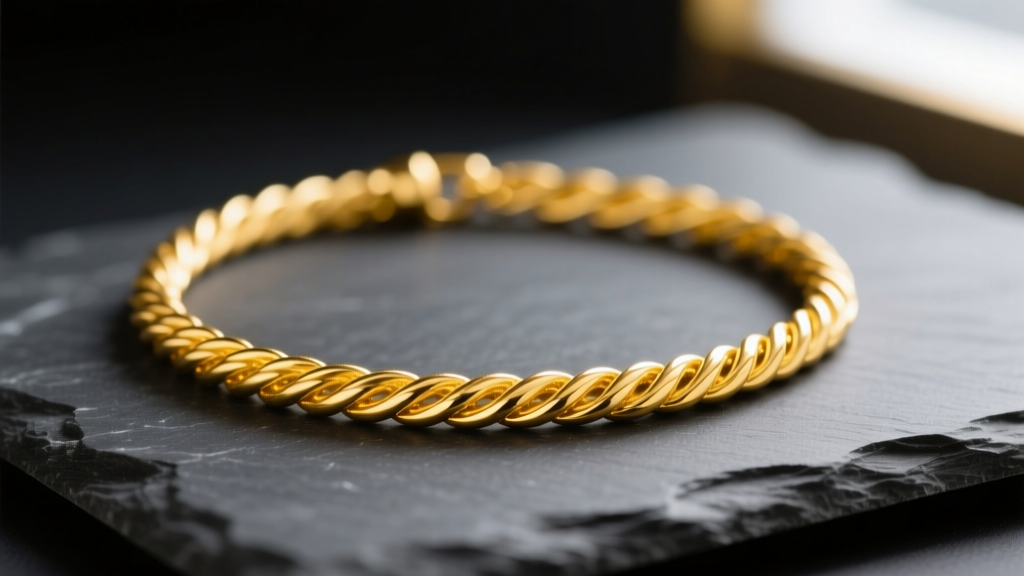
When investing in fine jewelry, a gold 24 carat necklace represents the pinnacle of purity, luxury, and hypoallergenic wear. Composed of 99.9% pure gold, these pieces possess a deep, buttery yellow luster that lower-karat alloys simply cannot replicate. However, this unparalleled purity comes with a significant metallurgical trade-off: extreme softness. To properly care for pure gold, we must first understand its physical limitations.
On the Vickers Hardness (HV) scale, 24K gold measures at a mere 25 to 30 HV. By comparison, 18K gold sits around 125 HV, and 14K gold reaches approximately 140 HV. This means your pure gold necklace is roughly as soft as a human fingernail. It is highly malleable and ductile, making it exceptionally prone to micro-scratches, stretching, and deformation from everyday friction. According to the Gemological Institute of America (GIA), the lack of alloying metals like copper, silver, or zinc means the gold lacks the structural lattice reinforcement necessary to resist surface abrasion. Therefore, standard jewelry cleaning methods that work perfectly for 14K or 18K gold can easily ruin the finish of a 24K piece.
Daily Wear and Prevention Protocols
The most effective way to maintain a pristine gold 24 carat necklace is to minimize the need for aggressive cleaning in the first place. Prevention is your primary maintenance tool.
Navigating Chemical Exposures
While pure gold is highly resistant to tarnish and oxidation, it is not entirely immune to chemical interactions. Chlorine is the ultimate enemy of gold jewelry. Even though pure gold won't suffer from the stress corrosion cracking that plagues alloyed gold, prolonged exposure to chlorinated pool water or harsh household bleach can cause microscopic surface pitting and degrade any solder points if the clasp is made of a lower-karat alloy. Always remove your necklace before swimming or cleaning.

Managing Friction and Cosmetics
Because 24K gold scratches so easily, be mindful of your clothing. Rough textiles like wool, heavy denim, or garments with metallic threads can act like fine sandpaper against the soft metal over time. Furthermore, apply all perfumes, lotions, and hairsprays before putting on your necklace. The alcohols and aerosolized chemicals in cosmetics can create a dull, cloudy film on the gold's surface, trapping dead skin cells and dust that eventually lead to abrasive wear.
Expert Insight: If you wear a 24K gold chain daily, expect it to develop a 'patina' of micro-scratches over time. This is a natural characteristic of pure gold, not a defect. Embracing this soft luster is part of owning high-purity jewelry.
The Step-by-Step Cleaning Method for Pure Gold
When your necklace loses its luster due to accumulated sebum, dust, and cosmetic residue, it is time for a gentle wash. Never use commercial jewelry dips or ultrasonic cleaners. Follow this exact protocol to safely restore your necklace's shine.
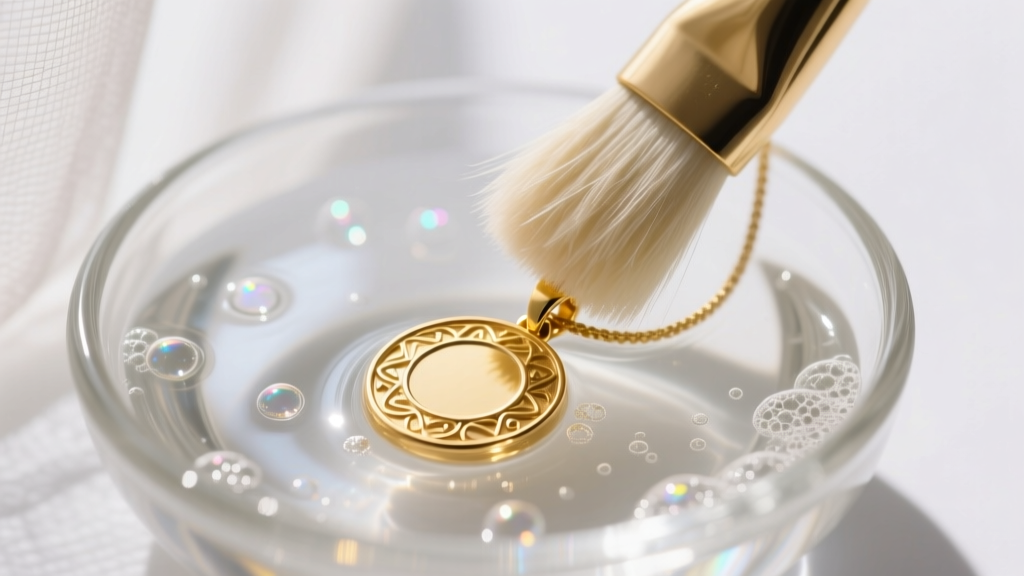
- Prepare the Solution: Fill a small glass bowl with distilled water. Do not use tap water, as the dissolved minerals and trace chloramines can leave microscopic water spots. Ensure the water is lukewarm (around 85°F or 29°C). Add exactly two to three drops of a pH-neutral, lotion-free dish soap, such as Dawn Free & Clear or Seventh Generation.
- The Brief Soak: Submerge your gold 24 carat necklace in the solution for no more than 3 to 5 minutes. This is just enough time to loosen surface oils without allowing the soap to dry on the metal.
- Agitation, Not Scrubbing: Gently swish the necklace through the water. If there is stubborn debris trapped in the links (common in rope or box chains), use a brand-new, ultra-soft baby hairbrush with natural bristles. Do not use standard toothbrushes, as even 'soft' nylon bristles are stiff enough to leave micro-marring on 25 HV gold.
- The Rinse: Rinse the necklace under a gentle stream of lukewarm distilled water to remove all soap residue.
- Drying: Lay the necklace flat on a clean, lint-free microfiber cloth. Gently pat it dry. Never rub or pull the chain through the cloth, as the friction can stretch the soft links or induce scratching.
What NEVER to Do: A 24K Gold Hazard Table
Many well-intentioned jewelry owners accidentally destroy the finish of their pure gold pieces by using methods meant for harder alloys. Refer to this hazard matrix to avoid catastrophic damage to your 24K necklace.
| Cleaning Method | Hazard Level for 24K Gold | Specific Failure Mode |
|---|---|---|
| Ultrasonic Cleaners | Extreme | High-frequency vibrations can easily snap pure gold links or stretch the chain beyond repair. |
| Steam Cleaners | High | Thermal shock and high pressure can warp delicate pendants and force moisture into microscopic crevices. |
| Baking Soda Pastes | Severe | Baking soda is a mild abrasive (Mohs 2.5) that will aggressively scour and dull the pure gold surface. |
| Toothpaste | Severe | Contains silica and calcium carbonate abrasives that will leave deep, visible scratch patterns. |
| Commercial Silver Dips | Moderate | While pure gold won't tarnish, the harsh thiourea chemicals can cause surface etching and dullness. |
| Paper Towels | Moderate | Wood pulp fibers in paper towels act as an abrasive, creating a web of micro-scratches on the soft metal. |
Storage and Polishing Realities
How you store your gold 24 carat necklace is just as critical as how you clean it. Because pure gold is so soft, it must never be stored in a communal jewelry box where it can rub against diamonds, sapphires, or even harder metals like platinum and stainless steel. A diamond ranks a 10 on the Mohs scale and will slice through 24K gold effortlessly.
Store your necklace individually in a soft, untreated flannel pouch or a dedicated compartment lined with anti-tarnish cloth. While pure gold does not tarnish, these specialized cloths are excellent at trapping airborne dust and silica particles that would otherwise settle on the chain and act as an abrasive the next time you wear it.
The Truth About Polishing
You should avoid polishing a 24K gold necklace at home. Traditional polishing cloths often contain embedded jeweler's rouge or mild cutting compounds designed to remove a microscopic layer of metal to reveal a fresh, shiny surface. Because 24K gold wears away so quickly, frequent polishing will drastically reduce the weight and structural integrity of your chain over time. If the necklace becomes excessively dull, rely on the gentle soap-and-water wash described above rather than abrasive polishing.
Professional Maintenance and Refurbishing
Even with meticulous care, a frequently worn 24K necklace may eventually stretch, kink, or accumulate deep scratches. When this happens, seek out a master jeweler who has specific experience working with high-purity gold. According to the World Gold Council, maintaining the integrity of high-karat gold requires specialized bench techniques.
Instead of traditional buffing, a skilled jeweler will use a process called burnishing. Burnishing involves using a highly polished, hardened steel or agate tool to compress the surface molecules of the gold, effectively ironing out micro-scratches and restoring the high-polish shine without removing any metal mass. If your chain has stretched or a clasp has weakened, the jeweler may also perform annealing—carefully heating the gold to relieve internal stresses and restore its natural malleability before reshaping it. Always verify that your jeweler understands the unique properties of 24K gold before handing over your investment.


