Expert Care and Cleaning for Fine Chains and Necklaces
Learn expert techniques to clean, polish, and store your favorite chains and necklaces. Discover metal-specific tips to prevent tarnish and breakage.

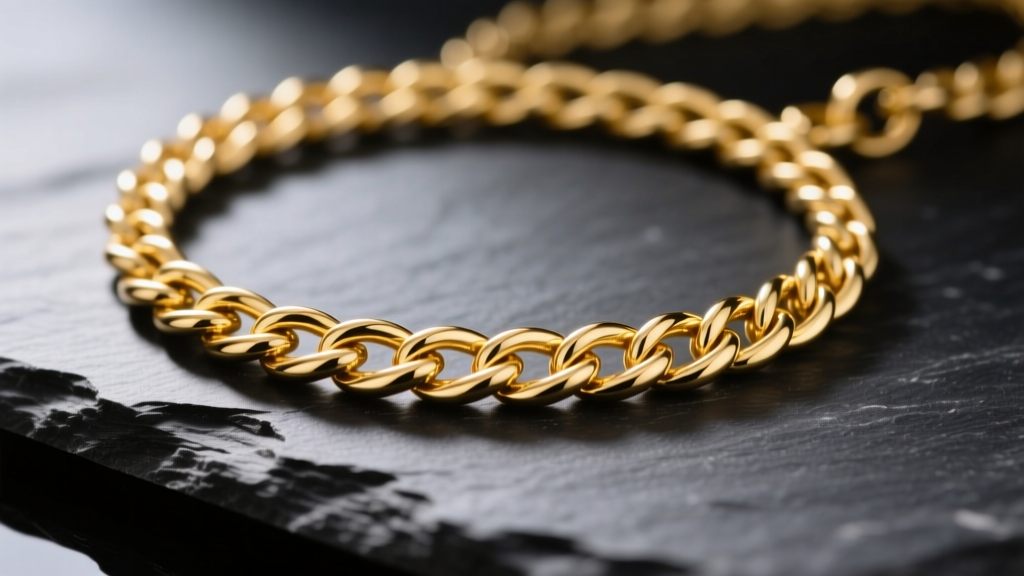
The Hidden Costs of Neglecting Your Jewelry
Chains and necklaces are among the most frequently worn pieces in any collection, sitting directly against the skin and absorbing sebum, lotions, perfumes, and environmental pollutants. Over time, this accumulation does more than just dull the metal's luster; it actively accelerates structural degradation. A neglected chain is significantly more prone to link stretching, clasp failure, and irreversible surface scratching. Understanding the specific metallurgical properties of your jewelry is the first step toward preserving both its aesthetic brilliance and its mechanical integrity. Whether you are wearing a heavy sterling silver Cuban link or a microscopic 0.8mm 18k gold cable chain, the maintenance protocols must be tailored to the exact alloy composition and structural design of the piece.
Understanding Metal Vulnerabilities and Alloy Compositions
Fine jewelry is rarely made from pure, 24-karat metal because pure gold and silver are far too malleable for daily wear. The alloys mixed into these metals dictate how they react to moisture, friction, and chemicals. For instance, the copper mixed into sterling silver (which makes up 7.5% of the alloy) is the exact element that reacts with atmospheric hydrogen sulfide to create silver sulfide—the black tarnish that plagues silver owners. Similarly, 18k gold contains 25% alloy metals like zinc and copper, making it softer and more susceptible to micro-abrasions than 14k gold, which contains a higher percentage of strengthening alloys.
| Metal Type | Tarnish Risk | Primary Failure Mode | Recommended Cleaning Agent |
|---|---|---|---|
| 14k Solid Gold | Very Low | Clasp spring fatigue | Mild dish soap & warm water |
| 18k Solid Gold | Low | Link stretching (if under 1.2mm) | Mild dish soap & microfiber |
| Sterling Silver (925) | High | Sulfide oxidation (tarnish) | Electrochemical bath or silver polish |
| Platinum (950) | None | Surface patina development | Jeweler's steam or mild soap |
| Gold Vermeil | Moderate | Gold layer depletion (under 2.5 microns) | Damp microfiber cloth only |
Step-by-Step Cleaning Protocols by Material
Using the wrong cleaning method can permanently ruin a piece. Ultrasonic cleaners, for example, use high-frequency sound waves to create microscopic cavitation bubbles. While excellent for solid platinum or diamond-set 14k gold, the violent implosion of these bubbles can literally blast the gold layer off vermeil or gold-plated chains and necklaces, leaving you with a patchy, ruined base metal.
Solid Gold and Platinum Chains
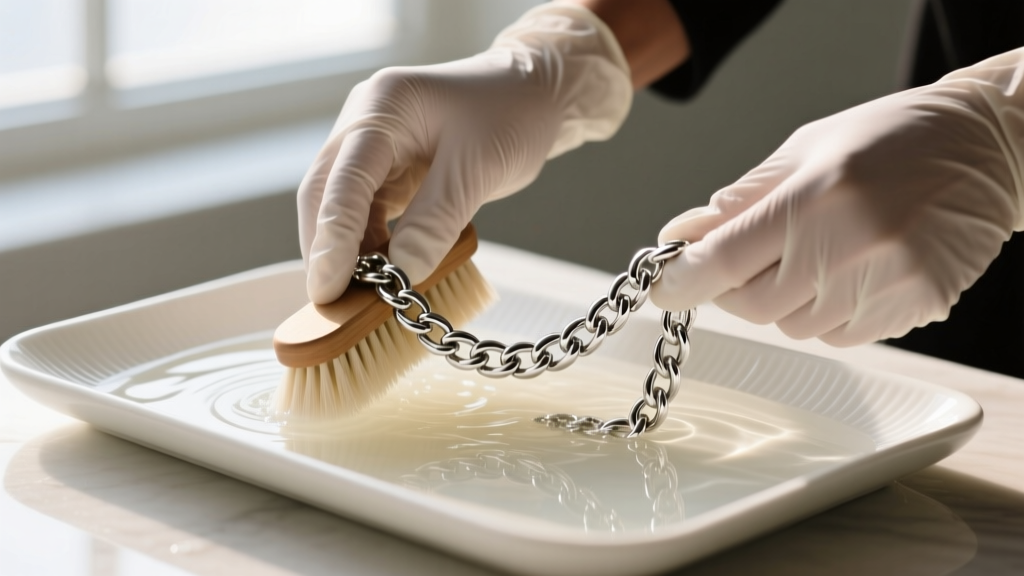
For solid gold and platinum, the safest and most effective method is a simple surfactant bath. Mix a few drops of phosphate-free dish soap (like Dawn) into a bowl of warm—not hot—water. Submerge the chain for 15 to 20 minutes to loosen body oils and cosmetic buildup. Use a soft-bristled baby toothbrush to gently agitate the links, paying special attention to the areas immediately surrounding the clasp where grime accumulates. Rinse thoroughly under lukewarm running water and pat dry with a lint-free microfiber cloth. According to the Gemological Institute of America (GIA), avoiding harsh chemicals like chlorine is critical, as chlorine can permanently weaken the alloy structures in gold, leading to spontaneous cracking.
Sterling Silver and Oxidation Management
Silver requires a more aggressive approach when heavy tarnish sets in. For light tarnish, a dedicated silver polishing cloth impregnated with micro-abrasives is sufficient. However, for heavy, blackened silver sulfide buildup, utilize an electrochemical reduction bath. Line a glass bowl with aluminum foil (shiny side up), place the silver chain inside, and add a tablespoon of baking soda and a pinch of salt. Pour boiling water over the mixture. The chemical reaction forces the sulfur to leave the silver and bind to the aluminum. Warning: Never use this method on intentionally oxidized silver (where the crevices are blackened for contrast) or on chains featuring porous gemstones like turquoise, opals, or pearls, as the boiling water and alkaline environment will destroy them. For more detailed silver care, refer to the GIA Silver Care Guide.
Vermeil and Gold-Plated Pieces: The Danger Zone
Gold vermeil consists of a sterling silver base plated with at least 2.5 microns of gold. Standard gold-plated chains and necklaces often have a layer as thin as 0.5 microns. Never submerge these pieces in chemical baths, and never use polishing cloths, which are mildly abrasive and will strip the gold layer. Simply wipe them down with a slightly damp microfiber cloth after wear to remove acidic sweat, and dry them immediately.
Mechanical Maintenance: Clasps, Jump Rings, and Links
The structural integrity of chains and necklaces relies entirely on tiny mechanical components. The jump ring—the small circular link that connects the chain to the clasp—is the single most common point of failure. Over time, the tension on the jump ring can cause the soldered seam to separate. Invest in a 10x jeweler's loupe and inspect the solder seams on your jump rings every six months. If you see a hairline gap or notice the ring is slightly oval rather than perfectly round, take it to a jeweler for laser soldering before the chain snaps and the piece is lost.
Lobster clasps and spring ring clasps contain microscopic internal springs that frequently fail due to the intrusion of lotion, dead skin cells, and dust. If your clasp feels sticky or fails to snap back with a crisp, audible click, do not use a metal pin to dig out the grime, as you will bend the spring. Instead, use a wooden toothpick to gently dislodge debris, followed by a quick blast of compressed air. A drop of ultra-fine synthetic watch oil applied with a needle-tip oiler can restore the clasp's action, but use it sparingly to avoid attracting more dust.
Strategic Storage Solutions to Prevent Tangling and Scratching
How you store your chains and necklaces is just as important as how you clean them. The Mohs hardness scale dictates that harder metals will scratch softer ones. Storing a platinum chain in the same compartment as an 18k gold pendant will result in severe micro-scratching on the gold. Furthermore, tossing delicate chains into a drawer guarantees a frustrating battle with knots, which can permanently deform thin wire links.
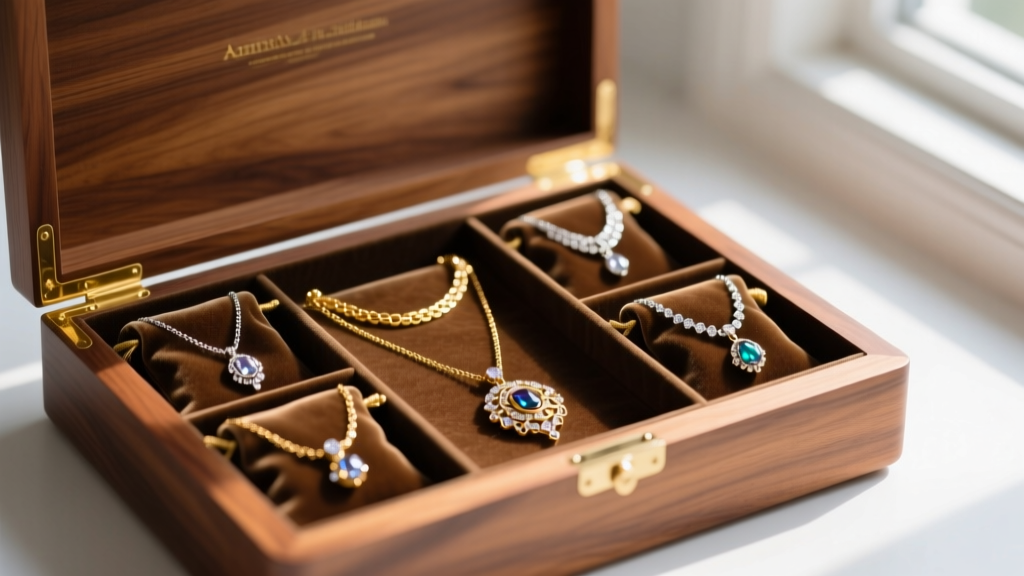
To prevent tangling, store chains and necklaces either hanging from padded hooks or laid completely flat. If using a jewelry box, ensure each piece has its own dedicated, fabric-lined compartment. For long-term storage, place silver pieces in individual polyethylene ziplock bags alongside 3M anti-tarnish strips, which absorb atmospheric sulfur compounds. Avoid storing jewelry in cardboard boxes or wrapping them in rubber bands, as both materials off-gas sulfur and will accelerate severe tarnishing. By combining meticulous cleaning habits with intelligent storage strategies, you can ensure your necklaces remain pristine and structurally sound for generations.
Expert Insight: "The lifespan of a delicate chain is rarely determined by the metal's purity, but rather by the wearer's maintenance of the clasp mechanism and the jump ring soldering. A well-maintained 0.9mm 14k gold chain will easily outlast a neglected 2.0mm 18k gold chain."


