The Channel Pearl Necklace: 2026 Style & Trend Analysis
Discover the 2026 trend analysis of the channel pearl necklace. Explore architectural designs, pearl grades, pricing tiers, and expert styling tips.

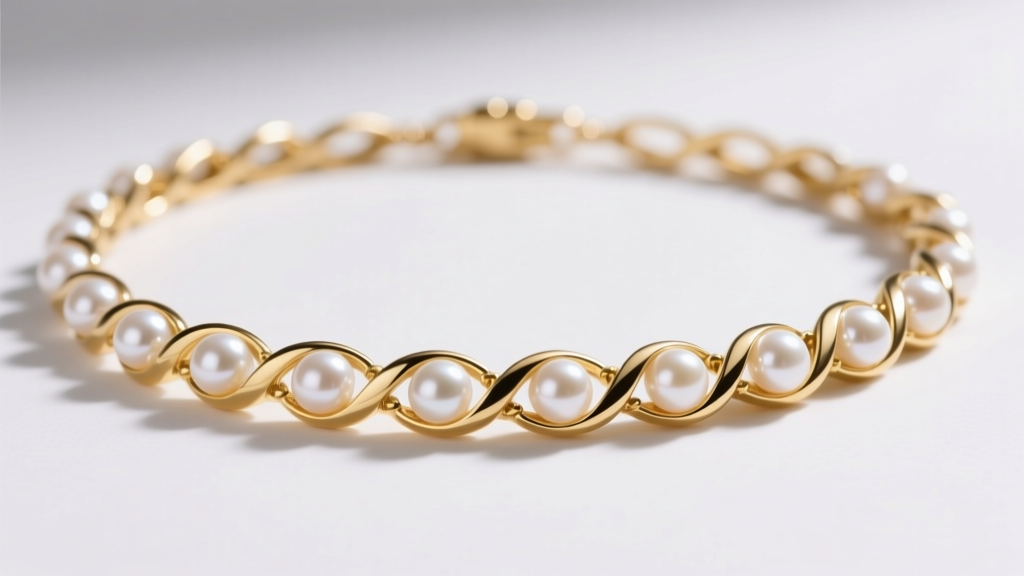
The jewelry landscape of 2026 has decisively moved past the ultra-minimalist aesthetics of the early 2020s, embracing what industry insiders are calling 'Structural Romance.' At the absolute center of this movement is the channel pearl necklace. Unlike traditional knotted silk strands or simple prong-set pendants, the channel pearl necklace merges the organic, luminous beauty of pearls with the precise, architectural geometry of milled metal tracks. This comprehensive style and trend analysis breaks down the mechanics, material science, and styling frameworks you need to understand this defining accessory of the year.
The Architecture of the Trough and Channel Setting
To truly appreciate the channel pearl necklace, one must understand the gemological and metallurgical challenges of its construction. Pearls are remarkably soft, ranking between 2.5 and 3.0 on the Mohs hardness scale. A traditional diamond channel setting relies on immense lateral pressure against the stone's girdle to hold it in place. Applying this same pressure to a pearl would result in immediate spalling, cracking, or nacre delamination.
Therefore, the modern channel pearl necklace utilizes a specialized 'U-shaped trough' or 'cradle' channel. Instead of gripping the sides, the metal track is milled to cradle the bottom 30% to 40% of the pearl. The pearls are typically half-drilled and secured into the channel using a specialized, UV-cured jewelry epoxy, or they are fully drilled and slide through a continuous, articulated metal tube that acts as a protective sleeve. This architectural approach not only protects the fragile nacre from impact but also creates a seamless, fluid ribbon of light that reflects off both the metal walls and the pearl's orient.
2026 Trend Forecast: Why the Channel Setting is Dominating
Why is the channel pearl necklace dominating high jewelry and contemporary fine jewelry showcases in 2026? The answer lies in the consumer shift toward 'heirloom modernism.' Buyers are seeking pieces that feel historically significant but visually avant-garde. The channel setting achieves this by framing the classic pearl in a distinctly industrial, modernist context.
Furthermore, the rise of mixed-metal styling has made the channel necklace a staple. Designers are increasingly utilizing two-tone channels—such as an 18k yellow gold outer track with a rhodium-plated white gold inner cradle—to amplify the contrast against the pearl's overtone. According to trend reports from the Gemological Institute of America (GIA), the demand for non-traditional pearl settings has surged, with consumers prioritizing structural innovation over classic strand configurations.
Material Science: Metal Tracks and Nacre Compatibility
The success of a channel pearl necklace relies entirely on the synergy between the metal's malleability and the pearl's nacre thickness. A rigid metal will not drape correctly around the clavicle, while a metal that is too soft will warp, causing the pearls to pop out of their troughs.
The 18k Gold Standard
For continuous channel necklaces, 18k gold remains the undisputed standard in 2026. Its higher gold content (75%) provides the exact malleability required for the metal track to articulate and drape fluidly against the skin without snapping or permanently bending. Platinum, while highly durable, is often too rigid for tight-radius channel curves unless the necklace is heavily articulated with micro-hinges, which drives up the manufacturing cost exponentially.
Nacre Thickness Requirements
Not all pearls can survive the manufacturing process of a channel setting. The friction of sliding pearls through a metal track, or the heat generated during the epoxy curing process, requires a robust nacre layer. The American Gem Society (AGS) notes that high-quality nacre is essential for longevity. For a channel pearl necklace, we recommend a minimum nacre thickness of 0.6mm for Akoya pearls, and ideally over 2.0mm for freshwater variants, to prevent the metal track from wearing through the nacre over decades of wear.
Pearl Grade and Channel Compatibility Matrix
| Pearl Type | Avg. Nacre Thickness | Channel Suitability | 2026 Market Price Range (18-inch) |
|---|---|---|---|
| Hanadama Akoya | 0.8mm - 1.2mm | Excellent (Highest Luster) | $4,500 - $9,200 |
| Standard Akoya | 0.3mm - 0.6mm | Moderate (Risk of peeling) | $1,200 - $3,000 |
| Gem-Grade Freshwater | 2.0mm+ (Solid Nacre) | Excellent (Highly Durable) | $800 - $2,400 |
| White South Sea | 2.0mm - 4.0mm | Poor (Too large for standard troughs) | $15,000+ (Custom only) |
Styling Frameworks: Necklines and Layering Techniques
The architectural nature of the channel pearl necklace demands intentional styling. Because the metal track adds visual weight and a distinct linear element, it behaves differently than a soft, knotted strand.
The Plunge and the V-Neck
A 16-to-18-inch channel pearl necklace acts as a natural frame for V-necklines and deep plunge blouses. The rigid geometry of the metal channel mirrors the angles of the neckline, creating a cohesive, structured look. For 2026, pairing an 18k yellow gold channel necklace with a deep emerald green silk blouse is a dominant color-blocking trend that highlights the warm overtone of the gold and the cool rosé of the pearls.
Asymmetrical Layering
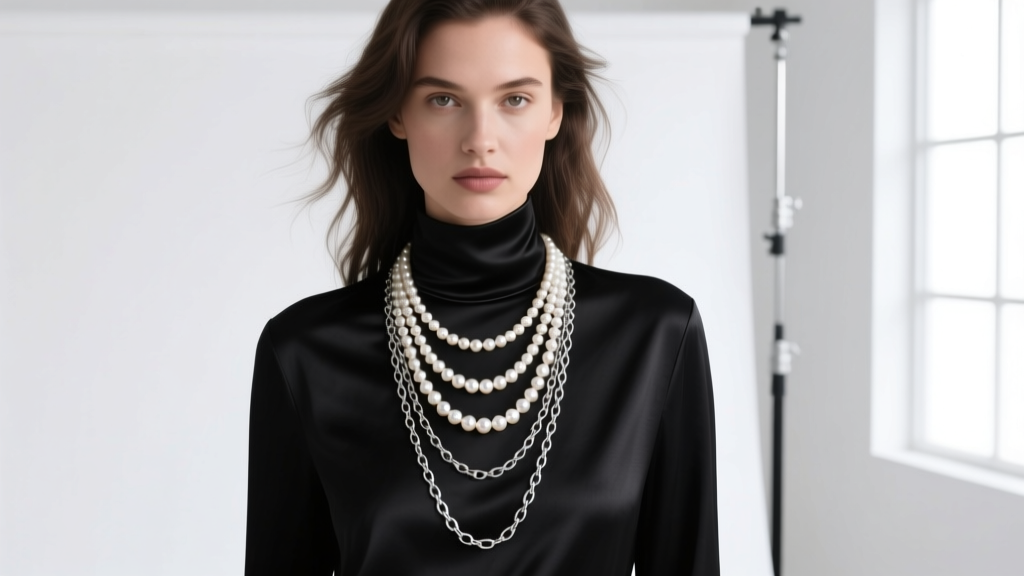
Layering a channel pearl necklace requires contrasting textures. Do not layer it with another pearl strand; the visual redundancy will muddy the aesthetic. Instead, layer a 16-inch channel pearl choker with a 20-inch matte-finished box chain or a darkened oxidized silver lariat. The juxtaposition of the high-polish pearl channel against a matte or darkened metal chain creates a striking, editorial depth that is highly favored in contemporary fashion styling.

Care, Maintenance, and Failure Modes
Owning a channel pearl necklace requires a strict adherence to specialized care protocols. The intersection of organic gemstones and precision metalwork introduces specific failure modes that owners must actively prevent.
- Ultrasonic Degradation: Never place a channel pearl necklace in an ultrasonic cleaner. The high-frequency vibrations will shatter the bond of the jewelry epoxy securing the half-drilled pearls, and the micro-abrasions will cause the pearls to rattle and scratch against the metal channel walls.
- Chemical Tarnish Transfer: If the metal channel is not properly rhodium-plated (in the case of white gold) or if it accumulates sulfur-based tarnish, the dark oxidation can physically transfer into the microscopic pores of the pearl's nacre, causing permanent gray staining at the contact points.
- Thermal Shock: The metal track expands and contracts with temperature changes at a vastly different rate than the aragonite crystals of the pearl. Avoid wearing the necklace in saunas or exposing it to extreme cold, as this thermal mismatch can cause the pearls to crack within their cradles.
The Verdict for 2026
The channel pearl necklace is not a fleeting seasonal fad; it is a fundamental evolution in how we bridge organic gemstones with modern metallurgy. By prioritizing pieces with robust nacre, precision-milled 18k gold troughs, and intentional styling, collectors and fashion enthusiasts alike can invest in a piece that perfectly encapsulates the structural romance of 2026.


