How to Style, Layer, and Clean Your Gold D Necklace
Learn how to style, layer, and maintain your gold D necklace. Expert tips on chain lengths, karat choices, and neckline pairings.

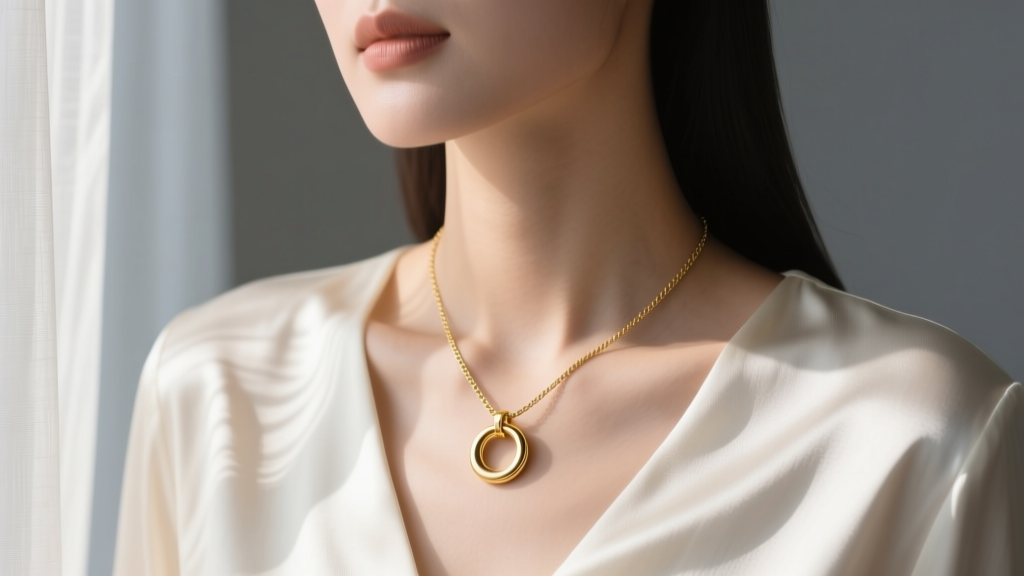
The Anatomy and Appeal of the Gold D Necklace
In the landscape of personalized jewelry, the gold D necklace remains a staple for those seeking a blend of sentimentality and architectural elegance. Whether the 'D' represents a name like Diana or David, a meaningful word like 'Dream,' or you are referencing the structural D-link chain trend dominating 2026 aesthetics, mastering this piece requires more than just slipping it over your head. As a foundational layering piece, a gold initial or D-link necklace demands an understanding of metallurgy, proportion, and neckline geometry to truly elevate your look.
This comprehensive guide will walk you through the exact steps to select, layer, and maintain your gold D necklace, ensuring it remains a versatile cornerstone of your jewelry wardrobe for years to come.
Step 1: Selecting the Right Gold Karat and Chain Architecture
Before styling, you must understand the material you are working with. The durability and color of your gold D necklace depend entirely on its karat weight and the chain's structural integrity. Pendants, particularly solid gold initials, exert concentrated stress on the chain's bail and links.
| Gold Karat | Purity | Durability | Best Application | Est. Price Range |
|---|---|---|---|---|
| 10k (417) | 41.7% | Very High | Active lifestyles, budget-friendly daily wear | $150 - $350 |
| 14k (585) | 58.5% | High | The ideal balance for layering and pendant support | $350 - $850 |
| 18k (750) | 75.0% | Medium | Luxury pieces, rich yellow hue, occasional wear | $850 - $2,200+ |
According to the Gemological Institute of America (GIA), 14k gold is generally the superior choice for pendant necklaces because the alloy metals (like copper and zinc) provide the tensile strength needed to prevent the chain from snapping under the weight of a solid gold 'D' charm. If you opt for a D-link chain (where the links themselves are shaped like the letter D), ensure the links are soldered shut to prevent them from pulling apart when caught on clothing.
Chain Thickness and Clasp Mechanics
For a standard initial D pendant weighing between 2 to 5 grams, a chain thickness of 1.0mm to 1.5mm is optimal. A 1.2mm box chain or a 1.5mm rope chain provides excellent structural support. Avoid spring ring clasps for heavier pendants; they are prone to mechanical failure. Always upgrade to a 5mm or 7mm lobster clasp, which features a stronger internal spring and a more secure locking mechanism.
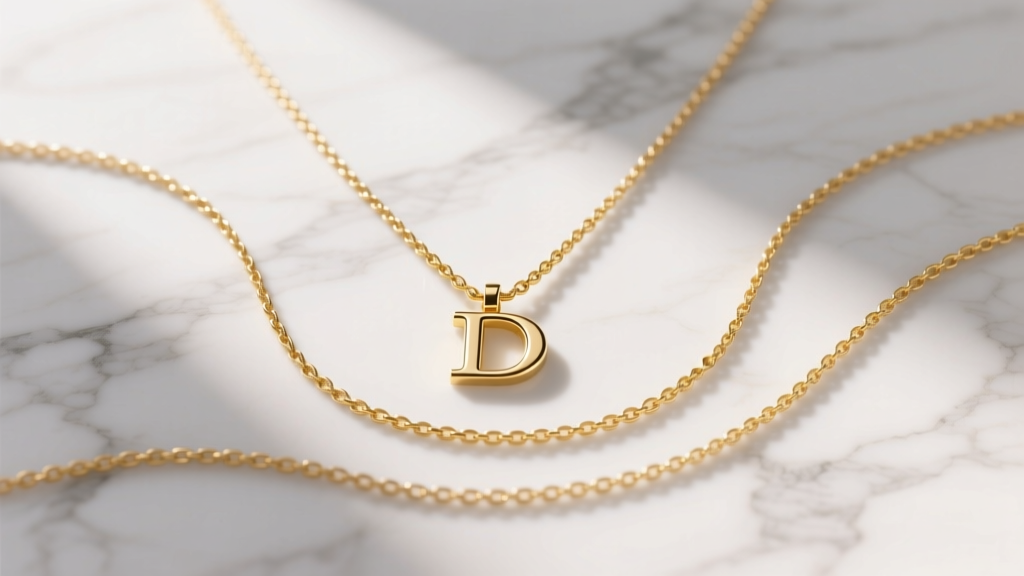
Step 2: Mastering the 3-Tier Layering Formula
The gold D necklace shines brightest when integrated into a curated stack. In 2026, the 'messy stack' has been replaced by precision layering, which relies on strict mathematical spacing to prevent tangling and visual clutter.
The 2-Inch Drop Rule
To layer your D necklace without the chains intertwining, you must maintain a minimum 2-inch gap between each chain. Here is the exact step-by-step formula for a flawless 3-piece stack:
- Layer 1 (The Choker/Collar): 14-inch or 15-inch chain. Use a minimalist 1.0mm cable chain or a delicate herringbone. This sits snugly at the base of the neck.
- Layer 2 (The Focal Point): 16-inch or 17-inch chain. This is where your gold D necklace lives. Use a slightly thicker 1.2mm chain to support the pendant, allowing the 'D' to rest perfectly on the collarbone.
- Layer 3 (The Anchor): 18-inch or 20-inch chain. Introduce a different texture here, such as a 2.0mm Figaro or a paperclip chain, ending with a small geometric charm or a simple gold bead to draw the eye downward.
Pro-Tip: If you struggle with chains twisting together throughout the day, invest in a multi-strand necklace detangler clasp. This small gold cylinder attaches to the ends of your chains at the nape of your neck, locking them into parallel alignment and completely eliminating tangles.
Step 3: Pairing Your Gold D Necklace with Necklines
The visual weight of a gold D pendant must be balanced against the geometry of your clothing. The wrong pairing can cause the pendant to get lost in fabric or look awkwardly suspended.
- The V-Neck: The natural geometry of a V-neck mirrors the angles of the letter D. Wear your 16-inch D necklace so the pendant sits exactly one inch above the apex of the V. This creates a harmonious, elongating effect on the torso.
- The Crew Neck: High, tight necklines require shorter chains. Opt for a 14-inch or 15-inch gold D necklace worn as a choker. If the chain is too long, the pendant will rest awkwardly on the ribbed fabric of the collar, causing it to flip upside down.
- The Scoop Neck: This expansive neckline allows for heavy layering. You can comfortably wear your 16-inch D necklace alongside an 18-inch lariat or a 20-inch pendant necklace, filling the negative space without overwhelming your frame.
- The Off-The-Shoulder: With the collarbones fully exposed, a single, delicate 15-inch gold D necklace with a pavé diamond accent provides the perfect amount of sparkle without competing with the dramatic shoulder line.
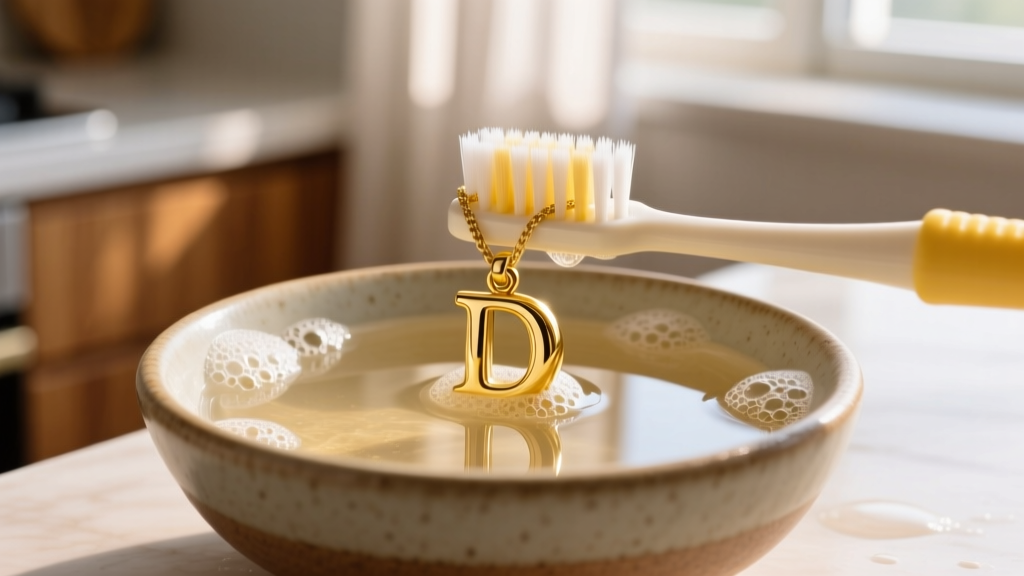
Step 4: Professional Cleaning and Maintenance Routine
Gold is a non-reactive metal, meaning it will not tarnish or rust. However, the alloy metals in 14k and 10k gold can accumulate sebum, lotion residue, and environmental dust, which dulls the reflective surface of your D pendant. The Jewelers of America recommends a gentle, manual cleaning approach for everyday pieces.
The 5-Minute At-Home Cleaning Method
- Prepare the Solution: Fill a small ceramic bowl with lukewarm water and add three drops of mild, phosphate-free dish soap (avoid harsh detergents or moisturizing soaps that leave a film).
- Soak: Submerge your gold D necklace for exactly 5 minutes. This loosens the microscopic debris trapped in the chain links and the bail of the pendant.
- Agitate Gently: Using a brand-new, ultra-soft baby toothbrush, gently brush the back of the 'D' pendant and the clasp mechanism. Do not scrub aggressively, especially if your D necklace features pavé diamonds, as you risk loosening the prongs.
- Rinse and Dry: Rinse thoroughly under lukewarm running water (ensure the drain is plugged!). Pat dry with a lint-free microfiber cloth. Never use paper towels, as the wood pulp fibers can cause micro-scratches on high-polish gold.
Crucial Warning: Never place a gold D necklace with gemstone accents, pearls, or enamel detailing into an ultrasonic cleaner. The high-frequency vibrations can shatter fragile stones and strip enamel finishes. Reserve ultrasonic cleaning for plain, solid gold D-link chains without any secondary materials.
Troubleshooting Common Gold D Necklace Issues
Even with perfect styling, mechanical quirks can arise. Here is how to solve the two most common frustrations associated with initial pendants.
Issue 1: The Pendant Keeps Flipping Upside Down
This is a physics problem related to the center of gravity. If the bail (the loop connecting the pendant to the chain) is too light or too wide, the heavier bottom curve of the 'D' will pull the pendant backward. The Fix: Have a local jeweler solder a tiny, discreet gold counterweight bead to the back of the bail, or switch to a chain with a slightly heavier gauge that provides enough friction to keep the bail seated forward.
Issue 2: The Clasp Keeps Sliding to the Front
This occurs when the chain is too lightweight and the clasp is disproportionately heavy, causing it to migrate to the lowest point (the front of your neck). The Fix: Purchase a silicone necklace stopper (a tiny, invisible disc that slides onto the chain behind the clasp) or upgrade to a chain that features a silicone-lined lobster clasp, which grips the skin and hair slightly to anchor it at the nape of the neck.
By understanding the structural nuances of your gold D necklace and applying these precise styling and maintenance techniques, you transform a simple initial charm into a sophisticated, enduring element of your personal style.


