Restoring an Owl Vintage Necklace: Repair & Care Guide
Learn how to clean, repair, and authenticate your owl vintage necklace. Expert troubleshooting for tarnish, broken bails, and missing cabochon eyes.

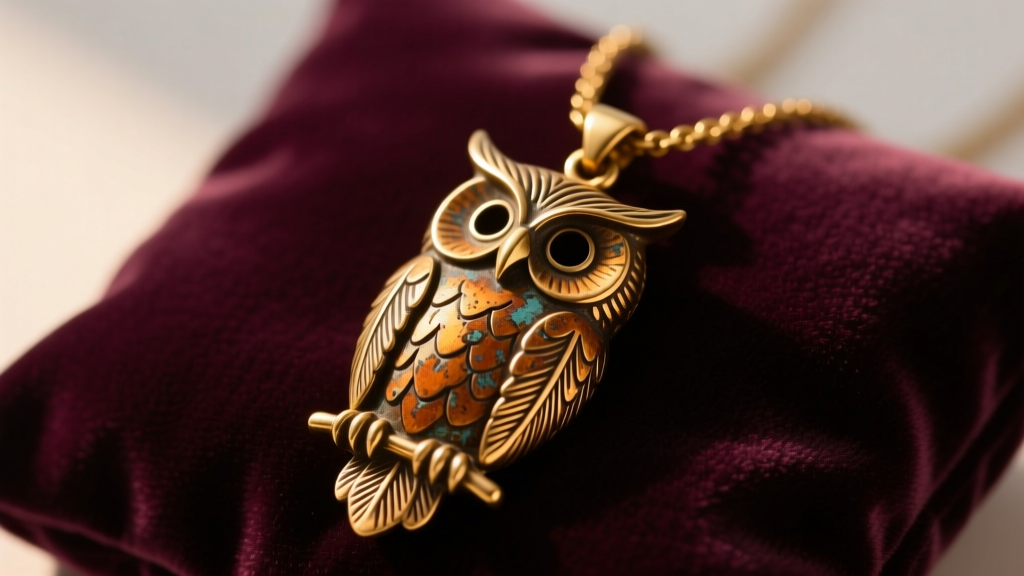
The owl vintage necklace remains a highly coveted staple of 1970s bohemian jewelry and Art Nouveau revival collections. Symbolizing wisdom, mystery, and protection, these pendants often feature intricate feather tooling, piercing amber eyes, and heavy metal casts. However, inheriting or thrifting an owl vintage necklace in the modern market often means dealing with decades of neglect. Common issues include seized jump rings, cloudy glass cabochons, aggressive tarnish, and snapped chains.
As of 2026, the market for authenticated mid-century and 1970s bohemian jewelry continues to surge, making proper restoration essential for both wearability and value retention. This comprehensive troubleshooting guide provides professional frameworks for diagnosing materials, executing structural repairs, and preserving the historical integrity of your vintage owl pendant.
Diagnosing Base Metals and Tarnish Profiles
The first step in troubleshooting any vintage piece is accurately identifying the base metal. Most 1970s owl pendants were cast in Zamac (a zinc-aluminum-magnesium-copper alloy) or solid brass, while higher-end or earlier pieces utilized sterling silver. Misidentifying the metal is the most common cause of irreversible damage during the cleaning process.
| Metal Type | Visual & Weight Cues | Safe Cleaning Protocol | Primary Risk Factor |
|---|---|---|---|
| Zamac (Pot Metal) | Greyish undertone, heavy cast, often plated | Mild soap, water, soft microfiber wipe | Severe pitting if exposed to acidic dips |
| Solid Brass | Yellow-gold hue, warm tone, heavy | Maas or Brasso metal polish, soft cloth | Over-polishing removes historical patina |
| Sterling (925) | Black sulfide tarnish, lighter weight | Polishing cloth, mild silver dip (sparingly) | Stripping oxidation from feather crevices |
The Patina Dilemma: To Dip or Not to Dip?
When dealing with a sterling silver owl vintage necklace, collectors often reach for liquid silver dips. These thiourea-based chemical baths instantly remove black silver sulfide. However, they also strip the dark oxidation from the deep crevices of the owl's feathers, leaving the piece with a flat, unnatural, and blindingly white appearance. For vintage pieces, mechanical polishing with a treated jeweler's cloth is vastly superior, as it removes surface tarnish while preserving the dark contrast in the tooling that gives the owl its three-dimensional depth.
Troubleshooting Structural Failures and Bail Repairs
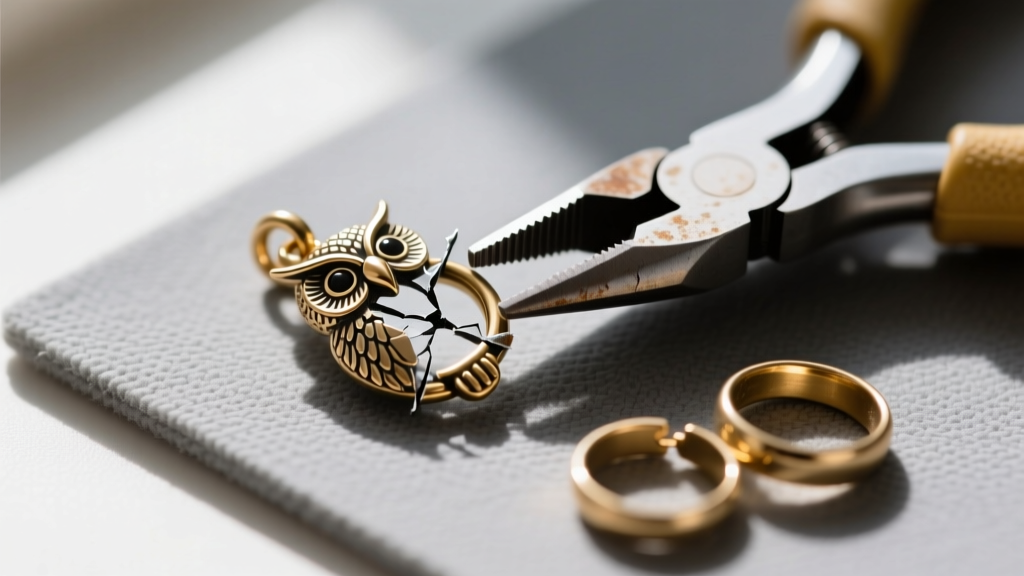
The bail—the loop connecting the pendant to the chain—is the highest stress point on any necklace. Vintage owl pendants, which are often cast thick and heavy, place immense torque on the jump ring holding the bail. If your pendant frequently slips off or the bail loop is bent open, the structural integrity has failed.
Sizing and Replacing Jump Rings
Never pull a jump ring apart laterally; this weakens the metal and creates a gap that will catch on clothing. Instead, use two pairs of flat-nose pliers to twist the ring open in a lateral, twisting motion. When replacing a fatigued ring, you must match the wire gauge to the weight of the pendant:
- 18-Gauge (1.0mm): Required for heavy brass or Zamac owls weighing over 15 grams.
- 20-Gauge (0.8mm): Ideal for delicate sterling silver or hollow-cast pendants.
- 22-Gauge (0.6mm): Too weak for most vintage pendants; reserve for lightweight chain links.
If the integrated bail loop on the pendant itself has snapped off, a jeweler will need to laser-weld a new sterling silver or brass bail pad to the back of the pendant. Traditional torch soldering is risky on Zamac, as the low melting point of the zinc alloy will cause the entire owl to melt into a puddle before the solder flows.
Replacing Missing 'Eyes' and Rhinestone Accents
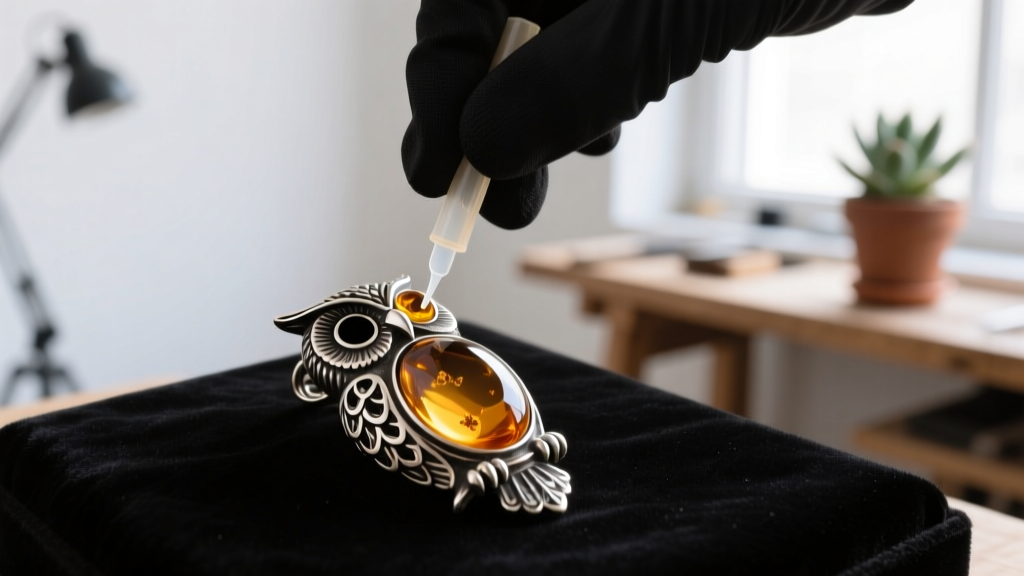
The 'eyes' of an owl vintage necklace are typically set with glass cabochons, faceted acrylics, or rhinestones. Over decades, the original adhesive dries out, shrinks, and fails, causing the stones to fall out. Replacing them requires precision sizing and the correct chemical adhesive.
Sizing and Sourcing Cabochons
Use a digital caliper to measure the inner diameter of the empty eye socket to the nearest tenth of a millimeter. Common vintage cabochon sizes are 3mm, 4mm, and 5mm. According to the Gemological Institute of America (GIA), identifying whether the original stone was glass or acrylic is crucial for sourcing a matching replacement; glass has a higher refractive index and feels noticeably colder to the touch than acrylic. If the original reflective foil backing behind the glass has disintegrated, punch a small circle of aluminum tape and place it behind the new cabochon to restore the piercing, reflective gaze.
Adhesive Selection: Why Super Glue Fails
Avoid cyanoacrylate (Super Glue) at all costs. As cyanoacrylate cures, it releases fumes that cause 'blooming'—a permanent, cloudy white haze that will ruin the transparency of your glass cabochon. Instead, use E6000 Jewelry & Bead adhesive. It remains slightly flexible after curing, allowing the metal pendant to expand and contract with temperature changes without popping the stone out. Apply a microscopic dot using a toothpick, seat the cabochon, and let it cure for 24 hours.
Authenticating True Vintage vs. Modern Reproductions
As the popularity of the owl vintage necklace has grown, so has the market for modern, artificially aged reproductions. Troubleshooting a potential purchase requires a forensic look at the findings and hallmarks.
Clasp and Chain Analysis
The clasp is often the most reliable indicator of age. According to the Antique Jewelry University, the modern lobster claw clasp was not widely adopted in mass-market jewelry until the late 1980s and 1990s. If your owl pendant features a tiny, round spring ring clasp with a visible solder seam, it is highly likely to be a true 1960s or 1970s piece. Furthermore, examine the chain links: vintage chains often feature slightly uneven, hand-soldered links, whereas modern reproductions use perfectly uniform, machine-stamped links that are often laser-welded.
Decoding Maker's Marks
Flip the owl pendant over and examine the back under a 10x jeweler's loupe. Look for hallmarks stamped into the metal. Prominent mid-century makers of animal motif jewelry include Trifari, Monet, Coro, and Napier. Unsigned pieces are not necessarily fake; many high-quality bohemian owl pendants were imported from Europe or Mexico in the 1970s and were stamped only with '925' or left entirely blank due to the casting depth limitations of the mold.
Pro-Tip: Modern reproductions often feature a thick, glossy lacquer coating to prevent tarnishing. True vintage brass or silver will have a raw, porous feel and will naturally oxidize when exposed to the oils in your skin.
Long-Term Storage and Preservation
Once your owl vintage necklace is repaired and properly polished, storage is critical to preventing future structural and cosmetic failures. Never store vintage jewelry in PVC plastics or standard zip-lock bags, as the off-gassing of polyvinyl chloride accelerates the tarnishing of silver and degrades the plating on Zamac. Store the necklace flat in an acid-free, archival-quality jewelry box with anti-tarnish silver strips. By addressing structural weaknesses and respecting the original materials, you ensure that your vintage owl pendant remains a wearable piece of history for decades to come.


